If someone may be poisoned or is in immediate danger, get medical help first: call 911 for severe symptoms, or Poison Control at 1-800-222-1222 for case-specific advice. Do not eat, drink, or use the suspect product. Then report it to the right authority: food reports depend on the food and where you found it; drug and other product reports go through FDA or the agency responsible for that category.
This is a U.S.-specific guide to choosing a reporting route, preserving useful identifying information, and describing what happened. There is no single hotline for every product or circumstance. The right next step depends on urgency, product category, and—if it is commercial food—whether you noticed the concern in a store or after bringing the product home.
First, deal with immediate danger
Call 911 if anyone has collapsed, is having trouble breathing or a seizure, cannot be awakened, or appears to face immediate danger. For suspected accidental poisoning, call Poison Control at 1-800-222-1222. A call or online report about a product is not a substitute for emergency care or individualized medical advice. Do not delay medical help while gathering label details or completing a complaint form.
Poison Control and product-reporting agencies serve different purposes. Poison Control provides case-specific advice about a possible poisoning; an agency complaint tells the appropriate authority about the product and incident. If someone may have been exposed, address the person’s health first, then report the product when doing so will not interfere with care. You can make a report even if a health professional has not confirmed that the product caused a symptom.
The Tool Desk
Outbyte PC Repair FREERepair Windows errors before they cause bigger problemsFix Now →Outbyte Driver Updater FREEScan for outdated or missing drivers - takes under a minuteDriver Scan →#1 Best Overall

- IDENTIFY WHICH FOODS MAY BE CAUSING YOUR SYMPTOMS. Food intolerances happen when your gut microbiome and digestive enzymes can’t break down a food ingredient. Although gluten and lactose are the most common issues, intolerances can happen with any food item. When these intolerances go unchecked, symptoms like headaches, gas, diarrhea, acne, and bloating may develop.
- TESTS 800 COMMON FOOD ITEMS. Our food intolerance test for adults and children covers 14 major food categories: dairy, vegetables, fruits, grains, meats, seafood, nuts, sweeteners, spices, fats, oils, mushrooms, superfoods, and preservatives.
- HOW IT WORKS. (1) Register your test kit on the 5Strands website or mobile app (2) Collect 10-15 strands of hair. (3) Send your sample to our certified lab using the included prepaid shipping materials. (4) Once your sample is received, we’ll email you the results within 4 days. After 60 days, your hair sample will be permanently disposed of.
- EASY TO READ RESULTS. Each food item is labeled as Insignificant, Mild, Moderate, or Severe to help guide your elimination plan. This gives you clear directions to begin removing severe intolerance foods, moderate your intake of mid-level triggers, and keep safe foods in rotation to support gut health, digestion, and symptom relief.
- 3RD PARTY STUDIED & DOCTOR RECOMMENDED. 5Strands is the only intolerance and sensitivity test independently validated through third-party research. Every sample is processed in our certified U.S. lab using a double-pass method for accurate results, and our testing has helped over 345,000 people and pets uncover their food intolerances and environmental sensitivities.
For suspected nicotine poisoning, FDA likewise advises calling 911 for severe symptoms and gives Poison Control’s number for live medical advice. See the FDA nicotine-poisoning guidance.
If you suspect an intentional biological, chemical, or radiological threat, the FDA Safety Reporting Portal FAQ directs consumers to local 911. That is different from a suspected accidental poisoning, for which Poison Control is the case-specific advice route. If the situation is immediately dangerous, use emergency services rather than waiting for a routine product complaint to be reviewed.
Do not use the product; keep its identifying details
Do not eat or use a product that appears damaged, opened, contaminated, or otherwise unusual. FDA advises consumers not to eat commercial food products that are damaged or look unusual. More broadly, do not continue using a suspect product while you try to determine what happened. Avoid further contact or use, and prioritize any immediate medical or safety needs.
FDA advises keeping the item and its existing packaging and labeling available. The label may contain the product name, manufacturer, lot or batch code, expiration or best-by date, serial number, and other details that help identify it. These marks can help an agency or company trace which product is involved. A clear photograph of the label can also help, especially if the item or packaging is later unavailable. Take photos only if you can do so safely; do not handle a suspect item just to get a better image.
There is no single handling method established for every type of suspect product. The consumer guidance cited here does not say that every item should be sealed, refrigerated, transported, or handled in a particular way. Do not assume that one storage or evidence procedure applies to food, medicine, a household chemical, and every other product alike. Ask police or the relevant agency how to handle or provide the item, and follow their instructions.
Keeping the original packaging and identifying details does not mean you have to investigate the incident yourself. Record what you saw and when, and distinguish direct observations—such as a broken seal or an unusual appearance—from your concern that tampering may have occurred. The report can be useful without a consumer establishing how the product was altered or proving a cause of illness.
Choose the reporting route by product and situation
Use three questions to choose a route: Is there an urgent medical or safety danger? What kind of product is involved? And, for commercial food, where did you find it? These distinctions matter: a suspected poisoning calls for medical advice or emergency response, while a product-quality complaint goes to the agency responsible for that product category. For food, the first contact also changes depending on whether you noticed the concern in a store or took the product home.
Rank #2
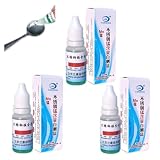
- Instant Material Verification: Improve your inspection process with stainless steel test liquid. Watch as it quickly identifies the grade and quality of any stainless steel material with just a drop. Stay confident in your results as you observe the reddening time for added assurance.
- Professionally Developed: After professional scientific formula, our stainless steel test liquid provides accurate and reliable testing, effectively identifying the authenticity of 304 stainless steel.
- Stainless Steel Test Liquid : Ensure stainless steel quality on-the-mark with our test liquid for procurement, marketing, and processing. Lightweight and compact, it's easy to carry to any location. Ideal anytime and anywhere for evaluating stainless steel. Perfect for professionals.
- Portable Testing: This stainless steel test liquid is suitable for stainless steel procurement, marketing, and processing. It is convenient to carry, light weight, and compact size. You can test the quality of stainless steel anytime and anywhere.
- Extensive Use: stainless steel test liquid can test various stainless steel products, such as food and beverage utensils, building materials, and sanitary ware. Whether you need to check the quality of your kitchenware, your construction projects, or your bathroom fixtures, this test liquid can help you do it easily and accurately.
| Situation | First route | Additional route |
|---|---|---|
| Immediate danger or severe symptoms | Call 911 | For a serious, life-threatening event involving an FDA-regulated product, FDA also lists its emergency number, 1-888-INFO-FDA (1-888-463-6332) |
| Suspected accidental poisoning | Call Poison Control at 1-800-222-1222 | Make the appropriate product report after addressing medical needs |
| Commercial food tampering noticed in a store | Tell the store manager | Report to USDA for meat or poultry; report other foods to FDA |
| Commercial food product already brought home | Notify local police | Report to USDA for meat or poultry; report other foods to FDA |
| Drug product tampering | FDA’s 24-hour emergency number: 301-443-1240 | For a life-threatening event, call 911 and contact FDA’s emergency number listed above |
| Non-emergency concern about an FDA-regulated product | Use FDA’s Report a problem page and SmartHub routing | Contact the manufacturer or distributor and the retailer |
| Hazardous household product, such as a toy, appliance, or chemical | Report to the Consumer Product Safety Commission (CPSC) | Use the responsible agency’s reporting route for other product categories |
The table is a routing guide, not a substitute for emergency response. If the situation changes—for example, someone develops severe symptoms—switch to the urgent route. Contact pages and phone numbers can change, so verify current details on the agency’s official site when making a report.
Quick wins for a faster PC:
Repair Windows errors before they cause bigger problemsFix Now →Fix the driver behind crashes, sound loss and screen glitchesFind Drivers →Food: store versus home matters
FDA’s food-tampering guidance distinguishes where you found the product. If you notice suspected tampering while shopping, tell the store manager. If you brought the commercial food product home, notify local police. These are different first contacts; do not assume that a federal online form replaces the store or local-police step specified for the situation.
The federal food route then depends on the type of food. Meat and poultry concerns go to the USDA Meat and Poultry Hotline. Other foods—including seafood, produce, and eggs—go to FDA. FDA’s food tampering guidance provides the consumer routing.
In practical terms, identify both the setting and the category before contacting the federal route: a suspected issue with meat or poultry is not routed the same way as a concern about seafood, produce, or eggs, and a product noticed at a store has a different initial contact from a commercial product already at home. If the category is unclear, use the agency’s official guidance or ask the authority you contact where the report belongs. Keep the label information available so the product can be identified accurately.
This food guidance concerns commercial food products. It does not establish one universal reporting process for every food item or every kind of suspected exposure. If someone may have been poisoned, call Poison Control or 911 as appropriate regardless of which food-reporting route applies.
Drugs and other FDA-regulated products
FDA’s Safety Reporting Portal FAQ routes drug product tampering to its 24-hour emergency number, 301-443-1240. This is a specific route for suspected drug tampering, not a general substitute for medical help or for the non-emergency complaint system. For a serious, life-threatening event involving an FDA-regulated product, call 911 and FDA at 1-888-INFO-FDA (1-888-463-6332), and contact a health professional.
FDA’s emergency information also distinguishes accidental poisoning from an intentional biological, chemical, or radiological threat: it directs accidental poisoning concerns to Poison Control at 1-800-222-1222 and intentional threats to local 911. If symptoms are severe or someone is in immediate danger, call 911. Do not let uncertainty about which complaint form to use delay an emergency call.
Rank #3

- Swab any sample, and test for Salmonella contamination.
- Suitable for testing food, food processing areas, solid or liquid samples, all surfaces and environments.
- Use this test to detect salmonella contamination in meats such as chicken, turkey, duck, beef, pork and many more.
- Test to detect salmonella contamination in fruits, vegetables, eggs, milk, powdered milk/formula, cheese, fish/seafood, drinks and beverages, processed foods such as charcuterie, pre-cut fruit products, canned foods, cereals, nut butters, frozen pot pies, stuffed chicken entrees, flour, peanut butter, salami sticks, prepackaged salads, and many more.
- Test for salmonella contamination on surfaces at home kitchens, food processing factories, grocery stores, daycare centers, cafeterias, schools, restaurants and hotels.
For non-emergency concerns—including suspected harm, product-quality problems, or mislabeling—use FDA’s Report a problem page. Its SmartHub system routes reports across FDA-regulated categories such as food, medicines, medical devices, cosmetics, animal products, and tobacco. FDA identifies consumer reports about injury, illness, potential harm, product quality, and mislabeling; suspected tampering is also a reportable concern.
The FDA reporting interface, including MedWatch Online, was updated March 14, 2026, according to the FDA reporting page. Use the current online router rather than relying on an old saved form or assuming that one form covers every product. The portal can direct a report according to product category. For a non-emergency complaint, FDA also recommends telling the manufacturer or distributor and the retailer. Those contacts complement, rather than replace, the appropriate agency route.
What’s actually slowing this PC down?
Pick the symptom - the matching free tool is one click away.
For drug tampering in particular, use the listed FDA emergency contact rather than treating the incident as an ordinary product-quality question. For other FDA-regulated product concerns that are not emergencies, the Report a Problem page is the consumer-facing starting point. If the event is life-threatening, emergency medical care comes first.
Household products and other categories
FDA directs complaints about hazardous household products, including toys, appliances, and chemicals, to CPSC. That distinction helps prevent a consumer from sending every product-safety complaint to FDA simply because FDA’s online portal is familiar. For non-emergency concerns that fall outside FDA’s remit, FDA’s general reporting guide identifies category-specific agencies and routes.
FDA’s reporting system covers categories such as food, medicines, medical devices, cosmetics, animal products, and tobacco. Household products such as toys, appliances, and chemicals are examples the cited FDA guidance directs to CPSC. Choose the route based on the product involved, rather than guessing from the nature of the concern alone. If you are unsure, consult the official category guide or ask the agency where to redirect the report.
Do not buy a kit or special container as a prerequisite to reporting. The official consumer guidance supports retaining the suspect product’s own packaging and calling the relevant authority; it does not recommend purchasing evidence-storage products, protective gloves, home poison test kits, or first-aid kits for the purpose of making a report.
What to include in your report
Report promptly and give a factual, traceable account. You do not have to know why the product looks unusual or whether it caused an illness before you report a concern. FDA advises consumers to include:
Rank #4

- IDENTIFY WHAT FOODS & DRINKS MAY BE CAUSING INTOLERANCE SYMPTOMS. Gluten and lactose intolerances occur when the digestive system struggles to process foods within those categories like milk and bread, but these intolerances can happen with any food or drink too. If your food intolerances aren’t handled properly, symptoms like acid reflux, constipation, diarrhea, headaches, and weight gain can occur.
- TESTS 1030 FOOD & BEVERAGE ITEMS. Your hair sample is compared against 30 food and drink categories, including acidity regulators, anti-caking agents, beverages, dairy, emulsifiers, fats, flavor enhancers, food dyes, fruits, grains, herbs, legumes, modified starches, mushrooms, nuts, preservatives, processing aids, proteins, seafood, seasonings, spices, stabilizers, superfoods, sweeteners, thickeners, and vegetables.
- NON-INVASIVE HAIR SAMPLE COLLECTION WITH FAST RESULTS. 1) Register your test kit on our 5Strands website or mobile app. 2) Collect 10-15 strands of hair from anywhere on your body. 3) Mail the sample to our certified U.S. lab with the included shipping materials. 4) We’ll send the results to your email and mobile app within 4 days of receiving your hair sample.
- CLEAR ANSWERS TO START AN ELIMINATION DIET. Each food item is categorized by 4 response levels so you have a concrete starting point to eliminate trigger foods, consume mid-level food triggers in moderation, and keep safe-listed foods in your current diet. Consistent implementation of your results gives your gut microbiome the space to rebalance, promoting proper digestion while alleviating symptoms.
- INDEPENDENTLY VALIDATED & PHYSICIAN RECOMMENDED. 5Strands is the only food intolerance test of its kind supported by independent third-party research. Every sample goes through a double-pass process in our U.S. lab to ensure accuracy, and our testing has helped over 345,000 people and pets uncover their food intolerances.
- What happened, when you noticed it, and why you suspect tampering or poisoning. Describe what you observed, not just your conclusion.
- The product’s name and a description, plus any lot, batch, serial, date, or other codes on the container or label.
- The company identified on the label, and where and when you obtained the product.
- Who may have been affected and their contact details.
- Whether a doctor or hospital was involved, and relevant contact details if available.
- Photos of the product and label, if they can be taken safely.
These details help make the account traceable: an agency or company can identify which product you mean, where it came from, and what happened. Copy codes carefully rather than estimating them, and say when a detail is unknown. Include the date and place you obtained the product when you can. If more than one person may have been affected, give the affected people’s information and explain what you know about each person’s involvement.
Keep the product’s existing packaging and labeling available. A label photograph can help preserve identifying information, but it does not replace keeping the item and its packaging when possible. FDA also recommends notifying the manufacturer or distributor and the retailer. When you contact those parties, give the same clear account and product identifiers, and be clear that the concern is suspected rather than confirmed if that is what you know.
Follow police or agency directions about whether to bring or send the item; the available consumer guidance does not establish a universal evidence-packaging procedure. Do not assume you should seal, refrigerate, ship, or transport every product in the same way. Ask the authority handling the report how it wants the item handled. The useful baseline is to keep the product’s existing packaging and label details available, avoid further use, and follow case-specific instructions.
Recommended Free Tools
What happens after you report
A report is useful even when no one has confirmed that the product caused an illness or injury. FDA reviews information to assess seriousness and decide whether follow-up may be appropriate. Depending on the issue’s seriousness, investigators may collect samples or inspect. FDA’s consumer reporting page says, “Your report can save lives.”
Submitting a report does not itself establish that tampering occurred or that a product caused a symptom. Include what you observed, distinguish it from what you suspect, and answer follow-up questions as accurately as possible. A product may look unusual without the cause being known; the report gives the agency information to assess, not a consumer determination that an offense or defect has been proven.
Reporting promptly helps provide the relevant facts while they are available. Keep your account consistent across calls or forms, and have the product name, label, codes, purchase location, and dates ready if an agency or company asks for them. If your concern is routed to another agency, follow the receiving agency’s instructions. Agency review and any follow-up depend on the seriousness and nature of the information; a report does not guarantee a particular investigation or outcome.
Food-related reports may involve more than one contact: the store manager or local police as appropriate, plus USDA for meat and poultry or FDA for other foods. Likewise, reporting a product concern to FDA or CPSC does not replace emergency medical care, Poison Control advice, or directions from police. Think of each report as serving its own purpose—medical advice for a possible exposure, local response for the food situation specified by FDA, and product oversight through the responsible regulator.
Free tools Windows power users keep installed
One-click scans. No signup required.
Best Value
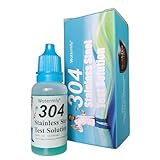
- INSTANT & ACCURATE IDENTIFICATION: Scientifically formulated reagent rapidly distinguishes between 200-series (Industrial Grade) and 300-series (Food/Medical Grade) stainless steel with clear, reliable results in just 2 minutes
- MATERIAL VERIFICATION FOR COOKWARE: Use this solution to verify your thermoses, pots, and utensils by testing whether they are made from 200-series or 300-series stainless steel alloys
- EASY 4-STEP PROCESS: No professional lab equipment or chemistry background required. Simply clean the surface, apply one drop, wait 2 minutes, and compare the color to the included chart for straightforward on-site testing
- COST-EFFECTIVE & LONG-LASTING: One 12ml bottle provides approximately 200 individual tests at just pennies per test, offering a fraction of the cost of laboratory analysis for both home users and professional quality inspectors
- VERSATILE APPLICATIONS: Whether shopping for new kitchenware, auditing your home, or performing industrial quality control on pipes and sheets, this portable solution serves as a material verification and fraud prevention tool
If you are outside the United States
The phone numbers and agencies above are U.S. routes. Elsewhere, contact your local emergency number for immediate danger, your local poison center for poisoning advice, police when appropriate, and the regulator responsible for the product category in your country. Do not assume that FDA, USDA, or CPSC handles reports outside the United States.
Common mistakes to avoid
- Waiting to report until a cause is proven. FDA accepts reports about suspected harm and product-quality concerns and evaluates information to assess seriousness. State what you know and what you suspect separately.
- Using a product while trying to resolve uncertainty. Do not eat or use a suspect product. Keep its existing packaging and identifying information available, and ask authorities how to handle the item.
- Sending every report to the same agency. Food, drugs, medical products, household hazards, and other categories have different routes. FDA directs hazardous household products such as toys, appliances, and chemicals to CPSC.
- Skipping the setting-specific food step. Tell the store manager about suspected tampering noticed in a store; notify local police about a commercial food product brought home. Then use the appropriate federal food route.
- Confusing a product complaint with poisoning care. Call 911 for an emergency and Poison Control for suspected accidental poisoning advice. An online complaint is not urgent medical care.
- Assuming one evidence procedure applies to all items. Consumer guidance does not set one universal method for sealing, storing, or transporting every kind of suspect product. Ask police or the relevant agency.
Frequently Asked Questions
Who should I call if I think a product was poisoned or tampered with?
If anyone is in immediate danger or has severe symptoms, call 911. For suspected accidental poisoning, call Poison Control at 1-800-222-1222. Then report the product through the route for its category: for example, local police and the appropriate federal food route for commercial food, or FDA’s reporting system for a non-emergency FDA-regulated product concern.
Should I call the police if food packaging looks tampered with?
FDA says to tell the store manager if you notice suspected commercial food tampering in a store. If you have already brought the commercial food product home, notify local police. Meat and poultry concerns also go to USDA’s Meat and Poultry Hotline; other foods, including seafood, produce, and eggs, go to FDA.
Where do I report a tampered product?
It depends on the product and circumstances. Use FDA’s Report a Problem page and SmartHub for non-emergency FDA-regulated product concerns; drug product tampering is routed to FDA’s 24-hour emergency number, 301-443-1240. FDA directs hazardous household products such as toys, appliances, and chemicals to CPSC. For commercial food, follow the store-versus-home and food-category routes.
Windows Errors? Fix Them Before They Spread
Repair common Windows errors and clear accumulated junk for a smoother, more stable PC - no reinstall needed.Free scan · no reinstallOutdated Drivers Are Slowing You Down
One free scan finds every outdated or missing driver and matches the right update for your exact hardware.Free scan · exact hardware matchWhat information should I save for a product tampering report?
Keep the product’s existing packaging and labeling available. Record the product name and description, lot, batch, serial or date codes, company on the label, where and when you got it, what happened and when you noticed it, affected people and contact details, and whether a doctor or hospital was involved. A safe photograph of the product and label can help.
Do I need proof that the product caused an illness before reporting it?
No. FDA reviews reports to assess seriousness and whether follow-up may be appropriate, even when a causal link has not been confirmed. Describe what you observed, what you suspect, and any medical care involved without presenting an unconfirmed cause as fact.
Should I seal, refrigerate, or send the suspect product to an agency?
The cited consumer guidance does not establish one handling method for every product. Keep the item and its existing packaging and labeling available, do not use it, and ask police or the relevant agency how to handle or provide it. Do not assume sealing, refrigeration, or transport is appropriate in every case.
Is there one hotline for every kind of product tampering?
No. The route depends on urgency and product category, and food reports also depend on where the product was found and whether it is meat or poultry. Call 911 for immediate danger; use Poison Control for suspected accidental poisoning advice; then use the relevant agency’s current official reporting route.
Do these 3 things before closing this tab:
1Repair Windows errors before they cause bigger problems2Fix the driver behind crashes, sound loss and screen glitches3Clear out junk files and repair common Windows errorsThe Bottom Line
Bottom line: Call 911 for immediate danger, Poison Control at 1-800-222-1222 for suspected accidental poisoning, and do not use the suspect product. Keep its existing packaging and label details available, then report through the route for the product and situation: store manager or local police plus USDA/FDA for commercial food, FDA for relevant FDA-regulated products, and CPSC for hazardous household products. Verify current agency contact details and follow instructions for handling the item.
Quick Recap
Product prices and availability are accurate as of the date/time indicated and are subject to change. Any price and availability information displayed on Amazon at the time of purchase will apply.

