Do these 3 things before closing this tab:
1Clear out junk files and repair common Windows errors2Fix the driver behind crashes, sound loss and screen glitches3Repair Windows errors before they cause bigger problemsTo host a community screening about a sensitive conflict, first secure permission for the exact film and format, then plan an accessible event with clear expectations for discussion and participant care. A personal viewing arrangement does not necessarily cover a public or community showing, even when admission is free. The right process depends on the film, country, venue and audience.
Start with two separate questions: may you show this film in this setting, and what event or premises rules apply where you are? Once those are clear, work backward from the experience you want to create. A screening can give attendees a shared starting point for listening and discussion, but it cannot guarantee agreement or resolve a conflict.
1. Get permission to show the film
Before announcing the event or choosing a playback method, contact the film’s rights holder or an authorized licensor. Ask whether the permission covers your specific film, venue, audience, date and format. A consumer streaming account or personal copy should not be assumed to authorize a community screening.
Be specific when you make the inquiry. Tell the rights holder whether the event is in person or online, whether it is a one-off or part of a series, whether you expect to charge for admission, and what kind of audience and venue you have in mind. Ask what playback formats are authorized and whether the permission includes any conditions you need to plan around. Do not infer that rights for an in-person showing also cover an online event, or that a license for one title covers another.
Recommended Free Tools
#1 Best Overall

- 【The Latest WIFI 6 Technology And Bluetooth 5.3】This projector with Wi-Fi and Bluetooth is equipped with the latest Wi-Fi 6 technology, compatible with Wi-Fi 6, 5G and 2.4G, offering faster connection speed and stronger stability, eliminating buffering and disconnection issues, and ensuring smoother online content playback. Additionally, it is fitted with the latest Bluetooth 5.3 chip, allowing for easy connection to Bluetooth speakers, headphones or other Bluetooth audio devices, providing a more efficient and stable transmission channel, and enabling users to enjoy higher audio quality with ease
- 【Built-in Streaming Media APP】Without any additional equipment,The YGSKK Wi-Fi projector supports streaming apps such as Prime Video, YouTube, and Hulu.The built-in applications allow you to easily enjoy a wide variety of movies, popular TV series and millions of other contents. Moreover, it also has an app store where you can download more applications. Whether it's a shared movie night or personal entertainment, this smart projector is very suitable
- 【Native 1080P High Definition,Compatible 4K】The native 1080P resolution presents you with clear and sharp full HD picture quality, with a brightness of up to 300 ANSI lumens, offering you images that are 50% brighter than those of similar projectors on the market. Whether you are watching movies, TV series, playing games or browsing photos, it will bring you astonishing clarity. Moreover, this movie projector is compatible with 4K, allowing you to enjoy the perfect experience of 4K picture quality. Note: Please ensure to connect 4K devices (such as TV sticks or USB drives) via HDMI to play 4K videos
- 【Wirelessly Connect to a Smart Phone, 50-200‘’ Large Screens】This is an amazing projector for iPhone. It is equipped with the "J-Share" setting, which enables wireless connection with smartphones. Both the phone and the projector need to be in the same network environment. Android phones need to download a program to connect, while iPhones do not need to download any applications (connect through the iPhone's screen mirroring function). In addition, this portable projector can project a large screen of 50 to 200 inches. You can adjust the screen size according to your personal preference to better enjoy the perfect experience of a large screen
- 【Strong Compatibility And Built-in Speakers】YGSKK projector for bedroom is equipped with three interfaces: HDMI, USB and audio (with an HDMI cable included). It is compatible with TV sticks, TV boxes, DVD players, laptops, USB flash drives, Switch/PS5, PC and other devices. The projector is built with high-fidelity stereo speakers, providing excellent and clear audio quality for an outstanding audio experience. It is also an excellent mini projector suitable for both indoor and outdoor activities
In the UK, government guidance says, “You need permission if you want to show films or TV shows in public.” Its examples include community cinemas, film clubs and one-off events; selling tickets is not the deciding factor. The type of permission depends on what is shown and where, and local council permission or a commercial subscription may also be relevant in some cases. Check the UK government’s guidance on showing films in public and confirm the requirements for your event.
Ask for the total licensing cost and any other applicable charges before you settle a budget or sell tickets. The guidance does not provide a standard fee, and the price and terms are specific to the film and arrangement. If you are comparing venues or formats, use the same rights questions for each option so you do not mistake a cheaper room or ticketing setup for a lower overall screening cost.
A limited community-premises exception in England and Wales
Revised UK guidance issued in September 2026 describes a licensing exception for some non-profit film exhibitions at community premises. It is conditional, not a blanket exemption from copyright permission or other rules. Among its requirements are that the exhibition take place between 08:00 and 23:00, the audience not exceed 500, the person responsible for the premises consent, and arrangements be in place to implement the film’s age rating. Charges for separate activities, such as refreshments or a talk, may be treated differently from the film exhibition itself.
In practical terms, do not treat a community venue, nonprofit status or free admission as enough by itself to establish that the exception applies. Check that the premises, exhibition and event arrangements meet the full conditions. If you intend to charge for refreshments or a discussion, ask whether those are separate activities under the guidance rather than assuming they are covered in the same way as the film exhibition.
This exception is specific to the UK context described in the UK government’s revised Licensing Act 2003 guidance. Check the full conditions and ask your local authority whether they apply. Hosts elsewhere should check their own country’s copyright and event rules rather than relying on this exception. The exception concerns the licensing activity of exhibiting the film; it does not replace the need to clear screening rights with the rights holder.
2. Decide what the event is for
Set a practical purpose before booking a room. You might want to introduce a film and its context, create a space for people to listen across differences, or connect attendees with local resources. Be realistic: a screening can open a conversation, but it cannot guarantee agreement, resolve a conflict or change attitudes.
Decide who the event is for and how much time to reserve for the film and any conversation afterward. Consider whether to invite community groups, speakers or a facilitator. American Documentary’s POV screening guide recommends planning at least a month ahead for its screening process; treat that as a useful lead-time suggestion, not a universal requirement.
A month of lead time can help you work through the dependencies in order: rights and event rules first, then the venue or platform, access arrangements, equipment testing and attendee communication. It also gives you time to find out whether a facilitator, translator or sign-language interpreter is needed. The exact schedule will depend on the film, venue and audience, so use the lead time as a planning prompt rather than a fixed deadline.
What’s actually slowing this PC down?
Pick the symptom - the matching free tool is one click away.
Think through whose participation you hope to make possible. A sensitive conflict may be personal for some attendees and less familiar to others. You do not need to make the event a forum in which people explain or defend their identities. Instead, define the event’s purpose in terms of what people can do together—watch, listen, ask questions, consider evidence or learn about local resources—and say what it will not promise to accomplish.
Rank #2
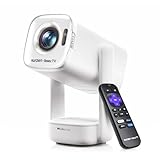
- A Roku account and internet connection are required for activation (Creating an account is free)
- Portable Roku TV Smart Projector: Meet the World's 1st Portable Roku TV Smart Projector with Roku TV built in. Just power on, connect to WiFi, and start streaming-no dongles, no switching inputs, no extra TV stick, and no extra remote needed. Enjoy top apps like Netflix, Prime Video, Hulu, YouTube, Roku Channel, and Apple TV. Enjoy 500+ TV channels with live news and weather, sports coverage, and more-totally free for bedroom viewing, living room movie nights, game day, soccer match nights, and backyard entertainment, home cinema, casual gaming, family gatherings, and party entertainment
- USB-C PD Power for Flexible Indoor and Outdoor Use: This portable projector supports 65W+ USB-C PD power input, so it can work with a compatible wall charger, laptop charger, power bank, or the Aurzen PowerBase Stand sold separately. Move it from the bedroom to the living room, use it as an outdoor projector for backyard movie nights, camping, and road trips, football match nights without being tied to one wall outlet. Note: Requires a 65W+ USB-C PD power source with 20V/3.25A output and a 5A E-Marker USB-C to USB-C cable
- Portable Gimbal Design, No Cable Interference: This small projector is built for real room-to-room use, with a smooth-damping gimbal stand that rotates fluidly and stays steady without sinking. Unlike side- or rear-powered projectors, D1R air uses a bottom power design that keeps cables out of the rotation path, reducing pulling, blocking, and setup hassle, so it's easier to place, adjust, and start watching in the bedroom, or project onto the ceiling or wall. Compact at 5.35 x 4.33 x 10.12 in and weighing only 1.18 kg (2.60 lb), it is easy to carry between rooms or take on the go.
- Independent Base Speakers, Dolby Audio & Useful Ports: Built-in dual 5W speakers are placed in the independent audio base instead of the projector body, creating a larger sound chamber for fuller sound, clearer dialogue, and reduced vibration. With Dolby Audio, dual-band WiFi (2.4G/5G), Bluetooth 5.2, and useful ports including HDMI, USB, Audio Out, and USB-C, this projector with WiFi and Bluetooth connects easily to laptops, game consoles, TV sticks, headphones, soundbars, and USB drives, making it a flexible projector for bedroom viewing, living room movies, sports streaming, and outdoor entertainment. Warm Tip: Fan noise at 1 m ranges from 29-35 dB by mode; steady fan sound is normal.
Choose a format that fits the purpose
For an in-person event, compare the room’s accessibility, equipment, capacity and suitability as neutral territory for people with different relationships to the conflict. For an online event, check whether the film’s rights cover online exhibition and whether the platform supports the access and moderation arrangements you need. Do not assume that permission for one format includes another.
Use the same practical questions to compare the options:
- What are the screening rights and total licensing costs for the film and territory?
- Can the format provide the captions, interpretation or other access arrangements attendees need?
- How many people are likely to attend, and can they participate meaningfully in the discussion?
- What venue and equipment will an in-person screening require, compared with platform access and online moderation?
- How will ticketing, attendee privacy and control of the conversation work?
In-person events make the room itself part of the plan: consider transport, sightlines, sound, layout and whether attendees can hear one another. An online event removes the need to reserve a physical room but still requires rights for online exhibition, access planning, an appropriate platform and a way to moderate conversation. Neither format is automatically more accessible or less costly; compare the actual needs, rights and arrangements for your particular event.
Online options vary by film. For example, Traumality describes licensed in-person screenings of its own work and a paid, ticketed online option through Kinema on its screening page. That is an example of one rights holder’s arrangement, not evidence that another film has the same options. The page does not establish general availability or partner terms for other films.
3. Make the venue and screening accessible
Ask the venue directly about wheelchair access and public transport links. Check whether all attendees can see the screen and hear both the film and one another during discussion. Find out what captioning, interpretation or sign-language interpretation can be arranged, and whether smaller breakout groups would make participation easier. There is no single technical standard that suits every room and audience, so verify what the particular venue and attendees require.
Do not rely on a venue’s general description to answer specific access questions. Confirm the route into the room, whether attendees can get to their seats, and whether the discussion layout will work for people who need to move around or sit in a particular place. If interpretation is needed, establish what arrangements are possible before finalizing the date and format. Organizer resources recommend checking access and interpretation needs but do not prescribe one technical standard for every audience.
Consider whether the room is suitable for people who may come with different relationships to the conflict. POV recommends considering neutral territory and room layout as part of planning. That does not mean every attendee will experience the location in the same way; it means organizers should think about who can get there, how the seating is arranged and whether people can participate without feeling singled out.
Outdated Drivers Are Slowing You Down
One free scan finds every outdated or missing driver and matches the right update for your exact hardware.Free scan · exact hardware matchWindows Errors? Fix Them Before They Spread
Repair common Windows errors and clear accumulated junk for a smoother, more stable PC - no reinstall needed.Free scan · no reinstallCheck the audiovisual setup before the event
Confirm the screen, projector, ambient light, sound system, available inputs and playback format with the venue. Test the exact file or disc and any captions on the equipment you will use. If the venue already has suitable equipment, use it rather than buying a projector by default. If there is a genuine gap, consider borrowing or renting equipment before purchasing; confirm that it works with the film’s format and the room.
Check both what the room can display and what the audience needs to hear. A projector that works in one room may not be suitable for another screen size or ambient-light condition, and an available connection is not useful unless it matches the playback device. Confirm the sound in the room, including whether discussion participants can hear one another. Make time for an end-to-end test of the actual film file or disc, rather than testing only a menu or unrelated clip.
Rank #3

- Note: For the best viewing experience, we recommend a 5.2ft distance for a 80" screen. Please also upgrade to the latest firmware for optimal performance.
- Enhanced Clarity and Brightness: With 200 ANSI and an 2000:1 contrast ratio, this projector provides sufficient brightness for casual movie watching, kids' shows, or gaming. Additionally, the 5W SoundBase Speaker enhances both the visual and auditory experience, giving you rich sound and clear images without the need for external speakers.
- Versatile and Portable Design: This mini proyector offers flexibility with ceiling mounting, table placement, tripod installation, or 180-degree rotation. Weighing only 0.88lb, it easily adapts to any space or occasion.
- Built-in Multiple Apps: This projector with WiFi and Bluetooth offers seamless access to 1,000,000 videos with a single click, eliminating the need for an external TV stick. Dive into endless entertainment with one device, ideal for home theaters or outdoor movie nights, or portable use.
- Intuitive and Precise Control: Our projector comes with an advanced Air Mouse remote that combines a traditional remote and mouse into one, offering seamless navigation and precise pointer control. It supports voice commands for hands-free adjustments.
Buy equipment only to solve a known gap. The relevant questions are whether the venue already has appropriate audiovisual equipment, whether everyone will be able to see and hear the film, and whether the setup supports the authorized playback format. Product specifications and current availability are not established here, so compare equipment against your venue’s requirements instead of relying on a generic projector recommendation.
4. Set expectations before people arrive
The invitation should explain the film and the event’s purpose, include any known content information, and make clear whether participation in the discussion is optional. Give accurate details about wheelchair access, transport, captions and interpretation. Tell attendees in advance if press will be present or if photography or recording is planned.
Free tools Windows power users keep installed
One-click scans. No signup required.
Make the invitation informative without suggesting that attendees have to disclose why the subject matters to them. A person may attend to watch quietly, take part in a discussion, or leave afterward; state clearly that participation is optional. If you have known content information for the film, share it in advance so people can decide whether and how they want to attend. Do not promise a particular emotional experience or claim that a discussion will be comfortable for everyone.
Be precise about privacy. If you ask people to respect one another’s confidentiality, do not imply that the host can guarantee what every attendee will repeat outside the room. Explain any limits and state plainly whether press, photography or recording will take place. This information matters whether the event is in person or online: attendees should know in advance what may be recorded or shared, rather than finding out after they arrive.
Include practical access information in the same communication as the event purpose. Give details you have verified about wheelchair access, transport, captions and interpretation, and say what is arranged rather than leaving attendees to infer it. If a request is still being checked, do not present it as confirmed.
5. Facilitate dialogue without pressuring disclosure
For a sensitive subject, a facilitator who understands the issues can help establish a welcoming environment and keep the conversation moving without imposing their own views. That person need not be a spokesperson for any community. Agree on their role in advance, including how they will invite quieter attendees in without compelling them to speak.
The Tool Desk
Outbyte PC Repair FREEClear out junk files and repair common Windows errorsFree Scan →Outbyte Driver Updater FREEScan for outdated or missing drivers - takes under a minuteDriver Scan →A facilitator is there to support the event’s purpose, not to decide which community’s account is acceptable or force consensus. Before the screening, talk through the structure: whether there will be a short introduction, how the conversation will begin, how participants can pass, and what the facilitator will do if discussion becomes hostile or too intense. If you invite speakers or community groups, clarify how their contributions fit the event and avoid implying that one speaker can represent everyone affected by a conflict.
Distinguish dialogue from debate at the outset. POV’s guide puts it this way: “In a debate, participants try to convince others that they are right. In a dialogue, participants try to understand one another and expand their thinking by sharing viewpoints and listening actively.” Attribute that wording to the POV guide, which does not identify an individual speaker.
This distinction gives attendees a useful shared expectation: the aim is to listen and understand, not to win an argument. Invite people to connect opinions to evidence, while recognizing that the event is not a guarantee that people will reach the same conclusions. A facilitator can support the conversation without adding their own views or requiring anyone to disclose personal experiences.
Rank #4

- A Roku account and internet connection are required for activation (Creating an account is free). Note: Power Supply: 100-240V AC, 50/60Hz.
- America's #1 TV Streaming Platform, All Top Apps: With Roku as your entertainment guide, exploring popular apps like NetfIix, Prime Video, Hulu, YouTube, Roku Channel—plus free movies, shows, and live TV—is as easy as it is fun. No dongles or extra remotes. Enjoy 500+ TV channels with live news and weather, sports coverage, and more—totally free.
- A Simple and Fast Home Screen: Enjoy a simple projector interface with intuitive navigation, quick search, and personalized recommendations. No-nonsense remote keep it effortless, while the Roku mobile app lets you control with your phone, type easily, or use voice commands.
- 1080P Full HD Resolution: Enjoy your favorite movies and TV shows in stunning high-definition picture quality for enhanced clarity and detail. This projector is perfect for creating a massive 60 to 150-inch screen for your home theater and outdoor movie nights.
- Auto Focus & Keystone Zero-Fuss: Advanced auto focus and auto keystone correction instantly adjust for a sharp, aligned screen-just place, power on, and enjoy a big screen without manual setup.
Use ground rules that protect choice
- Invite active listening and encourage people to connect claims or opinions to evidence.
- Do not ask anyone to represent an entire community or disclose personal experiences.
- Make clear that attending the discussion or sharing a personal story is optional.
- Allow people to pass, take a break or leave without being asked to explain.
- Pause or redirect the discussion if it becomes hostile or too intense.
Explain these expectations before discussion begins, not only after a problem arises. The invitation can set expectations about optional participation and privacy; the facilitator can then restate the purpose and ground rules in the room. A clear option to pass is especially important: inviting a person to contribute is different from making them answer in front of others.
Plan in advance how the facilitator will pause the room, restate the purpose or redirect a conversation that escalates. A large gathering may be better suited to information exchange, while smaller groups can support more intensive dialogue. If distress is foreseeable, consider whether appropriate local support professionals or agencies should be available.
Think through what a pause would look like before you need one. The facilitator may stop the discussion, remind participants of the event’s purpose or redirect the conversation; choose a response that fits the room and the people attending. Do not assume a single format will suit every group. A large gathering may allow information to be shared, while smaller groups can make more intensive dialogue possible, but smaller groups should still preserve the choice not to speak.
When distress is foreseeable, identify appropriate local support professionals or agencies that may be available. This is a planning consideration, not a promise that a screening can prevent distress or a substitute for professional care. Healing the Healers’ Community Viewing and Action Guide describes preparing the relational and physical setting before a screening so the experience is less likely to feel overwhelming. Treat this as that guide’s approach, not a clinical standard or a guarantee that nobody will be distressed.
Independent reader supportYour contribution helps us test, update, and keep practical guides available for everyone.6. Use a practical planning sequence
- Confirm the film and rights. Identify the exact documentary and intended in-person or online format, then get permission from the rights holder or authorized licensor. Ask what the license covers and what it costs. Check local event and premises requirements separately.
- Define the event. Set its purpose, intended audience, screening date and discussion length. Decide whether community groups, speakers or a facilitator should be involved. Keep the purpose achievable and do not promise that the event will resolve disagreement.
- Secure a suitable venue or platform. Check capacity, transport, wheelchair access, room layout and whether the location is appropriate for people with different relationships to the conflict. For online events, confirm the platform, online rights, access features and moderation plan.
- Arrange access and equipment. Ask about captions, interpretation and other needs. Confirm the room’s screen, ambient light, sound, inputs and playback format. Test the actual file or disc with captions on the planned setup; borrow or rent equipment if the venue has a real gap.
- Prepare the conversation. Confirm the facilitator’s role, explain dialogue rather than debate, set expectations around listening and voluntary participation, and decide how to pause or redirect an escalating discussion. Consider group size and whether a large gathering or smaller groups better suit the purpose.
- Communicate with attendees. Share the event purpose, known content information, access details, optional nature of participation, and any press, photography or recording plans. Explain confidentiality limits and give accurate information about the venue or platform.
- Prepare for participant care. Identify a quiet place or a way for people to step out. If distress is foreseeable, determine whether appropriate local support should be present or available. Do not frame support planning as a guarantee that no one will be distressed.
POV recommends allowing at least a month for its screening process. Use that as a helpful reminder to begin early enough to resolve rights, access, venue and facilitation questions, not as a legal minimum or a requirement for every event. The order above helps keep the decisions connected: for example, the intended format affects rights and equipment, while the intended audience affects access, room size and discussion design.
What a screening can—and cannot—do
A carefully arranged screening can give people a shared film to respond to and a structured opportunity to listen. The organizer resources and legal guidance cited here do not establish that screenings reduce conflict, change attitudes or improve community relations. Design the event around a clear purpose and people’s ability to participate safely, not a promised outcome.
The cited organizer resources and legal guidance do not provide a relevant outcome statistic that would support a claim that a screening changes attitudes or improves relations. They offer organizer recommendations and legal conditions, not evidence of a guaranteed social effect. A well-planned event is therefore best judged by whether the rights and local requirements were checked, attendees received accurate information, access and equipment were considered, and the discussion was facilitated with room for people to listen, pass or step away.
Keep the goal modest and concrete. You can plan a lawful screening, give people accurate expectations and create conditions for a thoughtful conversation; you cannot control every response or promise that participants will agree. That distinction is especially important when people have different personal relationships to the conflict.
Frequently Asked Questions
Can I show a documentary to a community group if the screening is free?
Do not assume that free admission makes a community screening private or exempt. UK government guidance says permission may be needed for public showings even when tickets are free, and lists community cinemas, film clubs and one-off events as examples. Contact the rights holder or authorized licensor for the exact film and check local event rules.
Best Value

- 【Your Plug-and-Play Smart Cinema】It starts with the powerful Allwinner H726 chip and pure Android 14 for wireless freedom and direct access to hulu, YouTube and more with no extra sticks. The 135'' giant screen that pulls you into the immersive viewing experience. This is the smart projector that does it all
- 【Big Screen & Tiny Space】Our 0.9:1 ultra-short throw mini projector is made for bedrooms and small living rooms. Sits close to the wall (0.75m-2.65m), throws a huge 35-135” image. Effortlessly resize (80%-100%) without moving it. For the best 80”+ view, we recommend 1.6m
- 【4K Supported & Native 720P for Casual Use】Sharp enough for streaming. Bright enough for a bedroom or a backyard hangout. Simple enough for anyone. This portable projector is an affordable option for creating a basic home cinema experience. HD 720P | 4K Support | Total Freedom
- 【Portable Design & Universal Mounting】In seconds, you can swivel its lens 180° to project onto any surface. This mini proyector offers flexibility with ceiling mounting, table placement, tripod installation. Weighing only 0.77lb, it easily adapts to any space or occasion
- 【Vivid Detail & Built-In Sound】With 200 ANSI lumens brightness and an 8000:1 contrast ratio, this hy300 projector delivers clear, watchable images for movies, kids' shows, and gaming. The integrated 5W SoundBase Speaker provides rich audio, completing your experience—no external speakers needed
Does my streaming subscription cover a community screening?
A personal viewing arrangement should not be assumed to authorize a community or public screening. Ask the film’s rights holder or an authorized licensor whether the permission covers your venue, audience, date and intended format.
Does permission for an in-person screening also cover an online event?
Not necessarily. Confirm the rights for the exact format you plan to use. Online exhibition may require different permission and brings platform, access, ticketing, privacy and moderation questions to consider.
What is the community-premises film exception in England and Wales?
Revised UK guidance issued in September 2026 describes a licensing exception for some non-profit film exhibitions at community premises. Conditions include showing the film between 08:00 and 23:00, an audience of no more than 500, consent from the person responsible for the premises and arrangements to implement the film’s age rating. It is UK-specific, conditional and does not replace copyright permission. Check the full guidance and your local authority.
How far in advance should I plan the screening?
POV recommends planning at least a month ahead for its screening process. Treat that as practical lead-time advice, not a universal rule. Starting early can help you confirm rights, venue or platform, access arrangements, equipment, facilitator and attendee communications.
Quick wins for a faster PC:
Clear out junk files and repair common Windows errorsFree Scan →Scan for outdated or missing drivers - takes under a minuteDriver Scan →What should I tell attendees before the event?
Explain the film and event purpose, share any known content information, provide accurate access and transport details, and say whether discussion participation is optional. Disclose whether press, photography or recording is planned, and explain the limits of any request for confidentiality.
How do I keep the discussion from becoming a debate?
Explain that dialogue is aimed at understanding and listening, unlike debate aimed at persuading others. Invite active listening and evidence-based contributions, make personal disclosure optional, and agree how the facilitator can pause or redirect an escalating discussion.
Should I buy a projector for the screening?
Only if the venue has a genuine equipment gap. First check its screen, projector, ambient light, sound, inputs and playback format, then test the exact film file or disc with captions. Borrowing or renting may make more sense than buying if suitable equipment is unavailable.
Is an online screening cheaper or more accessible than an in-person event?
There is no universal answer in the reviewed sources. Compare rights and total licensing cost, captions and interpretation, expected audience size, discussion participation, equipment versus platform needs, ticketing, privacy and moderation for your particular event.
Do these 3 things before closing this tab:
1Clear out junk files and repair common Windows errors2Fix the driver behind crashes, sound loss and screen glitches3Repair Windows errors before they cause bigger problemsThe Bottom Line
Clear rights for the exact film and format before you announce the event, then check local rules, venue access and equipment. Set a realistic purpose, tell attendees what to expect, and facilitate dialogue that makes listening possible without requiring anyone to disclose personal experiences. Plan for care, but do not promise that a screening will resolve disagreement or prevent distress.
Quick Recap
Product prices and availability are accurate as of the date/time indicated and are subject to change. Any price and availability information displayed on Amazon at the time of purchase will apply.

