Some links on this page are affiliate links: if you buy through them we may earn a commission, at no extra cost to you.
The most useful first step is usually a private, low-pressure check-in: ask what would help, offer a specific task, and let your neighbor decide. For anything involving a disaster site, cleanup, or multiple households, coordinate through local emergency management or an established relief organization instead of showing up on your own.
Start with a check-in, not an assumption
A wildfire can leave people facing very different circumstances. Someone may need a ride, a meal, help with an errand, pet care, or simply space. They may not know what they need yet. Ask privately, listen to the answer, and treat the person affected as the decision-maker.
A useful offer is concrete and easy to accept or decline: “I’m going to the store this afternoon. Would picking up anything for you help?” or “Would you like me to check in tomorrow, or would you rather have some quiet?” These are practical ways to communicate respectfully, not official required scripts. The important part is to offer an option rather than decide what the survivor needs.
The Tool Desk
Outbyte Driver Updater FREEScan for outdated or missing drivers - takes under a minuteDriver Scan →Outbyte PC Repair FREEClear out junk files and repair common Windows errorsFree Scan →- Give a choice. Offer one or two manageable options instead of asking someone under strain to organize your help.
- Make declining easy. “No pressure if that doesn’t help” signals that the offer does not create an obligation.
- Follow their lead. If they accept, clarify what they want and when. If they decline or do not respond, do not keep pressing.
- Respect privacy. Do not treat their home, belongings, or account of what happened as public property. Ask before visiting, photographing, sharing details, or posting about their situation.
A neighbor’s silence is not an invitation to arrive at the door. If you are unsure whether a visit would be welcome, ask by a channel they already use with you, and leave the decision with them.
Popular on Amazon

- NIOSH APPROVED: For at least 95 percent filtration efficiency against certain non-oil based particles
- COMPATIBLE: With a variety of protective eyewear and hearing protection
- ADJUSTABLE NOSECLIP: Reduces potential for eyewear fogging and helps provide a custom and secure seal
- TWO-STRAP DESIGN: With welded dual point attachement that helps provide a secure fit
- APPLICATIONS: Gringing, sanding, sweeping, bagging, and other dusty operations. Metalworking, chemical processing, construction, and metal processing
It can help to separate the offer from the outcome. You can make it clear that you are available without expecting a quick reply, a detailed explanation, or gratitude. If the person says they do not need anything, accept that answer. If they say they are not sure, you might offer to check back at a time they choose rather than repeat the question every day. A private, specific message also gives them room to answer when they are ready.
Practical support should remain practical: if they accept a ride, confirm when and where; if they want an errand, check what they actually want picked up. Do not assume that a meal, a visit, or help sorting belongings is welcome simply because it would be useful to you in their position. Their preferences are the best guide, and they can change as circumstances change.
Choose the right kind of help
There is an important difference between helping someone you know with an agreed task and joining a disaster response. Personal help can be arranged directly with the neighbor. Entering an affected area, cleaning damaged property, or serving multiple households requires coordination, an identified need, and appropriate precautions.
Free tools Windows power users keep installed
One-click scans. No signup required.
| Approach | Best suited to | How to proceed |
|---|---|---|
| Direct neighbor-to-neighbor help | A personal check-in or a practical task the neighbor has agreed to | Ask what they want, confirm the details, and follow their preferences |
| Organized response | Work in affected areas, cleanup, or assistance to multiple households | Contact local emergency management or an established organization, wait for an identified opportunity and assignment, and use the required safety gear |
FEMA’s Are You Ready? guide directs prospective volunteers to contact the local emergency manager to learn about opportunities. National Voluntary Organizations Active in Disaster (National VOAD) likewise advises people to affiliate with an organization that has been asked to respond, wait until travel is safe and needs are identified, and take an assigned role with suitable protective equipment. Its guidance warns: “Don’t underestimate the complexity of working in a disaster area.”
The distinction is about the setting and the work, not how generous someone is. A neighbor may welcome a personal ride or grocery errand while an evacuation order is still in force elsewhere; that does not authorize a volunteer to enter a closed area or handle cleanup. Conversely, a well-organized relief role may be the right way to help households you do not know. When a task crosses into the affected area or involves multiple people, pass the coordination to local emergency management or a response organization rather than improvising.
For organized volunteering, coordinate before you travel
Do not self-deploy to a wildfire response. Arriving without an assignment can create additional work for responders and divert attention from survivors. A road that looks open, a neighborhood you know, or a well-meant offer to help does not establish that the area is safe or that assistance is needed there.
- Check local instructions. Use the affected locality’s official emergency-management channels for current access, evacuation, re-entry, and volunteer information. Conditions can change, so a general guide cannot tell you whether a particular road or property is accessible.
- Contact a coordinating organization. Ask the local emergency manager or an established voluntary organization whether it has an active role for you. FEMA’s guide specifically points volunteers to the local emergency manager.
- Wait for a specific opportunity. Follow the organization’s instructions on whether to travel, where to report, and what work is needed. Do not substitute your own idea of a useful task for an assigned role.
- Confirm preparation and safety requirements. Ask what training, clothing, equipment, and other precautions the task requires. National VOAD advises volunteers to take suitable safety gear and an assigned role.
National VOAD maintains current response guidance, including direction to affiliate with an organization rather than arrive independently. The specific opportunities available depend on the incident and can change over time; check directly with local coordinators.
Quick wins for a faster PC:
Scan for outdated or missing drivers - takes under a minuteDriver Scan →Clear out junk files and repair common Windows errorsFree Scan →Also popular on Amazon

- The 3M 9205+ Aura N95 Particulate Respirator Masks are disposable N95 particulate respirators that protect against certain non-oil particles.
- 3M 9205+ Aura N95 Particulate Respirator Masks accommodate a wide range of face shapes and sizes. The product is suitable for grinding, sanding, sweeping, bagging, and other dusty or arid tasks.
- 3M 9205+ Aura N95 Particulate Respirator Masks filter certain airborne particles such as dust & debris, smoke & smog particles, cough & sneezing debris, and other particulates.
- Using 3M's proprietary Advanced Electret Media, dust and other airborne particles are filtered and breathed without difficulty.
- The 3M 9205+ Aura N95 Particulate Respirator Mask features a comfortable top panel to prevent eyewear from fogging.
Registration and waiting are part of helping, not bureaucratic obstacles to work around. An organization can identify where assistance is requested, when travel is safe, and what role fits the response. An unaffiliated arrival can burden local responders and use time and attention that should go to survivors. If there is no current opening for you, do not treat that as a reason to go independently; ask whether there may be a later opportunity or another way to support recovery.
Keep the safety requirements tied to the assignment. Do not assume that general outdoor experience, a familiar location, or bringing your own equipment makes a particular job appropriate. Follow the organization’s instructions about role, reporting location, protective gear, and timing. Current conditions and volunteer openings are incident-specific, so check again through local channels rather than relying on an old announcement.
Give money or goods in the way a response can use
For a general contribution, cash through a recognized disaster-relief organization is usually more useful than sending physical goods without a request. Cash gives relief organizations flexibility to direct support where it is needed and avoids creating unsorted inventory. FEMA’s preparedness guide identifies cash donations to recognized relief organizations as an effective contribution, and National VOAD says cash is best while warning that unsolicited goods create storage and sorting work.
| Giving option | When it fits | What to check |
|---|---|---|
| Cash through a recognized relief organization | You want to support response or recovery without selecting particular items | Use a recognized organization and check for a current local campaign if you want your gift directed to a particular response |
| Physical goods | An organization has requested specific items | Confirm the exact items, quantities, delivery location, and timing with the local coordinator before collecting or transporting anything |
National VOAD’s current guidance states: “Do not send or bring unsolicited donations.” The American Red Cross says it does not accept individual donated items or collections because of logistical constraints. That does not mean goods are never useful; it means a goods drive or delivery should follow a specific request from an organization able to receive and distribute those items. Check that request before buying, collecting, or loading supplies.
A well-meant donation drive can still leave responders with work they did not request: receiving, sorting, storing, and moving items takes resources. Before asking others to contribute goods, verify that a coordinating organization wants those exact items and can accept them at the stated time and place. If no such request exists, a cash gift through a recognized relief organization is the clearer option. Do not take supplies directly to a disaster site simply because they seem likely to be needed.
For current service and volunteer information, the Red Cross describes wildfire relief work that can include shelter, food, relief supplies, health and mental-health support, and recovery planning on its wildfire relief page. The organization’s frequently asked questions explain its policy on individual item donations and collections. Local needs and active response arrangements remain specific to the incident.
If you want a gift to support a particular fire, look for an active campaign from a recognized organization and confirm that it applies to that response. Do not assume a general donation page is tied to one locality, or that a previous campaign is still active. A local coordinator can also clarify whether a specific in-kind request is current. National VOAD member organizations and the Red Cross are examples of established channels for relief and volunteering; any current opportunity or campaign should be verified directly.
Also popular on Amazon

- NIOSH-APPROVED N95 for at least 95 percent filtration efficiency against certain non-oil-based particles and aerosols
- 3M COOL FLOW EXHALATION VALVE helps direct exhaled air downward and allows for easy breathing
- UP TO 50% EASIER BREATHING. Compared to non-valved 3M 8200 Testing
- ADVANCED FILTER MEDIA for easy breathing
- ADJUSTABLE M-NOSECLIP helps provide a custom and secure seal
Keep return and cleanup decisions with local authorities
Neighborly concern is not a reason to enter an evacuation area, inspect a damaged property, or begin clearing debris. Follow current local instructions for evacuation, road access, re-entry, and public safety. Wait for officials to say it is safe to return, and follow public-health directions before cleanup. The American Red Cross’s wildfire safety guidance identifies several post-fire hazards that may not be obvious at a glance.
Crashes, No Sound, or Screen Glitches?
Random freezes, missing sound and display glitches usually trace back to one bad driver. Find and replace yours safely.Free scan · under a minutePC Slower Than It Used to Be?
A free scan shows the junk files, broken settings and background clutter dragging Windows down - then fixes them in one click.Free scan · Windows 10 & 11- Keep away from hot ash, smoldering debris, and live embers.
- Do not approach damaged electrical lines.
- Watch for ash pits: ash can conceal hot material or unstable ground.
- Avoid direct contact with ash and follow local public-health instructions.
If a neighbor asks for help with cleanup after authorities have allowed return, do not assume that permission to enter makes every task safe. The Red Cross recommends protective clothing and eye protection and names an N95 respirator as a way to limit inhaled ash during cleanup. It also advises that children, pregnant people, and people with asthma or heart or lung conditions should not breathe ash dust. A respirator does not neutralize every hazard or make an unsafe task safe; follow local health guidance and the instructions for the specific work. If conditions or requirements are unclear, pause and ask the responsible local authority or coordinating organization.
These precautions are not a substitute for clearance from officials. A general article cannot determine whether an individual street, property, or work area has reopened. Conditions can differ even within one affected locality, so check current official instructions before traveling or returning. If a neighbor asks for help before it is safe to enter, you can still offer support outside the area—if they want it—without crossing a closure or taking on cleanup.
The N95 reference is narrow: the Red Cross names it to limit inhaled ash during cleanup. It should not be read as permission to handle every kind of debris or as a guarantee that ash exposure is harmless. In particular, children, pregnant people, and people with asthma or heart or lung conditions should not breathe ash dust. Follow local public-health directions and do not ask someone in a higher-risk group to take part in ash cleanup.
Offer emotional support without asking for a full account
People respond to disaster in different ways. A neighbor may want to talk, may prefer practical assistance, or may not want to discuss what happened. Do not press for details, try to diagnose their reaction, or promise that everything will be fine. You can listen without turning the conversation into an interview.
Try an open, low-pressure question such as, “Would talking help, or would you rather I take care of that errand?” If the person wants support beyond what you can offer, ask whether they would like help finding a local voluntary organization or a professional counselor. FEMA’s Coping with Disaster guidance notes that reactions vary and identifies community support and professional counseling as possible resources. Offering to help locate support is different from insisting that someone seek it.
You do not have to interpret someone’s feelings to be supportive. Let them decide whether to talk, and be willing to sit with uncertainty rather than rushing to reassure them. Avoid making the conversation about the details you want to know or using a neighbor’s experience as something to share with others. If they ask for help locating community or professional support, you can help find options; if they do not, keep the offer open without pressure.
Also popular on Amazon
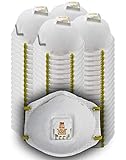
- NIOSH APPROVED: For at least 95% filtration efficiency against certain non-oil based particles like dust
- COOL COMFORT: 3M Cool Flow Valve, incorporating proprietary technology, helps reduce heat and humidity build-up inside the respirator to help keep the wearer more comfortable. Designed for hot/dusty work settings requiring long periods of wear
- FEWER PRESSURE POINTS: M-noseclip adjusts easily for fewer pressure points, a custom and secure seal, and greater comfort
- SECURE SEAL: Braided headbands two-strap design with dual point attachment helps provide a custom and secure seal
- BREATHE EASIER: Highly charged microfibers enhance the capture of airborne particles while allowing you to breathe easier
Check in over time, with permission
Recovery does not necessarily end when the immediate danger passes or public attention moves elsewhere. National VOAD notes that volunteer needs can continue for months or years, particularly during long-term recovery. That is a reason to make a considerate follow-up offer, not to assume the same person needs the same help indefinitely.
If your neighbor welcomed a check-in, agree on a reasonable way to follow up. You might ask whether they would like you to check again next week, or whether they would prefer to reach out when help is needed. Keep offers specific and let them set the pace. A practical errand later on may matter more than a dramatic gesture during the first few days, but the person affected—not the calendar—decides what is useful.
Recommended Free Tools
Long-term recovery can involve organized services as well as help between neighbors. The Red Cross describes services that include shelter, food, relief supplies, health and mental-health support, and recovery planning. What is available depends on the response and location, so refer a neighbor to current local information rather than promising that a particular service will be offered. The goal of a follow-up is to make support easier to find, not to take over the person’s decisions.
The scale and duration of organized support can be substantial in an individual response. In a report dated January 6, 2026, the American Red Cross said it had reached an estimated 178,000 people with relief and recovery assistance and provided more than $51 million in direct financial assistance to thousands of households after the January 2025 Los Angeles wildfires. Those are figures for that specific response, not a general estimate of wildfire recovery costs or a promise about what any one organization can provide in another incident. They illustrate why organized relief and longer-term recovery support can matter well beyond the initial emergency.
Use local information for decisions that change by incident
This is general U.S. guidance; local authorities determine current evacuation, re-entry, road access, and public-safety instructions. Volunteer openings, requested supplies, and active relief services also vary by location and time. The Red Cross’s current wildfire relief information describes response activity in the western United States in 2026, while its January 2026 report looks back at the January 2025 Los Angeles fires. Neither can establish what is available at a different incident today.
For a specific fire, rely on the affected locality’s official channels for operational directions and contact an established organization before volunteering or giving physical goods. For a personal offer to a neighbor, the simplest guide remains their answer: ask, listen, and let them choose.
Frequently Asked Questions
What is the best first thing to do for a neighbor after a wildfire?
Send a private, low-pressure check-in and offer one specific kind of help, such as a meal, ride, errand, or pet care. Let them accept, decline, or ask for something else; do not show up or keep pressing if they do not respond.
Also popular on Amazon

- NIOSH-APPROVED N95 for at least 95 percent filtration efficiency against certain non-oil-based particles and aerosols
- USE FOR: Sanding, drywall cutting, sweeping, sawing, woodworking, fiberglass insulating, yard work, grinding and dusting
- 3M ADVANCED ELECTROSTATIC MEDIA enhances the capture of airborne particles while allowing for easy breathing
- CUSHIONING NOSE FOAM rests on bridge of nose for comfort
- ADJUSTABLE NOSECLIP and stretchable headbands helps ensure a custom, secure seal
Can I go to the affected area to volunteer or help with cleanup?
Do not self-deploy. Contact local emergency management or an established voluntary organization, wait for an identified opportunity and assignment, and follow its travel and safety instructions. Return and cleanup must also wait until local authorities say it is safe and public-health guidance is clear.
Should I organize a donation drive or bring supplies to a wildfire site?
Only collect or deliver physical goods when an organization has requested specific items and confirmed quantities, destination, and timing. National VOAD warns against unsolicited donations, and the Red Cross says it does not accept individual donated items or collections. Cash through a recognized relief organization is generally more flexible.
What safety precautions matter during post-fire cleanup?
Follow local re-entry and public-health instructions, avoid hot ash, smoldering debris, live embers, damaged electrical lines, and ash pits, and avoid direct ash contact. The Red Cross recommends protective clothing, eye protection, and an N95 respirator to limit inhaled ash, but a respirator does not make every task safe. Children, pregnant people, and people with asthma or heart or lung conditions should not breathe ash dust.
How can I support a neighbor who is distressed?
Listen without pressing for details, diagnosing their response, or promising that everything will be fine. Ask whether they would like practical help or support finding a local voluntary organization or professional counselor. FEMA notes that reactions vary and identifies community and professional support as options.
How long should I keep checking in?
There is no fixed timeline. National VOAD notes that volunteer needs can continue for months or years, especially in long-term recovery. Ask whether your neighbor would welcome another check-in and let them choose the timing and type of help.
The Bottom Line
Start with a private offer, not an assumption. Let your neighbor decide what help is welcome, and leave organized volunteering, donations, return, and cleanup to current local instructions and coordinated response channels.






Say something about this film