Do these 3 things before closing this tab:
1Fix the driver behind crashes, sound loss and screen glitches2Repair Windows errors before they cause bigger problems3Scan for outdated or missing drivers - takes under a minuteIf beavers are nearby but are not harming people, property, or infrastructure, the most practical response may be to leave them alone. When there is a real conflict, match the response to the problem: protect particular trees, get expert help with backed-up water or blocked culverts, and keep pets and livestock away from active sites. Before changing a dam, lodge, burrow, or waterway, check with the local wildlife and waterway authorities; rules and permits differ by location.
Start with the problem, not the beaver
Beavers can live in urban and suburban neighborhoods wherever food and water are available. Feeding, dam building, or den building does not automatically mean that residents or public agencies need to intervene. Fairfax County Government explicitly encourages tolerance when beaver activity is not affecting human uses or infrastructure: “We encourage tolerance of beavers whenever possible when beaver activities are not impacting human uses or infrastructure.”
Begin by recording what is happening and where: which trees are being cut, whether water is actually reaching a road or property, whether a culvert is obstructed, and whether a pet has approached an active site. Separate observed damage from a general worry about having beavers nearby. That distinction helps avoid unnecessary disturbance and directs any needed response to the specific risk.
Try to describe the effect, not just the animal’s presence. For example, note whether a particular planting has been chewed, whether water is higher than usual at a particular location, or whether a road crossing is at risk. Identify whether the issue is recurring or a single observation. If you are unsure what caused the damage, a trail camera can be an optional diagnostic tool, but it is not required for coexistence and does not replace an assessment by the responsible land manager or wildlife professional.
Free tools Windows power users keep installed
One-click scans. No signup required.
#1 Best Overall
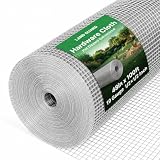
- Material and size: The size of the hardware cloth is 48 inch×100 ft square and 1/2 inch×1/2 inch thickness, adopt 19 guage hot-dipped galvanized material
- The amazing craft projects: select high-quality iron wire to be welded into wire fencing and then galvanized. The flat hardware fabric beautifies the appearance and have a certain function of decorative. The structure is firm and has high corrosion resistance. It is easy to install and not easily fading and deformed.
- Perfect poultry netting: Are you still worried about your chickens, ducks, rabbits, and other farm animals being attacked by various creatures such as rattlesnakes, raccoons, etc.? Buy it now. This roll cage is especially suitable for chicken fence, it will become your poultry protection cage such as rabbit wire, chicken fencing and duck run. it will become extremely safe and put your mind at ease.
- Multifunctional use: You can freely cut this chicken wire fencing into what appearances you want. The galvanized wire mesh screen roll can effectively protect your garden fruits, vegetables, flowers, and other plants from rodents. While install this mesh wire, please dig a shallow trench first and install the fence 2 to 3 feet deep in ground, so that it will provide the most beneficial protection for your ground. The 1/2inch net diameter can block most crawling creatures
- Warm reminder, before you buy, please read the product size and specifications carefully. The product is heavier, please be careful when installing it to avoid inconvenience to you.
If the situation affects a shared park, drainage route, road, or more than one property, coordinate before anyone acts. The U.S. Fish and Wildlife Service’s Beaver Restoration Guidebook, Version 2.02, discusses urban examples in Martinez, California, and Tualatin, Oregon, and emphasizes early stakeholder engagement and setting landowner expectations. Residents, property owners, parks staff, public works, wildlife professionals, and water-resource authorities may all need to agree on the problem and desired outcome.
Early coordination matters because one person’s preferred fix can affect neighbors upstream or downstream. Public agencies may own or maintain the road, culvert, park, or drainage structure even when the effects are noticed on private property. Before work is proposed, clarify who is responsible for the land and infrastructure, who can authorize a change, and who should be notified if water levels or access change.
Choose a response that fits the conflict
| Issue | First response to consider | Can it allow beavers to remain? | Key limitation |
|---|---|---|---|
| A few valued trees are being damaged | Protect individual trunks or a vulnerable planting area with mesh or fencing. | Yes. Protection is directed at plants, not at removing the animals. | Guard dimensions and appropriate materials depend on local guidance and the tree’s growth. |
| Water is backing up at a dam or pond | Ask local wildlife or water-resource professionals to assess a site-specific flow-control option, such as a pond leveler. | Potentially. These devices are intended to manage water while leaving beavers in place. | Design, installation, maintenance, ecological effects, and permissions depend on the site. |
| A culvert is blocked or threatened | Have the culvert and waterway assessed; exclusion fencing or a flow device may be appropriate. | Potentially. The aim can be to keep water moving without removing beavers. | Infrastructure and waterway work needs site-specific planning and may require approvals. |
| A person, dog, or livestock is close to an active site | Keep people at a sensible distance, leash dogs, and fence livestock away. | Yes. This is a safety measure, not a wildlife-handling response. | Do not approach or handle a beaver; contact an appropriate professional about an injured animal. |
| Someone proposes breaching or removing a dam | Pause and consult relevant authorities about permits, downstream effects, and safer alternatives. | Not necessarily; removal disturbs the site and may be temporary. | Beavers may rebuild quickly, and water release, sediment, and vegetation effects need consideration. |
These choices address different problems rather than ranking from “best” to “worst.” A tree guard is a relatively focused response to selected plants; it will not resolve backed-up water. A flow device or exclusion fence may help address water or access at a culvert, but needs site assessment and often more planning than a trunk guard. Dam removal may appear direct, but can be short-lived and can cause downstream effects. Compare any proposed measure by the conflict it addresses, whether beavers can remain, the upkeep it will need, installation complexity, and the permissions required.
Protect trees without trying to remove beavers
Guard the trees that matter most
For a small number of valuable trees, a physical barrier is a focused option. California Department of Fish and Wildlife lists hardware cloth, sheet metal, and welded wire mesh as trunk-protection materials. A roll of galvanized hardware cloth may be useful for making an individual guard, but the correct mesh, height, spacing, and installation should follow local wildlife-agency advice rather than a one-size-fits-all product specification.
Leave enough space between the guard and trunk for the tree to grow, and check the barrier over time so it remains effective as the trunk expands. Protect exposed roots where relevant. For a larger vulnerable planting area, fencing may be more practical than wrapping each tree, but the fence has to suit the location and be installed so it does not create a new obstruction or hazard.
Think of a guard as protection for a particular tree, not a barrier around the whole beaver habitat. Select the trees or planting area that are most important to protect, then inspect the work periodically. A guard that becomes tight against a growing trunk may no longer provide the intended clearance; a loose, damaged, or poorly placed barrier may fail to protect the trunk or roots. Ask the local wildlife agency for suitable materials and fitting advice before purchasing mesh.
Use dimensions only in their proper jurisdiction
Department for Environment, Food & Rural Affairs guidance for England specifies galvanized welded-mesh tree guards at least 1 metre high, with openings no larger than 2.5 by 5 centimetres and at least 15 centimetres between the trunk and mesh; it also says to protect exposed roots. These are England-specific figures, not a universal standard for cities elsewhere. Follow the local agency’s specifications where they differ.
Rank #2

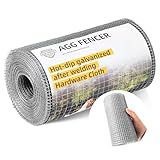
- Galvanized After Welding: Hot-dip galvanized after welding coats every welded joint, so the heavy duty mesh resists rust and breakage far longer than pre-galvanized wire in rain, soil, and sun.Thicker wire builds a sturdier fence that resists bending and animal push-through
- Product Size & Coverage: The roll is 16 inch wide by 25 foot long, and 1/2 inch×1/2 inch mesh opening, enough to cover a small run, a few beds, or one coop, cut to length for any project. Measure your project need first so you order the right length and avoid mid-job gaps
- Easy to Cut & DIY: Smooth welded edges reduce scratches while cutting and installing. And works well with fence posts, zip ties, and landscape staples for quick, tool-light setup. Installing it is a breeze, making it a convenient choice for DIY enthusiasts
- Multipurpose Garden & Coop Mesh: This hardware cloth is designed to build garden fences, poultry netting, and backyard animal barriers that keep rabbits, snakes, and gophers away from your plants and coops.Ideal for gardens, raised beds, chicken coops, and farms during spring planting and summer fencing
- Made for Home Gardeners & Chicken Keepers: Perfect for DIY homeowners, poultry raisers, and landscapers. Whether you're preventing small animals from accessing your garden or reinforcing fences for added security, this metal mesh is a reliable solution that will give you peace of mind
The same England guidance gives specific protective-fence dimensions: mesh openings no larger than 10 by 10 centimetres; a fence at least 1.2 metres high; posts extending 60 centimetres into the ground; mesh buried at least 30 centimetres where possible; and 45 centimetres of mesh pegged toward the water with a 30-centimetre overhang. These details are for the guidance’s England context; ask the relevant local authority before using them as a design for another jurisdiction.
The distinction between a guard around one tree and a fence around a broader planting area matters. Fence placement and anchoring have to suit the ground and waterway; the England specifications are useful examples of how detailed a local design can be, not a shortcut around site-specific advice. Do not assume that a measurement from another country is the right legal or technical requirement for your neighborhood.
Plan landscaping with beaver feeding in mind
If a neighborhood is choosing new plantings, Michigan Department of Natural Resources suggests considering vegetation that can regrow after beaver damage, including red osier dogwood and pussy willows. It also notes that ornamental trees and shrubs such as aspen, birch, and fruit trees may attract beavers. This is a planning consideration, not a guarantee that a particular planting will avoid damage.
For a shared landscape, discuss planting choices with the people who maintain it and decide which trees warrant individual protection. A mix of choices may be more practical than trying to protect every plant. The goal is to make a considered landscape plan, not to promise that any species or planting arrangement will prevent beaver activity.
When water backs up, get the site assessed
Distinguish a concern from a flood problem
Beavers may build dams or plug culverts, causing water to back up near roads or property. Check for actual changes in water level, drainage, or access and note what is affected. Michigan DNR recommends inspecting culverts, drainage ditches, and small streams. If water is threatening property, a road, or other infrastructure, contact the municipality or responsible land manager along with local wildlife or water-resource professionals.
The Tool Desk
Outbyte Driver Updater FREEScan for outdated or missing drivers - takes under a minuteDriver Scan →Outbyte PC Repair FREERepair Windows errors before they cause bigger problemsFix Now →Do not assume that a dam or a beaver-built pond is automatically an emergency. Instead, record where water is backing up and what it could affect, and share those observations with the people responsible for the road, property, or waterway. If infrastructure or property is at risk, make that clear when contacting public works, parks, or water-resource staff so they can assess the urgency and the appropriate response.
Ask about flow control or exclusion
Coexistence devices can regulate pond levels while allowing beavers to remain. California Department of Fish and Wildlife describes flow devices and warns that the sound of running water can prompt beavers to plug pipes or breaches. Fairfax County describes pond levelers using pipes through a dam and a protective cage around the inlet, arranged to maintain a controlled water level without drawing beavers to block the intake. A properly designed setup aims to manage water without making a simple opening that invites repeated plugging.
Rank #3
- Product details: The length of this hardware cloth is 8 inches/ 20.32cm, the width is 25ft/ 7.62m, and the hole size is 1/4 x 1/4inch. It is very suitable for repairing damaged chicken coops, gaps under houses and other small-sized damaged holes
Depending on the problem and site, professionals may consider a flow-control device, a protective cage or exclusion fence at a culvert, or another site-specific arrangement. There is no safe universal kit or layout to recommend for every neighborhood: water levels, structures, access, and potential downstream impacts differ. Consult the people responsible for the waterway and the relevant wildlife or water-resource agency before installing anything.
Ask the assessor to explain which problem the proposed device is intended to solve, how it will control water, who will install it, and who will inspect or maintain it. A device is not a set-and-forget answer simply because it is designed to permit coexistence; conditions at the site and the way beavers respond can matter. Because beavers may be prompted by running water to plug a pipe or breach, a design that works at one location should not be copied to another without review.
Recommended Free Tools
Exclusion fencing and culvert protection also need to be considered as parts of a waterway system, not as generic products. Site access, the culvert itself, water flow, and nearby property or infrastructure all matter. For public infrastructure, involve the agency or land manager responsible for it rather than treating the installation as a private do-it-yourself project.
Do not treat dam removal as a lasting fix
Dam breaching or removal can release water and affect areas downstream, so first establish whether the released water could threaten other property or structures. Check which permissions apply before work begins. Fairfax County Government says beavers may rebuild a breached or removed dam within 24 to 48 hours. It also warns that repeated removals can lead beavers to cut more vegetation and can move sediment downstream. That makes unplanned, repeated removal both potentially short-lived and capable of creating additional impacts.
Before anyone considers a breach, ask who may authorize the work, where the water will go, what could be affected downstream, and whether a less disruptive measure could address the problem. A fast return of dam-building activity can mean that a one-time removal does not solve the underlying conflict. Repeated removal can bring additional vegetation loss and sediment movement, so it is not a substitute for a durable plan.
Keep pets, livestock, and people at a sensible distance
Michigan DNR advises residents to leash dogs near beaver areas because beavers may react defensively if a dog or livestock approaches. Keep livestock fenced away from active sites. Explain the same boundary to children and visitors: observe from a distance rather than approaching an animal, lodge, burrow, or unstable bank.
Give dogs enough space that they cannot rush toward the water’s edge or an active beaver site. Keep livestock fenced away rather than relying on an animal to avoid the area on its own. A safe distance is a practical way to reduce the chance of a defensive response; it does not require confronting or moving the beaver.
Rank #4

- 1. Superior Materials & Rust Protection - SEBOSS 19 gauge hardware cloth is made from low-carbon steel wire for high strength and flexibility. It features hot-dip galvanized after welding, ensuring that every joint—where rust often begins—is fully zinc-coated. Ideal for chicken wire fencing and long-term outdoor use.
- 2. Eco-Friendly & Precise Manufacturing - Manufactured using advanced, Eco-conscious technology, each step—from material selection to welding, surface treatment, and inspection—is strictly controlled. The result? A high-quality wire mesh fence with consistent performance that meets your highest standards.
- 3. Reinforced Packaging + Bonus Accessories - Our wire fence rolls are heavy-duty and can be damaged during shipping. To prevent this, SEBOSS uses sturdy, high-cost carton packaging and includes free accessories to make your project easier. Peace of mind, delivered.
- 4. Versatile for Multiple Uses - This chicken wire mesh is perfect for garden fencing, chicken coops, gopher wire mesh, raised beds, tree guards, rat wire, and DIY crafts. If the size doesn’t suit your project, visit the SEBOSS store to find the right wire mesh fence roll for your needs.
- 5. Satisfaction Guaranteed - All SEBOSS wire mesh products are backed by a 5-year quality guarantee. If you’re not satisfied, return or exchange it easily through Amazon. Fast 24-hour customer support ensures your chicken wire fencing or gopher guard project goes smoothly—SEBOSS won’t let you down.
If you find an injured beaver or a young beaver you believe is orphaned, contact a licensed wildlife rehabilitator before removing it from the wild. Do not attempt to capture, transport, or handle the animal yourself. A local wildlife professional can advise on the appropriate response and help distinguish an apparent problem from one requiring intervention.
Do not investigate a lodge, burrow, or unstable bank at close range. England’s beaver guidance points landowners to local beaver groups and other experts for assessment and action planning. In other regions, ask the local wildlife agency for the appropriate qualified contact. Observation from a distance and a clear description of the concern are safer than entering an active site or disturbing its structures.
Independent reader supportYour contribution helps us test, update, and keep practical guides available for everyone.Check local rules before any physical work
There is no single legal rule that applies everywhere. Protections for beavers, permissions for work in waterways, and requirements for changing dams or lodges vary by country, state, county, and site. Contact the local wildlife agency, municipal parks or public works office, and the authority responsible for the waterway or flood risk before altering a dam, lodge, burrow, culvert, or watercourse.
- In California: California Department of Fish and Wildlife says notification or a Lake and Streambed Alteration Agreement may apply to activities that divert or obstruct natural water flow or modify beaver dams and lodges. Contact the department before installing devices or modifying the site.
- In Fairfax County, Virginia: Fairfax County Government advises property owners to check county, state, and federal permits before changing a dam.
- In England: Department for Environment, Food & Rural Affairs describes protected-species rules and a staged management approach. Some higher-impact interventions require licences, and work in waterways may also require environmental permissions.
These examples show why a rule from another region cannot establish what is permitted in your neighborhood. Ask the responsible agencies to identify required permits and who may carry out the work before arranging an intervention. Do this before cutting, breaching, installing, or otherwise changing a dam, lodge, burrow, culvert, or waterway. Even when a measure is intended to keep beavers in place, waterway and wildlife requirements may still apply.
A practical neighborhood plan
- Document the issue. Note the location, observed activity, affected trees or infrastructure, and any actual water-level or access problem. Keep observations separate from assumptions about what the beavers might do.
- Identify who is responsible for the site. Determine whether the affected land or infrastructure is privately owned, managed by the municipality, or part of a waterway overseen by another authority.
- Agree on the desired outcome. If there is no harm to people or infrastructure, tolerance may be appropriate. If something is affected, decide whether the priority is protecting particular trees, controlling water, securing a culvert, or reducing contact with pets.
- Consult the relevant professionals and agencies. Bring in wildlife or water-resource expertise, and involve public works or parks staff when public assets or drainage are affected. Confirm local requirements before physical work.
- Choose a proportionate measure and check it over time. Use tree protection for tree damage; consider professionally designed flow control or exclusion for water problems; maintain distance around active sites. Reassess whether the measure addresses the original issue without causing a new one.
This approach reflects the U.S. Fish and Wildlife Service’s emphasis on early stakeholder involvement in urban coexistence. Neighborhood measures can combine clear public information and expert visits with physical protections such as fencing or flow control; the appropriate mix depends on the specific site and the people responsible for it.
When sharing a plan, be explicit about what is known, what is still uncertain, and who will take the next step. For example, residents can report observed water changes while public works staff assess a culvert and wildlife professionals consider coexistence options. Agree on a point of contact and a way to reassess whether the original concern has been addressed. This keeps a neighborhood response focused on a real impact instead of turning ordinary beaver activity into a reason for unnecessary action.
Frequently Asked Questions
Should we do anything if beavers are nearby but no one is being affected?
Not necessarily. Fairfax County Government encourages tolerance when beaver activity is not affecting human uses or infrastructure. Observe from a distance and focus on a response only if a specific conflict arises.
Quick wins for a faster PC:
Repair Windows errors before they cause bigger problemsFix Now →Scan for outdated or missing drivers - takes under a minuteDriver Scan →Best Value

- High-Quality Raw Materials: Welded from strong low-carbon steel wire for stability and toughness. Each weld is reinforced and coated with a thick hot-dip galvanized layer for long-lasting corrosion resistance.
- Professional Galvanizing Process: Hot-dip galvanized after welding to fully cover wires and weld points, effectively reducing rust and extending the hardware cloth’s service life outdoors.
- Strong & Durable Mesh: Waterproof, rustproof, corrosion-resistant, tear-resistant, and smooth. Maintains performance in wet, saline-alkali, or harsh outdoor conditions.
- Multipurpose Applications: Suitable for chicken coops, rabbit/cat/dog enclosures, garden plants, tree guards, snake and rodent barriers, soil sieves, gutter covers, and DIY backyard projects.
- Fixed Size & Secure Packaging: Each roll is wrapped with protective film in a sturdy carton, with gloves included for safe handling and installation.
How can I protect a few trees from beavers?
A physical guard made from materials such as hardware cloth, sheet metal, or welded wire mesh can protect selected trunks. Follow local wildlife-agency advice on mesh, height, spacing, and root protection, and leave room for the tree to grow. The exact specifications vary by jurisdiction.
Can a pond leveler or flow device let beavers stay?
Potentially. These devices are intended to manage water while allowing beavers to remain, but their design and installation are site-specific. Running water can prompt beavers to plug pipes or breaches, so consult the responsible waterway and wildlife professionals rather than installing a generic kit.
Will removing a beaver dam solve a flooding problem?
It may not be a lasting fix. Fairfax County says beavers may rebuild a breached or removed dam within 24 to 48 hours. Repeated removals can lead to more vegetation cutting and sediment movement downstream, and any proposed work should be assessed for water-release effects and permits.
What should I do if my dog or livestock is near an active beaver site?
Keep dogs leashed and livestock fenced away. Beavers may react defensively if a dog or livestock approaches. Do not approach or handle a beaver; contact a licensed wildlife rehabilitator before removing an injured or apparently orphaned animal.
What’s actually slowing this PC down?
Pick the symptom - the matching free tool is one click away.
Do I need permission to change a dam or install a water-control device?
Requirements depend on location and the site. Contact the local wildlife agency, municipal parks or public works office, and relevant waterway or flood-risk authority before altering a dam, lodge, burrow, culvert, or watercourse.
The Bottom Line
Start by identifying a specific effect, not simply the presence of beavers. If people and infrastructure are unaffected, tolerance may be the best choice. Protect selected trees with locally appropriate guards, and get professional help for backed-up water or culvert concerns. Keep pets and livestock away, and check local permissions before any physical work.
Quick Recap
Product prices and availability are accurate as of the date/time indicated and are subject to change. Any price and availability information displayed on Amazon at the time of purchase will apply.

