The Tool Desk
Outbyte Driver Updater FREEScan for outdated or missing drivers - takes under a minuteDriver Scan →Outbyte PC Repair FREERepair Windows errors before they cause bigger problemsFix Now →Choose a helmet your specific track-day organizer accepts, then make sure the exact model fits securely and comfortably. Check the event rules before buying: Snell SA2025 is a current automotive-racing standard, but no certification, rating year, or helmet style is automatically accepted at every event. After acceptance, compare coverage, fit, ventilation, visibility, weight, and compatibility with any frontal head restraint (FHR) or required communications equipment.
Start with the track-day rules, not the helmet shelf
There is no universal track-day helmet rule. Requirements depend on the event and organizer, and a helmet that is permitted at one venue or event may not qualify at another. The FIA’s helmet guidance is expressly aimed at competitions on the FIA International Sporting Calendar; it tells entrants in other competitions to check the rules that apply to them.
Before shopping, read the current rules for the exact event you plan to attend. If the wording is unclear, ask the organizer which certifications, standard years, helmet types, and accessories it accepts. The FIA puts the practical advice plainly: “Before purchasing a racing helmet, you must check the sporting regulations of the competition in which you intend to participate.”
Make a short acceptance checklist
- Which certification standards and years are accepted?
- Must the helmet be full-face, or is an open-face helmet allowed for your car and session?
- Are an FHR device or specific helmet anchor points required?
- Are radio speakers, transducers, cameras, or other accessories restricted?
- Does the organizer define an acceptance date or other condition for older standards?
Do not infer acceptance from a label alone. If you are considering a specific helmet, provide the organizer with its exact make, model, and certification marking and ask for confirmation before purchase. Keep its reply with your event information.
#1 Best Overall

- Snell SA2025 Certified, made of Fiber Reinforce Plastic(FRP) shell, Double D-ring equipped, more lightweight and higher safety.
- Compatible with HANS/HNR M6 Threaded Inserts(not included), convenient for you to install Head&Neck Support devices to protect head and neck from getting hurt in auto racing sports.
- 40 MM sunshade film on the top of the visor helps to reduce giddiness caused by the sun/light while doing car racing acclivities.
- High density Expanded Polystyrene (EPS) fire retardant inner pads enhances comfort and safety.
- Tear-off posts button on the visor allows to install tear-off posts on the visor so as to ensure a clear view.
Check the rules close to the time you buy and again before the event, especially if the organizer publishes separate requirements for different sessions or vehicle categories. If you already own a helmet, compare its exact marking and model with the current requirements rather than relying on when you bought it, a retailer’s general description, or a past event’s acceptance. When a rule uses a standard name without explaining which version applies, ask the organizer to clarify the year and whether any acceptance date applies.
Verify the exact certification and helmet model
Snell SA2025 is a relevant standard to look for when shopping for an automotive racing helmet. Snell’s Final 2025 Standard for Protective Headgear, dated April 1, 2024, says the standard sets performance characteristics particularly suited to automotive racing conditions, which can include harnesses, restraint systems, and roll cages. That makes it relevant to this use; it does not make it an automatic pass for every organizer.
Check that the exact model—not merely the manufacturer or product family—is certified to the standard you intend to rely on. Snell describes certification as voluntary manufacturer submission followed by testing, including random sample testing. Its standard does not prescribe helmet materials or rank certified products. A higher price, carbon-fiber shell, or marketing claim therefore does not by itself establish a higher Snell certification level.
Read the product’s certification information carefully and match it to the model name and marking on the helmet. Do not assume that a company’s other helmets share the same certification, or that a product described broadly as a “racing helmet” has the particular approval your event asks for. If the maker’s page or label is unclear, check with the manufacturer and organizer before treating the helmet as eligible.
Quick wins for a faster PC:
Scan for outdated or missing drivers - takes under a minuteDriver Scan →Clear out junk files and repair common Windows errorsFree Scan →How FIA standards fit into the decision
For competitions governed by FIA rules, the FIA guideline lists FIA 8858-2002, FIA 8858-2010, and FIA 8859-2015 as suitable for some competitions, while some require the higher FIA 8860 standard. The FIA regulatory listing includes Technical List 25 for recognized helmet standards and Technical List 49 for premium helmets homologated to FIA 8859-2015, among other lists. The applicable competition rules and current lists determine what qualifies.
Snell certification and FIA homologation are distinct systems. Do not assume one substitutes for the other, or that a generic statement such as “FIA approved” confirms the precise approval needed. Verify the current requirements and exact model where FIA rules apply; for a track day outside that system, ask the organizer what it accepts.
| What you are checking | What the evidence establishes | What to verify before buying |
|---|---|---|
| Snell SA2025 | A Snell standard designed for performance characteristics suited to automotive racing; dated April 1, 2024. | That the exact model is certified and accepted by your organizer. |
| FIA 8858-2002, FIA 8858-2010, FIA 8859-2015 | The FIA guideline lists these as suitable for some FIA competitions. | Which standard and year the event accepts; suitability is not universal across competitions. |
| FIA 8860 | Some FIA competitions require this higher standard. | Whether your particular event requires it and whether the exact helmet is homologated accordingly. |
Do not use a general helmet “expiration” rule as a substitute for checking acceptance. The FIA guide says helmets have no validity date in its context, but FIA standards can be updated and competitions can define acceptance dates. A track-day organizer may set separate requirements. Confirm the event’s current rule rather than assuming either that a helmet remains acceptable indefinitely or that it expires after a universal number of years.
Get the fit right before comparing extras
A correct size label is not proof of a correct fit. The helmet should sit snugly, stay in place, and avoid painful pressure points. Its chin strap should secure it properly. A model that shifts around or becomes uncomfortable during a sustained session is not a good choice, even if its certification and features suit the event.
What’s actually slowing this PC down?
Pick the symptom - the matching free tool is one click away.
Rank #2
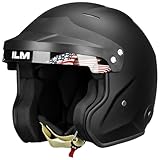
- Snell SA2025: Meets Snell SA2025 safety standards, this auto racing helmet which has Fiber Reinforce Plastic(GFRP) composite shell is not only lightweight, but also provides better protection during races or daily training.
- Compatible with HANS/HNR M6 Threaded Inserts(not included), convenient for you to install Head&Neck Support devices to protect your head and neck from getting hurt when participating in auto racing sports.
- Sunshade Strap: The 40MM sunshade film on the top of the helmet helps to reduce giddiness and dizziness caused by the sun/light while doing car racing acclivities. You can remove or install it as needed.
- Ventilation: This open face auto racing helmet has vents at the front and back to quickly dissipate excess heat for a cooler, more comfortable racing experience. Fire retardant liner further enhances comfort and safety.
- IMPORTANT: This helmet is manufactured for automobile racing and is not designed for use on public streets, roads or highways. This helmet meets all requirements of DOT and FMVSS 218 Federal Motor Vehicle Safety Standard.
Try-on procedure
- Measure and try it as you will wear it. The FIA advises wearing a balaclava while measuring head circumference or trying a helmet. Follow the helmet maker’s sizing instructions; do not select a size from a chart alone.
- Try the exact model. If possible, compare several models in person. Different helmet shapes, padding, and fit systems can feel different even when the size marking is the same.
- Check stability and pressure. Seat the helmet as directed by its maker. It should feel snug rather than excessively tight, should not move around, and should not create pressure points. Do not try to solve a poor fit by simply choosing a size that feels loose.
- Secure the chin strap. Adjust and fasten it according to the manufacturer’s instructions. A comfortable shell fit does not replace a correctly secured strap.
- Consider prolonged wear. Pay attention to ventilation and comfort, not just the first impression. Snell’s 2025 standard foreword emphasizes wearability: “A helmet that is not worn won’t protect anyone.”
If a helmet remains uncomfortable or unstable after following the manufacturer’s fitting guidance, try a different model rather than treating discomfort as something to endure. A standard certifies performance against its requirements; it cannot determine whether a particular helmet fits your head.
Consider the whole setup during a try-on. If you will wear a balaclava, use it; if you plan to use an FHR, confirm that the helmet’s anchor points and the restraint work together. Avoid choosing a helmet that feels acceptable only when worn differently from how you will use it on track. A stable, comfortable fit is a practical requirement for sustained driving, not a cosmetic preference.
Choose coverage for the car and event
A full-face helmet covers the face, chin, and jaw. An open-face helmet is lighter and better ventilated, according to FIA guidance, but leaves the face less covered. Which type is suitable depends on the event rules and the vehicle’s cockpit configuration; do not assume an open-face helmet is accepted just because the car has a roof.
The FIA says a full-face helmet may be required depending on event rules, generally in open-cockpit categories. Under its guidance, a full-face visor must be fully closed when racing in an open-cockpit vehicle; closing it is strongly recommended in a closed-cockpit vehicle. These are FIA-guidance statements, not a universal description of every track-day rule. Follow the rulebook for your event.
Do these 3 things before closing this tab:
1Clear out junk files and repair common Windows errors2Scan for outdated or missing drivers - takes under a minute3Repair Windows errors before they cause bigger problemsWhen comparing coverage, make the organizer’s requirement the gate. If both styles are allowed, weigh the additional face, chin, and jaw coverage of a full-face design against the lower weight and greater ventilation associated with open-face designs. Then make sure the chosen style works with your fit, visibility, and equipment needs.
Compare comfort and practical features
Once acceptance, certification, fit, and coverage are settled, assess the features that affect sustained use. Avoid treating a single feature—such as material, price, or a ventilation claim—as a stand-in for overall suitability.
| Feature | What to assess | Decision point |
|---|---|---|
| Weight | The FIA notes that greater helmet weight can contribute to neck fatigue. | Compare the models that meet the rules and fit you; comfort during prolonged wear matters more than a material claim. |
| Ventilation | Ventilation can improve comfort and help prevent visor fogging, according to FIA guidance. Snell also emphasizes ventilation during prolonged use. | Consider the car and conditions in which you will drive, and assess how the helmet feels when worn as intended. |
| Visibility and visor | Look for an unobstructed view and a visor appropriate to expected light. | Check the view in your driving position and confirm that the visor is approved for the exact helmet model. |
| FHR compatibility | An FHR restrains the head during frontal or angled-frontal impact. Its tethers connect to anchor points on both sides of the helmet. | Confirm that the helmet has suitable anchor points and is compatible with the restraint you will use. |
| Communications and accessories | Radio speakers, transducers, and other additions may be subject to event rules or manufacturer restrictions. | Check both before adding equipment; FIA communications restrictions apply to FIA International Sporting Calendar competitions and should not be generalized to every track day. |
Weight, airflow, and visibility are most useful to compare after you have narrowed the choice to accepted helmets that fit. Greater weight can contribute to neck fatigue, while ventilation may help comfort and reduce visor fogging. No single figure or feature makes one helmet suitable for everyone: consider how it feels during prolonged wear and whether you can see clearly from your driving position.
Check the visor and accessories as part of the system
The FIA says a visor installed on an FIA-approved helmet must be approved with that helmet. A replacement that is not approved for the model may not provide the same safety level. If the visor is damaged or worn, use a manufacturer-approved replacement for the exact helmet rather than assuming that a visor with a similar shape or attachment will do.
PC Slower Than It Used to Be?
A free scan shows the junk files, broken settings and background clutter dragging Windows down - then fixes them in one click.Free scan · Windows 10 & 11Crashes, No Sound, or Screen Glitches?
Random freezes, missing sound and display glitches usually trace back to one bad driver. Find and replace yours safely.Free scan · under a minuteRank #3
- Snell SA2025 Certified, made of Fiber Reinforce Plastic(FRP) shell, Double D-ring equipped, more lightweight and higher safety.
- Compatible with HANS/HNR M6 Threaded Inserts(not included), convenient for you to install Head&Neck Support devices to protect head and neck from getting hurt in auto racing sports.
- 40 MM sunshade film on the top of the visor helps to reduce giddiness caused by the sun/light while doing car racing acclivities.
- High density Expanded Polystyrene (EPS) fire retardant inner pads enhances comfort and safety.
- Tear-off posts button on the visor allows to install tear-off posts on the visor so as to ensure a clear view.
Unauthorized accessories or modifications can compromise safety performance, according to FIA guidance. Before installing speakers, cameras, mounts, or other equipment—or painting or otherwise altering a helmet—check the helmet maker’s instructions and your event rules. An accessory that works physically may still be disallowed or inappropriate for the helmet.
FHR compatibility is not just a matter of having metal terminals on the helmet. The FIA guidance describes the tether connection to anchor points on both sides as part of how the restraint works efficiently. Confirm that the helmet and the particular restraint are a compatible combination, and check whether the event requires an FHR or specifies any related equipment. If you use communications gear, confirm that the installation is allowed rather than modifying the helmet on your own.
Inspect, clean, and store the helmet carefully
Routine care helps you notice damage or deterioration before the next event. Follow the helmet manufacturer’s cleaning directions, and protect the helmet from impacts and falls when it is not in use. A case can help with storage and transport, but it does not replace inspection or careful handling.
Pre-use inspection checklist
- Check the strap and its condition.
- Inspect the liner and the helmet shell for cracks or other visible damage.
- Check FHR terminals, bolts, and accessory attachments.
- Inspect the visor and its fastenings.
- Confirm that installed accessories remain secure and permitted.
The FIA guideline advises keeping a helmet dry and out of prolonged direct sun or humid environments. It recommends mild soap and water for hand-washing the interior fit pad and cautions against heat guns or air dryers, because heat may damage energy-absorbing foam. The helmet maker’s own care instructions should guide cleaning.
After a fall or other impact
Inspect the helmet after any impact, including a free fall. Seek qualified help to determine whether it should be replaced; do not rely on a universal replacement interval or on the absence of obvious exterior damage. The right decision depends on the helmet and the incident, and the maker’s guidance is relevant.
Independent reader supportYour contribution helps us test, update, and keep practical guides available for everyone.A practical buying order
Use this sequence to avoid spending time comparing helmets that your event will not accept:
- Get the event’s current requirements. Confirm accepted standard and year, helmet style, FHR requirements, and accessory restrictions with the organizer.
- Shortlist exact certified models. Check the model’s certification or homologation rather than relying on a brand-level claim.
- Try for fit and wearability. Use the maker’s sizing advice, wear a balaclava when measuring or trying the helmet, and assess stability, pressure, strap fit, ventilation, and comfort.
- Match coverage to rules and cockpit. Select full-face or open-face only after confirming what is permitted for the event and appropriate to the car.
- Check the complete equipment setup. Confirm visor approval, FHR anchor compatibility, and permission for any communications gear or accessories.
- Plan for care. Follow cleaning and storage directions, inspect the helmet regularly, and know whom to contact after an impact.
For a sensible budget, begin with the event’s acceptance rules and the models that fit, rather than assuming that a more expensive shell or material claim means a higher certification level. No specific price or model can be recommended for every driver. Once a suitable option is found, a protective helmet case is a useful supporting purchase because it can help prevent impacts and falls during storage and transport.
The useful comparison is not “which helmet has the most impressive specification?” It is “which accepted helmet fits securely, provides the required coverage, and works with the equipment and conditions of this event?” No single model can be named as best for every driver on the evidence here; organizer acceptance and individual fit are decisive.
Free tools Windows power users keep installed
One-click scans. No signup required.
Rank #4

- Snell SA2025 Certified IMPORTANT: This is an auto racing helmet certified to Snell SA2025 standards and is not intended for motorcycle road use or FMVSS 218 compliance.
- Lightweight fiberglass composite shell construction
- Fire retardant padded interior and airflow venting for comfort
- Protective, soft carry bag included
- 3mm Anti-scratch, flame resistant shield with tear off posts
Frequently Asked Questions
What helmet rating do I need for a track day?
There is no rating that is accepted at every track day. Ask your organizer which standards and years it accepts, then verify the exact helmet model’s certification. Snell SA2025 is a relevant automotive-racing standard, but it is not an automatic pass for every event. FIA standards apply where the event uses FIA rules, and Snell certification and FIA homologation are distinct systems.
How should a racing helmet fit?
It should sit snugly, remain stable without moving around, and avoid painful pressure points. Wear a balaclava when measuring or trying it, as the FIA advises, and follow the maker’s sizing and strap instructions. If possible, try several exact models; a size label alone cannot tell you whether a helmet fits your head.
Do I need a full-face helmet for track days?
It depends on the event rules and the car. FIA guidance says a full-face helmet may be required, generally in open-cockpit categories. A full-face design covers the face, chin, and jaw; an open-face design is lighter and better ventilated but provides less face coverage. Confirm what your organizer permits.
Does a racing helmet expire after a set number of years?
Do not assume a universal expiration period. The FIA guide says helmets have no validity date in its context, while FIA standards may be updated and competitions may define acceptance dates. Track-day organizers can set separate requirements, so check the current rule for your event and helmet.
Can I use a replacement visor or add a camera, speakers, or a mount?
Check the manufacturer’s instructions and event rules first. The FIA says a visor for an FIA-approved helmet must be approved with that helmet, and an unapproved replacement may not provide the same safety level. Unauthorized accessories or modifications can compromise safety performance or violate event rules.
What should I do if my helmet is dropped or takes an impact?
Inspect it after any impact, including a free fall, and seek qualified help to determine whether it should be replaced. Do not rely only on the absence of visible shell damage or on a universal replacement rule. Follow the helmet maker’s guidance.
Does a higher-priced helmet provide a higher Snell certification?
Not by itself. Snell’s SA2025 standard does not prescribe helmet materials or rank certified products. Verify the exact model’s certification and choose based on event acceptance, fit, required coverage, and equipment compatibility rather than price or a material claim alone.
The Bottom Line
Check your organizer’s current requirements first, then verify the exact model and prioritize a secure, comfortable fit. Choose the coverage and accessories your event permits, confirm FHR and visor compatibility, and care for the helmet according to its maker’s instructions.
Quick Recap
Product prices and availability are accurate as of the date/time indicated and are subject to change. Any price and availability information displayed on Amazon at the time of purchase will apply.

