What’s actually slowing this PC down?
Pick the symptom - the matching free tool is one click away.
Delhi Press launched Sarita in 1945. In the 1950s, the Hindi monthly brought stories, advice, political discussion, domestic features and reader participation into one large, family-oriented magazine. Historian Aakriti Mandhwani argues that this mix helped make reading less exclusively a form of national or literary service and more an expression of everyday interests—and, in that sense, offered a broader idea of citizenship. That is a historical interpretation of the magazine’s editorial choices, not a claim that it changed legal citizenship or spoke for every Indian reader.
A magazine designed to be shared—and read in different ways
In the 1950s, an issue of Sarita cost one rupee, averaged more than 100 pages and sometimes ran to about 200, according to Mandhwani’s account of the period. It became one of the widely read Hindi monthlies of the decade. Its scale and variety made it suited to more than one kind of reading: a household could turn to different sections for different interests, rather than follow a single literary or political thread. Mandhwani’s 2024 account in Scroll.in draws on available issues from 1948–1958 and some from 1960.


A mixed menu of reading
Issues moved among short stories, one-act plays, nonfiction, advice on household problems, serialized novels, readers’ letters, film and book reviews, and a prize crossword. Other features included photography, cooking, knitting, children’s literature, a pen-pal column introduced in December 1949, and an agony-aunt feature introduced in November 1951. The form encouraged readers to move between entertainment, practical information, correspondence and public questions within the same publication.
One title, multiple household readers
Mandhwani describes Sarita as packaging wholesome, educational family reading while also addressing people’s differing desires according to age, gender and marital status. Its variety did not presume that a household had one uniform reader. The book introduction also argues that women demanded the magazine and made creative space within it, expanding women’s access to reading. This describes the magazine’s structure and the evidence available; it does not mean all women read it alike or had equal access to print.
#1 Best Overall
From national service to personal interests
Earlier widely read Hindi journals such as Sarasvatī, Mādhurī and Chā̃d also sought broad readerships. Mandhwani contrasts their emphasis on literary work and women’s service to Hindi and the nation with Sarita’s stronger visibility for individual reading desires and everyday interests. The shift was not a rejection of serious writing; it made room alongside it for domestic advice, popular entertainment and readers’ own contributions.
Politics without a single nationalist script
Sarita did not simply withdraw from public life. It ran a recurring section on the Indian Constitution and addressed issues including language policy and the Nehru government’s position on communism. At the same time, Mandhwani notes that nationalist poetry was absent and idealized narratives of nation-building were sparse. The magazine’s political engagement therefore took a different shape from straightforward celebration of national service.
Rank #2
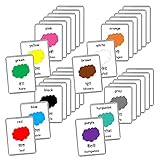
- Includes thick laminated flash cards.
- Waterproof and tear resistant cards.
- 22 Hindi-English Bilingual Sets to choose from.
- Large size cards - Each flash card is 5.5inX4.5in in size.
- Each flash card set comes in a beautiful eco-friendly jute/burlap pouch for easy storage.
Hindi, Hindustani and who belongs
In a March 1958 editorial, editor Vishwa Nath wrote: “Hindi – or should we call it Hindustani – because it includes both Hindi and Urdu . . .” Mandhwani reads this preference for a language that included Hindi and Urdu as a challenge to a homogenized idea of national language. The excerpt supplies only this fragment, which ends in an ellipsis; it should not be treated as a complete statement of the editorial’s argument.
Room to question political power
Mandhwani also describes cartoons criticizing Nehru and Congress tactics, alongside an article attacking corruption. These examples support her interpretation of citizenship as more than dutiful service: it could include readers’ capacity to question the state and dominant national narratives. They show editorial choices, not that every reader agreed with them or that Sarita had a formal political program.
Recommended Free Tools
What circulation figures do—and do not—show
Mandhwani reports figures from Audit Bureau of Circulations archives to trace the magazine’s growth and put its reach in context. Her 2019 article records 10,901 monthly subscribers in 1952 and 29,002 in 1960. It also reports average circulation of 45,590 for Māyā and 44,746 for Manohar Kahāniyā in 1950–1955, so Sarita should not be described as the period’s best-selling Hindi magazine on this evidence. The latest Sarita figure Mandhwani says she could access was an average monthly circulation of 98,622 in 2005—not a current readership figure. Her 2019 article in Modern Asian Studies gives the archival scope and qualifications behind these numbers.
What “redefined the Indian citizen” means
Mandhwani’s phrase describes a cultural argument, not a legal change. Sarita made space for a reader who might enjoy fiction, seek practical advice, write a letter, discuss public affairs or question political authority—and who need not define reading only as service to the nation. Its family format also reflected differences within households, including gendered expectations and women’s demands for access and creative participation.
The evidence supports an account of one influential magazine’s editorial possibilities, not a claim that it transformed every reader or represented the full range of post-independence India. For a sustained study of the magazine and its publishing context, see Mandhwani’s Everyday Reading: Middlebrow Magazines and Book Publishing in Post-Independence India, whose first chapter treats Sarita. University of Massachusetts Press.
Quick Recap
Product prices and availability are accurate as of the date/time indicated and are subject to change. Any price and availability information displayed on Amazon at the time of purchase will apply.
Free tools Windows power users keep installed
One-click scans. No signup required.




