The Affair of the Diamond Necklace did not cause the French Revolution, but it helped make the monarchy look wasteful, compromised and untrustworthy. In 1785, a fraudster used Queen Marie-Antoinette’s name to persuade Cardinal Rohan to arrange the secret purchase of an extravagant necklace. The queen knew nothing about the deal; when the fraud became public, however, her reputation—and public confidence in royal authority—suffered.
What was the Affair of the Diamond Necklace?
The Affair of the Diamond Necklace was an elaborate fraud involving a necklace that jewelers Charles Auguste Böhmer and Paul Bassenge had struggled to sell. Their asking price had been reduced to 1.6 million livres, according to the Château de Versailles. The jewelers’ own 1786 account also gives the figure as 1,600,000 livres, but it is a participant document published after the scandal, not an independent court finding. Château de Versailles; Böhmer and Bassenge, 1786 memorandum.


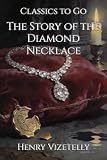
Versailles describes the necklace as containing nearly 650 diamonds and almost 2,800 carats. The Metropolitan Museum of Art’s collection record, by contrast, describes a design of 540 diamonds. The sources do not explain the difference, so the figures should not be treated as interchangeable. Château de Versailles; The Metropolitan Museum of Art.
How did the fraud work?
Jeanne de la Motte fabricated the queen’s interest
Jeanne de la Motte claimed to be close to Marie-Antoinette and told Cardinal Louis de Rohan that the queen wanted the necklace but needed to buy it secretly. Rohan hoped to regain royal favor. To reinforce the story, de la Motte arranged a nighttime meeting in the Queen’s Grove at Versailles on 11 August 1784. Rohan mistook a woman presented there for the queen. Château de Versailles.
What’s actually slowing this PC down?
Pick the symptom - the matching free tool is one click away.
#1 Best Overall
Rohan acted as intermediary
In early 1785, Rohan handled the supposed purchase. The jewelers’ 1786 memorandum says they believed the queen would buy the necklace and that Rohan showed them proposals bearing her name. That is the jewelers’ account of events, not a verbatim court judgment. Versailles says they handed the necklace to Rohan on 1 February 1785; he passed it to de la Motte and her accomplices. Böhmer and Bassenge, 1786 memorandum; Château de Versailles.
The missing payment exposed the scheme
The fraud came to light when the jewelers sought payment. Versailles records Rohan’s arrest at Versailles on 15 August 1785 and his trial before the Parlement de Paris in May 1786, where he was declared innocent. De la Motte and accomplices were also arrested and tried; de la Motte was branded with a V for “Voleuse” (“thief”), according to Versailles. The queen had not known about the transaction, but her name had been drawn into a public scandal. Château de Versailles.
Was Marie-Antoinette involved?
No. The fraud relied on the false claim that Marie-Antoinette wanted the necklace. Versailles states that she had rejected it and had no knowledge of the scheme. Her name was central to the deception, but that does not mean she was party to it. Château de Versailles.
That distinction did little to protect her public image. The Metropolitan Museum says public opinion turned against the queen and that the affair brought scandal on the royal family in the years before the Revolution. The accusation and its public circulation mattered politically even though the queen was not responsible for the fraud. The Metropolitan Museum of Art.
Recommended Free Tools
How did the scandal contribute to the French Revolution?
The affair contributed to the monarchy’s discredit; it was not a direct or sufficient cause of the Revolution. It gave critics a vivid story in which royal luxury, court privilege and unreliable justice could be discussed through the queen’s name. Strasbourg City Museums places the affair’s repercussions amid France’s debt crisis, public agitation, parliamentary opposition, royal spending and disputes over privilege and the subordination of justice. These pressures were broader than the necklace case itself. Strasbourg City Museums.
The case also exposed a gap between formal outcomes and public perception. Rohan was acquitted, yet the scandal still tarnished Marie-Antoinette’s reputation. The affair’s political force lay in the damage it did to confidence in the monarchy, not in proving that the queen had bought the necklace or in triggering revolution on its own. Château de Versailles; The Metropolitan Museum of Art.
Independent reader supportYour contribution helps us test, update, and keep practical guides available for everyone.What happened to the Queen’s necklace?
The original necklace disappeared and is believed to have been taken apart. The Met’s collection record says de la Motte’s husband was caught selling some of the diamonds in London shortly afterward, but the complete fate of the jewels is not established there. The Metropolitan Museum of Art.
A surviving image is not the necklace itself. The Met holds a circa-1785 etching associated with Nicolas Antoine Taunay, titled Répresentation Exacte du Grand Collier en Brillants des Srs. Boëhmer et Bassenge. It depicts the necklace; the museum notes that reproductions based on the print have been made. The Metropolitan Museum of Art.
Quick Recap
Product prices and availability are accurate as of the date/time indicated and are subject to change. Any price and availability information displayed on Amazon at the time of purchase will apply.




