For many healthy whole-blood donors, the immediate recovery period is short: rest at the donation site, have a drink and snack, and return to ordinary activities when you feel well. But replacing the fluid and cells removed during donation takes longer. The American Red Cross says fluid is replaced within 24 hours, while red-cell recovery can take about five weeks depending on nutrition and iron status; Canadian Blood Services says red cells can take months to replenish. These are different component estimates, not a guarantee that every donor will feel normal on a set schedule.
What “recovery” means after donating blood
There is no single clock for recovery because your body restores different parts of a whole-blood donation at different rates. You may feel ready to leave the donation center well before all the donated components have been replenished.
| What is recovering | General timeline in official guidance | What the estimate means |
|---|---|---|
| Fluid | Within 24 hours, according to American Red Cross educational material | The Red Cross says temporarily lost fluid is replaced within 24 hours, or sooner if you drink extra fluids. This is not a timeline for replacing all blood components. |
| Plasma | Within hours, according to Canadian Blood Services | Plasma is the liquid portion of blood. The estimate describes component replacement, not a promise about how quickly an individual feels completely normal. |
| Platelets | Within days, according to Canadian Blood Services | This is a component-specific estimate from the organization’s donor guidance. |
| Red blood cells | About five weeks in American Red Cross educational material; Canadian Blood Services says replenishment can take months | The Red Cross estimate depends on nutrition and iron status. The sources give different general descriptions, so neither should be treated as a universal personal deadline. |
| Energy or exercise tolerance | Varies by person and activity | The reviewed official guidance does not set a universal time when every donor feels fully back to normal. The Red Cross notes that some high-performance competitive athletes may notice a marginal decrease in exercise tolerance for about one week. |
Canadian Blood Services summarizes the distinction this way: “The plasma portion of your donation is replaced within hours and the platelet portion within days. Red blood cells can take months to replenish.” The statement is from its donor guidance. The Red Cross’s fluid and red-cell estimates appear in its At-A-Glance: PHLEBOTOMY educational material.
These figures are not contradictory measures of one identical process. “Fluid,” “plasma,” and red cells refer to different parts of the donation, and the sources describe their estimates in different ways. A statement that fluid is replaced within 24 hours does not mean that all donated blood has been replaced by then. Likewise, a component timeline does not tell you exactly when you personally will feel energetic or comfortable enough for a particular task.
Do these 3 things before closing this tab:
1Fix the driver behind crashes, sound loss and screen glitches2Clear out junk files and repair common Windows errors3Scan for outdated or missing drivers - takes under a minute#1 Best Overall

- Iron Support Supplement: One 180 count bottle of Nature Made Iron 65 mg (325 mg Ferrous Sulfate)(1) Tablets—a 180-day supply
- Mineral Iron Benefits: Nature Made Iron supplement 65 mg (Ferrous Sulfate 325 mg)(1) is an Iron deficiency supplement that is vital for red blood cell formation and supports healthy cognitive function
- Iron Deficiency Supplement: This adult Iron supplement provides a dietary supplement for men and women who are looking for Iron deficiency help; including women in their reproductive years
- How to Take: Adults take one Nature Made 65 mg Iron tablet daily with water and a meal to aid absorption
- High-Quality Minerals: These gluten free Nature Made Iron mineral supplements have no synthetic FD&C dyes and no artificial flavors
It helps to think of recovery in two separate ways: how you feel and what your body is replenishing. The first determines whether you are ready for a normal day, workout, or other activity. The second can continue after you have left the center and resumed your routine. The official guidance reviewed here does not promise that every donor will feel fully back to normal after a fixed number of hours or days.
What to do in the first hours and on donation day
Before leaving the donation site
Stay in the refreshment area for the observation and recovery period, have the offered snack and drink, and tell staff promptly if you feel faint, dizzy, weak, or otherwise unwell. Canadian Blood Services encourages donors to spend about 15 minutes in the refreshment area; the American Red Cross describes a recovery period of about 10–15 minutes. Follow the procedure and instructions at the center where you donated.
That brief period is a chance to rest and let staff know if you are not feeling well before you leave. Do not rush out simply because the collection itself is over. If symptoms begin or continue while you are still at the center, tell staff rather than trying to manage them on your own.
For the rest of the day
- Drink extra non-alcoholic fluids and eat normally. The Red Cross advises extra fluids; Canadian Blood Services advises fluids through the rest of the day.
- Avoid alcohol for the period specified by your collecting service. The Red Cross advises avoiding it for 24 hours, while Canadian Blood Services advises avoiding it on donation day.
- Take it easy if you feel tired, lightheaded, or weak. Resume ordinary activity only when you feel well enough to do so safely.
The instructions are simple, but they serve different purposes: the refreshment break gives you time to recover at the center, while drinking fluids and eating normally support aftercare once you are home. The Red Cross says temporarily lost fluid is replaced within 24 hours, or sooner if you drink extra fluids. That estimate should not be used to conclude that strenuous activity or alcohol is automatically appropriate as soon as you feel thirsty less often; follow the collection service’s specific aftercare directions.
Free tools Windows power users keep installed
One-click scans. No signup required.
There is a small difference in the organizations’ alcohol advice: the Red Cross specifies 24 hours, and Canadian Blood Services says to avoid alcohol on donation day. Because the wording is not identical, use the advice from the organization that collected your donation rather than combining the two into a new rule.
Rank #2

- A NECESSARY COMPONENT OF HEMOGLOBIN Iron is a necessary component of hemoglobin; the oxygen carrier responsible for delivering oxygen to the cells; including muscle cells (1); Nature’s Bounty Iron helps promote normal red blood cell production (1)
- HELPS MAINTAIN ENERGY UTILIZATION (1) Iron supports energy utilization; helping you to feel your best (1)
- SUPPORTS WOMEN’S HEALTH (1) Everyone needs Iron; but pregnancy and menstruation may increase Iron requirements; Often recommended as a mineral supplement for women; Nature’s Bounty Iron offers the daily nutritional support you need (1)
- NECESSARY FOR OVERALL HEALTH Taking a daily Iron supplement with Ferrus Sulfate helps provide your body with the iron it needs for daily functioning (1)
- FROM THE TRUSTED WELLNESS EXPERTS Nature’s Bounty Iron is a product of 50 years of dedication to quality; consistency and scientific research to make vitamins and nutritional supplements of unrivaled excellence
Exercise and lifting
Restrictions differ slightly between blood services. Canadian Blood Services advises avoiding strenuous activity for six to eight hours and heavy lifting for 24 hours. The Red Cross advises avoiding heavy exercise and lifting for the rest of the day. Use the instructions from the service that collected your blood, and wait longer if symptoms have not resolved. For high-performance competitive athletes, Red Cross guidance says exercise tolerance may be marginally lower for about one week; it advises against donating on the same day as a competition or strenuous practice.
In practical terms, an ordinary routine and a hard workout are not the same decision. The guidance allows a return to ordinary activity when you feel well, but it sets a separate waiting period for strenuous exercise and heavy lifting. If you are deciding whether to lift something heavy, train intensely, or take part in practice, use the specific time restriction from your blood service. Feeling fine early does not cancel that service’s advice.
For competitive athletes, the approximately one-week note is an estimate of a possible marginal change in exercise tolerance, not a guarantee that every athlete will notice a difference or a universal restriction on all exercise. The clearer timing advice is not to donate on the same day as a competition or strenuous practice. If you still feel lightheaded or weak after the stated waiting period, wait longer and do not treat the clock alone as proof that you are ready.
Recommended Free Tools
Why you may feel tired, dizzy, or faint
Some donors feel lightheaded or weak around the time of donation, and the collected blood includes both fluid and red cells. A short observation period, a drink, a snack, and rest are part of standard aftercare, but the available guidance does not establish a fixed duration or frequency for post-donation symptoms. If you feel faint at the center, tell staff and sit or lie down rather than trying to walk it off.
Feeling tired or dizzy does not have one guaranteed recovery timeline in the official guidance. The estimates for fluid, plasma, platelets, and red cells describe the replenishment of components; they do not say that a particular symptom will last for the same length of time. Pay attention to how you feel, rest if needed, and avoid activities such as driving or strenuous exercise while you remain faint or weak.
Rank #3

- Well-Absorbed Iron: Provides 25 mg of elemental iron per capsule in a non-constipating, well-absorbed form as iron bisglycinate
- Symptoms of Low Iron: Nearly 1 in 3 adults in the U.S. may have low iron levels, which can manifest as weakness, fatigue, shortness of breath, dizziness, drowsiness, irritability, infrequent menstruation, and more
- Blood Support: Dietary iron is essential for the formation of new red blood cells, especially important for women of childbearing age, after blood loss from surgery/injury, or for those who follow vegan/vegetarian diets*
- NSF Certified for Sport: Tested for compliance with label claims and to ensure the absence of nearly 300 substances banned by many major athletic organizations
- Trusted: Thorne is trusted by 100+ professional sports teams and the #1 most recommended clinical brand by consumers and health-care practitioners (Based on a 2026 independent survey of US supplement consumers and health-care practitioners)
If faintness occurs while driving, pull over safely and do not start driving again until you have fully recovered. Canadian Blood Services advises consulting a health care provider if fainting symptoms persist, worsen, or concern you. If you are still at the donation site, alert staff before leaving.
Protect the needle site and know when to seek advice
If the site bleeds
Apply pressure to the needle site and raise your arm, following the Red Cross’s guidance. Use the written aftercare instructions provided by your collection service, and contact that service if you have a problem.
Quick wins for a faster PC:
Fix the driver behind crashes, sound loss and screen glitchesFind Drivers →Clear out junk files and repair common Windows errorsFree Scan →If arm symptoms worsen
Contact a health care provider about worsening arm pain, tingling or numbness, or a bruise that develops increasing pain, swelling, tenderness, redness, or fever. Canadian Blood Services identifies these as reasons to seek medical advice. You can also report an adverse reaction to the collection service.
The key distinction is worsening or concerning symptoms, rather than assuming every mark or sensation has the same significance. If a bruise is becoming increasingly painful, swollen, tender, or red, or you develop a fever, seek medical advice. Follow the center’s written directions and contact the service that collected your blood if you are unsure how to handle a problem.
Iron, food, and repeated donations
Donating whole blood removes iron along with blood volume. Iron status and nutrition affect how quickly red cells are restored, so iron-rich foods can be part of sensible aftercare. Canadian Blood Services and the Red Cross advise frequent donors to discuss iron supplements with a health care provider; Canadian Blood Services also recommends asking about checking iron stores. Supplements are not a routine recommendation for every donor, because whether they are appropriate depends on the individual.
Rank #4
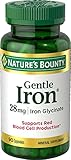
- IRON SUPPLEMENT WITH VITAMIN C FOR WOMEN & MEN: gentle on your stomach, with essential Vitamin C for optimal iron absorption (1)
- SUPPORTS RED BLOOD CELL PRODUCTION (1): Helps maintain cellular energy utilization (1)
- FOLIC ACID & VITAMIN B-12 FOR WELLNESS (1): Includes Folic Acid and Vitamin B-12 to support healthy blood function and overall wellness in women and adults (1)
- NON-GMO & GLUTEN-FREE CAPSULES: Made with gelatin capsules, free from gluten
- TRUSTED BRAND WITH QUALITY STANDARDS: Nature's Bounty offers wellness products that are backed by science and made with great ingredients; committed to quality and potency in every bottle
This is particularly relevant when thinking about repeated donations: the recovery timeline for one donation does not by itself tell you whether your iron stores are adequate over time. If you donate frequently, ask a health care provider whether checking iron stores or taking an iron supplement is appropriate for you. Do not assume that an iron tablet is required after every donation or start one just because red-cell replenishment can take weeks or longer.
What’s actually slowing this PC down?
Pick the symptom - the matching free tool is one click away.
Iron-rich foods are a reasonable part of the advice in the official guidance, but they are not a substitute for individualized medical guidance when you have a concern about iron. Nutrition and iron status are among the factors the Red Cross names in its estimate of about five weeks for red-cell replacement. Canadian Blood Services describes red-cell replenishment as potentially taking months. Those general statements are a reason to avoid treating one timetable as universal, not a diagnosis of low iron in any individual donor.
Independent reader supportYour contribution helps us test, update, and keep practical guides available for everyone.Whole blood is not the same as plasma or platelet donation
The timelines and precautions here primarily concern whole-blood donation. Plasma and platelet donation procedures differ, so do not automatically apply whole-blood recovery estimates or restrictions to those procedures. Follow the specific post-donation instructions from the service that collected your donation.
Although Canadian Blood Services gives component timelines for plasma, platelets, and red cells, those figures are not a full set of aftercare instructions for every donation procedure. The practical guidance in this article—such as the specific activity restrictions—should be understood as applying to whole-blood donation unless your collection service tells you otherwise.
Frequently Asked Questions
How long after donating blood can I work out?
Follow the instructions from the service that collected your blood. Canadian Blood Services advises avoiding strenuous activity for six to eight hours and heavy lifting for 24 hours; the Red Cross advises avoiding heavy exercise and lifting for the rest of the day. Wait longer if you still feel lightheaded or weak. The Red Cross also notes that some high-performance competitive athletes may notice marginally lower exercise tolerance for about a week and advises against donating on the same day as a competition or strenuous practice.
Best Value
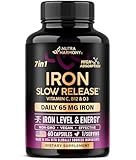
- High-Potency Iron 65mg — powerful daily support in one easy capsule. High-strength Ferrous Sulfate formula helps maintain healthy Iron levels to support steady energy and everyday vitality.*
- Slow-Release Iron Technology — advanced delayed-release technology allows Iron to be released gradually in the intestines rather than the stomach. This helps improve tolerance and reduces common digestive discomfort, including heaviness and constipation.
- Enhanced Absorption with Vitamin C — iron supplement formulated with Vitamin C to support Iron absorption and utilization in the body. Iron supplement with Vtamin C combination helps maximize bioavailability & overall effectiveness of each serving.
- Carefully Selected Nutrient Blend — includes synergistic nutrients such as Vitamin B12 and Vitamin D3 to support overall well-being and complement Iron’s role in daily nutritional balance. Each ingredient is chosen to work together for better nutrient efficiency and absorption support.
- Supports Healthy Iron Levels — designed to help maintain optimal iron levels in the body and support daily performance, energy, and vitality.
How long does it take to replace the blood I donated?
There is no single replacement time for all blood components. The Red Cross says temporarily lost fluid is replaced within 24 hours, or sooner if you drink extra fluids. Canadian Blood Services says plasma is replaced within hours, platelets within days, and red cells can take months. A Red Cross education sheet estimates about five weeks for red cells, depending on nutrition and iron status. These are different component estimates, not a guarantee about when you will feel fully normal.
Why do I feel tired or dizzy after giving blood?
Some donors feel lightheaded or weak around the time of donation, but the official guidance does not give a universal duration for these symptoms. Rest, have a drink and snack, and tell staff if you are still at the center. If you feel faint while driving, pull over safely and do not resume until fully recovered. Seek medical advice if faintness persists, worsens, or concerns you.
When should I get medical advice after donating blood?
Canadian Blood Services advises seeking medical advice for persistent, worsening, or concerning faintness; worsening arm pain, tingling, or numbness; or a bruise with increasing pain, swelling, tenderness, redness, or fever. For bleeding at the needle site, apply pressure and raise your arm, following the Red Cross guidance, and contact your collection service if there is a problem.
Should I take iron after donating blood?
Not necessarily. Donation removes iron, and frequent donors can ask a health care provider whether iron testing or supplements are appropriate. The Red Cross and Canadian Blood Services also mention iron-rich foods. The guidance does not recommend an iron supplement for every donor.
The Bottom Line
For many donors, the on-site rest period is short, but feeling ready to leave is not the same as replacing every component of donated blood. Drink fluids, eat normally, follow your collection service’s limits on alcohol, strenuous exercise, and lifting, and wait longer if you feel unwell. Fluid and red-cell recovery have different timelines, and persistent or worsening symptoms deserve medical advice.
Quick Recap
Product prices and availability are accurate as of the date/time indicated and are subject to change. Any price and availability information displayed on Amazon at the time of purchase will apply.

