Recommended Free Tools
Babur’s daughter Gulbadan Begum travelled to Mecca with a party of Mughal royal women in the mid-1570s. Their journey began overland from Fatehpur-Sikri, continued to the port of Surat, and crossed the sea to the Hijaz. Gulbadan reportedly spent three years and six months there, performed the hajj four times, and returned to India after a shipwreck near Aden. The sources disagree about some dates and details, and no account of this pilgrimage in Gulbadan’s own surviving writing is known.
Who was Gulbadan Begum?
Gulbadan Begum (c. 1522–23–1603) was Babur’s daughter, Humayun’s half-sister and Akbar’s aunt. She was also the author of the Humayun-nama, a history of Humayun’s reign. By the time of the pilgrimage, she was a senior member of the Mughal dynasty. Her presence made the expedition a journey by a royal family party, not a solitary pilgrimage.
| # | Preview | Product | Price | |
|---|---|---|---|---|
| 1 |

|
Gulbadan's Chronicle: A Vagabond Princess in the Mughal Empire | $40.00 | Buy on Amazon |
| 2 |
|
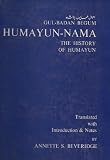
Humayun Nama | $34.00 | Buy on Amazon |
| 3 |

|
Vagabond Princess: The Great Adventures of Gulbadan | Buy on Amazon | |
| 4 |

|
Heroines of History : Stories of India's Princesses | $9.99 | Buy on Amazon |
Who travelled with her?
The surviving accounts name several women, though the lists and some family identifications vary. They include Salima Sultan Begum, Akbar’s wife; Sultanam Begum; Gulnar Aghacha, associated with Babur’s household; and Umm-Kulsum, identified as Gulbadan’s granddaughter. Beveridge’s translation also names two daughters of Kamran and women who had served Humayun. Attendants accompanied the party, and the named women should not be treated as a complete passenger list.
The journey had a substantial supporting retinue. Ruby Lal’s modern account describes a designated commander, male escorts, soldiers, provisions and money for charitable distributions. These details are a historian’s reconstruction from court histories, not testimony in a travel diary by Gulbadan.
Quick wins for a faster PC:
Scan for outdated or missing drivers - takes under a minuteDriver Scan →Repair Windows errors before they cause bigger problemsFix Now →Fix the driver behind crashes, sound loss and screen glitchesFind Drivers →#1 Best Overall
What route did the party take?
- Fatehpur-Sikri: The Mughal court was the party’s overland rallying point.
- Surat: The women and their retinue travelled to this port on India’s western coast to embark by sea.
- The Hijaz: From Surat, they crossed the sea to the region of Mecca and Medina, where Gulbadan remained for a prolonged stay.
- Return via the Red Sea: The homeward voyage included a shipwreck near Aden, after which Gulbadan eventually reached India.
Surat was not simply a convenient stop: the accounts describe a wait there before sailing, with the availability of Portuguese passage permits a concern. Beveridge’s introduction discusses the uncertainty surrounding authorization to travel by sea, while a later overview refers to concern over a Portuguese cartaz, or pass. The sources support the importance of maritime arrangements, but their details should not be collapsed into a single uncontested itinerary.
Akbar’s resources supported the expedition. Beveridge’s translation associates 12,000 robes of honour with Sultan Khwaja’s role and says the royal purse covered the women’s expenses. These are figures reported in a historical narrative, not modern accounting records.
Rank #2
When did the pilgrimage take place?
The safest broad dating is the mid-1570s. Sources disagree, and they do not always refer to the same stage of travel: setting out from the capital is different from sailing from Surat.
| Source | Date or chronology reported |
|---|---|
| Beveridge’s introduction to the translated Humayun-nama | Departure from Fatehpur-Sikri on October 15, 1575. |
| Ruby Lal’s notes in the Yale University Press excerpt | The Akbarnama gives October 8 or 9, 1575, or October 1576, for departure from Fatehpur-Sikri. Lal infers that Gulbadan left Surat in spring 1577 and began the return in spring 1580, reaching Fatehpur-Sikri about a year later. |
| TDV İslâm Ansiklopedisi | Gives 1574 as the pilgrimage year. |
| Encyclopaedia Iranica | Reports that Gulbadan returned to India in 1582 after a stay of three years and six months in the Hijaz. |
These accounts do not establish one precise departure date or a fully agreed sequence. Encyclopaedia Iranica’s account gives the broadest return endpoint: Gulbadan reached India in 1582. It also reports that she performed the hajj four times during her Hijaz stay.
What happened on the return?
Encyclopaedia Iranica reports that the returning party suffered a shipwreck near Aden and that Gulbadan reached India in 1582. The sources do not provide a single, fully reconciled chronology for the shipwreck, the journey onward, and arrival. It is therefore more accurate to state the reported event and endpoint than to assign an exact date to each stage.
Independent reader supportYour contribution helps us test, update, and keep practical guides available for everyone.What can be known from Gulbadan’s own writing?
Although Gulbadan wrote the Humayun-nama, no surviving account by her narrates this pilgrimage as a travel diary. Beveridge’s introduction explicitly notes the absence of a record of the journey from Gulbadan’s pen. The itinerary and events must instead be reconstructed from court histories and later scholarship.
That distinction matters when reading vivid descriptions of the expedition. Ruby Lal’s scene-setting in Vagabond Princess: The Great Adventures of Gulbadan is modern historical narration, not a quotation from Gulbadan or another participant. Interpretations of the pilgrimage as an expression of Mughal political identity or women’s agency likewise belong to modern historical analysis; the surviving evidence does not establish every traveller’s personal motives.
Further reading
Ruby Lal’s Vagabond Princess: The Great Adventures of Gulbadan (Yale University Press, 2024) offers a modern biography. Beveridge’s translated Humayun-nama is a companion source for Gulbadan’s writing, but it is not her account of the pilgrimage.
What’s actually slowing this PC down?
Pick the symptom - the matching free tool is one click away.
Sources: Annette S. Beveridge’s translation and introduction to the Humayun-nama; Encyclopaedia Iranica, “Golbadan Bēgom”; Ruby Lal’s Vagabond Princess excerpt and notes; The Indian Express historical overview; TDV İslâm Ansiklopedisi, “Gülbeden Begüm”.
Quick Recap
Product prices and availability are accurate as of the date/time indicated and are subject to change. Any price and availability information displayed on Amazon at the time of purchase will apply.




