Quick wins for a faster PC:
Scan for outdated or missing drivers - takes under a minuteDriver Scan →Repair Windows errors before they cause bigger problemsFix Now →Agatha Christie’s men are not all cut from the same mold. In Gill Plain’s reading of Towards Zero, Thomas Royde represents a mid-century ideal of quiet endurance: his friends register his pain through what he does not say. The “manosphere” in Plain’s provocative framing is historical and literary, not a reference to today’s online movement. The difference between Christie’s 1944 novel and its 2025 adaptation shows how sharply ideas about masculine vulnerability can change.
What does “mid-century manosphere” mean here?
Literary scholar Gill Plain uses the phrase in a 2025 essay about the masculine ideals and anxieties that recur in Christie’s fiction. It is a lens for examining mid-century gender expectations, not a claim that Christie wrote about modern online communities. Plain’s essay was first published by The Conversation on 4 July 2025; Scroll republished it on 11 July.



That distinction matters because the central question is historical: what counted as a respectable man in Christie’s world, and what happened to men who could not—or would not—fit the ideal?
Thomas Royde: pain inferred from silence
Plain’s clearest example is Thomas Royde in Towards Zero. In Christie’s 1944 novel, he is stoical and quiet. His friends understand his reactions through his silences rather than through emotional disclosure. Plain describes this not as simple repression, but as a social world where “pain is respected, but simply not discussed.”
Outdated Drivers Are Slowing You Down
One free scan finds every outdated or missing driver and matches the right update for your exact hardware.Free scan · exact hardware matchPC Slower Than It Used to Be?
A free scan shows the junk files, broken settings and background clutter dragging Windows down - then fixes them in one click.Free scan · Windows 10 & 11#1 Best Overall
Royde’s restraint has meaning within the novel’s model of masculinity: he can endure the gap between himself and his cousin Nevile’s more conspicuous masculine confidence without making his hurt public. The people around him notice, but they do not require him to explain himself aloud.
Why the 2025 adaptation changes the comparison
The 2025 three-part screen adaptation makes Royde’s trauma more visible and presents him as more neurotic. Plain argues that this is not the same character as the stoical, silent man in the 1944 novel. The contrast is useful precisely because it separates Christie’s original characterization from a modern adaptation’s choices.
Rank #2
| Question | 1944 novel | 2025 adaptation, as discussed by Plain |
|---|---|---|
| How is male pain conveyed? | Mostly through silence and the inferences of friends. | More visibly expressed as trauma. |
| What does restraint suggest? | A recognizable social ideal in which pain may be respected without being discussed. | A more openly legible, troubled emotional state. |
| What is being compared? | Christie’s fictional figure in the original novel. | A later screen interpretation, not a substitute for the novel’s characterization. |
The adaptation’s release was region-specific: Agatha Christie Limited says all three episodes arrived on BBC iPlayer on 2 March 2025, BBC One broadcasts began weekly that evening, and BritBox US availability began on 16 April. Catalogs can change, so those dates describe the announced release, not guaranteed current access. See the official adaptation page.
Christie’s men include more than one ideal
Plain contrasts dependable, steady men with charismatic adventurers. The first type is associated with reliability and competent work; the second can be alluring but also reckless, dangerous, or murderous. These are not simply “good” and “bad” personality categories. Their tension reveals the limits of what society accepts as masculine: stability may look respectable but unexciting, while boldness can attract admiration even when it turns destructive.
Plain notes possible resonances with Christie’s marriages, but cautions against explaining these recurring figures through autobiography alone. They also express a wider middle-class worldview. Treating the characters only as disguised versions of people in Christie’s life would miss the social pattern her fiction explores.
Work, action and postwar masculine agency
In Plain’s account, mid-century British masculinity is tied to action and competent work, with self-respect earned through a good day’s labour. That ideal helps explain why a man’s capacity to function matters so much in these stories: work and action can provide status and a sense of agency, while failure or exclusion threatens both.
Plain’s peer-reviewed 2020 article, “‘Tale Engineering’: Agatha Christie and the Aftermath of the Second World War,” places this question in the postwar shift from classical detection toward thrillers. The period’s thriller hero was often wounded and socially excluded, facing direct threats and sometimes a powerful male antagonist. Plain argues that Christie adapted and “feminised” this popular narrative, giving women some of the same vulnerability and exposure to risk. Her analysis therefore complicates any simple claim that postwar stories restore masculine power: Christie also examines who is damaged, who gets to act, and whose vulnerability counts.
Independent reader supportYour contribution helps us test, update, and keep practical guides available for everyone.Other dysfunctional men in Christie’s postwar fiction
Plain’s 2020 study identifies several different forms of male inadequacy, rather than one universal type. The examples show how Christie’s fiction tests masculine ideals through character and plot:
Best Value

- Brand: Generic
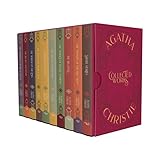
- The World's Favourite Agatha Christie Box Set
- Taken at the Flood (1948): David Hunter is discussed as a dangerous demobbed soldier.
- Mrs McGinty’s Dead (1952): Plain points to an Oedipal case of arrested development.
- They Do It With Mirrors (1952): megalomania and misguided hero-worship expose another failure of masculine judgment.
- 4.50 From Paddington (1957): a former fighter pilot is presented as childlike.
A 2022 BYU undergraduate honors thesis by Rebekah Olsen offers a separate reading of Taken at the Flood: its abstract contrasts David Hunter with Rowley Cloade, whose civilian wartime trauma and emotional restraint are linked to violence. It is a student thesis, not peer-reviewed research, so it is best treated as a supplementary interpretation rather than the same kind of scholarly authority as Plain’s journal article.
Where to start with the novel
Towards Zero was first published in 1944. Agatha Christie Limited records its appearance in three parts in Collier’s Magazine in May 1944, followed by a US book edition in June and a Collins hardback in July. The official site also lists a paperback edition. Reading the novel makes the Royde comparison concrete: it lets readers encounter the original character before weighing what a later adaptation changes. Find the publication details at Agatha Christie Limited.
Quick Recap
Product prices and availability are accurate as of the date/time indicated and are subject to change. Any price and availability information displayed on Amazon at the time of purchase will apply.




