Recommended Free Tools
When Ron Howard adapted JD Vance’s 2016 memoir Hillbilly Elegy, he wasn’t chasing a political parable so much as a human one. The book arrived amid cultural anxiety about class, identity, and the so-called forgotten regions of America, and Howard saw in it a character-driven story about family inheritance and emotional survival. His film aimed to translate that interior struggle to the screen, emphasizing the push and pull between trauma and resilience rather than any partisan diagnosis of the country.
Howard has since emphasized that his interest lay in empathy, not ideology. Hillbilly Elegy, as he conceived it, was meant to interrogate how cycles of poverty, addiction, and shame shape behavior across generations, while still allowing room for individual agency and grace. The adaptation leaned into intimate performances and domestic volatility, framing Vance less as a cultural spokesperson and more as a witness to a complicated upbringing.
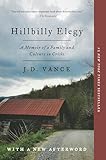


That framing helps explain why Howard has expressed surprise and disappointment at Vance’s later political evolution. The version of Vance he connected with was a reflective narrator, critical of easy answers and wary of hardening resentment into identity. As Vance’s public persona has shifted, it has retroactively reframed the film, raising uncomfortable questions about how faithfully any adaptation can capture a real person whose story, and self-conception, continues to change long after the credits roll.
JD Vance Then vs. JD Vance Now: The Political Evolution That Sparked Howard’s Reaction
To understand Ron Howard’s reaction, it helps to revisit who JD Vance was in the public imagination when Hillbilly Elegy entered the cultural bloodstream. In 2016, Vance emerged less as a political actor than as a reluctant interpreter of his own past, offering a memoir that blended personal reckoning with social observation. His voice was introspective, often conflicted, and notably cautious about assigning blame.
What’s actually slowing this PC down?
Pick the symptom - the matching free tool is one click away.
#1 Best Overall
That version of Vance, the one Howard adapted, framed his Appalachian upbringing as a source of both damage and dignity. He acknowledged structural forces without fully absolving personal responsibility, a tension that gave the book its uneasy credibility across ideological lines. For filmmakers, it presented a character study rather than a manifesto.
The Memoir-Era Vance: Ambivalence and Self-Interrogation
In Hillbilly Elegy, Vance positioned himself as an insider critiquing his own community, but with visible discomfort about the role he was being asked to play. He resisted becoming a symbol, even as media narratives elevated him into one. That resistance mattered to Howard, who has often gravitated toward protagonists wrestling with identity rather than projecting certainty.
The film reflects that ambivalence. Its Vance is observant but unsure, shaped by competing moral codes and emotional loyalties. Political conclusions remain largely offscreen, implied through context rather than declared, which allowed audiences to project their own interpretations onto the story.
At the time, Vance’s public commentary also reflected skepticism toward populist political movements, including pointed criticism of Donald Trump. He spoke about the dangers of grievance politics and the seductive pull of resentment, ideas that aligned with the film’s emphasis on internal struggle over external enemies.
Quick wins for a faster PC:
Fix the driver behind crashes, sound loss and screen glitchesFind Drivers →Clear out junk files and repair common Windows errorsFree Scan →Scan for outdated or missing drivers - takes under a minuteDriver Scan →The Senatorial Vance: Alignment and Assertion
Vance’s later political ascent marked a sharp tonal shift. As a Senate candidate and now a national political figure, his rhetoric has grown more declarative, more combative, and more strategically aligned with the populist forces he once viewed warily. Where the memoir asked questions, the politician offers answers.
This evolution is not uncommon in American political life, but it is particularly striking given the intimacy of Vance’s original narrative. His current positions on cultural and institutional power contrast with the earlier emphasis on personal reckoning and moral complexity. The distance between those versions is where Howard’s disappointment seems to take root.
For Howard, the change appears less about ideology than about orientation. The filmmaker has suggested that the reflective self-criticism he responded to has been replaced by a more performative certainty. In that sense, the surprise is personal as much as political, stemming from a sense that the human core he adapted has been overshadowed.
When the Subject Outgrows the Story
The disconnect highlights a broader challenge in adapting real people for the screen. Films freeze a subject at a particular moment, preserving a snapshot that can feel definitive even as the person continues to evolve. When that evolution moves in an unexpected direction, the adaptation can begin to feel misaligned, or even inadvertently ironic.
Free tools Windows power users keep installed
One-click scans. No signup required.
Hillbilly Elegy now exists in tension with its source’s public life. Scenes once read as cautionary or contemplative can take on different meanings when viewed through the lens of Vance’s current political identity. The film hasn’t changed, but its context has, complicating its emotional and cultural reception.
Howard’s reaction underscores how little control filmmakers ultimately have over the legacies of real-world subjects. Empathy-driven storytelling assumes a degree of continuity between past and future selves. When that continuity fractures, it raises uncomfortable questions about authorship, intention, and whether any adaptation can remain stable once reality moves on.
In Vance’s case, the evolution has reframed Hillbilly Elegy not as a prologue, but as a record of a version of its subject that no longer fully exists. For Howard, that gap between then and now appears to be where surprise gives way to disappointment, and where a human story becomes inseparable from the political one unfolding beyond the screen.
‘Surprised and Disappointed’: Unpacking Ron Howard’s Public Comments
Ron Howard has been careful in how he discusses JD Vance’s political ascent, choosing words that register personal dismay rather than partisan outrage. In interviews following Vance’s rise to national prominence, Howard described himself as “surprised and disappointed,” framing his reaction as a response to tone and posture more than policy. The phrasing suggests a filmmaker reckoning with a subject who no longer resembles the inward-looking figure he once studied.
PC Slower Than It Used to Be?
A free scan shows the junk files, broken settings and background clutter dragging Windows down - then fixes them in one click.Free scan · Windows 10 & 11Outdated Drivers Are Slowing You Down
One free scan finds every outdated or missing driver and matches the right update for your exact hardware.Free scan · exact hardware matchRank #2

- Milan
- Abis music
- Hillbilly elegy (music from the netflix film)
What stands out is how consistently Howard situates his comments within the intent of Hillbilly Elegy. He has emphasized that the film was built around empathy, self-examination, and an acknowledgment of structural and personal responsibility. Vance’s more combative political identity, in Howard’s telling, feels at odds with that foundation.
A Reaction Rooted in Character, Not Party
Howard has avoided positioning himself as a direct political adversary of Vance. Instead, his remarks return to the qualities that initially drew him to the material: vulnerability, doubt, and a willingness to interrogate one’s own assumptions. The disappointment he articulates stems from the perception that those traits have receded from public view.
By framing his response this way, Howard implicitly separates ideology from temperament. His concern appears less about conservative politics writ large and more about a perceived shift from introspection to absolutism. It’s a distinction that reflects Howard’s long-standing interest in character-driven narratives rather than ideological messaging.
When Empathy Meets Power
Howard’s comments also reveal an unease with how personal narratives can harden once they intersect with political power. Hillbilly Elegy was conceived as a story about constraint and consequence, shaped by forces larger than any one individual. Vance’s later rhetoric, often emphasizing certainty and cultural confrontation, reframes that story in ways Howard did not anticipate.
The Tool Desk
Outbyte PC Repair FREERepair Windows errors before they cause bigger problemsFix Now →Outbyte Driver Updater FREEFix the driver behind crashes, sound loss and screen glitchesFind Drivers →This is where surprise becomes disappointment. The filmmaker has suggested that empathy, once central to the story, now feels absent from the public persona attached to it. The contrast exposes how easily a narrative of understanding can be overtaken by one of dominance when translated into political capital.
Public Reflections as Authorial Distance
In speaking out, Howard is also marking a boundary between the film and its subject’s current identity. His comments function less as a critique of Vance and more as a clarification of authorial intent, a way of reminding audiences what Hillbilly Elegy was trying to explore at the time it was made. The film, in Howard’s view, remains anchored to a moment of uncertainty rather than conviction.
That distinction matters because it acknowledges the limits of adaptation. Howard’s surprise underscores how filmmakers often trust that a subject’s future self will remain in dialogue with their past. When that dialogue breaks down, public commentary becomes a means of reclaiming the emotional and ethical center of the work, even as reality continues to move beyond it.
Where the Film and the Politician Diverge: Compassion, Responsibility, and Power
At its core, Hillbilly Elegy was shaped around compassion as a narrative engine. Howard approached the material less as a sociological argument and more as an intimate portrait of people navigating inherited hardship. The film’s emotional grammar depended on restraint, humility, and the idea that progress begins with understanding rather than blame.
JD Vance’s political ascent complicates that framing. As a public figure, he now speaks from a position of authority rather than vulnerability, and that shift alters how his earlier story is received. Howard’s disappointment seems rooted in this inversion, where lived experience once offered perspective but now appears to justify hardened positions.
Compassion Without Conquest
The film’s compassion was observational, not prescriptive. Characters are depicted as constrained by systems, family history, and economic inertia, with no single villain offered for easy resolution. That ambiguity is central to Howard’s filmmaking ethos, one that resists moral conquest in favor of emotional proximity.
In contrast, Vance’s political messaging often frames cultural struggle in adversarial terms. Where the film lingered on fragility, the politician emphasizes certainty. For Howard, the divergence suggests a loss of curiosity about complexity, replaced by the confidence demanded by political momentum.
Responsibility as Reflection Versus Leverage
Hillbilly Elegy treats responsibility as a shared burden, spread across individuals and institutions alike. The story acknowledges personal agency while insisting that context matters, a balance that allows empathy to coexist with accountability. Howard has long favored this tension, seeing it as essential to honest storytelling.
Vance’s current posture reframes responsibility as leverage, a rhetorical tool used to assign fault and mobilize allegiance. Howard’s reaction suggests discomfort with that recalibration, particularly when it appears to flatten the nuance that once defined the narrative. The responsibility depicted on screen was inward-looking, not performative.
Power Changes the Meaning of a Story
Perhaps the most profound divergence lies in how power reshapes narrative meaning. Hillbilly Elegy emerged from a position adjacent to power, examining its absence and consequences. As Vance now operates within the political machinery he once critiqued, the story retroactively shifts tone, whether the film intends it or not.
Howard’s surprise acknowledges this transformation without attempting to correct it. His disappointment functions as a quiet reminder that stories born of marginality carry different ethical weight once their subjects command influence. In that gap between compassion and authority, the film and the politician now speak in distinctly different voices.
The Limits of Adaptation: What Filmmakers Can—and Can’t—Control Once the Credits Roll
Howard’s response to Vance’s political ascent underscores a fundamental truth of adaptation: once a film enters the world, it no longer belongs solely to its creators. Even the most careful, empathetic rendering of a real person freezes a moment in time, while the subject continues to evolve. The gap between portrayal and present reality is not a failure of filmmaking, but an inevitability of storytelling drawn from life.
In Hillbilly Elegy, Howard adapted a memoir rooted in reflection rather than prescription. The film’s emotional authority came from its proximity to uncertainty, from a sense that its characters were still searching for language to explain their circumstances. That search cannot anticipate the future choices of its real-life counterparts, nor can it guard against those choices reshaping how the story is received.
Authorship Ends, Interpretation Begins
Filmmakers can guide tone, perspective, and moral emphasis, but they cannot dictate interpretation over time. As Vance’s public identity has hardened into a partisan shape, viewers inevitably revisit the film with new assumptions. Moments once read as vulnerable now risk being reframed as origin myths, regardless of Howard’s original intent.
This is where Howard’s disappointment appears less personal than philosophical. It reflects an awareness that cinema’s meaning is provisional, contingent on cultural context and the evolving reputations of those it depicts. The film remains unchanged, but its interpretive gravity shifts as the real world moves around it.
The Ethics of Freezing a Living Subject
Adapting a living figure carries an ethical tension that documentaries often confront more directly than narrative features. A scripted film suggests coherence and closure, even when it strives for ambiguity. When the subject later adopts positions that seem to contradict the spirit of the adaptation, the film can feel misleading through no fault of its own.
Howard’s comments suggest an acceptance of this risk rather than a rejection of it. Hillbilly Elegy was never intended as a political roadmap or character endorsement. Its ethical commitment was to emotional truth in a specific moment, not to lifelong alignment with its subject’s future beliefs.
When Reality Rewrites the Subtext
Political power has a way of retroactively rewriting subtext. Lines of dialogue, thematic emphases, even casting choices can take on unintended resonance when a real-life figure steps onto a larger stage. What once read as observation may later feel like justification, or conversely, like a missed warning.
Howard cannot recalibrate the film to match Vance’s present-day rhetoric, nor does he attempt to. The limits of adaptation lie precisely there: cinema can illuminate, but it cannot contain. Once the credits roll, the story continues elsewhere, shaped by forces far beyond the frame.
Rewatching Hillbilly Elegy in the Age of Vance’s Political Rise
Revisiting Hillbilly Elegy today is an exercise in cognitive dissonance. The film’s emotional center was built around a young man struggling to outrun cycles of poverty, addiction, and inherited trauma, framed through a largely apolitical lens of resilience and self-determination. In the context of JD Vance’s current political persona, that framing feels newly unstable, inviting questions the film never anticipated having to answer.
Ron Howard’s surprise and disappointment are not reactions to a single policy stance, but to the broader divergence between the story he thought he was telling and the figure Vance has become. What once played as an inward-looking character study now risks being read as a foundational myth for a political identity that the film does not explicitly endorse. That gap is where the discomfort sets in, both for the filmmaker and for audiences approaching the film with hindsight.
A Film Made for Empathy, Not Ideology
Hillbilly Elegy was constructed to emphasize emotional access rather than argument. Its most memorable scenes prioritize family volatility, generational pain, and moments of grace under pressure, deliberately steering away from partisan critique. Howard’s direction favors compassion over confrontation, trusting viewers to engage with the human cost of socioeconomic struggle rather than its political weaponization.
In today’s climate, that restraint can feel almost alien. Vance’s rise has sharpened ideological lines that the film left deliberately blurred, causing some viewers to retroactively search for political signals that were never embedded in the text. The result is a viewing experience shaped less by what the film says than by what the subject has since chosen to represent.
When Character Arcs Outpace Their Source
Narrative cinema depends on the illusion of completion. Hillbilly Elegy closes with a sense of earned stability, a suggestion that personal reckoning can interrupt inherited damage. Vance’s political evolution complicates that ending, turning what felt like resolution into a temporary pause in a much longer, more contentious story.
Do these 3 things before closing this tab:
1Clear out junk files and repair common Windows errors2Scan for outdated or missing drivers - takes under a minute3Repair Windows errors before they cause bigger problemsThis is where Howard’s disappointment reads as reflective rather than defensive. The film’s arc assumed continuity between emotional insight and future worldview, an assumption that real life routinely dismantles. Rewatching the film now exposes how easily audiences conflate narrative growth with moral trajectory, even when history proves otherwise.
The Audience as Co-Author Over Time
Time transforms viewers into collaborators. Each rewatch is informed by headlines, speeches, and public actions that inevitably bleed into interpretation. Scenes that once emphasized vulnerability can now feel like foreshadowing, while moments of humility may be reassessed as performative, regardless of the sincerity that informed their original depiction.
Howard’s comments acknowledge this shift without attempting to police it. Hillbilly Elegy exists as a record of belief in a particular version of its subject, anchored to a moment before political ambition hardened into ideology. Rewatching it now reveals less about the film’s shortcomings than about how power reshapes narrative meaning once the real world asserts authorship.
Independent reader supportYour contribution helps us test, update, and keep practical guides available for everyone.Art, Authorship, and Accountability: When Real-Life Subjects Rewrite Their Own Narrative
At the heart of Ron Howard’s reaction is a question that extends beyond JD Vance as an individual: what responsibility does a filmmaker bear when their subject’s future actions diverge sharply from the values inferred onscreen? Hillbilly Elegy was crafted as an intimate character study, not a political endorsement, yet its continued circulation ties it unavoidably to Vance’s present-day influence. Howard’s surprise and disappointment reflect the uneasy realization that authorship does not end at the final cut.
Do these 3 things before closing this tab:
1Scan for outdated or missing drivers - takes under a minute2Repair Windows errors before they cause bigger problems3Fix the driver behind crashes, sound loss and screen glitchesThe film captured a moment of self-interrogation and empathy, presenting Vance as someone shaped by hardship and motivated by an urge to transcend it. That portrayal now sits in tension with a political persona defined by hardline rhetoric and ideological certainty. The disconnect forces audiences to reconsider whether the film documented a genuine phase of growth or simply a chapter later overwritten by ambition and power.
Adaptation as Interpretation, Not Prophecy
Biographical storytelling operates on interpretation rather than prediction. Howard adapted Hillbilly Elegy under the assumption that emotional honesty carried forward, that insight gained would inform future choices. Vance’s trajectory underscores how fragile that assumption can be when lived experience intersects with political opportunity.
This does not invalidate the film, but it does reframe it. Hillbilly Elegy becomes less a definitive statement about who Vance is than a snapshot of who he was willing to be at a specific time. The surprise Howard expresses speaks to a filmmaker confronting the limits of narrative empathy when the subject’s later actions resist the spirit of their earlier self-portrait.
Accountability Without Retconning
There is a temptation, especially in polarized times, to retroactively assign blame to the artwork itself. Yet doing so risks confusing representation with advocacy. Hillbilly Elegy did not argue for Vance’s political worldview; it humanized a personal history that has since been mobilized in ways the film neither anticipates nor endorses.
Best Value
Howard’s measured response avoids the impulse to disown the work or defensively justify it. Instead, it acknowledges a more uncomfortable truth: once a real person reasserts control over their narrative in the public sphere, the film must coexist with outcomes it cannot correct. Accountability, in this sense, belongs less to the artist than to the evolving subject who continues to redefine what their story means.
When the Subject Becomes the Author
Vance’s political rise illustrates how real-life figures eventually reclaim authorship from their chroniclers. The film offered a lens grounded in compassion and restraint; Vance’s later choices impose a new lens shaped by ideology and power. Viewers are left navigating the space between those versions, aware that neither fully cancels the other.
Howard’s disappointment is not about being contradicted, but about witnessing a narrative he once believed in give way to something more rigid and divisive. In that gap lies the enduring tension of political cinema rooted in lived experience: art can illuminate a moment, but it cannot bind the future.
What This Moment Says About Political Cinema and the Risks of Telling Living Stories
Ron Howard’s reaction to JD Vance ultimately highlights a long-standing tension in political cinema: the desire to humanize versus the reality that people continue to change after the credits roll. Films drawn from living subjects are inherently provisional, even when they feel emotionally complete. They ask audiences to engage with a moment in time, not a sealed biography.
In that sense, Hillbilly Elegy now occupies a more complicated cultural space. It exists as both a sincere attempt at understanding and a reminder that understanding is not the same as prediction. Howard’s surprise reflects a filmmaker confronting the limits of storytelling when real life refuses to follow a redemptive or coherent arc.
The Illusion of Narrative Closure
Political films often borrow the language of personal transformation, because cinema thrives on arcs that suggest meaning and growth. But real political identities are rarely static, and they are especially susceptible to the pressures of ambition, audience, and power. What feels like resolution on screen can, in retrospect, look more like a pause.
Hillbilly Elegy offered viewers a sense of emotional closure rooted in empathy and resilience. Vance’s later political posture disrupts that closure, exposing how easily a personal story can be repurposed once it enters the ideological marketplace. The film did not fail; it simply stopped where life did not.
Empathy as Risk, Not Endorsement
Howard’s comments also underscore a risk filmmakers knowingly take when they lead with empathy. Humanizing a subject does not guarantee alignment with their future choices, nor does it obligate the artist to defend them indefinitely. Yet in a polarized climate, empathy is often retroactively framed as complicity.
The distinction matters. Political cinema that refuses empathy becomes propaganda; cinema that embraces it accepts uncertainty as part of the bargain. Howard’s disappointment suggests not regret for extending understanding, but concern over how that understanding has since been leveraged by its subject.
Living Stories in an Accelerated Political Age
The speed at which public figures reinvent themselves has only intensified the challenge. A film can take years to develop, while a political identity can harden or reverse in a single election cycle. This imbalance leaves filmmakers perpetually behind the present, working with materials that history may soon complicate.
What Howard’s experience illustrates is not a cautionary tale against adapting real people, but a call for humility about what such adaptations can claim. Political cinema can capture emotional truth without owning moral outcomes. It can bear witness without foreclosing the future.
In the end, Hillbilly Elegy stands as a case study in the fragility of narrative authority. Howard’s surprise and disappointment do not diminish the film’s intent; they sharpen its context. The moment reminds viewers that when art intersects with living politics, the story never truly ends, it only keeps changing who gets to tell it.
Quick Recap
Product prices and availability are accurate as of the date/time indicated and are subject to change. Any price and availability information displayed on Amazon at the time of purchase will apply.




