Maker Faire Bay Area 2024 mixed hands-on games and installations with its maker projects. Make: editor Sam Freeman’s preview singled out five experiences, from a towering arcade cabinet to a laser maze—but called its selection “a very non-inclusive list,” not a complete event guide.
What games could visitors try at Maker Faire Bay Area 2024?
Freeman’s October 17, 2024, preview highlighted five varied experiences. They were described as activities visitors could try at that event; the preview does not establish that each was available throughout the weekend or remains available today. Read the Make: preview.
Spacebar Arcade
Sam Mateosian’s Spacebar Arcade was a 16-foot-tall arcade cabinet that opened into a virtual-reality arcade. Visitors could play from outside using game pads and a large screen, or put on a VR headset and enter the virtual space with friends and family. It paired a striking physical structure with shared virtual play.
The Retro Roadshow
The Retro Roadshow invited visitors to try vintage video game consoles and personal computers running auto-racing games. Its focus was the evolution of gaming art, science, design, and technology across roughly five decades, experienced through the machines themselves.
Free tools Windows power users keep installed
One-click scans. No signup required.
#1 Best Overall
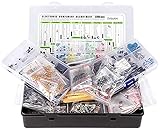
- Box including: Resistors, Transistors, Diodes, Zeners, Inductors, ICs, Crystal Oscillators, PCBs, LEDs, Mini Switch, Potentiometer, Trim Pots, LDRs, Headers, Terminals
- Includes 2200 pcs of the most important and usefull Eletronic Components Electronic Component Assortment
- Assorted by Professionals, made for Professionals
- Comes in a recyclable 11 * 7 * 2.5 inch Box, well organized
Waterlight Graffiti
Antonin Fourneau’s Waterlight Graffiti turned drawing and writing into a temporary light display. Water completing a circuit lit LEDs embedded in a panel; as the water evaporated, the marks faded. The preview described the Maker Faire appearance as the installation’s first public opportunity in California.
Laser Maze
At Benicia Makerspace’s Laser Maze, players navigated intersecting laser beams. Breaking a beam added three seconds to a player’s time, making the installation a physical skill challenge rather than a conventional video game.
Rank #2

- Learn electronics with ProTechTrader's Deluxe Kit 1 for Make: Electronics, 3rd Edition. Its 200-piece electronics kit matches early Sections 1-3 by Charles Platt.
- Build breadboard circuits with specified passive parts and semiconductors, then move projects to perforated board. A double-sided organizer keeps labeled parts sorted.
- Measure and assemble projects with the PDM631 multimeter and 30W soldering iron. Exact solder, heat-shrink tubing, wire, and test leads support the lesson work.
- Power the supported experiments with the supplied 9V battery, connector, or AC/DC adapter. This electronics tool kit sets up a new beginner bench in one package.
- Choose Deluxe for home study or a supervised class when your new bench needs tools, project power, and the parts used in Sections 1-3. Book sold separately. This product is not a toy and is designed for use by teens and adults ages 13 and up
PinSim
Jinxbot’s PinSim combined virtual-reality pinball with physical controls: real flipper buttons and a ball plunger, alongside an Xbox 360 controller and an Oculus headset. Like Spacebar Arcade, it connected hands-on inputs to a virtual experience.
How the five experiences differ
The preview does not rank or rate the exhibits. Its descriptions do, however, show several distinct ways to play:
The Tool Desk
Outbyte Driver Updater FREEFix the driver behind crashes, sound loss and screen glitchesFind Drivers →Outbyte PC Repair FREERepair Windows errors before they cause bigger problemsFix Now →Rank #3

- TURN CODE INTO REAL-WORLD RESULTS — Follow 22+ guided lessons to make LEDs blink, read temperature and distance, move servo and stepper motors, control an LCD and respond to joystick or IR input; ideal for a family weekend build, homeschool unit, coding club or STEM classroom
- MORE PROJECT VARIETY IN ONE ORGANIZED KIT — Includes the UNO R3 controller, LCD1602 with pre-soldered header, breadboard power module, ultrasonic and DHT11 sensors, joystick, IR receiver and remote, SG90 servo, stepper motor, relay, DC motor, fan blade, displays, LEDs, buttons, resistors and jumper wires
- START WITHOUT SOLDERING — Plug-in modules, a solderless breadboard and the pre-soldered LCD help beginners focus on wiring, code and testing; the illustrated component list makes it easier to find each part and move from one lesson to the next
- LEARN THE LOGIC, THEN CREATE YOUR OWN — Use Arduino IDE and the included example code to understand digital input and output, analog sensing, timing, motor control and display functions, then change thresholds, speeds and sequences for alarms, environmental monitors, reaction games and motion projects
- CLEAR SETUP SUPPORT FOR FIRST-TIME BUILDERS — Download the latest tutorial and code, select the UNO board and correct computer port, check component polarity and breadboard rows, and keep power-module input at 9V or below; younger learners should work with an experienced adult
- Physical installations: Waterlight Graffiti and the Laser Maze centered on interacting with a physical panel or moving through a physical challenge.
- Virtual play with physical inputs: Spacebar Arcade offered game pads for outside play as well as a VR option; PinSim paired pinball controls with VR.
- Games from different eras: The Retro Roadshow foregrounded vintage consoles and computers, while Waterlight Graffiti and the Laser Maze offered original interactive installations.
- Different social and skill demands: Spacebar Arcade was described as a place to enter the virtual space with friends and family. The maze emphasized an individual timed challenge; the preview does not specify how many people could use the other exhibits at once.
What this preview does—and does not—tell you
These five examples show the range of playful, interactive work featured in Freeman’s selection, not the full lineup at Maker Faire Bay Area 2024. The article gives no event attendance figure, total exhibit count, or visitor outcome data. It is an event preview, not a consumer-product review: it does not report hands-on testing by the author, recommend a headset, or establish that any exhibit is currently available.
Quick Recap
Best Value
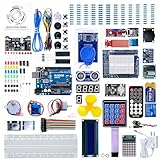
- 30+ Guided Electronics Projects: Start with LEDs and build toward LCD1602 displays, RFID access, motion detection, distance sensing, motor control and environmental monitoring for STEM learning, coding clubs, classrooms and hobby projects
- 200+ Components Across 63 Types: Includes an ELEGOO UNO R3 controller, LCD1602, RC522 RFID, RTC, HC-SR501 PIR sensor, ultrasonic sensor, DHT11, GY-521, MAX7219, keypad, joystick, relay, SG90 servo, stepper motor, breadboard and more
- Begin Without Soldering: Pre-soldered modules, a solderless breadboard, organized storage case and small-parts box reduce setup time and help beginners move from lesson to lesson while keeping LEDs, ICs, wires and sensors easy to find
- Learn, Modify and Create: Program the ELEGOO UNO R3 board with Arduino IDE using the included PDF tutorial and example code, then adjust sensor thresholds, timing, display text and motor behavior to turn guided lessons into original projects
- Flexible Power and Project Setup: Includes a 9 V, 1 A power supply, breadboard power module, 9 V battery and USB cable to support controller, breadboard and module experiments without sourcing basic setup accessories separately
Rank #4

- ELEGOO UNO R4 WiFi Control Board: Fully compatible with Arduino IDE and original Arduino shields. Features a 32-bit 48 MHz Renesas RA4M1 processor, USB-C, a 12 × 8 LED matrix, a Qwiic connector, built-in Wi-Fi and Bluetooth connectivity. Suitable for interactive STEM projects, it gives learners more room to progress from basic circuits to connected IoT projects
- Step-by-Step Tutorials for Beginners: Start with clear wiring diagrams and ready-to-run sample code, then advance through sensors, displays, motors, RFID, and wireless projects. Structured lessons reduce setup confusion and help beginners understand both how each circuit works and how to modify it
- 200+ Components with Practical Modules: Ultrasonic sensor, PIR motion sensor, RFID module, OLED display, keypad, joystick, relay, servo, stepper motor, DC motor and fan blade, temperature and humidity sensor, breadboard, jumper wires, LEDs, resistors, and more. Also compatible with your existing UNO R3 shields and projects
- Build Projects You Can Recognize: Equipped with professional online tutorials and step-by-step graphical manuals. Suitable for teens, beginners, hobbyists, educators, engineering students and electronics enthusiasts. The included parts support a progressive path from first coding exercises to maker prototypes without purchasing every module separately
- Organized Parts and Reliable Support: Each kit includes clearly listed components and beginner-friendly project resources to help users identify parts and start faster. ELEGOO provides responsive technical support for setup, programming, wiring and troubleshooting, ensuring you have a smooth learning experience
Product prices and availability are accurate as of the date/time indicated and are subject to change. Any price and availability information displayed on Amazon at the time of purchase will apply.




