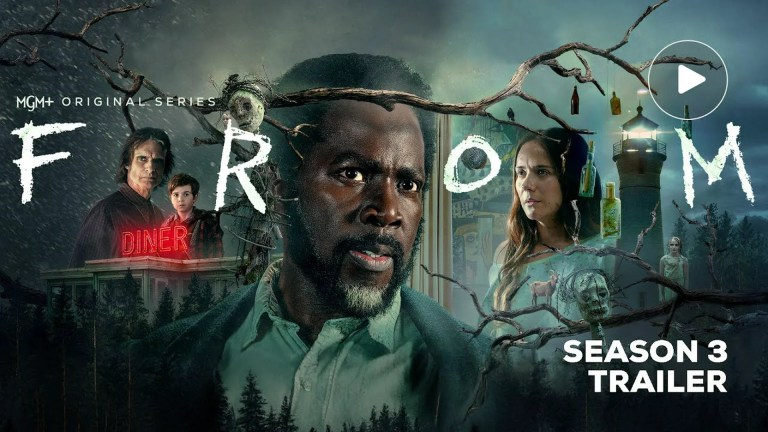
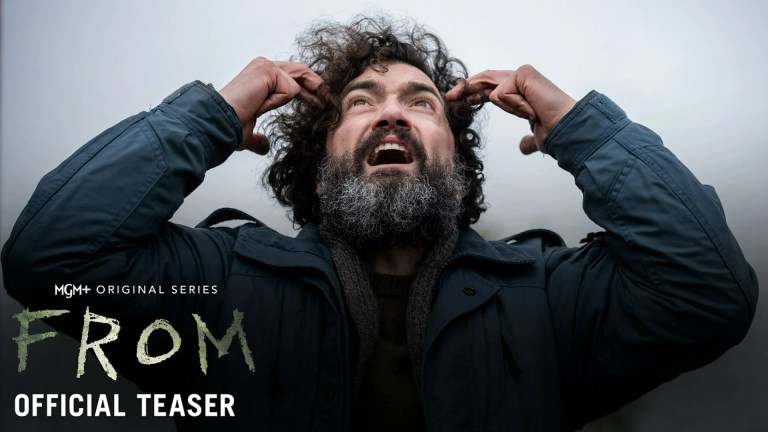
Spoilers through the Season 4 finale.
Free tools Windows power users keep installed
One-click scans. No signup required.
The monsters in FROM are recurring supernatural predators native to the trapped town—not confirmed vampires, zombies, Wendigos, Skinwalkers, or any other named folklore species. They emerge from underground tunnels at night, imitate ordinary people, use familiar voices to make residents open doors and windows, and then kill with deliberate cruelty. The strongest mythology now connects them to an ancient child-sacrifice bargain intended to grant immortality, although the series has not yet confirmed that every monster is one specific original participant.
The short answer: what are the monsters in FROM?
The safest description is that they are immortal or recurring supernatural beings created—or sustained—by the town’s ancient bargain. They have human appearances and voices, but they are not ordinary people in disguise. They survive injuries that should be fatal, sleep in subterranean chambers, change their appearance, and can return through a process that appears to involve reproduction, regeneration, or reincarnation.
They are also more than simple hunting animals. Their behavior shows intelligence, memory, coordination, and an apparent interest in fear and emotional suffering. They do not merely attack whoever happens to be nearby. They select targets, exploit relationships, imitate loved ones, negotiate at doors and windows, and sometimes prolong a killing specifically to make another person suffer.
The Season 3 revelations supplied the central origin clue: an earlier population sacrificed children in the hope of becoming immortal. Season 4 expanded the picture by introducing the Man in Yellow, a more powerful and psychologically sophisticated presence who may oversee or share the same supernatural system. His precise relationship to the familiar smiling creatures remains unresolved.
Do these 3 things before closing this tab:
1Fix the driver behind crashes, sound loss and screen glitches2Repair Windows errors before they cause bigger problems3Scan for outdated or missing drivers - takes under a minute#1 Best Overall

- Bold kaiju designs inspired by classic Godzilla characters
- Interchangeable parts for endless customization! Mix, match, and build your own unique monsters
- Stands approx. 3.75" tall
- Includes QR code access to exclusive animated episodes
- For ages 4 and up
That distinction matters. FROM has explained the monsters’ connection to a ritual and established that the threat can continue beyond the apparent death of an individual creature. It has not yet explained the town’s complete origin, the exact identity of every monster, or the final purpose of the beings behind the cycle.
For U.S. viewers looking for where to watch FROM, availability can change by season and service, so check the current listing for the specific episodes you need.
How the monsters hunt
They look and sound human
The creatures’ most important weapon is not speed. It is trust.
At night, they commonly appear as calm, ordinary-looking people. They smile, speak gently, ask to be let inside, and sometimes present themselves as someone the victim recognizes. The disguise is functional: residents are more likely to approach a familiar face than a visibly inhuman predator.
Once invited through a door or window, the creature’s appearance becomes irrelevant. The victim has already made the decision that allows the attack to happen. This is why the town’s rules place so much emphasis on keeping buildings secured after dark.
They use invitations and openings
The creatures repeatedly target doors, windows, and moments when residents believe they are safe. Talismans can protect an occupied enclosed space when the shelter is properly secured, but they are not a general force field and do not make the creatures harmless. An unprotected opening, an invitation, or a failure to follow the town’s defensive rules can turn a supposedly safe building into a killing ground.
Their tactics make the town’s residents participate in their own vulnerability. That is one reason the monsters are more frightening than conventional attackers: they turn ordinary social instincts—helping someone, answering a voice, comforting a child, or recognizing a neighbor—into possible traps.
They torture as well as kill
The creatures often could kill quickly, but they frequently choose not to. The clearest example comes in the Season 3 premiere, when they keep Boyd alive and force him to watch Tian-Chen’s torture and death. The attack is designed not just to remove a victim but to injure Boyd psychologically.
Quick wins for a faster PC:
Scan for outdated or missing drivers - takes under a minuteDriver Scan →Clear out junk files and repair common Windows errorsFree Scan →Fix the driver behind crashes, sound loss and screen glitchesFind Drivers →That pattern supports a stronger conclusion than “the monsters enjoy hunting.” Their cruelty appears intentional. Fear, grief, helplessness, and the collapse of trust are part of what they seek—or at minimum part of the supernatural system’s method of operating. The Season 3 premiere’s treatment of Boyd and Tian-Chen is especially important evidence for reading the creatures as psychological torturers rather than purely biological predators.
Rank #2
- Legendary kaiju in die-cast form – now collectible; includes Godzilla, Mechagodzilla, King Ghidorah, and Rodan
- Over 60 percent die-cast metal – built to last; durable mini monsters perfect for fans ages 8 and up
- 2.5-inch scale – compact for display or dioramas; showcase your favorite Toho icons anywhere
- Screen-accurate details – classic designs from 1956 to 1974; sculpted to honor each kaiju’s original film appearance
- Jada Toys – Trusted by collectors worldwide; crafting high-quality figures across iconic franchises and genres
What do the monsters want?
The show has not given the creatures one complete mission statement, but their repeated behavior points to several overlapping objectives.
1. Access to human victims
The most obvious goal is physical access. The monsters want residents to open doors and windows, leave shelters, or otherwise break the conditions that keep them safe. Their disguises, voices, and apparent patience all serve that purpose.
They are not indiscriminate forces of nature. They test people and exploit weaknesses. A monster may pretend to be lost, lonely, injured, or familiar because the emotional response creates an opening.
The Tool Desk
Outbyte PC Repair FREEClear out junk files and repair common Windows errorsFree Scan →Outbyte Driver Updater FREEFix the driver behind crashes, sound loss and screen glitchesFind Drivers →2. Fear and psychological collapse
The monsters seem to value terror beyond its usefulness as a hunting tactic. They taunt residents, speak with confidence, and use personal knowledge to make attacks feel intimate. Their cruelty is often staged for an audience, especially when one person’s suffering is used to punish or break another.
The likely objective is not simply to increase the number of deaths. It is to destroy the community’s ability to trust one another and to make survival psychologically unbearable. A town whose residents are afraid of every voice at the window is easier to control than one whose people remain organized and hopeful.
3. Control and submission
Season 4 makes the broader controlling intelligence behind the town more visible. The Man in Yellow uses false identities, visions, tests, and personal manipulation to make residents doubt what they know and question their own perceptions.
This suggests that the supernatural forces do not want only bodies. They also want obedience, confusion, and psychological submission. The Man in Yellow’s methods are more elaborate than the familiar night creatures’ door-to-door hunting, but they appear to serve a related purpose: making people act according to the town’s rules without understanding who wrote them.
4. Continuation of the cycle
The monsters are not a threat that ends when one creature is destroyed. Their apparent ability to return—or to be replaced by a new version of the same entity—shows that the system is built for continuation.
Fatima’s pregnancy and the return of a Smiley-like creature indicate that reproduction, recurrence, or regeneration is part of the mythology. The exact mechanism is still unclear, but the practical result is not: defeating one body does not necessarily defeat the force represented by that body.
Rank #3

- PERFECT 8-INCH DISPLAY SIZE – Ideal balance between play and display, easy to handle while still visually impactful
- MOVABLE JOINTS FOR DYNAMIC POSES – Multiple articulation points allow action poses, battle scenes, and creative storytelling
- DETAILED MONSTER DESIGN – Realistic textures and durable paint create a high-quality creature look
- VERSATILE FOR PLAY & DISPLAY – Great for kids playtime, desk decoration, or collectible shelves
- GREAT GIFT FOR MONSTER FANS – Perfect for birthdays, Halloween, Christmas, and creature figure collectors
5. Feeding and predation
The creatures kill and mutilate people, and Season 4 depicts the Man in Yellow feeding on corpses. However, the series has not established that the night creatures require human flesh or organs in the straightforward biological sense.
Feeding may be necessary, ritualistic, symbolic, pleasurable, or a combination of those things. It is accurate to say that consumption is an observed behavior. It is too definite to say that the monsters are simply “cannibals” or that feeding is their sole reason for attacking.
Recommended Free Tools
The child-sacrifice and immortality connection
The strongest explanation currently supported by the show is an ancient bargain involving the town’s earlier population:
- An earlier community sacrificed children.
- The adults involved believed the sacrifice would grant them immortality.
- The children’s suffering became part of the supernatural structure surrounding the town.
- The bargain produced, transformed, or sustained the beings that now hunt residents at night.
- Because the bargain was corrupted, incomplete, or cyclical, the town’s story continues to repeat.
Tabitha and Jade’s recovered memories provide the most important link between the present-day mystery and the original sacrifice. Fatima’s pregnancy and Smiley’s return then show that the consequences of that bargain are not confined to the distant past.
The wording must remain precise. The show has established a connection between the monsters and the child-sacrifice/immortality bargain. It has not conclusively shown that every creature currently seen is literally one of the original adults who participated in the sacrifice.
Several details remain in the way of that more specific claim. The monsters vary in age and appearance, their relationship to reincarnation has not been fully explained, and the series has not clearly separated the original participants from later bodies or recurring supernatural roles. “The bargain created the monsters” is supported. “Every monster is one particular original parent” is still an interpretation.
Outdated Drivers Are Slowing You Down
One free scan finds every outdated or missing driver and matches the right update for your exact hardware.Free scan · exact hardware matchWindows Errors? Fix Them Before They Spread
Repair common Windows errors and clear accumulated junk for a smoother, more stable PC - no reinstall needed.Free scan · no reinstallWhy Smiley is the key to the monsters’ immortality
Smiley provides the clearest evidence that “immortal” does not mean “invulnerable.”
Boyd transfers the worms in his blood into Smiley. The creature then burns from the inside and appears to be destroyed. Under ordinary rules, that would end the threat posed by that individual. Instead, Fatima later gives birth to a new Smiley-like creature.
This development suggests that the body can die while the entity, identity, function, or supernatural role continues. The most accurate terms are therefore recurring, regenerative, or effectively immortal as a system, rather than invulnerable.
Rank #4

- Highly detailed and durable soft vinyl figures imported from Japan
- Fan favorite characters from all the famous films
- Each figure is approximately 7.5" and includes a hang tag
- True to film likeness
- Articulated
Smiley also explains why killing a monster has limited strategic value. The residents may be able to destroy a particular body, but the town’s underlying mechanism can produce the threat again. The monsters are not just individual predators; they are part of a process that preserves the predator population.
Who—or what—is the Man in Yellow?
The Man in Yellow should be treated separately from the familiar smiling night creatures.
Season 4 distinguishes him through several characteristics:
- He can appear during the day.
- He uses human identities and manipulates people psychologically.
- He has access to personal information, visions, and false realities.
- He appears capable of killing outside the ordinary pattern associated with the nighttime creatures.
- His presence suggests a higher-order intelligence behind the town’s tests and punishments.
It is reasonable to describe him as a superior or distinct supernatural force connected to the same system. It is not yet safe to call him the confirmed leader or creator of the monsters.
He may command them. He may be another product of the original bargain. He may feed on the same structure that sustains them. He may represent the intelligence that designed the cycle. The Season 4 finale raises these possibilities without settling them.
The useful distinction for understanding the show is this: the smiling creatures are the town’s recurring hunting force, while the Man in Yellow represents a more powerful form of manipulation and control. Treating him as merely another night creature erases the significance of his daylight activity and his apparent ability to operate by different rules.
What the Season 4 finale changes
Season 4 shifts the central mystery from only “What is this place?” to “What does this place want?” Producer commentary describes the season as part of that change in emphasis, with the mythology moving toward the intentions behind the town’s supernatural machinery. Coverage of the Season 5 setup and the Man in Yellow frames the fifth season as the final stage of the story rather than evidence that every mystery has already been solved.
The finale also shows the danger of disturbing the town’s underlying anchor. Removing or disrupting an apparent source of the town’s structure does not simply free the residents. It can also strip away protections and release the creatures more broadly.
That creates an important strategic point: the town’s defenses and the town’s prison may be connected. The same system that traps people may also be containing or regulating the monsters. Destroying one without understanding the other could make the situation worse.
Best Value

- 5-Piece Articulated Action Figure Set: This set includes 5 distinct horror-themed animal character figures, each with unique styling and highly detailed sculpting, designed for collectors and enthusiasts.
- Multiple Movable Joints for Posing: Each figure features fully articulated joints for flexible positioning, allowing you to create dynamic displays and custom scenes. Ideal for shelf, desk, and showcase arrangement.
- Premium Durable Material: Made of high-quality PVC material for sturdiness and long-lasting display. Smooth finish and solid construction ensure long-term use without easy breakage or deformation.
- Ideal Collectible Gift Choice: Classic popular design makes this set an excellent gift for collectors, horror-themed figure fans, friends, and family on holidays, birthdays, and special occasions.
- Wide Application for Decoration & Collection: Suitable for desktop display, shelf decoration, game room decor, Halloween-themed displays, and personal collection. Perfect for enhancing interior atmosphere.
What the monsters are not
There is no confirmed basis for identifying the creatures as:
- Wendigos
- Skinwalkers
- Vampires
- Zombies
- Demons in the traditional religious sense
- Aliens
- A named historical folklore species
Those comparisons may be useful as fan theories or shorthand, but none has been established as the show’s official explanation. The creatures have some traits associated with several horror categories—human mimicry, nocturnal hunting, unnatural survival, and predation—but resemblance is not identification.
They are also not ordinary humans wearing costumes. Their physical resilience, subterranean existence, transformation, and apparent return after death make that explanation incompatible with what the series has shown.
Canon versus theory
| Claim | Status | What can safely be said |
|---|---|---|
| The creatures hunt residents at night and use human appearances. | Established | State this directly. Their disguises help them obtain invitations and lower victims’ defenses. |
| They deliberately torment people. | Strongly established | Their treatment of Boyd and Tian-Chen shows that emotional cruelty is part of their behavior, not merely an accidental by-product. |
| They are connected to child sacrifice and an immortality bargain. | Established connection | This is the central origin clue, but it should not be expanded into unsupported claims about every individual monster. |
| Smiley’s threat can return after his apparent destruction. | Established onscreen development | The process may be reproductive, regenerative, or reincarnational; the exact label remains open. |
| Every monster is one of the original adults who made the bargain. | Leading interpretation, not fully confirmed | Use “may be,” “appears to be,” or “the leading explanation is.” |
| The Man in Yellow commands the creatures. | Plausible but unconfirmed | Describe him as connected to, possibly overseeing, or potentially superior to them. |
| The Man in Yellow created the creatures. | Unresolved | Do not state this as fact. |
| The monsters are Wendigos, Skinwalkers, vampires, or demons. | Unsupported | These are comparisons, not established identities. |
| The monsters attack solely to feed. | Incomplete | Feeding is observed, but fear, torture, control, and continuation are also central parts of their behavior. |
The major unanswered questions before Season 5
- What exactly is the town? It may be a physical place, another dimension, a curse, a constructed reality, or several of those things operating together.
- Are the creatures the original adults? The bargain connection is strong, but the series has not clarified whether the monsters retain individual identities or are recurring bodies and roles.
- What is the Man in Yellow’s position? He may be a commander, creator, participant, consequence, or separate force tied to the same supernatural source.
- Why do the creatures wear mostly mid-century clothing? The clothing suggests a historical layer, but it has not been reconciled fully with the apparent antiquity of the child-sacrifice event.
- Do they need human flesh? The show depicts feeding, but has not established whether it is biologically necessary or part of the ritual and psychological cruelty.
- Why do talismans work? Their origin, limits, and relationship to the Man in Yellow remain unclear.
- Can the cycle actually be ended? Destroying an anchor may remove protections rather than liberate the trapped residents. The final answer may depend on understanding the bargain and the children’s unresolved fate.
Since the producers describe Season 5 as the show’s final season, these should be treated as open questions leading into the conclusion—not as problems Season 4 has already solved. The series’ established creature rules support the distinction between what the monsters demonstrably do and what viewers are still inferring about their origin.
What’s actually slowing this PC down?
Pick the symptom - the matching free tool is one click away.
Bottom line: the monsters are the town’s recurring cycle made flesh
The monsters in FROM are best understood as supernatural, human-presenting predators produced or sustained by an ancient bargain involving the sacrifice of children and the promise of immortality. They want access to victims, but physical feeding does not fully explain their behavior. They also seek fear, grief, psychological collapse, obedience, and the continuation of the system that keeps producing them.
Smiley proves that the threat can recur even after an individual creature is destroyed. The Man in Yellow shows that the familiar night hunters may be only one level of a larger intelligence. What remains unknown is whether that intelligence created the creatures, commands them, or is itself another expression of the same failed immortality bargain.
Frequently Asked Questions
Are the monsters in FROM vampires?
No. The series has not identified them as vampires or any other established folklore species. They are supernatural beings that hunt at night, imitate humans, survive extraordinary injuries, and appear to recur after death.
What do the monsters want in FROM?
They clearly want access to human victims, but their behavior also shows an interest in fear, torture, psychological collapse, and control. Feeding is an observed behavior, not a confirmed complete explanation for their attacks.
Are the monsters the people who sacrificed the children?
The child-sacrifice and immortality bargain is firmly connected to the monsters, but the show has not confirmed that every creature is literally one specific adult who participated in the original ritual. That remains the leading interpretation.
Is the Man in Yellow the leader of the monsters?
He appears connected to a more powerful supernatural intelligence and may oversee the creatures, but the series has not officially confirmed that he is their leader or creator. His daylight activity and stronger psychological influence distinguish him from the familiar night predators.
Can the monsters in FROM be killed permanently?
Smiley’s apparent destruction followed by the appearance of a new Smiley-like creature suggests that an individual body can be destroyed while the entity or role returns. “Immortal” is therefore more accurate than “invulnerable”: killing one monster may not end the larger threat.
The Bottom Line
The answer is not a folklore label but a cycle: the creatures are recurring supernatural predators tied to an ancient child-sacrifice bargain promising immortality. They hunt bodies, but they also cultivate terror and submission. Season 4 adds the Man in Yellow as a potentially higher-order force, while leaving the final hierarchy and the means of ending the cycle for the fifth and final season.
Do these 3 things before closing this tab:
1Clear out junk files and repair common Windows errors2Fix the driver behind crashes, sound loss and screen glitches3Repair Windows errors before they cause bigger problemsQuick Recap
Product prices and availability are accurate as of the date/time indicated and are subject to change. Any price and availability information displayed on Amazon at the time of purchase will apply.