Free tools Windows power users keep installed
One-click scans. No signup required.
Flow’s Golden Globe win landed like a seismic tremor across the animation industry, precisely because it didn’t arrive with the weight of a legacy studio behind it. The largely wordless, independently produced feature from Latvian filmmaker Gints Zilbalodis tells the story of a solitary cat navigating a flooded world, using visual storytelling, mood, and movement instead of dialogue to carry its emotional weight. Against the glossy, star-powered campaigns of Disney and Pixar, Flow felt almost defiantly small, which made its victory all the more resonant. It was a reminder that animation’s most powerful language isn’t spectacle, but sensation.
Golden Globes voters responded to Flow’s purity of vision and emotional clarity, qualities that cut through an awards season often dominated by familiarity and brand trust. Where recent studio releases leaned into franchise extensions, musical maximalism, or high-concept comedy, Flow embraced restraint, atmosphere, and an elemental sense of wonder. Its environmental undertones, coupled with its universal, dialogue-free approach, made it accessible across cultures while still feeling personal and authored. That combination gave it a prestige aura that aligned perfectly with the Globes’ increasingly international outlook.
| # | Preview | Product | Price | |
|---|---|---|---|---|
| 1 |
![Flow (The Criterion Collection) [Blu-ray]](https://m.media-amazon.com/images/I/41EL6AUypOL._SL160_.jpg)
|
Flow (The Criterion Collection) [Blu-ray] | $32.28 | Buy on Amazon |
| 2 |
|
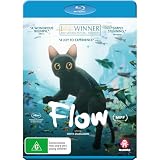
Flow Blu-ray | Animated | $29.90 | Buy on Amazon |
| 3 |
![Mr. Flow ( Mister Flow ) [ Blu-Ray, Reg.A/B/C Import - France ]](https://m.media-amazon.com/images/I/41FI9ICqN5L._SL160_.jpg)
|
Mr. Flow ( Mister Flow ) [ Blu-Ray, Reg.A/B/C Import - France ] | $41.98 | Buy on Amazon |
The upset also signals a broader recalibration in how animation is being evaluated at the highest levels. Flow’s win suggests that voters are no longer measuring animated films solely by technical polish or box-office reach, but by originality, artistic risk, and emotional impact. For independent creators and global animation studios outside Hollywood, the message is unmistakable: the door is open wider than ever. And for Disney and Pixar, it’s a clear indication that innovation, not dominance, is now the currency of awards-season success.
What Exactly Is ‘Flow’? Inside the Film’s Story, Style, and Creative Origins
A Wordless Journey Through a Submerged World
At its most elemental, Flow follows a lone black cat drifting through a world overtaken by rising waters. There is no dialogue, no narration, and no human presence to anchor the audience’s understanding. Instead, the film relies on behavior, movement, and spatial awareness, allowing viewers to project meaning onto the cat’s quiet struggle to survive.
Crashes, No Sound, or Screen Glitches?
Random freezes, missing sound and display glitches usually trace back to one bad driver. Find and replace yours safely.Free scan · under a minuteWindows Errors? Fix Them Before They Spread
Repair common Windows errors and clear accumulated junk for a smoother, more stable PC - no reinstall needed.Free scan · no reinstall#1 Best Overall
- Genre: Family; Animation
- Number of Discs: 2
- Number of Tracks: 0
- Playback Duration: 85
- Rating: PG
As the journey unfolds, the cat encounters other animals, forming a fragile, wordless community shaped by necessity rather than sentimentality. These interactions are never anthropomorphized in a traditional sense. They remain grounded in animal logic, which gives the film an unusual emotional honesty and avoids the familiar beats of studio animation.
Visual Storytelling as the Primary Language
Flow’s most striking feature is its commitment to pure visual storytelling. The camera glides, lingers, and drifts with the characters, often moving like water itself. Long, unbroken shots and carefully paced compositions create a hypnotic rhythm that invites contemplation rather than constant stimulation.
The animation style is deceptively simple, favoring clarity and atmosphere over surface-level detail. Lighting, color gradients, and environmental sound design do the heavy lifting, shaping mood and emotional progression. This restraint stood out sharply to Golden Globes voters accustomed to dialogue-driven storytelling and rapid-fire humor.
The Creative Origins of an Independent Vision
Flow is the work of Latvian filmmaker Gints Zilbalodis, who has steadily built a reputation as a singular voice in animation. Known for working with small teams and maintaining near-total creative control, Zilbalodis wrote, directed, animated, and composed the music for the film. The result feels less like a committee-driven production and more like a personal cinematic statement.
Do these 3 things before closing this tab:
1Repair Windows errors before they cause bigger problems2Fix the driver behind crashes, sound loss and screen glitches3Clear out junk files and repair common Windows errorsDeveloped outside the traditional studio system and produced using accessible tools rather than blockbuster resources, Flow exemplifies what modern independent animation can achieve. Its existence is inseparable from its creative freedom, allowing it to take risks that larger studios often avoid.
Why Its Minimalism Resonated With Voters
Golden Globes voters responded not just to Flow’s craftsmanship, but to its confidence in saying less. In an awards landscape crowded with high-concept premises and vocal performances, the film’s silence became its signature. Its themes of environmental instability, coexistence, and adaptability emerged organically, without overt messaging or exposition.
That universality, paired with its international origins, aligned with the Globes’ evolving identity as a more globally minded institution. Flow didn’t compete with Disney or Pixar on scale or spectacle. It offered something rarer: a reminder that animation can still surprise by stripping itself down to its purest cinematic form.
Why Golden Globes Voters Responded: Emotional Resonance Over Franchise Familiarity
The Golden Globes’ embrace of Flow reflects a broader recalibration in how animated films are evaluated during awards season. Rather than defaulting to brand recognition or technical dazzle, voters gravitated toward a film that trusted emotion, mood, and visual storytelling to carry its impact. In a year crowded with sequels and studio-safe originals, Flow felt disarmingly sincere.
Its victory wasn’t a rejection of Disney or Pixar’s craftsmanship, but an acknowledgment that emotional immediacy can outweigh narrative complexity or franchise pedigree. Flow met viewers on a purely sensory level, allowing interpretation rather than dictating meaning. That openness proved quietly powerful.
A Film That Invites Feeling, Not Consumption
Unlike many studio animated features engineered for maximum accessibility, Flow asks its audience to slow down. There are no signposted emotional beats or comedic resets designed to keep attention locked. Instead, the film unfolds with patience, trusting viewers to engage emotionally rather than passively consume.
For Golden Globes voters, many of whom watch dozens of contenders in rapid succession, that distinction matters. Flow didn’t feel like content to be evaluated; it felt like an experience to be absorbed. That lingering emotional aftereffect is often what separates winners from nominees.
Franchise Fatigue and the Search for Authenticity
While Disney and Pixar continue to produce polished, often heartfelt films, familiarity has become a double-edged sword. Even strong entries can feel constrained by expectations of tone, structure, and audience segmentation. Flow, unburdened by brand identity, operated without those limitations.
Quick wins for a faster PC:
Fix the driver behind crashes, sound loss and screen glitchesFind Drivers →Clear out junk files and repair common Windows errorsFree Scan →Scan for outdated or missing drivers - takes under a minuteDriver Scan →The Globes have historically shown a willingness to reward films that signal artistic independence, particularly when international voices are involved. In this context, Flow represented not just a compelling film, but a refreshing alternative to studio orthodoxy.
Emotion as a Universal Language
Flow’s near-wordless design eliminated cultural barriers, allowing emotion to function as its primary narrative engine. Grief, wonder, fear, and resilience are communicated through movement, sound, and environmental change rather than dialogue. That universality made the film accessible across borders without sacrificing specificity.
For an increasingly international voting body, this kind of storytelling aligns with a global sensibility. Flow didn’t need translation to be understood, and that clarity of feeling gave it an edge over dialogue-heavy contenders.
What the Win Signals About Shifting Tastes
The Golden Globe win suggests a growing appetite for animation that prioritizes mood and thematic depth over familiarity and marketability. Voters appear more willing to champion films that challenge assumptions about what animated features should look or sound like. Flow benefited from that shift, arriving at precisely the right cultural moment.
Its success sends a signal beyond awards season. Independent animation is no longer a novelty category; it’s part of the central conversation. For studios, filmmakers, and audiences alike, Flow’s win hints at a future where emotional risk is not just tolerated, but rewarded.
Disney and Pixar’s 2024 Offerings: Why the Studios Fell Short This Awards Cycle
Against Flow’s ascendance, Disney and Pixar’s 2024 animated slate highlighted a growing disconnect between technical excellence and awards momentum. The films were commercially visible and impeccably produced, but they struggled to generate the kind of critical afterglow that sustains voters through a crowded season. In a year where atmosphere and authorship mattered more than spectacle, polish alone was not enough.
This was not a failure of craft. It was a matter of perception, timing, and creative risk in an awards landscape increasingly drawn to the unexpected.
Sequel Gravity and Creative Predictability
Pixar’s major presence in 2024 leaned heavily on familiar intellectual property, most notably with Inside Out 2. While the film expanded its emotional vocabulary and performed extraordinarily well with audiences, its pleasures were incremental rather than revelatory. For awards voters, the sense of returning to a known emotional framework can subtly dampen enthusiasm, even when execution is strong.
Recommended Free Tools
Rank #2
- Blu-ray Movies
Disney Animation faced a similar challenge across its output, with projects shaped by brand continuity and franchise expectations. These films delivered comfort and clarity, but rarely surprise. In contrast to Flow’s uncharted emotional terrain, they felt carefully calibrated rather than discovered.
Market Strategy Versus Artistic Identity
Both studios continue to operate under immense commercial pressure, and that reality inevitably shapes creative decisions. Broad demographic appeal, merchandising considerations, and global box office performance remain central priorities. The result is animation that often feels engineered for longevity rather than urgency.
Flow benefited from the opposite conditions. Its purpose was not to sustain a brand or extend a universe, but to evoke a specific emotional state. That singularity of intent stood out sharply to voters assessing films as artistic statements rather than market products.
The Limits of Dialogue-Driven Storytelling
Disney and Pixar’s storytelling traditions remain rooted in dialogue, verbal humor, and explicit emotional articulation. While effective for mainstream audiences, this approach can feel overdetermined in an awards context increasingly receptive to subtlety. In 2024, several studio releases spelled out their themes rather than allowing them to emerge organically.
What’s actually slowing this PC down?
Pick the symptom - the matching free tool is one click away.
Flow’s restraint made the contrast unavoidable. By trusting imagery and sound design over exposition, it invited interpretation rather than instruction. That openness aligned with a voting body attuned to global cinema traditions, where silence and ambiguity are often seen as strengths.
When Excellence Becomes the Baseline
Perhaps the greatest challenge Disney and Pixar faced this cycle is one of their own making. Their historical dominance has recalibrated expectations so thoroughly that technical brilliance is assumed. To stand out now, a studio film must not only excel, but redefine.
In 2024, their offerings met the expected standard without radically reshaping it. Flow, arriving from outside the system, had no baseline to meet and everything to prove. That difference, subtle but decisive, helped tilt the Golden Globes conversation away from legacy powerhouses and toward a film that felt newly alive.
The Rise of Independent Animation: How ‘Flow’ Fits a Broader Industry Shift
Flow’s Golden Globe victory did not arrive in a vacuum. It emerged at a moment when independent animation is increasingly challenging the assumption that innovation must come from studios with the deepest pockets. Over the past decade, awards bodies have steadily widened their definition of what animated filmmaking can be, and Flow stands as a clear beneficiary of that evolving perspective.
A Global, Festival-Driven Path to Recognition
Unlike Disney and Pixar releases that debut as global events, Flow built its reputation through festivals and critical advocacy. Its quiet momentum mirrored the path of recent international animated standouts that gained visibility through word of mouth rather than marketing saturation. By the time awards season arrived, Flow already carried the aura of a discovery rather than a product.
Golden Globes voters, increasingly influenced by international cinema trends, responded to that distinction. The film’s aesthetic sensibility and pacing felt closer to European and arthouse animation traditions than to Hollywood spectacle. That alignment mattered in a year when the Globes signaled a renewed interest in global storytelling voices.
Animation Beyond the Family-First Model
Flow also reflects a broader shift away from animation being treated primarily as family-oriented entertainment. Its emotional register is introspective, its storytelling elliptical, and its themes resonate more strongly with adult viewers without alienating younger ones. This flexibility challenges long-standing industry assumptions about what animated films are allowed to be.
As more independent films explore animation as a medium rather than a genre, awards bodies have followed suit. Flow’s win suggests a growing comfort with honoring animated films that do not prioritize jokes, sidekicks, or moral clarity. Instead, mood, atmosphere, and emotional resonance are being valued as legitimate cinematic achievements.
Technology as Expression, Not Spectacle
Another factor separating Flow from its studio competitors is its relationship to technology. Where major studios often emphasize technical advancement as a selling point, Flow uses its tools in service of tone and immersion. Its animation is not designed to impress through scale, but to support a cohesive emotional experience.
This philosophy reflects a wider movement within independent animation, where accessible tools have lowered barriers without flattening artistic ambition. As technology democratizes production, distinct visual identities are no longer confined to studio pipelines. Flow’s success reinforces the idea that originality, not rendering power, is what increasingly captures critical attention.
What the Win Signals for the Industry
Flow’s Golden Globe win signals a recalibration of taste rather than a rejection of studio animation. Disney and Pixar remain central forces, but they now operate within a more pluralistic ecosystem. Independent films are no longer outliers; they are active participants shaping the conversation.
For the global animation industry, this moment carries real implications. Financing models, distribution strategies, and creative risk tolerance may continue to shift as awards recognition validates alternative paths. Flow did not just beat industry giants—it demonstrated that animation’s future is expansive, international, and increasingly defined by artistic intent over institutional scale.
A New Animation Aesthetic: Visual Language, Silence, and Storytelling Without Spectacle
If Flow’s Golden Globe victory represents a shift in values, its aesthetic is where that shift becomes most visible. The film operates on a visual and emotional frequency far removed from the kinetic maximalism associated with Disney and Pixar. Rather than guiding audiences through dialogue-driven exposition or carefully engineered emotional beats, Flow asks viewers to observe, listen, and feel.
This approach places Flow closer to the traditions of international art cinema than mainstream American animation. Its storytelling trusts the audience to interpret meaning through movement, composition, and rhythm. For awards voters increasingly attuned to global cinema language, that restraint reads not as absence, but as confidence.
Visual Language Over Verbal Explanation
Flow communicates almost entirely through images, using framing and pacing as its primary narrative tools. The camera lingers on environments and small physical gestures, allowing emotional context to emerge organically. This visual-first philosophy stands in sharp contrast to studio animation, where dialogue often carries narrative clarity and thematic intent.
The result is a film that feels universal without flattening its specificity. By minimizing spoken language, Flow avoids cultural friction and invites a broader international audience into its world. For Golden Globes voters, whose remit spans global cinema, that accessibility carries real weight.
The Tool Desk
Outbyte PC Repair FREEClear out junk files and repair common Windows errorsFree Scan →Outbyte Driver Updater FREEScan for outdated or missing drivers - takes under a minuteDriver Scan →Rank #3
- Mr. Flow ( Mister Flow )
- Mr. Flow
- Mister Flow
The Power of Silence in Animated Storytelling
Silence is one of Flow’s most radical creative choices. Rather than filling every moment with music cues or comic relief, the film allows quiet to function as emotional space. Ambient sound and negative space become expressive tools, heightening tension and intimacy in ways dialogue-heavy films rarely attempt.
This restraint signals a growing appreciation for animation as a medium capable of subtlety. Silence in Flow is not emptiness; it is an invitation to engage more actively. That level of audience participation aligns with a broader awards-season trend toward films that reward patience and attentiveness.
Rejecting Spectacle Without Sacrificing Impact
Flow’s animation avoids the hyper-detailed textures and explosive set pieces that define many studio releases. Its visuals are stylized, cohesive, and deliberately modest in scale. Instead of chasing awe through technical excess, the film finds power in consistency and tone.
This rejection of spectacle is not a rejection of ambition. Flow proves that emotional resonance can outweigh visual bombast, especially when every creative choice serves a unified vision. In recognizing that achievement, the Golden Globes affirmed that animation’s highest aspirations no longer require the loudest or most expensive presentation.
Global Implications: What ‘Flow’s Win Means for International and Indie Animators
Flow’s Golden Globe victory doesn’t just mark an awards-season upset; it represents a recalibration of who animation’s global gatekeepers are willing to champion. For decades, the category has been dominated by Hollywood studios with near-unlimited resources and built-in cultural reach. This win signals that voters are increasingly open to films that emerge outside those pipelines, especially when they articulate a clear, singular artistic identity.
The message to international animators is unmistakable: you no longer need to sound, look, or narrate like Disney or Pixar to compete on the world stage. Flow succeeded by leaning into its origins rather than sanding them down. In doing so, it reframed difference as an asset, not a liability.
A Breakthrough Moment for Non-English and Visual-First Animation
Flow’s minimal reliance on dialogue carries enormous implications for filmmakers working beyond English-speaking markets. By privileging image, movement, and sound design over spoken language, the film bypasses traditional barriers of translation and localization. That universality made it particularly well-suited to a voting body as internationally oriented as the Golden Globes.
This approach also reasserts animation’s roots as a visual art form rather than a dialogue-driven one. For independent creators with limited access to celebrity voice talent or global marketing campaigns, Flow offers a viable alternative path to recognition. It suggests that clarity of vision can travel farther than familiarity of voice.
Validation for the Indie Pipeline and Festival Circuit
Flow’s ascent underscores the growing importance of festivals, international distributors, and boutique animation studios in shaping awards narratives. Instead of relying on massive studio rollouts, the film built momentum through critical acclaim and word-of-mouth within cinephile circles. That trajectory mirrors the rise of independent live-action cinema over the past decade, now increasingly mirrored in animation.
For emerging animators, this win reinforces the idea that prestige animation is no longer confined to studio systems. Carefully curated festival exposure, coupled with a distinctive artistic voice, can lead to industry-defining moments. The Golden Globes’ recognition validates the indie pipeline as not just viable, but vital.
Pressure on Major Studios to Rethink Creative Risk
While Flow’s win is celebratory for independents, it also places quiet pressure on Disney and Pixar to reassess their creative comfort zones. Their films remain technically exceptional, but the industry conversation is shifting toward originality of form and emotional restraint. Audiences and voters alike appear more receptive to films that challenge expectations rather than reinforce them.
This doesn’t signal the end of studio dominance, but it does suggest a more competitive and diversified future. If major studios respond by embracing greater stylistic risk, Flow’s influence will extend far beyond trophies. Its true legacy may be how it expands the definition of what animated cinema, at its highest level, is allowed to be.
What’s actually slowing this PC down?
Pick the symptom - the matching free tool is one click away.
Awards Season Ripple Effects: How This Victory Could Reshape Future Animated Contenders
Flow’s Golden Globe win doesn’t exist in isolation. It arrives at a moment when awards bodies are increasingly open to redefining what animated excellence looks like, and that openness is likely to echo throughout the remainder of the season. From guild conversations to Oscar ballots, the film’s success reframes how contenders are evaluated, not by scale or brand recognition, but by artistic intent and emotional resonance.
A New Awards Playbook for Animated Campaigns
One immediate ripple effect is how animated films may be positioned during awards campaigns. Flow proved that a restrained, visually driven film can break through without celebrity voice casts or nostalgia-based marketing. That outcome may encourage distributors to foreground craft, tone, and thematic ambition rather than leaning solely on spectacle or humor-driven appeal.
For voters, this shift offers permission to engage with animation more like international art cinema. Flow’s victory suggests that animation can be assessed on the same aesthetic and emotional terms as live-action prestige films. That recalibration could benefit future contenders that sit outside the traditional family-friendly mold.
Greater Visibility for International and Non-English Animation
The Golden Globes have long positioned themselves as internationally minded, and Flow’s win reinforces that identity in a meaningful way. Its success highlights how non-English or dialogue-light animated films can resonate across borders through visual storytelling alone. In an increasingly globalized industry, that universality becomes a competitive advantage rather than a barrier.
Free tools Windows power users keep installed
One-click scans. No signup required.
This moment could embolden international studios to pursue awards runs with greater confidence. As streaming platforms and global distributors continue to invest in animation from outside Hollywood, Flow serves as proof that these films can compete, and win, on the industry’s biggest stages.
Redefining Voter Expectations for Animated Storytelling
Perhaps the most lasting impact lies in how Flow subtly reshapes voter expectations. Its meditative pacing, minimal exposition, and trust in visual language stand in contrast to the densely plotted, dialogue-heavy norm. The Golden Globes’ recognition signals a growing appetite for animation that invites contemplation rather than constant engagement.
Future contenders may take note, exploring quieter emotional spaces or more experimental structures. If animation is increasingly judged by how deeply it communicates without words, the medium’s expressive potential expands dramatically. That evolution could usher in a richer, more diverse slate of animated films year after year.
What This Means Heading Into the Oscars and Beyond
While Golden Globe wins don’t guarantee Oscar success, they do shape perception. Flow now enters the broader awards conversation as a legitimate artistic benchmark rather than a charming outlier. That status can influence how Academy voters approach the animated category, especially those already advocating for broader definitions of excellence.
Do these 3 things before closing this tab:
1Repair Windows errors before they cause bigger problems2Fix the driver behind crashes, sound loss and screen glitches3Clear out junk files and repair common Windows errorsUltimately, Flow’s triumph is less about one trophy and more about what it unlocks. It affirms that animation’s future isn’t bound to a single studio system or storytelling formula. As awards bodies continue to embrace films like Flow, the medium stands poised to enter a new era, one where creative daring is not just rewarded, but expected.
Quick Recap
Product prices and availability are accurate as of the date/time indicated and are subject to change. Any price and availability information displayed on Amazon at the time of purchase will apply.

