At the end of Field of Dreams, Ray understands that “he” means his late father, John—not Shoeless Joe Jackson. When Ray invites John to have a catch, the baseball field gives father and son a chance to reconnect after their relationship was left unresolved. The reveal is clear; broader readings about faith, healing, and second chances are interpretations rather than one exclusive explanation of the film.
What does “If you build it, he will come” mean?
Ray first takes the voice’s instruction as a promise that building a baseball field in his cornfield will bring Shoeless Joe back. He risks the farm to build it, and the story draws other baseball figures to the field as well. But Joe is not the final answer to the voice’s mysterious “he.”
| # | Preview | Product | Price | |
|---|---|---|---|---|
| 1 |
|
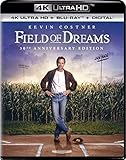
Field of Dreams (4K Ultra HD + Blu-ray + Digital) | $12.99 | Buy on Amazon |
| 2 |
![Field of Dreams [Blu-ray]](https://m.media-amazon.com/images/I/51gGoA3lyAL._SL160_.jpg)
|
Field of Dreams [Blu-ray] | $14.02 | Buy on Amazon |
| 3 |
![Field of Dreams [Blu-ray]](https://m.media-amazon.com/images/I/51Zkn8ncs8L._SL160_.jpg)
|
Field of Dreams [Blu-ray] | $23.73 | Buy on Amazon |
| 4 |
![FIELD OF DREAMS [Blu-ray] [1989]](https://m.media-amazon.com/images/I/51yYp19TYTL._SL160_.jpg)
|
FIELD OF DREAMS [Blu-ray] [1989] | $23.60 | Buy on Amazon |
Near the end, Joe directs Ray’s attention to a young player at home plate. Ray recognizes the player as his father, John, and asks him to have a catch. The ending identifies John as the person the instruction ultimately foretold. The MiLB account also states directly that “he” refers to John, not Joe or Moonlight Graham; the AFI Catalog’s plot summary establishes Ray’s initial focus on Joe and the family history behind the reveal.
Why does Ray’s reunion with his father matter?
Ray and John had a strained relationship, and they did not resolve their differences before John died. The final catch gives them a second chance to share something that mattered to them both. Rather than explaining their past at length, the scene lets a simple game express the connection they can now recover.
Free tools Windows power users keep installed
One-click scans. No signup required.
#1 Best Overall
That simplicity was deliberate, according to Turner Classic Movies’ production-history account. Director Phil Alden Robinson initially wrote and filmed the scene without Ray explicitly identifying the player as his father. Preview audiences were confused about who he was, or read Ray’s silence as unkind, so Robinson added the invitation, “Hey Dad, you wanna have a catch?” TCM reports that Robinson wanted very little said between father and son; the added line makes the relationship unmistakable without turning the reunion into a speech.
How the other baseball stories shape the ending
The visitors’ stories establish a pattern of return and unfinished business before the film brings Ray’s family story to the foreground. Shoeless Joe’s return can be read as restoration after his exclusion from baseball; Terence Mann is drawn back toward baseball and writing; and Moonlight Graham briefly returns to the game he left behind. The AFI plot summary traces these arcs, while the University of Notre Dame’s McGrath Institute essay frames the film around reconciliation and realized dreams.
Rank #2
- Factory sealed DVD
Those stories make the field a place where people can recover something they lost or left unfinished. Ray’s reunion is the most personal resolution: the field he built while expecting Joe becomes the setting for a reconciliation with his father.
Is the ending about faith, family, or baseball?
Family reconciliation is the ending’s explicit emotional resolution: Ray recognizes John, calls him Dad, and they play catch. Faith is one way to interpret how the field and voice bring the characters together, but the film does not provide a single definitive statement that limits its meaning to that reading. The McGrath Institute offers a faith-centered interpretation, emphasizing perseverance and reconciliation and calling Ray’s reunion with his father the film’s most profound reconciliation.
Rank #3
- Factory sealed DVD
Baseball is not merely the mechanism for the supernatural events. It is the shared language through which Ray and John can meet again without needing to settle every old argument in words. These readings can coexist, but they should not be mistaken for proof of one exclusive authorial message.
Independent reader supportYour contribution helps us test, update, and keep practical guides available for everyone.What does the ending say about the real Shoeless Joe Jackson?
The film’s supernatural return is a fictional redemption story, not evidence that the historical Jackson was innocent or guilty in the 1919 Black Sox scandal. MLB.com’s account of the Field of Dreams site and Jackson notes that the controversy over his guilt continues. It also reports that Jackson had 12 hits and made no errors in the 1919 World Series. Those statistics are baseball history, not proof of what Jackson knew about or did in the scandal.
Rank #4
Why the final catch stayed with viewers
The ending’s emotional force comes from making its revelation concrete: Ray gets to do with his father what they could not do after their estrangement and John’s death. W. P. Kinsella, author of the novel Shoeless Joe, later wrote that viewers moved by the ending had contacted him; some men told him they had taken their fathers to games or simply had a catch with them. That is Kinsella’s retrospective account, published by ABC News, rather than a measure of audience response.
Quick Recap
Product prices and availability are accurate as of the date/time indicated and are subject to change. Any price and availability information displayed on Amazon at the time of purchase will apply.
Quick wins for a faster PC:
Scan for outdated or missing drivers - takes under a minuteDriver Scan →Repair Windows errors before they cause bigger problemsFix Now →Fix the driver behind crashes, sound loss and screen glitchesFind Drivers →



