Barack and Michelle Obama’s entry into Hollywood was not a celebrity vanity pivot but a deliberate extension of the storytelling ethos that defined their time in public life. After leaving the White House in 2017, the former president and first lady founded Higher Ground Productions with the stated goal of amplifying underrepresented voices and examining history, culture, and civic life through film and television. The move signaled an ambition to work within mainstream entertainment while maintaining a clear social and educational purpose.
In 2018, Higher Ground formalized its creative direction with a landmark multi-year deal at Netflix, instantly positioning the company as a major player in the streaming era. The agreement covered documentaries, scripted series, feature films, and children’s programming, allowing the Obamas to explore multiple formats without being confined to traditional prestige nonfiction. Crucially, the deal gave them creative autonomy, ensuring projects would reflect personal interests rather than algorithm-driven trends.
| # | Preview | Product | Price | |
|---|---|---|---|---|
| 1 |

|
Biography - Barack Obama | $5.89 | Buy on Amazon |
| 2 |

|
Barack Obama-man & His Journey | $9.99 | Buy on Amazon |
| 3 |

|
Dinesh D'Souza Complete Documentary DVD Collection (Obama's America 2016 / America - Imagine The... | $79.36 | Buy on Amazon |
| 4 |
|
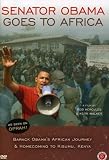
Senator Obama Goes To Africa | $11.83 | Buy on Amazon |
| 5 |

|
Obama | $19.99 | Buy on Amazon |
From Public Service to Cultural Storytelling
Rather than appear onscreen as stars, the Obamas chose a behind-the-scenes producer role, collaborating with acclaimed filmmakers, journalists, and authors. Barack Obama’s long-standing interest in history and global politics paired naturally with Michelle Obama’s focus on education, identity, and community, shaping the thematic backbone of Higher Ground’s slate. This approach allowed their projects to feel cohesive without being narrowly autobiographical.
From its earliest releases, Higher Ground positioned itself at the intersection of prestige cinema and accessible streaming content. The company’s work would span Oscar-winning documentaries, literary adaptations, biographical dramas, and youth-focused series, all unified by an emphasis on empathy, historical context, and civic awareness. Understanding how Higher Ground began is essential to tracing the chronological evolution of every film and series the Obamas would go on to produce, each reflecting a distinct chapter in their post-presidential cultural legacy.
#1 Best Overall
The First Releases (2019): Launching a Mission-Driven Slate on Netflix
Higher Ground’s arrival on Netflix in 2019 was deliberately measured rather than flashy, signaling that the Obamas were more interested in substance than volume. Their first releases established a creative philosophy centered on labor, dignity, and global interconnectedness, themes deeply rooted in Barack Obama’s political worldview and Michelle Obama’s emphasis on lived experience. Rather than leading with celebrity-driven content, Higher Ground debuted with a documentary that asked viewers to grapple with the realities of modern capitalism.
American Factory (2019)
Higher Ground’s first official release was American Factory, a feature-length documentary directed by Steven Bognar and Julia Reichert. The film examines the reopening of a shuttered General Motors plant in Dayton, Ohio, by a Chinese manufacturing company, capturing cultural clashes, labor tensions, and the fragile promise of economic revival. While the Obamas do not appear onscreen, their curatorial influence is evident in the film’s refusal to simplify complex global forces into heroes and villains.
Premiering on Netflix in August 2019, American Factory immediately positioned Higher Ground as a serious player in prestige documentary filmmaking. The project went on to become a cultural touchstone, sparking conversations about globalization, workers’ rights, and the future of American manufacturing. Its success culminated in a historic Academy Award win for Best Documentary Feature, making Barack and Michelle Obama the first former president and first lady to win an Oscar.
American Factory: A Conversation with the Obamas (2019)
Released shortly after the film, American Factory: A Conversation with the Obamas functioned as a companion piece rather than a traditional promotional extra. In this shorter Netflix special, Barack and Michelle Obama sat down with the filmmakers to discuss why the story resonated with them and what it revealed about economic anxiety in a rapidly changing world. The discussion reinforced Higher Ground’s emphasis on dialogue, framing entertainment as a starting point for civic reflection rather than a passive viewing experience.
Together, these two releases defined Higher Ground’s initial public identity. They demonstrated that the Obamas’ post-White House creative ambitions were rooted in elevating overlooked perspectives and tackling structurally complex issues, setting a clear template for the films and series that would follow.
Expanding the Documentary Voice (2020): Social Justice, History, and Personal Stories
After the breakout success of American Factory, Higher Ground entered 2020 with a noticeably broadened documentary mission. Rather than focusing on a single economic system or workplace, the company expanded outward, using nonfiction storytelling to explore civil rights, political awakening, and individual transformation. The result was a trio of projects that underscored how deeply the Obamas viewed documentary cinema as a tool for historical preservation and social empathy.
Crip Camp: A Disability Revolution (2020)
Released on Netflix in January 2020, Crip Camp: A Disability Revolution chronicles the origins of the modern disability rights movement through the unlikely setting of a summer camp in 1970s New York. Directed by Nicole Newnham and Jim LeBrecht, the film traces how the friendships and political consciousness formed at Camp Jened fueled decades of activism, culminating in the passage of the Americans with Disabilities Act.
Higher Ground’s involvement amplified a story that had long existed on the margins of mainstream historical narratives. The film balanced archival footage with deeply personal testimony, framing disability rights as inseparable from broader civil rights struggles. Its impact was immediate, earning widespread critical acclaim and an Academy Award nomination for Best Documentary Feature, further cementing Higher Ground’s reputation for socially urgent storytelling.
Recommended Free Tools
We Are the Dream (2020)
Premiering on HBO in February 2020, We Are the Dream focused on a new generation of young activists commemorating the 50th anniversary of Dr. Martin Luther King Jr.’s assassination. Directed by Davis Guggenheim, the documentary followed four students from Oakland as they prepared to deliver speeches inspired by King’s legacy, linking past movements to present-day calls for racial justice.
The project marked a subtle expansion of Higher Ground beyond Netflix while maintaining its thematic throughline. By centering youth voices, the film emphasized political inheritance and civic responsibility, presenting activism not as an abstract ideal but as a lived, evolving practice shaped by history and personal experience.
Becoming (2020)
In May 2020, Netflix released Becoming, a behind-the-scenes documentary following Michelle Obama on the book tour for her bestselling memoir. Directed by Nadia Hallgren, the film blended intimate vérité moments with public appearances, capturing the emotional resonance of Obama’s message as it connected with audiences across the country.
Unlike Higher Ground’s other documentaries, Becoming leaned heavily into personal storytelling rather than collective movements. Yet its cultural significance was no less substantial, offering a rare, reflective portrait of a public figure grappling with identity, legacy, and visibility. The film demonstrated Higher Ground’s growing versatility, proving that personal narratives could be just as politically resonant as large-scale social histories when framed with honesty and care.
Quick wins for a faster PC:
Repair Windows errors before they cause bigger problemsFix Now →Fix the driver behind crashes, sound loss and screen glitchesFind Drivers →Breaking into Narrative Film (2020–2021): Feature Films, YA Adaptations, and Award Contenders
After establishing Higher Ground as a formidable force in nonfiction, the Obamas made a deliberate pivot into scripted storytelling. Between 2020 and 2021, the company expanded its mandate beyond documentaries, using narrative film and series to explore grief, justice, coming-of-age, and civic identity through accessible, character-driven stories. The shift marked a crucial evolution, positioning Higher Ground as a full-spectrum production company rather than a single-genre brand.
Rank #2
- PRES BARACK OBAMA-THE MAN & HIS JOURNEY (DVD MOVIE)
The Letter for the King (2020)
Higher Ground’s first foray into scripted television arrived with The Letter for the King, a Netflix fantasy series adapted from Tonke Dragt’s beloved Dutch YA novel. Premiering in March 2020, the six-episode series followed a young squire tasked with delivering a secret letter that could determine the fate of a kingdom.
While far removed from contemporary politics, the series reflected Higher Ground’s interest in moral responsibility and youthful agency. Its diverse casting and emphasis on ethical choice aligned with the company’s broader values, even within a genre framework aimed at younger audiences. The project signaled an openness to global source material and genre storytelling as vehicles for universal themes.
Fatherhood (2021)
Released on Netflix in June 2021, Fatherhood marked Higher Ground’s first narrative feature film. Starring Kevin Hart in a dramatic turn, the film was based on Matthew Logelin’s memoir about raising a daughter as a widowed single father after the sudden death of his wife.
Crashes, No Sound, or Screen Glitches?
Random freezes, missing sound and display glitches usually trace back to one bad driver. Find and replace yours safely.Free scan · under a minuteWindows Errors? Fix Them Before They Spread
Repair common Windows errors and clear accumulated junk for a smoother, more stable PC - no reinstall needed.Free scan · no reinstallDirected by Paul Weitz, Fatherhood blended humor and grief with a grounded emotional sensibility. The film stood out for its depiction of Black fatherhood rarely afforded this level of vulnerability in mainstream studio releases. Commercially successful on Netflix, it demonstrated Higher Ground’s ability to deliver crowd-pleasing stories without sacrificing emotional depth or social nuance.
Worth (2021)
Later that year, Higher Ground released Worth, a courtroom drama centered on the creation of the September 11th Victim Compensation Fund. Premiering at the Sundance Film Festival before its Netflix debut in September 2021, the film starred Michael Keaton as attorney Kenneth Feinberg, tasked with assigning monetary value to human life.
Directed by Sara Colangelo, Worth grappled with moral ambiguity, collective grief, and the limits of legal frameworks in the face of national trauma. The film was positioned squarely as an awards contender, earning strong critical notices for its restraint and ethical seriousness. It reinforced Higher Ground’s emerging narrative identity: prestige-driven storytelling rooted in civic questions rather than spectacle.
Ada Twist, Scientist (2021)
Expanding further into scripted series, Higher Ground debuted Ada Twist, Scientist on Netflix in September 2021. Based on Andrea Beaty’s popular children’s book series, the animated show followed a young Black girl with an insatiable curiosity for science, engineering, and problem-solving.
Do these 3 things before closing this tab:
1Fix the driver behind crashes, sound loss and screen glitches2Repair Windows errors before they cause bigger problems3Scan for outdated or missing drivers - takes under a minuteWhile aimed at preschool audiences, the series carried the company’s thematic throughline of empowerment through knowledge. By centering STEM education, creativity, and perseverance, Ada Twist extended Higher Ground’s cultural mission to its youngest viewers, reinforcing the idea that storytelling can shape civic and intellectual identity from an early age.
Together, these projects represented a decisive creative expansion. By the end of 2021, Higher Ground had successfully crossed into narrative film and scripted television, balancing commercial appeal with the same ethical and cultural considerations that defined its documentary work.
Series with a Purpose (2021–2022): Education, Leadership, and Global Perspectives
As Higher Ground moved deeper into television, the company’s focus sharpened around series designed to educate, contextualize power, and broaden global awareness. Between 2021 and 2022, the Obamas leaned heavily into episodic storytelling as a civic tool, using accessible formats to explore food equity, democracy, governance, and environmental stewardship. These projects reinforced Higher Ground’s identity as a producer of ideas-forward content built for wide audiences.
Waffles + Mochi (2021)
Premiering on Netflix in March 2021, Waffles + Mochi marked Higher Ground’s first foray into live-action children’s television. Executive produced by Michelle Obama, who also appeared onscreen, the series followed two puppet friends traveling the world to learn about food, cooking, and where ingredients come from.
Free tools Windows power users keep installed
One-click scans. No signup required.
Brightly produced and intentionally playful, the show doubled as a primer on nutrition, global cultures, and healthy eating habits. While clearly aimed at younger viewers, Waffles + Mochi aligned with Michelle Obama’s long-standing advocacy around food access and wellness, translating policy-adjacent concerns into family-friendly entertainment.
We The People (2021)
Later that year, Higher Ground released We The People, an animated anthology series built around the U.S. Constitution and civic participation. Produced in collaboration with Kenya Barris, the Netflix series used short musical episodes to explore concepts like freedom of speech, due process, and equal protection under the law.
The show’s distinctive approach blended pop music, animation, and civics education, targeting teens and young adults often underserved by traditional political programming. In an era of heightened democratic anxiety, We The People positioned itself as both a cultural intervention and an educational resource, reaffirming Higher Ground’s belief that democracy depends on accessible storytelling.
Our Great National Parks (2022)
In April 2022, Higher Ground expanded its global footprint with Our Great National Parks, a five-part documentary series narrated by Barack Obama. Streaming on Netflix, the series explored national parks across the world, from Chilean Patagonia to the Congo Basin, highlighting biodiversity, conservation, and the delicate balance between human development and natural preservation.
What’s actually slowing this PC down?
Pick the symptom - the matching free tool is one click away.
Visually ambitious and internationally scoped, the series blended nature filmmaking with quiet political subtext. Obama’s narration framed environmental stewardship as a shared global responsibility, elevating the series beyond traditional wildlife programming and into the realm of soft-power storytelling.
The G Word with Adam Conover (2022)
Released in May 2022, The G Word with Adam Conover took on one of Higher Ground’s most ambitious goals: demystifying how government actually works. Hosted by comedian and educator Adam Conover, the Netflix series examined federal bureaucracy, public services, and the unintended consequences of policy decisions.
Balancing humor with investigative rigor, the show aimed to counter cynicism by explaining government as a human system shaped by incentives and constraints. As executive producers, the Obamas used The G Word to reframe governance not as abstraction, but as a lived structure that quietly shapes everyday life.
Together, these series represented a deliberate pivot toward scalable, idea-driven television. By 2022, Higher Ground had firmly established itself as a producer willing to engage young audiences, global issues, and complex systems through formats designed to inform without alienating, and to entertain without diluting purpose.
Broadening Genres and Audiences (2022–2023): Family Entertainment, Sports, and Cultural Storytelling
By late 2022, Higher Ground Productions entered a phase defined less by civics-forward television and more by strategic genre expansion. The company began reaching younger viewers, prestige film audiences, and mainstream streaming subscribers, while maintaining its underlying commitment to cultural reflection and historical relevance.
This period demonstrated how the Obamas’ producing philosophy could translate across formats, from children’s animation to awards-season cinema, without losing thematic cohesion.
Ada Twist, Scientist (Season 3, 2022)
Higher Ground’s commitment to family-friendly storytelling continued with the third season of Ada Twist, Scientist, which premiered on Netflix in 2022. Based on Andrea Beaty’s bestselling book series, the animated show followed a curious young Black girl who approaches everyday problems through scientific thinking and experimentation.
While firmly aimed at preschool audiences, the series carried Higher Ground’s broader values: curiosity, critical thinking, and representation. By centering a young girl of color as a scientist-in-the-making, the show functioned as both entertainment and early educational intervention, expanding the Obamas’ cultural reach to the youngest possible demographic.
The Tool Desk
Outbyte PC Repair FREERepair Windows errors before they cause bigger problemsFix Now →Outbyte Driver Updater FREEFix the driver behind crashes, sound loss and screen glitchesFind Drivers →Descendant (2022)
Premiering at the 2022 Sundance Film Festival before debuting on Netflix, Descendant marked one of Higher Ground’s most critically lauded documentary efforts. Directed by Margaret Brown, the film examined the discovery of the Clotilda, the last known slave ship to arrive in the United States, and its connection to Africatown, Alabama.
Rather than treating history as distant abstraction, Descendant focused on living descendants reckoning with generational trauma and cultural preservation. The film underscored Higher Ground’s ability to support rigorous historical storytelling while centering Black voices, local memory, and contemporary consequence.
Rustin (2023)
With Rustin, Higher Ground made a decisive move into prestige narrative filmmaking. Released on Netflix in November 2023, the biographical drama starred Colman Domingo as Bayard Rustin, the openly gay civil rights strategist who played a central role in organizing the 1963 March on Washington.
Rank #4
The film reframed a familiar chapter of American history by spotlighting a figure long marginalized within it. As producers, the Obamas used Rustin to merge historical correction with mainstream accessibility, positioning the film as both awards contender and cultural reckoning.
The Light We Carry (2023)
Released in December 2023, The Light We Carry served as a companion piece to Michelle Obama’s bestselling book of the same name. Part documentary, part live event, the Netflix special followed Obama on tour as she reflected on identity, resilience, and connection in uncertain times.
Intimate in tone and direct in address, the project leaned into personal storytelling rather than institutional analysis. It reinforced Higher Ground’s interest in emotional accessibility, using lived experience as a bridge between public figures and private audiences.
Leave the World Behind (2023)
Higher Ground closed out 2023 with its most commercially ambitious project to date. Leave the World Behind, a Netflix-backed psychological thriller directed by Sam Esmail and starring Julia Roberts, Mahershala Ali, and Ethan Hawke, premiered in December after a brief theatrical run.
Though genre-driven, the film echoed familiar Higher Ground concerns: societal fragility, technological dependence, and the erosion of trust. As executive producers, the Obamas demonstrated that their brand of storytelling could extend into high-concept fiction, using suspense and spectacle to explore modern anxieties without overt political framing.
Recommended Free Tools
Recent and Ongoing Projects (2024–Present): The Latest Films, Series, and What’s Next
As Higher Ground moved into 2024, the company entered a phase defined less by experimentation and more by range. With its Netflix partnership firmly established, the Obama-backed banner expanded across documentary features, unscripted series, and global nature storytelling, while continuing to develop high-profile narrative projects behind the scenes.
The Greatest Night in Pop (2024)
Released on Netflix in January 2024, The Greatest Night in Pop revisited the creation of “We Are the World,” the 1985 charity single that brought together dozens of music icons for famine relief. Directed by Bao Nguyen, the documentary blended archival footage with new interviews to reconstruct a singular moment in pop culture history.
Higher Ground’s involvement underscored its ongoing interest in collective action and cultural memory. The film framed celebrity not as spectacle but as leverage, examining how art, politics, and logistics collided during one extraordinary night with global consequences.
The Later Daters (2024)
Premiering in late 2024, The Later Daters marked Higher Ground’s most explicit foray into relationship-based unscripted television. The Netflix series followed singles in their 50s, 60s, and 70s as they navigated love, vulnerability, and companionship later in life.
Outdated Drivers Are Slowing You Down
One free scan finds every outdated or missing driver and matches the right update for your exact hardware.Free scan · exact hardware matchPC Slower Than It Used to Be?
A free scan shows the junk files, broken settings and background clutter dragging Windows down - then fixes them in one click.Free scan · Windows 10 & 11Warm, character-driven, and free of competitive gimmicks, the show aligned with the Obamas’ preference for dignity-forward storytelling. By spotlighting aging and romance without irony, the series expanded the company’s thematic focus on identity and connection across life stages.
Our Oceans (2024)
Released globally on Netflix in November 2024, Our Oceans was a five-part nature documentary series narrated by Barack Obama. Each episode explored a different oceanic region, combining cutting-edge cinematography with environmental science and conservation messaging.
The project reflected Higher Ground’s growing engagement with climate storytelling. Rather than framing environmental collapse abstractly, the series emphasized interdependence, illustrating how ocean health directly shapes human futures.
Upcoming Scripted Films and Series (In Development)
Beyond its 2024 releases, Higher Ground continues to develop several scripted projects that signal a return to prestige narrative filmmaking. Among the most closely watched is the long-gestating adaptation of Mohsin Hamid’s novel Exit West, a speculative romance centered on migration and displacement.
What’s actually slowing this PC down?
Pick the symptom - the matching free tool is one click away.
The company is also attached to multiple literary adaptations and original scripts for film and television, many of which remain deliberately under wraps. Consistent with past strategy, Higher Ground appears focused on patience over volume, positioning future releases as event-level projects rather than content churn.
Best Value
What Higher Ground Is Building Toward
Taken together, the Obamas’ recent and ongoing work suggests a production identity that is increasingly confident and diversified. Documentary remains the backbone, but unscripted formats, nature programming, and genre storytelling now coexist within the slate.
Rather than chasing trends, Higher Ground’s post-2023 projects reinforce a clear philosophy: stories that broaden empathy, contextualize power, and meet audiences where they are, whether through pop nostalgia, environmental urgency, or intimate human connection.
Thematic Throughlines and Cultural Impact: What the Obama Filmography Says About Power, Identity, and Change
Across Higher Ground’s growing slate, a clear creative philosophy emerges. Whether through documentaries, children’s programming, or prestige scripted work, the Obamas consistently interrogate how power operates, how identity is formed, and how individuals navigate systems larger than themselves. The result is not a partisan body of work, but a deeply civic one.
Rather than offering simple uplift, these projects invite viewers to engage with complexity. They frame social change as incremental, collective, and often uncomfortable, reflecting a worldview shaped by lived experience inside institutions rather than outside them.
Power as Structure, Not Spectacle
One of the defining traits of the Obama filmography is its treatment of power as a system rather than a personality. In American Factory, power emerges through economic imbalance and globalization, while in Descendant, it manifests in the long shadow of historical erasure. Even Our Great National Parks and Our Oceans explore power indirectly, examining who controls land, resources, and environmental narratives.
This approach resists the hero-villain binary common in political storytelling. Instead, Higher Ground’s films ask audiences to consider how policies, industries, and histories quietly shape everyday life, often long after the headlines fade.
Identity as Lived Experience
Questions of identity run through nearly every Higher Ground release, but rarely in abstract terms. Projects like Becoming and We Are the Dream foreground identity as something shaped by memory, community, and generational struggle. Waffles + Mochi and later family-oriented programming translate those ideas for younger audiences, framing identity as curiosity, empathy, and self-discovery.
The Tool Desk
Outbyte PC Repair FREERepair Windows errors before they cause bigger problemsFix Now →Outbyte Driver Updater FREEFix the driver behind crashes, sound loss and screen glitchesFind Drivers →Importantly, these stories center people defining themselves rather than being defined by institutions. That emphasis reflects Michelle Obama’s influence in particular, positioning identity as active and evolving rather than fixed or imposed.
Change as Process, Not Moment
Higher Ground’s work consistently challenges the idea that change arrives through singular breakthroughs. Crip Camp traces decades of disability activism; Rustin examines the unseen labor behind the March on Washington; The Light We Carry focuses on emotional resilience rather than political wins. Even lighter projects like Working: What We Do All Day emphasize continuity over climax.
This long-view perspective distinguishes the company from issue-driven media cycles. Change, in the Obama worldview, is slow, collective, and sustained by relationships rather than rhetoric.
Cultural Impact Beyond Politics
While Higher Ground is inseparable from the Obamas’ public identities, its cultural impact extends beyond political affiliation. The films and series have influenced how mainstream audiences engage with labor, disability, environmentalism, and civic participation, often reaching viewers who might not seek out explicitly political content.
By prioritizing craft, accessibility, and emotional intelligence, the company has helped normalize socially engaged storytelling within major streaming ecosystems. In doing so, it has expanded the space for documentaries and message-driven entertainment to coexist with prestige drama and family programming.
Taken as a whole, the Obama filmography reads less like a brand extension and more like a long-term cultural project. It reflects a belief that storytelling can clarify complexity, humanize systems, and foster empathy without prescribing answers. In an era of polarized media, Higher Ground’s most radical choice may be its insistence on patience, nuance, and the quiet power of listening.
Quick Recap
Product prices and availability are accurate as of the date/time indicated and are subject to change. Any price and availability information displayed on Amazon at the time of purchase will apply.

