Free tools Windows power users keep installed
One-click scans. No signup required.
Yes—a familiar song can bring back a specific childhood memory, not just a general feeling of the past. But there is no single song everyone remembers: the soundtrack of childhood depends on what you heard, who played it, and what mattered to you.
Why a song can bring a childhood memory back
Music can act as a cue for autobiographical memory: hearing a song may bring to mind an event or period from your own life. Recognition matters, but so does personal significance. In a study of adults over 40, personally significant songs were more likely to be linked with episodic memories than songs participants considered personally insignificant. [c003]


Familiarity may also help. A 2024 study of 75 cognitively healthy adults aged 65–80 found a positive association between self-reported familiarity and music-evoked autobiographical memories. That result describes the study sample, not a guarantee that every familiar song will unlock a memory for every listener. [c006]
Which years tend to stay with us?
Researchers often describe a “reminiscence bump”: a higher rate of recall or emotional connection to music from certain life periods, commonly adolescence and early adulthood. The peak shifts with the question asked and the way memory is measured, so studies do not establish one universal age when music becomes memorable.
#1 Best Overall
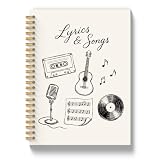
- 【Practical Spiral Binding】 Featuring a beautiful water-resistant hardcover and high-quality spiral binding, this notebook ensures smooth page turning and secure pages that won’t come loose. It lays flat for a more comfortable and efficient writing experience
- 【Ideal On-the-Go Size】 Designed at a convenient 8.3 x 5.17 inches, these notebooks strike the perfect balance between portability and usability—easy to carry in backpacks, totes, or briefcases.
- 【Distinctive & Inspiring Designs】 Featuring thoughtfully created, original covers, each notebook reflects individuality while sparking creativity and personal expression.
- 【Versatile Everyday Use】 Whether for note-taking, journaling, planning, or brainstorming, these multifunctional notebooks adapt effortlessly to your daily needs.
- 【Thoughtful Gift Choice】 Stylish yet practical, UYRSF notebooks make meaningful gifts for students, professionals, and loved ones—perfect for any occasion.
Memorable events and meaningful songs show different peaks
- In a study of 88 people aged 20–22, memories of a single memorable music event peaked for events that occurred when participants were 13–14. This was a particular sample and task, not a universal rule. [c004]
- A 2025 study of 1,891 participants found an inverted-U pattern in the release years of personally meaningful songs, with the distribution peaking around age 17. It measured meaningful songs, not childhood memories specifically. [c002]
These findings are not contradictory: one asks about a memorable music event, while the other examines personally meaningful songs. Neither says that everyone’s strongest music memories begin at the same age.
Childhood listening can include your parents’ music
Krumhansl and Zupnick’s 2013 study found peaks in young adults’ memories, recognition, preferences, and emotional responses for music from both their own generation and their parents’ generation. They called this pattern “cascading reminiscence bumps” and suggested that hearing music at home during childhood may help account for the older-generation peak. [c005]
Rank #2
In the 2024 study of adults aged 65–80, music associated with middle childhood (ages 5–9), as well as adolescence (14–18), was more likely to evoke memories than music associated with ages 20–25 after familiarity was taken into account. This is a result from that sample, not a prediction for every listener. [c006]
There is no universal childhood soundtrack
An exact-phrase forum discussion from 2004 has people swapping memories of childhood songs and rhymes, but it does not identify one song that the question must mean. Those posts are personal recollections, not evidence that a track was shared by a whole generation or region. [c001]
Quick wins for a faster PC:
Clear out junk files and repair common Windows errorsFree Scan →Scan for outdated or missing drivers - takes under a minuteDriver Scan →Rank #3

- 【Meaningful Music Gifts】Featuring the inspiring quote “Music Is What Feelings Sound Like” and an elegant guitar note design, this journal makes a thoughtful gift for music lovers, musicians, guitar players, choir members, music teachers, and anyone who feels deeply connected to music
- 【Music Journal Gift for Any Occasion】A wonderful choice for birthdays, Christmas, graduation, or teacher appreciation. Ideal as music teacher gifts, gifts for songwriters, band members, and students learning instruments
- 【Premium PU Leather Cover】Crafted with soft-touch PU leather and detailed embossed artwork, this notebook offers a classic vintage look with a refined feel. The elastic closure keeps pages secure and protected wherever you go
- 【Versatile for Writing & Creativity】Includes 140 pages with both lined and blank layouts—perfect for songwriting, journaling, note-taking, lyric drafts, class notes, or daily reflections. Designed with a storage pouch and small card slots for keeping tickets, setlists, or small keepsakes neatly organized
- 【Compact & Easy to Carry】Measuring 4.7 × 7.8 inches, this lightweight and portable journal fits easily into bags or backpacks. Great for school, studio sessions, church choir practice, travel, or everyday use
A 2023 cross-cultural study collected 24,120 recalled songs from 4,824 participants in 102 countries and reported broad musical reminiscence-bump patterns across countries, age groups, sexes, and genres. That supports recurring patterns in when people recall music; it does not mean people everywhere remember the same songs. [c007]
Independent reader supportYour contribution helps us test, update, and keep practical guides available for everyone.How to pin down the song you remember
If you are trying to identify a half-remembered childhood song, start with the memory around it rather than assuming the song was a hit everyone knew. These details can help narrow your own recollection:
- Age: About how old were you when you heard it?
- Familiarity: Was it played repeatedly, or did you hear it only once?
- Personal significance: Does it connect to a particular person, event, or period?
- Who played it: Was it a parent’s music, a school song, a family sing-along, or something you chose yourself?
- What the memory contains: Do you remember the song itself, or the room, people, and occasion surrounding it?
These are prompts for your own memory, not a method that can confirm a song’s identity. The studies support the relevance of age, familiarity, and personal significance; the details of a listener’s setting remain personal.
Quick Recap
Product prices and availability are accurate as of the date/time indicated and are subject to change. Any price and availability information displayed on Amazon at the time of purchase will apply.




