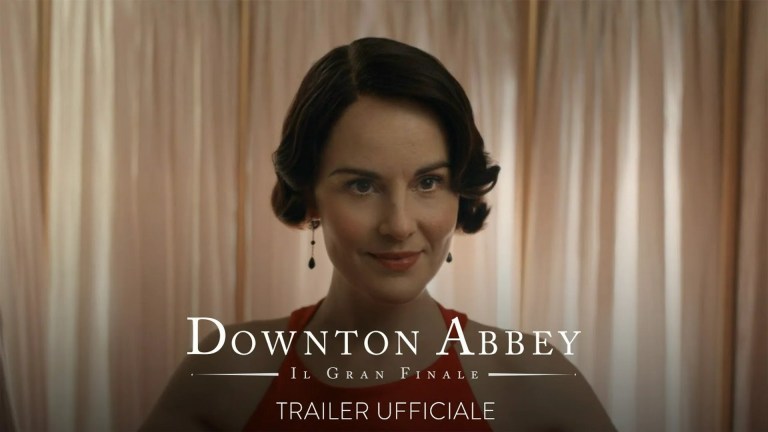
Full spoilers for Downton Abbey: The Grand Finale and the wider series follow. The film ends with Mary Crawley becoming the new authority at Downton. Robert and Cora retire to the estate’s Dower House, Grantham House in London is sold to fund Downton’s future, and the younger generation takes over both upstairs and downstairs. The final dance in the great hall is not confirmed to be a literal haunting: it is best understood as Mary’s memory, and as a farewell to the people and performances that made Downton what it is.
The ending in plain terms
Downton Abbey: The Grand Finale closes the Crawley family story by making change the condition of survival. Downton does not remain frozen in the form it had at the beginning of the television series. Instead:
- Mary becomes Downton’s principal leader. She remains at the Abbey with her children, George and Caroline.
- Robert and Cora move to the Dower House. They stay on the estate, but Robert gives up day-to-day control of the main house.
- Grantham House is sold. The family can no longer afford to maintain multiple grand residences, so the proceeds are used to protect Downton and improve the estate cottages.
- The servants’ hierarchy changes. Andy becomes butler, Daisy takes over the kitchen, and Carson and Mrs Patmore retire.
- Mary is not given a romantic ending. Her divorce from Henry Talbot leaves her socially vulnerable, but the resolution is her acceptance of responsibility—not a second marriage.
- The final gathering of familiar faces is memory rather than a supernatural revelation. Matthew, Sybil, Violet, and the other figures in the hall represent Downton’s emotional past.
The result is a passing of the torch. The old Downton is not destroyed, but its leadership, finances, social rules, and household structure have all been reorganized.
Why does Mary take control of Downton?
Mary’s succession is connected to the film’s central crisis. By 1930, her divorce from Henry Talbot has made her a scandalous figure in the eyes of fashionable society. She is excluded from a London party and refused entry to the royal enclosure at Ascot. The rejection is not merely personal humiliation: it threatens the Crawley family’s social standing and makes Mary appear, to the old order, like an unsuitable public face for Downton.
What’s actually slowing this PC down?
Pick the symptom - the matching free tool is one click away.
#1 Best Overall

- The New York Times called it Superb! and Time found it Ultimately rewarding.with a sterling cast.This acclaimed adaptation of Paul Scot's masterpiece, The Raj Quartet, won over 20 international awards, including a Golden Globe and an Emmy. Filmed on location, it re-creates the turbulent period when British colonial rule in India came crashing down. The memorable cast includes Dame Peggy Ashcr
Mary’s situation becomes more dangerous when she sleeps with Gus Sambrook. Gus then tries to exploit the possibility that he could reveal the affair. He wants Mary to support his attempt to recover money lost from the Levinson family fortune. Mary refuses to be blackmailed, even though disclosure could damage her further.
Edith steps in and confronts Gus, threatening to destroy his reputation. Tom investigates and discovers that Gus has a history as a con artist. Once Gus is exposed, the immediate threat to Mary and the family disappears. Crucially, Mary does not regain her position because Gus’s scheme somehow succeeds, and she does not regain it through a new romantic match. She survives the crisis by refusing to be controlled and by accepting the consequences of her own choices.
Tom Branson and Bertie Pelham then persuade Robert that Mary is the person best equipped to lead Downton. Robert’s acceptance is difficult because handing over the estate means admitting that his own role must change. Mary has the practical knowledge, toughness, and emotional investment required to manage a modern estate. She is also raising George and Caroline, which makes the transfer part of a longer family succession rather than an isolated administrative decision.
Mary’s authority is therefore not a consolation prize for losing Henry. It is the film’s recognition that she has become the Crawley most capable of carrying Downton into the future, even as a divorced woman and single mother facing a less deferential society.
The Tool Desk
Outbyte PC Repair FREERepair Windows errors before they cause bigger problemsFix Now →Outbyte Driver Updater FREEScan for outdated or missing drivers - takes under a minuteDriver Scan →What happens to the Crawley family’s money?
The financial problem begins with the expected inheritance from Cora’s late mother’s estate. Cora’s brother Harold arrives with bad news: the money has effectively disappeared. Gus took it from the New York market before the 1929 crash and then lost it through further investments. The family’s hoped-for financial rescue is therefore not available.
That failure exposes the weakness of the old Crawley lifestyle. Maintaining Downton is already expensive, and the family is also carrying Grantham House, its London residence. Mary has argued that the London townhouse should be sold, because preserving every symbol of status is less important than keeping the principal estate viable.
By the conclusion, Robert agrees to sell Grantham House. The money is directed toward securing Downton and making practical improvements, including work on the estate cottages. The family also plans to use a large London flat instead of maintaining an expensive townhouse.
This is a deliberately modest form of aristocratic adaptation. The Crawleys are not suddenly wealthy again, and Gus’s financial plan does not save them. They survive by reducing overhead, concentrating their resources, and investing in the people and buildings that keep Downton functioning. The sale of Grantham House is one of the clearest signs that the film’s ending is about efficiency replacing display.
Recommended Free Tools
Rank #2

- Follows Dr Michaela Mike Quinn's pioneering journey
- Set in a time when women were expected to be silent
- Stars Jane Seymour as the independent Dr Quinn
Why do Robert and Cora leave the main house?
Robert and Cora do not abandon Downton. They move to the Dower House, the smaller residence on the same estate that had been associated with Violet.
Practically, the move creates room for Mary to run the main house. Symbolically, it marks Robert and Cora’s retirement from active leadership. Robert remains the Earl of Grantham, and Cora remains close to the family, but the authority attached to the main house now belongs to Mary.
Their walk away from the Abbey, while the family and servants wave goodbye, resembles a formal ceremony. It is not a punishment or a sign that the Crawleys have lost everything. It is a deliberate transfer of responsibility. Robert understands that preserving Downton requires him to stop treating its traditional structure as untouchable.
What happens to Mary and Edith?
Mary and Edith finally reach a more mature understanding of each other. Their rivalry was one of the defining tensions of the series, but the film no longer presents them as competing for the same future.
Quick wins for a faster PC:
Clear out junk files and repair common Windows errorsFree Scan →Fix the driver behind crashes, sound loss and screen glitchesFind Drivers →Repair Windows errors before they cause bigger problemsFix Now →Edith is happily married to Bertie Pelham and remains professionally powerful through her newspaper. She has her own marriage, influence, and identity, while Mary faces the immediate public and practical crisis at Downton. Edith uses her position to help Mary rather than undermine her.
Their final parting is emotional because it feels like a genuine goodbye between sisters whose relationship has finally outgrown its old bitterness. Edith does not take over Downton, but she becomes one of Mary’s strongest allies. The film gives both women authority, just in different forms: Mary inherits responsibility for the estate, while Edith possesses a public and professional influence of her own.
How does Mary recover socially?
After Mary is rejected by London society, Cora organizes a dinner at Downton. The plan initially falters because many local guests decline their invitations. Edith proposes inviting Guy Dexter, the famous actor, and Noël Coward, the celebrated playwright. Once those names are attached to the event, its social appeal changes: invitations are withdrawn and then restored, and the dinner becomes a success.
Coward plays the piano and recognizes material from Mary’s life that could become the basis of a future play, echoing the world of Private Lives. The scene does not pretend that Mary’s divorce never happened. Instead, it shows a different kind of social legitimacy emerging around her. Popularity, talent, celebrity, and personal loyalty can matter as much as the rigid approval of the aristocratic establishment.
Rank #3

- This fascinating and entertaining 5-DVD set of rare television dramas, broadcast both live and filmed from 1951 to 1960, stars such up-and-coming performers as James Dean, Natalie Wood, Paul Newman, Joanne Woodward, Michael Landon, and Suzanne Pleshette, as well as established legends such as Ray Milland, Loretta Young, David Niven, Walter Brennan, Mickey Rooney, and many other luminaries of the b
The dinner also connects Downton’s familiar drawing-room rituals with the faster and more theatrical culture of the 1930s. Mary is not restored simply because the old social system changes its mind. She finds a new route back into public life through the people and cultural forces that the old system cannot fully control.
What is the significance of the Yorkshire Show?
The Yorkshire Show gives Mary a different kind of acceptance. In London, she is rejected by an elite society concerned with scandal and appearances. In Yorkshire, her relationship with the estate community matters more.
Daisy’s ideas are taken seriously during the show, and Carson supports her against the local establishment figure Sir Hector Moreland. The event succeeds, demonstrating that the younger generation can contribute ideas rather than merely carry out instructions from the old hierarchy.
Mary presents the final cup to Daisy’s father-in-law, Mr Mason. The moment connects her publicly with the local community and with the people whose work and cooperation help keep the estate alive. It also helps explain why Robert can trust her with Downton. She is not simply inheriting property; she is learning to act as the steward of a community, its staff, and its institutions.
Free tools Windows power users keep installed
One-click scans. No signup required.
What happens to the servants?
The downstairs story mirrors the transfer of power upstairs. Downton’s future depends on younger people taking responsibility while the old guard learns to step aside.
- Carson retires for good. Retirement is difficult for him because service has defined his identity for decades. Andy is now the butler, and Carson must learn to let his successor do the job.
- Mrs Hughes remains housekeeper. She continues to anchor the running of Downton while the household changes around her.
- Mrs Patmore retires. She goes to live with Mr Mason, leaving the kitchen to Daisy.
- Daisy takes over the kitchen. Her promotion gives the servant structure a capable younger successor instead of allowing the old kitchen hierarchy to end without continuity.
- Bates moves to the Dower House. He becomes Robert’s valet as Robert and Cora establish their new household there.
- Anna becomes Cora’s lady’s maid. Anna is pregnant and asks Mary to be godmother to her unborn child. Mary happily accepts, linking the family’s future to the next generation of servants as well as Crawleys.
- Thomas Barrow returns with Guy Dexter. Thomas and Guy are openly established as partners as well as professional associates. At the successful Downton dinner, Thomas is invited upstairs for coffee, a small but meaningful sign of increased social acceptance.
These outcomes are not separate epilogues. Together, they show the household becoming less rigid. Experience still matters, but authority is no longer reserved exclusively for the people who inherited their roles from an earlier age.
What does the final hall scene mean?
After the family and servants leave the main house, Mary walks alone through the great hall. She then sees the familiar Downton figures dancing together, including Matthew Crawley, Sybil Crawley, and Violet Crawley, all of whom are dead within the story.
The film does not establish that Downton has literally become haunted. The strongest reading is that Mary is experiencing a subjective memory or vision, while the film uses earlier or archival footage to bring the ensemble’s past into the closing scene. It is also a cinematic farewell to the audience: the house appears filled, one last time, with the people who gave it emotional meaning.
Rank #4
![Dr. Quinn, Medicine Woman - The Complete Season 2 [Region 1]](https://m.media-amazon.com/images/I/412fdk-3gDL._SL160_.jpg)
- Factory sealed DVD
Why Matthew appears
Matthew was Mary’s great lost love, and his marriage to her helped secure the path that ultimately allowed her future at Downton. His appearance represents both personal grief and the family history that made Mary’s position possible. The scene acknowledges that Mary’s strength was shaped by losses she never simply moved beyond.
Why Sybil appears
Sybil represents the family’s lost youth and its most hopeful commitment to social change. Her life connected the aristocratic Crawleys with a different political and social future, and her death remains one of the defining wounds of the story. Including her in the dance reminds Mary—and the audience—that progress has always carried a cost.
Why Violet appears
Violet embodies the older order: its wit, authority, traditions, and contradictions. Her presence brings the story back to the character whose intelligence and force shaped so many of Downton’s earlier conflicts.
The camera then rests on Violet’s portrait before the film pays tribute to Dame Maggie Smith, who died in 2024. The moment works on two levels. It says goodbye to Violet as a fictional character and to Smith’s defining performance, turning Downton’s farewell into a real-world memorial as well.
Are the people in the final dance ghosts?
Not in any confirmed literal sense. The sequence can be interpreted as a vision, a memory, or a stylized montage, but the film does not establish a supernatural plot. Treating the dancers as ghosts misses the scene’s main purpose: they are the emotional history of Downton appearing to Mary at the moment she inherits its future.
The dead characters do not return to change the story or reverse their deaths. Their presence says that continuity is made from memory. Mary can lead Downton precisely because she carries the people and experiences that came before her.
Independent reader supportYour contribution helps us test, update, and keep practical guides available for everyone.What the ending says about Downton’s future
The story runs from 1912 to 1930, a period in which the social role of aristocratic families changed dramatically. The Crawleys can continue only by surrendering parts of the lifestyle that once defined their status.
They sell the London house, move Robert and Cora to the Dower House, place Mary in charge, improve the estate cottages, and allow younger servants to advance. None of these changes erases the old world. Rather, they reorganize it around what can still function.
Do these 3 things before closing this tab:
1Scan for outdated or missing drivers - takes under a minute2Repair Windows errors before they cause bigger problems3Fix the driver behind crashes, sound loss and screen glitchesBest Value

- Factory sealed DVD
That is why the ending is hopeful without being sentimental. Downton survives, but not because it remains untouched. It survives because Mary accepts a different kind of leadership, the family gives up expensive symbols, the staff develops its own successors, and the estate becomes more accountable to the community around it.
The final dance expresses the same idea emotionally. The future belongs to Mary, George, Caroline, Anna’s unborn child, Daisy, Andy, and the other younger figures. But that future is built from the memories of Matthew, Sybil, Violet, and everyone else who shaped the house. Continuity does not require sameness.
Is this the end of the Downton Abbey franchise?
It is the final chapter for this ensemble, this period, and this group of actors. The film provides a deliberate farewell rather than ending on a cliffhanger that requires another sequel.
That does not amount to an absolute promise that no story set in the wider Downton world could ever exist. Julian Fellowes has left open the possibility that Downton might someday be revisited with different characters, a different period, or different actors. The same-ensemble story, however, reaches its natural conclusion here.
PC Slower Than It Used to Be?
A free scan shows the junk files, broken settings and background clutter dragging Windows down - then fixes them in one click.Free scan · Windows 10 & 11Outdated Drivers Are Slowing You Down
One free scan finds every outdated or missing driver and matches the right update for your exact hardware.Free scan · exact hardware matchIf you want to revisit the ending
The closing montage is designed to reward a rewatch of the earlier story, especially Mary and Matthew’s relationship, Sybil’s place in the Crawley family, Violet’s influence, and the long evolution of the servants. For a permanent, broadly compatible copy, look for the Downton Abbey: The Grand Finale DVD in your region. Collectors and home-cinema viewers may instead prefer Downton Abbey: The Grand Finale Blu-ray or 4K Ultra HD, subject to local format and region compatibility.
For readers who want production context and behind-the-scenes material rather than another plot summary, Downton Abbey: The Grand Finale by Emma Marriott is an official companion-style book tied directly to the film. Edition availability can vary by country, so check the exact format and seller before buying.
Frequently Asked Questions
Does Mary remarry at the end of Downton Abbey: The Grand Finale?
No. Mary remains unmarried after her divorce from Henry Talbot. Her ending is about becoming Downton’s leader and raising George and Caroline, not finding another husband.
Are Matthew, Sybil, and Violet really ghosts in the final scene?
The film does not confirm a literal supernatural event. The final dance is best read as Mary’s memory or vision and as a farewell montage featuring the characters who shaped Downton’s history.
Why do Robert and Cora move to the Dower House?
They remain on the Downton estate but retire from running the main house. Their move allows Mary to take formal control while keeping them close to the family.
What happens to Gus Sambrook?
Gus’s attempt to pressure Mary collapses after Edith confronts him and Tom uncovers his history as a con artist. He is exposed and sent away; his investment plan does not rescue the Crawleys’ finances.
Is Downton Abbey finished for good?
The film is a definitive goodbye to this ensemble, period, and group of actors. A future story in the broader Downton world has not been ruled out, but it would not necessarily continue with the same characters and cast.
The Bottom Line
The Grand Finale ends with Downton surviving by changing. Mary takes charge, Robert and Cora move to the Dower House, Grantham House is sold, and younger members of the household inherit responsibility. The last dance is not a literal resurrection but a memory-filled farewell: the future belongs to Mary and the next generation, while the past remains part of what makes Downton worth preserving.
Do these 3 things before closing this tab:
1Scan for outdated or missing drivers - takes under a minute2Clear out junk files and repair common Windows errors3Fix the driver behind crashes, sound loss and screen glitchesQuick Recap
Product prices and availability are accurate as of the date/time indicated and are subject to change. Any price and availability information displayed on Amazon at the time of purchase will apply.