Do these 3 things before closing this tab:
1Fix the driver behind crashes, sound loss and screen glitches2Repair Windows errors before they cause bigger problems3Scan for outdated or missing drivers - takes under a minuteIn the spring of 2007, Wild Hogs rode into theaters with the unmistakable aura of a disposable studio comedy. On paper, it looked like a relic even before release: a mid-budget, PG-13 road movie built around aging male stars, directed at an audience Hollywood was already starting to overlook. Disney, through its Touchstone banner, treated it as reliable counterprogramming rather than a potential hit.
Then the box office numbers came in, and everything changed. Wild Hogs opened at number one and kept chugging along, ultimately earning just under $254 million worldwide on a budget estimated at around $60 million. For a studio comedy without franchise branding, visual effects spectacle, or awards aspirations, it became one of the most profitable films Disney released that decade.
A Perfect Storm of Timing, Talent, and Audience Hunger
Part of Wild Hogs’ success came from how precisely it tapped into its moment. The film arrived when the theatrical comedy landscape was shifting away from broad, all-ages fare and toward edgier R-rated hits like The 40-Year-Old Virgin and Knocked Up. Wild Hogs zigged where others zagged, offering a safe, accessible comedy that appealed to couples, older audiences, and casual moviegoers who still showed up on opening weekend.
| # | Preview | Product | Price | |
|---|---|---|---|---|
| 1 |

|
Wild Hogs | $11.20 | Buy on Amazon |
| 2 |
|
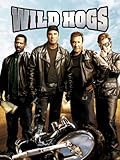
Wild Hogs | $3.99 | Buy on Amazon |
| 3 |

|
Pee-Wee's Big Adventure | $12.99 | Buy on Amazon |
| 4 |

|
Wild River | $16.99 | Buy on Amazon |
| 5 |

|
Smokey and the Bandit II | $14.99 | Buy on Amazon |
The cast was its secret weapon. Tim Allen, John Travolta, Martin Lawrence, and William H. Macy weren’t chasing relevance; they embodied familiarity. Each actor brought their own fan base, and together they projected an old-school, movie-star energy that felt comforting rather than dated.
Free tools Windows power users keep installed
One-click scans. No signup required.
Disney’s Quiet Comedy Machine at Full Power
Behind the scenes, Wild Hogs represented Disney operating in a mode it would soon abandon. Touchstone was designed to release adult-skewing comedies without risking the core Disney brand, and Wild Hogs fit that mandate perfectly. It didn’t need awards buzz or critical acclaim to justify itself; it needed legs, and it got them.
#1 Best Overall
The film’s financial performance sent an unmistakable signal internally. This was the kind of dependable, mid-budget win studios once prized: manageable risk, strong theatrical returns, and clear sequel potential. Almost immediately, Disney began exploring how to get the gang back on the road, setting the stage for what would become Wild Hogs 2: Bachelor Ride.
Fast-Tracking the Follow-Up: Inside Disney’s Early Plans for Wild Hogs 2: Bachelor Ride
With Wild Hogs still riding strong in theaters, Disney didn’t waste time debating whether a sequel made sense. The only real question was how quickly it could be assembled without losing the easygoing chemistry that made the original work. Within weeks of release, the studio began quietly moving pieces into place, treating a follow-up as a matter of logistics rather than speculation.
This wasn’t franchise-building in the modern, cinematic-universe sense. It was old-school sequel thinking: same stars, same tone, slightly bigger road trip, and a hook that justified getting the guys back together. Internally, the project was framed as a low-risk extension of a proven formula.
PC Slower Than It Used to Be?
A free scan shows the junk files, broken settings and background clutter dragging Windows down - then fixes them in one click.Free scan · Windows 10 & 11Outdated Drivers Are Slowing You Down
One free scan finds every outdated or missing driver and matches the right update for your exact hardware.Free scan · exact hardware matchThe Concept: One Last Ride, Higher Stakes
The working title Wild Hogs 2: Bachelor Ride offered a clear clue to the sequel’s angle. Early story outlines reportedly centered on one of the group preparing for a late-in-life wedding, giving the characters an excuse to hit the road again under more personal stakes. The idea leaned into middle-aged anxiety and male friendship, themes that tested well with the film’s core audience.
Rather than escalating into cartoonish territory, the sequel was meant to feel slightly more reflective. Disney wanted to preserve the grounded, approachable humor that separated Wild Hogs from louder studio comedies of the era. The emphasis was still on camaraderie, not spectacle.
Keeping the Band Together
From the outset, the sequel was envisioned as an all-or-nothing proposition. Tim Allen, John Travolta, Martin Lawrence, and William H. Macy were considered non-negotiable, with Disney keenly aware that the film’s appeal rested on the group dynamic. Losing even one Hog would fundamentally alter the pitch.
That requirement immediately complicated scheduling. Each actor was entering a busier phase of their career, juggling studio comedies, prestige projects, and in some cases, long-standing franchise commitments. The challenge wasn’t willingness as much as alignment.
A Script on the Fast Track
To keep momentum, Disney commissioned an early draft quickly, aiming to capitalize on audience goodwill before tastes shifted. The development process was efficient by Hollywood standards, with the studio pushing for a script that could be shot on a similar budget and timeline as the first film. The goal was to have cameras rolling within a narrow window while Wild Hogs was still fresh in the public mind.
At this stage, Wild Hogs 2 wasn’t viewed as a creative gamble. It was a strategic extension, the kind of sequel studios once relied on to stabilize yearly slates. That confidence would prove both understandable and, ultimately, misplaced as external factors began to creep in.
Creative Direction and Story Ambitions: What Bachelor Ride Was Supposed to Be
At its core, Wild Hogs 2: Bachelor Ride was designed as a character-first sequel, not a bigger or louder one. Disney’s internal mandate was to deepen the friendships audiences already connected with, using a life milestone as the narrative engine rather than upping the scale of the comedy. The road trip wasn’t just a repeat device; it was meant to reflect how much — and how little — the characters had changed since the first ride.
The bachelor-party hook gave the writers a natural framework to explore aging, regret, and recommitment, themes that felt increasingly relevant to the film’s original audience. Rather than positioning the Hog in question as a carefree groom, early drafts reportedly leaned into second-guessing and quiet panic. The comedy was meant to grow out of emotional discomfort, not slapstick escalation.
Recommended Free Tools
Less Lawless, More Introspective
One of the more notable creative decisions was what Bachelor Ride deliberately avoided. There was little appetite to introduce another outlaw gang or a cartoonishly violent antagonist like Ray Liotta’s character from the original film. Disney wanted the conflict to come from within the group, rooted in fear of settling down and the unspoken anxiety of being left behind.
That restraint reflected broader studio notes at the time. Wild Hogs had succeeded because it felt accessible, even gentle by mid-2000s comedy standards. The sequel was expected to preserve that tone, favoring awkward conversations and strained friendships over outrageous set pieces.
A Road Trip with Emotional Mileage
Early story outlines framed the trip as less about rebellion and more about avoidance. The groom-to-be was using the bachelor ride as a last grasp at freedom, while the others projected their own insecurities onto the journey. Each Hog had a personal stake, from career dissatisfaction to marital complacency, giving the screenplay multiple emotional lanes to explore.
This approach also allowed for a more episodic structure. Instead of a single escalating threat, the story unfolded through encounters that tested the group’s bond, echoing the rhythm of classic road movies rather than contemporary studio comedies. It was a quieter ambition, but one that aligned with Disney’s desire for broad appeal.
Rank #2
Comedy Calibrated for Disney’s Brand
While Wild Hogs flirted with edgier humor, Bachelor Ride was consciously being shaped to sit comfortably within Disney’s evolving live-action identity. The jokes were intended to skew observational rather than risqué, with an emphasis on situational irony and generational humor. That calibration was meant to keep the film accessible to couples and older audiences, not just fans of broad comedy.
In hindsight, that careful positioning may have been both a strength and a vulnerability. Bachelor Ride wasn’t chasing trends; it was doubling down on familiarity. As Hollywood comedy began shifting toward louder, more improvisational styles, Disney’s thoughtful, measured sequel started to feel less urgent within the studio’s broader slate.
Cracks in the Formation: Cast Scheduling, Creative Hesitation, and Comedy Fatigue
As Bachelor Ride edged closer to a potential greenlight, the biggest obstacle wasn’t the script. It was the simple reality of aligning four increasingly busy movie stars whose careers were drifting in different directions. What had once been an ensemble built on shared availability was now a logistical puzzle Disney couldn’t easily solve.
A Cast That Couldn’t Park at the Same Time
Tim Allen was firmly embedded in family-friendly studio fare and television commitments, while John Travolta was juggling prestige projects alongside commercial roles that required longer international shoots. Martin Lawrence, fresh off the Bad Boys sequel cycle, was recalibrating his on-screen persona, and William H. Macy remained a constant presence in independent film and prestige television. Coordinating a narrow production window that satisfied all four became a recurring issue in internal scheduling conversations.
Quick wins for a faster PC:
Repair Windows errors before they cause bigger problemsFix Now →Fix the driver behind crashes, sound loss and screen glitchesFind Drivers →Clear out junk files and repair common Windows errorsFree Scan →Unlike effects-driven franchises that could be reshaped around cast absences, Wild Hogs lived or died on its ensemble chemistry. Disney executives were wary of moving forward without the full original lineup, understanding that even a single recast would undermine the sequel’s appeal. What seemed manageable on paper turned into months of delays that quietly drained momentum.
Second-Guessing the Road Ahead
At the same time, the studio’s confidence in the concept began to soften. While the screenplay drafts were considered solid, they weren’t generating the kind of enthusiasm that signals a must-make sequel. Bachelor Ride felt competent and emotionally grounded, but not essential in a marketplace increasingly driven by opening-weekend urgency.
Internally, there was also concern that the sequel’s introspective angle, while thoughtful, might be perceived as low-energy by audiences expecting bigger laughs. Disney found itself torn between preserving the gentle tone that made Wild Hogs a hit and responding to a comedy landscape that was getting louder, faster, and more improvisational. That tension slowed decision-making at a critical moment.
When the Market Moved On
By the late 2000s, studio comedy was undergoing a noticeable shift. Films like The Hangover and Step Brothers were redefining what mainstream audiences responded to, favoring boundary-pushing humor over middle-aged introspection. Against that backdrop, Bachelor Ride began to feel like a relic of an earlier studio mindset.
Disney’s live-action priorities were also evolving, with resources increasingly redirected toward branded spectacles and franchise-driven storytelling. A modestly scaled, character-focused comedy no longer carried the same strategic weight it once had. Without a clear mandate to push it forward, Bachelor Ride gradually slipped from active development into quiet limbo.
A Cancellation Without a Curtain Call
There was no dramatic announcement, no official cancellation memo circulated to the press. The project simply stopped appearing on internal slates as other films took precedence. Scripts were archived, schedules moved on, and the Hogs were left parked at the edge of Disney’s development history.
In retrospect, Bachelor Ride wasn’t undone by a single misstep. It was worn down by timing, caution, and a changing sense of what studio comedy needed to be. The road was mapped, the engine was idling, but Disney ultimately chose not to take the trip.
A Changing Roadmap at Disney: Shifting Studio Strategy and the Decline of Adult Live-Action Comedies
As Bachelor Ride quietly faded, it was becoming clear that the issue wasn’t just the sequel itself, but the studio it was trying to exist within. Disney in the late 2000s was recalibrating its identity, narrowing its focus and redefining what kinds of movies made sense under its banner. In that evolving ecosystem, adult-skewing live-action comedies were becoming increasingly difficult to justify.
From Broad Appeal to Brand Management
Historically, Disney’s live-action division thrived on mid-budget comedies aimed at adults and families alike. Films like Wild Hogs, The Santa Clause, and even earlier Touchstone releases balanced broad humor with character-driven storytelling. They weren’t prestige pictures, but they were reliable, profitable, and culturally present.
By the time Bachelor Ride was under consideration, that philosophy was eroding. Disney’s leadership was shifting toward a brand-first mindset, emphasizing projects that reinforced the company’s core identity or fed into long-term franchises. Standalone comedies, especially ones centered on middle-aged characters without sequel-friendly mythology, no longer fit neatly into that strategy.
The Touchstone Exit and Its Ripple Effects
One of the most significant structural changes was Disney’s gradual retreat from Touchstone Pictures, the label that once housed its more adult-oriented fare. As Touchstone’s output diminished and eventually ceased, projects like Bachelor Ride lost a natural home within the company. What once could have been greenlit as a low-risk follow-up suddenly required justification at a higher corporate level.
Without Touchstone acting as a buffer, Wild Hogs 2 would have needed to align directly with Disney’s mainline branding. That raised uncomfortable questions about tone, marketing, and audience expectations. A reflective comedy about aging friendships and personal crossroads was harder to position alongside fairy tales, animated tentpoles, and emerging franchise worlds.
What’s actually slowing this PC down?
Pick the symptom - the matching free tool is one click away.
Rank #3
The Franchise Arms Race
The late 2000s also marked the beginning of Disney’s full embrace of franchise dominance. The acquisitions of Pixar, Marvel, and later Lucasfilm fundamentally reshaped the studio’s priorities. Resources, attention, and creative energy flowed toward properties that promised longevity, merchandise, and cross-platform synergy.
In that environment, a sequel like Bachelor Ride struggled to compete internally. It wasn’t designed to launch a trilogy, spin off a streaming series, or anchor a theme park attraction. Even with proven stars and a built-in audience, it felt like a relic of a pre-franchise era when success was measured by box office returns rather than brand expansion.
Cast Availability and the Cost of Waiting
As Disney hesitated, practical complications mounted. Tim Allen, John Travolta, Martin Lawrence, and William H. Macy were all busy, in-demand performers with shifting career trajectories. Coordinating their schedules became increasingly difficult as the years passed, and the original chemistry that defined Wild Hogs was no longer guaranteed to be easily recaptured.
The longer Bachelor Ride remained in development limbo, the more its momentum eroded. What could have been a timely follow-up risked becoming a nostalgia play before nostalgia had fully set in. For a studio already questioning the project’s strategic value, that uncertainty only reinforced the decision to move on.
The Tool Desk
Outbyte Driver Updater FREEScan for outdated or missing drivers - takes under a minuteDriver Scan →Outbyte PC Repair FREERepair Windows errors before they cause bigger problemsFix Now →A Comedy Model Left Behind
Ultimately, Bachelor Ride became collateral damage in a broader industry shift. Adult live-action comedies, once a staple of studio slates, were being squeezed out by tentpoles on one end and edgier, lower-budget comedies at rival studios on the other. Disney, in particular, was no longer interested in occupying the middle ground.
The road that once made sense for Wild Hogs simply no longer existed. Disney wasn’t just passing on a sequel; it was quietly closing the door on an entire mode of filmmaking that had served it well for decades. Bachelor Ride didn’t fail because it was broken. It failed because the map had changed, and Disney had already chosen a different destination.
Market Forces at Work: Why the Wild Hogs Audience Became Less Bankable Overnight
Wild Hogs arrived at a very specific cultural moment, when Gen X comedy still reliably opened big and stayed profitable through word of mouth and home video. By the time Bachelor Ride was circling the on-ramp, that audience had aged out of being a primary theatrical driver. Middle-aged male comedies no longer guaranteed opening-weekend urgency, especially without a high-concept hook or franchise promise.
What once played as relatable rebellion increasingly read as comfortable nostalgia. Studios began to see that familiarity alone wasn’t enough to justify wide releases, particularly when younger audiences were gravitating toward effects-driven spectacle or sharper, more subversive humor elsewhere.
The Collapse of the DVD Safety Net
One of Wild Hogs’ biggest advantages in 2007 was the home entertainment market. DVD sales routinely doubled a film’s profitability, cushioning mixed reviews and modest theatrical legs. By the early 2010s, that safety net had collapsed almost entirely.
Without robust post-theatrical revenue, comedies had to perform immediately and decisively at the box office. A sequel like Bachelor Ride, aimed at an older demographic less inclined toward repeat theatrical viewings, suddenly carried far more financial risk than its predecessor ever did.
International Box Office Changed the Math
Global markets became increasingly central to Disney’s greenlight decisions, and Wild Hogs was never a strong international brand. Its humor was culturally specific, star-driven, and rooted in American middle-aged anxieties that didn’t always translate overseas.
As studio slates tilted toward films that could perform consistently across territories, domestically skewing comedies struggled to justify their budgets. Bachelor Ride wasn’t just a sequel; it was a domestic play in an era when Disney needed global ones.
Recommended Free Tools
Brand Alignment in a Post-Franchise World
Disney’s evolving identity also played a role in the audience calculation. As the studio doubled down on four-quadrant properties, family-friendly branding, and interconnected universes, Wild Hogs began to feel out of step with where the company was heading.
The original film’s PG-13 humor, biker edge, and adult sensibility weren’t liabilities in 2007. A few years later, they made the sequel harder to position within Disney’s carefully managed ecosystem, particularly as the company became more cautious about what its logo promised audiences worldwide.
When Predictability Became a Liability
Perhaps most critically, Wild Hogs represented a type of success that studios were learning to distrust. It worked once, but it didn’t suggest growth, escalation, or reinvention. In a market increasingly driven by expansion rather than repetition, predictability became a liability rather than a comfort.
Rank #4
- DVD, Sealed, Region All, Keep Case
- Director: Elia Kazan
- Cast: Montgomery Clift, Lee Remick, Jo Van Fleet, Albert Salmi
Bachelor Ride didn’t lose its audience because people stopped liking the original film. It lost its leverage because Hollywood stopped betting on audiences showing up out of habit. In that recalibration, Wild Hogs went from dependable to dispensable almost overnight.
The Quiet Stall-Out: How Bachelor Ride Slid from Active Development to Limbo
By the time Bachelor Ride had cleared the initial hurdle of a greenlight conversation, it didn’t collapse under a single decisive no. Instead, it entered a familiar Hollywood purgatory, one where projects remain technically alive but increasingly unsupported. Development continued on paper, but momentum slowly drained away.
A Sequel Without Urgency
Unlike tentpole follow-ups that race toward release dates, Bachelor Ride never had a ticking clock. Wild Hogs was a hit, but not a phenomenon, and Disney didn’t feel compelled to rush a sequel into production. That lack of urgency made it easy for the project to keep slipping behind louder, more strategically aligned priorities.
Scripts circulated and ideas were refined, but there was no clear sense that the studio needed the movie to exist at a specific moment. In Hollywood, that often proves fatal. Projects that aren’t urgently needed are the easiest to postpone, and postponement quietly becomes abandonment.
Cast Availability Became a Complication
The original Wild Hogs worked largely because of its ensemble chemistry, which made recasting or partial returns a nonstarter. Coordinating schedules for John Travolta, Tim Allen, Martin Lawrence, and Ray Liotta was always going to be a challenge, especially as their careers pulled them in different directions. Television commitments, franchise obligations, and shifting personal priorities added friction with each passing year.
As time passed, the logistical challenge only grew. What might have been manageable within a year or two of the original release became increasingly impractical as the gap widened, turning cast coordination into another reason not to push forward.
Creative Confidence Met Corporate Caution
Director Walt Becker and the creative team reportedly remained interested in revisiting the characters, but enthusiasm on the filmmaking side didn’t guarantee institutional backing. Disney’s internal calculus had changed, and live-action comedies without clear franchise upside were no longer central to the studio’s identity. Without a strong internal champion, Bachelor Ride lacked the leverage needed to move from development into production.
This was also a period when Disney was consolidating labels and simplifying its theatrical output. The kind of mid-budget, star-driven comedy that Wild Hogs represented was increasingly seen as expendable rather than essential.
Development Limbo Is Still a Decision
No public cancellation was ever announced, and Bachelor Ride was never formally declared dead. Instead, it remained in a holding pattern as years passed and priorities shifted. In studio terms, that silence spoke volumes.
Outdated Drivers Are Slowing You Down
One free scan finds every outdated or missing driver and matches the right update for your exact hardware.Free scan · exact hardware matchPC Slower Than It Used to Be?
A free scan shows the junk files, broken settings and background clutter dragging Windows down - then fixes them in one click.Free scan · Windows 10 & 11Eventually, the industry moved on, and so did Disney. Bachelor Ride didn’t crash or burn; it simply ran out of road, a casualty of timing, strategy, and an evolving studio philosophy that no longer had room for a reunion ride.
What Might Have Been: Assessing the Sequel’s Chances Had It Reached Production
Speculating on Wild Hogs 2: Bachelor Ride inevitably invites a reassessment of the original film’s unlikely success. Wild Hogs wasn’t a critical darling, but it connected with adult audiences looking for a broad, star-powered comedy that skewed older. In a different studio climate, that alone might have been enough to justify one more ride.
The Box Office Case Was Stronger Than It Looked
From a purely commercial standpoint, a sequel wasn’t an irrational gamble. Wild Hogs grossed over $250 million worldwide on a modest budget, with domestic audiences driving much of that success. That kind of performance typically earns a follow-up, especially when the concept is easily repeatable and the stars remain recognizable.
Had Bachelor Ride arrived within three to four years of the original, it likely would have benefited from residual goodwill. Comedy sequels rarely grow an audience, but maintaining one would have been realistic, particularly before the theatrical comedy market began to erode in the early 2010s.
Audience Tastes Were Already Beginning to Shift
Where the math becomes murkier is tone and timing. By the time Bachelor Ride might realistically have gone before cameras, mainstream comedy was evolving toward raunchier, more improvisational styles or high-concept hybrids. The genial, midlife-crisis humor that defined Wild Hogs was starting to feel like a relic of an earlier decade.
That didn’t mean there was no audience, but it did mean Disney would have been betting on a demographic it was no longer prioritizing. The studio increasingly oriented itself toward four-quadrant spectacle, leaving adult-skewing comedies to other players or to streaming platforms that hadn’t yet fully matured.
Best Value
Star Power: Asset and Liability
The returning ensemble would have been the sequel’s biggest selling point and its greatest risk. Travolta, Allen, Lawrence, and Liotta still carried name recognition, but their collective box office draw was becoming less predictable. A sequel would have leaned heavily on nostalgia rather than momentum.
That reliance might have worked as counterprogramming, but it also limited the film’s upside. Bachelor Ride was never positioned to reinvent the franchise or attract a younger audience, which made it harder to justify as a theatrical priority rather than a cable-era crowd-pleaser.
Do these 3 things before closing this tab:
1Repair Windows errors before they cause bigger problems2Fix the driver behind crashes, sound loss and screen glitches3Clear out junk files and repair common Windows errorsA Comedy Caught Between Eras
Ultimately, Wild Hogs 2 would have existed in an uncomfortable middle ground. It was too expensive and star-driven to be a low-risk experiment, yet not ambitious enough to fit Disney’s increasingly brand-forward identity. The sequel’s odds weren’t doomed, but they were narrowing with every passing year.
Had it moved quickly, Bachelor Ride might have delivered a solid, if unspectacular, return. Delayed and re-evaluated in a changing industry, it instead became a reminder that in Hollywood, viability is often less about what a film could earn and more about whether it still fits the moment when the green light finally comes.
Legacy and Lessons: What Wild Hogs 2 Reveals About Disney’s Evolving Approach to Risk
In hindsight, the quiet fade-out of Wild Hogs 2 feels less like a single missed opportunity and more like a case study in how Disney recalibrated its creative risk tolerance in the late 2000s. The sequel didn’t fail loudly or collapse under scandal; it simply stopped making sense inside a studio that was redefining what success looked like.
From Mid-Budget Bets to Brand Certainty
Wild Hogs belonged to an era when Disney still made room for mid-budget, star-driven comedies that lived or died on audience goodwill. As the studio doubled down on franchises, IP ownership, and global repeatability, projects without long-term brand value became harder to justify.
Bachelor Ride sat in that vulnerable middle. It promised modest returns without offering sequel-proof mythology, merchandising potential, or franchise elasticity, all factors that increasingly shaped greenlight decisions.
The Cost of Waiting in a Fast-Moving Industry
Timing proved to be the sequel’s silent enemy. As Disney paused to assess market shifts and internal priorities, the window for a culturally relevant follow-up narrowed.
Comedy, especially theatrical comedy, doesn’t age gracefully in development. Jokes tethered to generational anxieties and star personas lose immediacy, and Wild Hogs 2 slowly transformed from a continuation into a period piece before a single frame was shot.
Star Power Isn’t a Strategy
Bachelor Ride also underscored a growing truth in Hollywood: recognizable faces alone no longer guarantee theatrical viability. While the original cast remained popular, their combined draw was less reliable in a marketplace increasingly driven by concept, spectacle, and IP recognition.
The Tool Desk
Outbyte PC Repair FREERepair Windows errors before they cause bigger problemsFix Now →Outbyte Driver Updater FREEFix the driver behind crashes, sound loss and screen glitchesFind Drivers →Disney’s leadership appeared to recognize that nostalgia, without reinvention, was a diminishing asset. A sequel that existed primarily to reunite a cast was harder to defend against safer or more scalable alternatives.
A Quiet Cancellation That Spoke Volumes
Notably, Wild Hogs 2 was never officially “killed” in dramatic fashion. It simply receded, overtaken by shifting priorities and a studio culture less inclined to nurse projects that didn’t align with long-term strategy.
That silence speaks to Disney’s evolving discipline. The studio became more comfortable letting viable but imperfect ideas go, even when they once looked like easy wins.
In the end, Wild Hogs 2: Bachelor Ride remains a fascinating what-if, not because it might have failed, but because it probably would have succeeded just enough. Its cancellation reflects a Disney that was learning to think bigger, risk less often, and define success on its own increasingly narrow terms.
Quick wins for a faster PC:
Fix the driver behind crashes, sound loss and screen glitchesFind Drivers →Repair Windows errors before they cause bigger problemsFix Now →For fans, it’s a reminder of a transitional moment when Hollywood still flirted with modest, character-driven sequels. For Disney, it marked another mile on the road toward becoming a studio where even proven hits had to justify their place in an ever-tightening lineup.
Quick Recap
Product prices and availability are accurate as of the date/time indicated and are subject to change. Any price and availability information displayed on Amazon at the time of purchase will apply.




