Crashes, No Sound, or Screen Glitches?
Random freezes, missing sound and display glitches usually trace back to one bad driver. Find and replace yours safely.Free scan · under a minutePC Slower Than It Used to Be?
A free scan shows the junk files, broken settings and background clutter dragging Windows down - then fixes them in one click.Free scan · Windows 10 & 11The “Spiritual Testament” was not newly discovered in 2025, and it is not a lost play or a manuscript in William Shakespeare’s hand. It is a religious text long attributed to his father, John Shakespeare. In a 2024 article, scholar Matthew Steggle argues that its date rules John out and proposes William’s sister, Joan Shakespeare Hart, as its arguably most likely creator. The attribution remains a proposal, not a settled identification.
What is the “Spiritual Testament”?
The Spiritual Testament is a religious document historically attributed to John Shakespeare, William’s father. Its significance lies in what it might reveal about the religious life of the Shakespeare family—not in any connection to William’s plays or handwriting. Matthew Steggle’s study examines early printed editions of the text underlying the document and challenges the traditional attribution.


The manuscript’s history is also less straightforward than the phrase “resurfaces after 400 years” suggests. Its existence was recorded in the eighteenth century; the 2024 development was a scholarly reassessment and proposed reattribution, not its first discovery.
Why is John Shakespeare’s authorship in doubt?
Steggle’s central argument is chronological: the document cannot belong to John Shakespeare for reasons of date. His article, “John Shakespeare’s ‘Spiritual Testament’ Is Not John Shakespeare’s,” appeared in Shakespeare Quarterly, Volume 75, Issue 1, Spring 2024, pages 44–71, and was published by Oxford Academic on 19 March 2024. Steggle describes his conclusion as a double thesis: John is ruled out by chronology, while Joan Shakespeare Hart is “arguably” the most likely creator. Read the article abstract and publication details at Oxford Academic.
#1 Best Overall
This is a claim about the authorship of this particular text. It does not establish who wrote it beyond doubt, nor does it settle the religious beliefs of William Shakespeare or the family as a whole.
Why is Joan Shakespeare Hart proposed as the author?
Joan (1569–1646) was William’s sister. Steggle identifies her as the text’s arguably most likely creator after rejecting John on chronological grounds. The University of Bristol’s account of the proposal notes that the document says its author was Catholic, named Saint Winifred as a patron saint, and intended to die a Catholic death. Those details are part of the basis for considering Joan, but they do not by themselves prove that she wrote the text. Read the University of Bristol’s summary of the proposal.
Rank #2

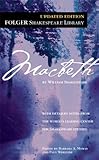
- William Shakespeare, ed. by Barbara A. Mowat and Paul Werstine, Romeo and Juliet, Folger Shakespeare Library, paperback
The distinction matters: a plausible alternative attribution can change how historians interpret one document without overturning everything known—or assumed—about a family’s religious history. The evidence summarized in the scholarly abstract supports a qualified proposal, not certainty or a claim that every member of the household shared Joan’s beliefs.
What is known about the manuscript’s reported discovery?
The sources give different dates, so no single exact discovery year should be treated as settled. Steggle recounts that John Jordan’s 1784 letter to the editor of The Gentleman’s Magazine first recorded the document’s existence. Jordan claimed that Joseph Moseley had found an incomplete manuscript in 1757 while repairing a roof at the former Shakespeare property on Henley Street. That is Jordan’s later account, not independent contemporary confirmation. The University of Bristol instead describes the find as occurring around 1780. Steggle’s account is in the article abstract and publication record; Bristol gives the approximate date in its press release.
Jordan hoped to publish a transcription, but the magazine’s editors declined, reportedly considering the text spurious. The record therefore distinguishes the claimed earlier find from the first recorded notice, and neither supports describing the manuscript as a new discovery in 2025.
Independent reader supportYour contribution helps us test, update, and keep practical guides available for everyone.What does the proposed reattribution change—and what does it not?
If Joan wrote the Spiritual Testament, it would be evidence relevant to her own religious identity and devotional life. It would not, on its own, establish William’s beliefs, prove that the whole Shakespeare household shared Joan’s faith, or resolve the broader question of the family’s religious profile. The claim is narrower: the traditional attribution to John is challenged, and Joan is offered as the leading alternative in Steggle’s analysis.
Rank #4
Coverage published in November 2025 framed the story as a manuscript “resurfacing” and a dramatic reversal of the family legacy. The Folger Shakespeare Library later included that coverage in its December 2025 roundup. Those headlines are not the primary scholarly claim: the 2024 article’s abstract describes a study of early printed editions and makes a qualified attribution. See the Folger’s December 2025 news roundup; See the November 2025 article that popularized the headline framing.
Quick Recap
Best Value
Product prices and availability are accurate as of the date/time indicated and are subject to change. Any price and availability information displayed on Amazon at the time of purchase will apply.
Recommended Free Tools




