Do these 3 things before closing this tab:
1Fix the driver behind crashes, sound loss and screen glitches2Clear out junk files and repair common Windows errors3Scan for outdated or missing drivers - takes under a minuteEdward Berger’s Conclave positions its audience inside the Sistine Chapel not as tourists of ritual, but as witnesses to a pressure cooker where faith, ambition, and fear collide. Adapted from Robert Harris’ novel, the film treats the papal election as both sacred ceremony and high-stakes political thriller, stripping away romanticism to reveal an institution wrestling with its own future. By the time the final ballots loom, the question is no longer who will win, but what kind of Church can survive what is about to be revealed.
As the conclave grinds on, the College of Cardinals fractures into uneasy camps, each embodying a different theological and political vision. There are traditionalists clinging to doctrinal certainty, reform-minded figures urging transparency and mercy, and pragmatic power brokers more concerned with stability than sanctity. Overseeing it all is Ralph Fiennes’ Cardinal Lomeli, a reluctant moral center whose role as dean forces him to balance obedience with conscience as buried secrets begin to surface.
| # | Preview | Product | Price | |
|---|---|---|---|---|
| 1 |
![Conclave [DVD]](https://m.media-amazon.com/images/I/414z7SfMfmL._SL160_.jpg)
|
Conclave [DVD] | $10.99 | Buy on Amazon |
| 2 |
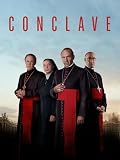
|
Conclave | $3.99 | Buy on Amazon |
| 3 |

|
Conclave DVD | Ralph Fiennes, Stanley Tucci, John Lithgow | Region 4 (Australia) | $17.76 | Buy on Amazon |
| 4 |

|
Conclave Como Se Elige Un Papa Dvd | $15.00 | Buy on Amazon |
| 5 |

|
Conclave: How a Pope Is Elected | $53.94 | Buy on Amazon |
Crucially, the film frames the stalemate not as dysfunction, but as a symptom of a Church at a crossroads. Scandals, whispered compromises, and procedural maneuvering have eroded the illusion of divine clarity, leaving the cardinals trapped between preserving authority and embracing uncomfortable truth. When the final vote approaches, Conclave makes it clear that the decision ahead will not simply choose a pope, but redefine what authority, identity, and faith might mean in a modern Church.
The Final Twist Explained: What the Last Revelation Actually Is
At the moment when Conclave appears ready to resolve itself as a procedural victory or defeat, Edward Berger introduces a revelation that reframes everything that came before. The newly elected pope, Cardinal Benítez, is revealed to be intersex, possessing female biological characteristics that have been deliberately concealed throughout his clerical life. It is a disclosure that lands quietly, almost reverently, yet its implications ripple through every theological and political argument the film has staged.
#1 Best Overall
- Genre: Mystery / Suspense; Thriller
- Number of Discs: 1
- Number of Tracks: 0
- Playback Duration: 121
- Director: Edward Berger
What the Film Reveals, and What It Withholds
Importantly, Conclave resists sensationalizing the discovery. The revelation is not framed as scandal or shock for its own sake, but as an intimate truth that exposes the limits of the Church’s categories. Benítez is neither unmasked as a fraud nor disqualified by doctrine within the narrative itself; instead, the film places the burden of interpretation squarely on the institution and the audience.
The secrecy surrounding Benítez’s body mirrors the conclave’s larger culture of concealment. For a Church that has historically tied authority to rigid definitions of gender, hierarchy, and order, the existence of a pope who exists outside those binaries is not a loophole, but a theological stress test.
Why This Twist Changes the Meaning of the Election
Until this moment, the papal vote appears to be about ideology: conservative versus reformist, continuity versus rupture. The final revelation reframes the election as something far more unsettling. The cardinals, in choosing Benítez, have unknowingly elevated a figure who embodies contradiction, ambiguity, and lived complexity rather than doctrinal certainty.
This is not presented as divine irony so much as divine provocation. The film suggests that the Church’s future may not be determined by better strategy or cleaner politics, but by whether it can recognize grace in forms it has long refused to name.
Quick wins for a faster PC:
Fix the driver behind crashes, sound loss and screen glitchesFind Drivers →Clear out junk files and repair common Windows errorsFree Scan →Scan for outdated or missing drivers - takes under a minuteDriver Scan →A Commentary on Power, Bodies, and Silence
Conclave’s twist also functions as a critique of how power has historically been protected within the Church. Benítez’s hidden biology is not a personal failing, but a survival mechanism within an institution that demands conformity at the expense of truth. His ascent to the papacy exposes how much of the Church’s authority has been built on silence rather than sanctity.
By ending on this revelation, Berger draws a direct line between bodily secrecy and institutional secrecy. The same mechanisms that buried abuse, silenced dissent, and preserved appearances are the ones that made Benítez’s existence possible within the hierarchy.
What the Ending Ultimately Suggests About the Church
Rather than offering resolution, Conclave closes by posing an uncomfortable question: if the Holy Spirit can move through a system this compromised, what does that say about the system itself? The final twist does not argue that the Church is redeemed by Benítez’s election, nor does it condemn it outright. Instead, it leaves the institution suspended between grace and reckoning.
In that unresolved tension, Conclave finds its most radical idea. Faith, the film suggests, may endure not because institutions are pure, but because truth eventually surfaces, even in places built to contain it.
Power, Secrecy, and Silence: Why the Ending Rewrites Everything We Thought We Knew
Conclave’s final revelation does not simply complicate the narrative; it retroactively alters how every preceding moment must be understood. What once looked like political maneuvering, moral compromise, or quiet cowardice now reads as something more systemic. The ending insists that secrecy is not an aberration within the Church’s power structure, but one of its foundational operating principles.
By revealing Benítez’s hidden truth only after his election, the film exposes how authority in the Vatican often functions independently of full knowledge. The cardinals believe they are exercising discernment, yet their choice is shaped by what the institution has trained them not to see. In that sense, the ending reframes the conclave itself as an exercise in willful blindness masquerading as spiritual rigor.
The Illusion of Control at the Heart of the Conclave
Throughout the film, the Vatican is presented as a space obsessed with control: over doctrine, over narrative, over bodies. Procedures are meticulous, language is guarded, and deviation is quietly managed rather than confronted. The ending reveals how fragile that control actually is.
Rank #2
Benítez’s ascent demonstrates that even the most closed system cannot fully regulate truth. The conclave is designed to eliminate uncertainty, yet it produces a pope who embodies uncertainty itself. Berger suggests that power built on suppression eventually selects for what it refuses to acknowledge, turning secrecy into an unintended path to authority.
Windows Errors? Fix Them Before They Spread
Repair common Windows errors and clear accumulated junk for a smoother, more stable PC - no reinstall needed.Free scan · no reinstallOutdated Drivers Are Slowing You Down
One free scan finds every outdated or missing driver and matches the right update for your exact hardware.Free scan · exact hardware matchSilence as Currency, Not Virtue
Silence in Conclave is often mistaken for humility or obedience, but the ending strips away that moral cover. Benítez survives, advances, and ultimately triumphs because he understands when to speak and, more importantly, when not to. His silence is not passive; it is adaptive.
This reframing casts a harsher light on the Church’s long-standing valorization of discretion. The film argues that silence has functioned less as a spiritual discipline and more as a currency that buys safety and advancement. In elevating someone shaped by that economy, the Church inadvertently exposes its own transactional relationship with truth.
When Secrecy Becomes Structural Sin
The final twist also forces a distinction between individual morality and institutional responsibility. Benítez’s secrecy is portrayed as a response to an environment that leaves no room for complexity. The greater indictment falls on a structure that requires erasure in order to confer legitimacy.
By ending the film at the moment this contradiction becomes unavoidable, Conclave refuses the comfort of resolution. The Church is left holding power it does not fully understand, granted through processes that reward concealment. What once appeared to be a story about reform versus tradition is revealed as something more unsettling: a meditation on how institutions teach their leaders to disappear parts of themselves in order to belong.
What’s actually slowing this PC down?
Pick the symptom - the matching free tool is one click away.
Faith Versus Institution: How the Film Reframes the Role of the Church
At its core, Conclave draws a sharp line between faith as a lived, interior reality and the Church as an administrative body designed to preserve itself. The ending insists that these two forces are not synonymous, even when they occupy the same space. Benítez’s election exposes how easily spiritual authority can be mistaken for institutional legitimacy.
Rather than attacking belief, the film interrogates the machinery that claims to safeguard it. Berger presents a Church more fluent in governance than discernment, one that confuses continuity with righteousness. The final twist reframes the papacy not as a divine endpoint, but as a byproduct of procedural momentum.
Belief Exists Outside the Walls
One of the ending’s quiet provocations is its suggestion that faith itself remains untouched by the conclave’s moral compromises. Benítez’s inner life, however obscured, is depicted as sincere, even reverent. His struggle is not with God, but with an institution that has taught him survival requires fragmentation.
In this sense, Conclave separates holiness from hierarchy. The film implies that belief persists despite the Church’s structures, not because of them. Faith becomes something that endures in private conscience, even as public authority grows increasingly hollow.
The Church as a Self-Preserving System
The final revelation reframes the Church less as a moral guide and more as a system optimized for stability. Every ritual, vote, and rule in the conclave serves to minimize disruption. What matters most is not who the pope truly is, but whether he can sustain the illusion of order.
By elevating a figure shaped by concealment, the institution confirms its priorities. The Church does not choose the most transparent or integrated leader, but the one best equipped to navigate its silences. Power, the film argues, flows toward those who least threaten the structure that grants it.
Rank #3
- DVD Movies, DVD TV Shows
Reform Without Transformation
Conclave resists the fantasy that change naturally follows revelation. Benítez’s election might appear radical on the surface, yet the process that produced it remains intact. The institution adapts without transforming, absorbing contradiction rather than confronting it.
This tension is where the film leaves the Church suspended. Faith may evolve, and individuals may carry profound interior truths, but the institution lags behind, protected by its own rituals. The ending suggests that without structural reckoning, even the most unprecedented pope risks becoming another carefully managed secret.
Recommended Free Tools
The New Pope as Symbol: Reform, Continuity, or Controlled Change?
The final image of Conclave hinges on a paradox: the election feels unprecedented, yet strangely inevitable. The new pope embodies a break from expectation, but not from the system that elevated him. What appears to be reform is carefully bounded, calibrated to reassure rather than to rupture.
A Pope Shaped by Secrecy
Benítez’s ascent is inseparable from the habits that allowed him to survive within the Church. His interior divisions, cultivated through years of concealment, make him uniquely legible to an institution fluent in silence. Rather than disqualifying him, this fragmentation becomes his credential.
The film suggests that the modern papacy favors those who understand opacity as governance. Benítez is not elected despite his hidden self, but because of it. He represents a leader fluent in the Church’s unspoken rules, capable of projecting unity while containing contradiction.
Reform as Optics, Not Overhaul
On a symbolic level, the new pope allows the Church to gesture toward progress without submitting to structural risk. His election can be framed externally as a sign of openness, adaptability, even moral courage. Internally, however, nothing about the conclave’s mechanics or power dynamics has changed.
The Tool Desk
Outbyte Driver Updater FREEScan for outdated or missing drivers - takes under a minuteDriver Scan →Outbyte PC Repair FREEClear out junk files and repair common Windows errorsFree Scan →This distinction is crucial to the film’s ending. Conclave argues that institutions often survive by absorbing symbols of reform while leaving their foundations untouched. The papacy becomes a surface onto which hope is projected, even as the underlying architecture remains closed.
Continuity Disguised as Evolution
The film resists portraying the Church as static, but it is equally skeptical of its capacity for genuine transformation. Continuity persists not through brute force, but through ritualized flexibility. Change is permitted only insofar as it does not destabilize authority.
In this light, the new pope functions as a pressure valve. He channels internal tensions outward, allowing the Church to claim responsiveness while preserving control. The appearance of evolution masks a deeper commitment to self-preservation.
The Burden Placed on the Individual
By ending with Benítez alone within the vastness of his new role, Conclave shifts the moral weight onto the individual rather than the institution. Any hope for authenticity or reform is localized in his conscience, not guaranteed by his office. The Church, as a system, remains neutral at best and resistant at worst.
This is the film’s most sobering implication. The papacy, stripped of its mystique, becomes a role that tests the limits of personal integrity within an unyielding structure. Whether Benítez can transcend that structure is left deliberately unresolved, underscoring how little the institution itself is willing to change.
Historical and Theological Echoes: How the Ending Engages Real Church Debates
The final revelation in Conclave does not arrive in a vacuum. It is deliberately calibrated to resonate with centuries of unresolved Church debates about authority, embodiment, and the limits of tradition. By grounding its twist in questions the Church has historically managed through silence rather than resolution, the film reframes its thriller mechanics as theological provocation.
Embodiment, Gender, and Canon Law
The revelation that Benítez’s body does not conform to the Church’s rigid binary assumptions invokes a long, uneasy history within Catholic theology. Canon law has traditionally treated sex as a fixed prerequisite for ordination, yet historical records show moments of ambiguity quietly absorbed rather than publicly confronted. Intersex bodies, in particular, have existed at the margins of ecclesiastical discourse, acknowledged in medical texts but rarely integrated into doctrinal clarity.
Conclave weaponizes that ambiguity. The film suggests that the Church’s authority has always depended less on absolute theological certainty than on its ability to manage exceptions discreetly. Benítez’s election exposes how doctrine can remain intact on paper while reality is negotiated behind closed doors.
Free tools Windows power users keep installed
One-click scans. No signup required.
The Papacy as Office Versus Ontology
One of the ending’s sharpest theological questions is whether the papacy is rooted in the nature of the individual or in the authority of the office itself. Catholic tradition insists on apostolic succession and sacramental continuity, yet the film asks whether those constructs are sustained by divine mandate or institutional consensus. If the cardinals accept Benítez fully as pope, the legitimacy of his authority becomes functionally real, regardless of doctrinal discomfort.
This mirrors real Church tensions between theological ideal and pastoral reality. Time and again, Catholic history shows moments where practice adapts quietly while teaching remains rhetorically fixed. The film’s ending dramatizes that dissonance rather than resolving it.
Secrecy as a Governing Principle
Perhaps the most historically grounded aspect of the ending is not the revelation itself, but the response to it. The decision to contain the truth reflects a Church that has long relied on secrecy as a stabilizing force. From conclave procedures to doctrinal disputes, opacity has often been framed as prudence rather than avoidance.
In this sense, Conclave is less radical than it appears. The film aligns with a historical pattern in which potentially destabilizing truths are managed internally to preserve institutional continuity. What changes is not the behavior, but the audience’s access to it.
Modern Synodality and the Illusion of Dialogue
Set against contemporary conversations about synodality and listening within the Church, the ending takes on added resonance. While modern Catholic leadership often emphasizes dialogue, participation, and discernment, Conclave presents these ideals as carefully stage-managed. Decision-making remains concentrated, even as the language of inclusivity expands.
The film’s final twist suggests that the Church can acknowledge complexity without surrendering control. It can carry unresolved contradictions forward indefinitely, provided they are sealed within ritual and hierarchy. In doing so, Conclave positions its ending not as a break from history, but as a continuation of how the Church has always survived moments of theological strain.
Independent reader supportYour contribution helps us test, update, and keep practical guides available for everyone.A Closed Door or a Crack of Light? What the Ending Suggests About the Church’s Future
The final moments of Conclave deliberately resist clarity. Benítez’s election does not arrive as a triumph or a scandal, but as an unresolved condition the Church chooses to live with. The doors of the Sistine Chapel close, the white smoke rises, and the institution moves forward without publicly reckoning with what it has privately accepted.
That ambiguity is the film’s most pointed statement. Rather than forecasting reform or retrenchment, Conclave frames the Church’s future as one of managed contradiction. Change is neither celebrated nor denied; it is simply absorbed.
Windows Errors? Fix Them Before They Spread
Repair common Windows errors and clear accumulated junk for a smoother, more stable PC - no reinstall needed.Free scan · no reinstallOutdated Drivers Are Slowing You Down
One free scan finds every outdated or missing driver and matches the right update for your exact hardware.Free scan · exact hardware matchBest Value
- Movie dvd
Institutional Survival Over Doctrinal Resolution
The ending suggests that the Church’s primary instinct remains preservation, not purification. By elevating Benítez and suppressing the implications of his identity, the cardinals prioritize continuity over theological coherence. Authority, the film argues, derives less from metaphysical certainty than from collective agreement to proceed as if certainty exists.
This is not cynicism so much as historical realism. Across centuries, the Church has weathered crises by postponing resolution rather than confronting it head-on. Conclave implies that this strategy, however morally fraught, is precisely what has allowed the institution to endure.
A Future Shaped by Silence
What remains most striking is not what the Church does, but what it refuses to say. The ending imagines a future where silence functions as policy, allowing incompatible truths to coexist beneath ritual and pageantry. Benítez becomes a living symbol of that silence, embodying both continuity and disruption without forcing either into the open.
In this reading, the future of the Church is neither closed nor fully opened. It is held in suspension, defined by what must remain unspoken to keep the structure intact.
Recommended Free Tools
Hope Without Revelation
Yet the film leaves space, however narrow, for cautious optimism. Benítez’s papacy introduces difference at the highest level of authority, even if that difference is never acknowledged. The crack of light, if it exists, lies in the fact that the Church can contain more complexity than it admits.
Conclave ultimately reframes hope as incremental and covert rather than declarative. Change does not arrive through proclamation, but through presence, quietly reshaping the institution from within while the façade remains unchanged.
Why Conclave Ends on Ambiguity—and Why That Choice Matters
If Conclave withholds resolution, it is because resolution would betray the film’s deepest insight. This is not a story about revelation or reform, but about how power endures by managing uncertainty. The final twist is not meant to clarify the Church’s direction, but to expose the mechanisms by which clarity is endlessly deferred.
Ambiguity as the Film’s Moral Position
Rather than answering whether Benítez’s papacy represents progress or hypocrisy, the film insists on holding both possibilities at once. That refusal is not evasive; it is the point. Conclave suggests that institutions like the Church do not operate through clean moral binaries, but through negotiated compromises that resist narrative closure.
By ending without doctrinal reckoning, the film aligns its structure with its subject. Just as the Church ritualizes mystery while governing through consensus, Conclave frames ambiguity as an ethical condition rather than a failure of storytelling. The audience is left to inhabit the same uncertainty the cardinals themselves normalize.
The Power of What Is Left Unspoken
Crucially, the film’s final moments emphasize omission over action. No decree is issued, no controversy publicly addressed, no truth officially named. The absence of confrontation becomes its own form of authority, reinforcing the idea that silence is not merely protective but productive.
In this sense, the ending reframes secrecy as a governing tool rather than a moral flaw. The Church’s power lies in its ability to move forward without resolving contradiction, trusting that time, ritual, and institutional momentum will outlast discomfort. Ambiguity becomes a strategy of survival.
What the Ending Asks of the Audience
Conclave’s ambiguity ultimately shifts responsibility onto the viewer. Instead of offering catharsis, it invites reflection on what kind of change feels acceptable, and at what cost. Is incremental inclusion without acknowledgment a step forward, or simply a more sophisticated form of denial?
The film refuses to answer because the answer depends on how one understands faith, authority, and progress. By ending where it does, Conclave mirrors the lived reality of the Church itself: a global institution suspended between tradition and transformation, sustained not by certainty, but by its ability to endure unresolved truths.
In that unresolved space, the film finds its final, unsettling power.
Quick Recap
Product prices and availability are accurate as of the date/time indicated and are subject to change. Any price and availability information displayed on Amazon at the time of purchase will apply.




