Windows Errors? Fix Them Before They Spread
Repair common Windows errors and clear accumulated junk for a smoother, more stable PC - no reinstall needed.Free scan · no reinstallOutdated Drivers Are Slowing You Down
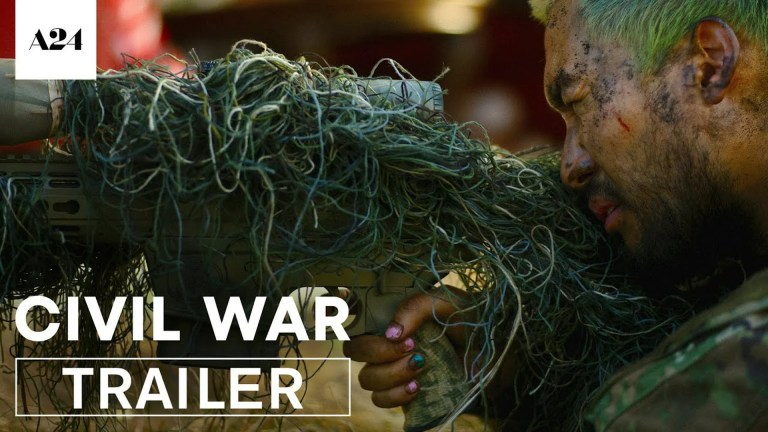
One free scan finds every outdated or missing driver and matches the right update for your exact hardware.Free scan · exact hardware matchAlex Garland’s Civil War (2024) is a warning about extremism, authoritarian power, and the disappearance of democratic restraints—not a fully specified prediction of a future partisan war. The movie intentionally avoids telling viewers which contemporary political side is responsible. Instead, it places them beside journalists moving through a country where violence has replaced peaceful political disagreement.
Alex Garland’s Civil War (2024) is a warning about what happens when extremist politics, authoritarian power, and political violence destroy the democratic restraints that make disagreement peaceful. It is not a detailed forecast of a future American conflict, and it is not a conventional left-versus-right allegory. Garland deliberately leaves the factions’ origins unclear so the audience experiences the war as the journalists do: through fragments, rumors, images, checkpoints, and sudden violence.
The film’s central question is less “Which political party caused this?” than “What happens when a society loses the ability to settle political conflict without force—and how quickly do ordinary people adapt to that loss?”
What Civil War is really trying to say
Garland has described the film as political and as a treatise against extremist thinking. But he has also resisted reducing its politics to a simple battle between America’s contemporary left and right. His concern is what happens when extremist ideas are allowed to advance without effective limits, institutions, or democratic resistance.
#1 Best Overall

- THIS TRENDS 24X36 STAR WARS: A NEW HOPE - ONE SHEET WALL POSTER uses high-resolution artwork and is printed on premium FSC-Certified Gloss Poster Paper
- HIGH QUALITY ART PRINT is ready-to-frame or can be hung on the wall using poster mounts, clips, push pins, or thumb tacks
- OFFICIALLY LICENSED wall poster
- PERFECT SIZE for any room; poster is 24" x 36"
- EASILY DECORATE any space to create the perfect decor for a party, bedroom, bathroom, kids room, living room, office, dorm, and more
That distinction matters. Civil War is not truly apolitical just because it avoids naming a real-world party as the villain. Its politics are visible in the world it creates: a president has taken a third term, the FBI has been disbanded, federal authority has broken down, and armed factions now determine what counts as law. The film is interested in the collapse of democratic restraints more than in presenting a conventional policy debate.
It is also not simply saying that “both sides are equally bad.” The film does not argue that every political position has the same moral value. Instead, it shows that once authoritarian overreach and extremist violence become normal, familiar political labels become less useful than the power relationships operating on the ground. The moral center of the movie is the survival of democratic restraint and human judgment—not neutrality about whether democracy should survive.
Why the film refuses to explain who is right
The most conspicuous choice in Civil War is what it does not explain. Viewers receive references to the president’s third term, federal abuses, secession, regional armies, and local brutality, but never a complete constitutional history of the conflict. We are not told exactly how the United States reached this point, which side first fired, or what each faction intends to do after victory.
That omission is intentional. Garland has said that the causes of political breakdown already surround contemporary audiences and that spelling them out would risk becoming redundant or patronizing. The film wants viewers inside the uncertainty of a war rather than comfortably outside it with a narrator’s political map.
What’s actually slowing this PC down?
Pick the symptom - the matching free tool is one click away.
The Western Forces demonstrate this strategy particularly well. They are an unlikely alliance between California and Texas, two regions that audiences may associate with very different political identities. Their partnership is not presented as a realistic military forecast that viewers should evaluate like a defense-policy scenario. It is a provocative speculative device: when the federal system collapses, old ideological and regional assumptions may be rearranged by immediate power interests.
The journalists do not have a reliable account of the war’s origins, either. They are collecting evidence during an unfolding crisis, not writing the final history of it. Viewers therefore learn what they can see and hear, often without knowing whether a rumor is true or whether a faction’s stated purpose matches its conduct.
Ambiguity is both the film’s method and its weakness
The lack of explanation has divided critics. One interpretation is that the film’s vagueness weakens its political warning. Without a clearer connection to polarization, institutional failure, class, race, ideology, or the specific causes of American democratic stress, the movie can seem to avoid the very analysis it invites viewers to consider.
Rank #2

- Print Quality that Stuns – Our premium 12-color high-resolution inks combined with fade-resistant technology ensure every pixel prints in lifelike vibrancy. Unlike cheap personalized poster prints, these won’t fade or discolor over time.
- Upload. Customize. Create. – Upload your JPEG or PNG image, using the customize tool to crop & position your posters and prints. Choose between gloss or matte, portrait or landscape to turn your vision into a custom print that commands attention.
- Industry-Leading Photo Paper – Our heavyweight 250gsm 10 mil gloss and matte photo paper feels premium, looks premium and outperforms anything you’ll find in mass-market print shops. Make your own poster with professional, gallery-worthy results.
- No Creases. No Rolled Edges. No Stress – Shipped in a heavy-duty poster tube, your custom prints arrive safe, unbent and ready to frame, hang or clip in no time. The reinforced tube packaging is designed to prevent rolls, folds and tears in transit.
- Trusted For 25+ Years – Posterprintshop has been printing for families, professionals & corporations since 2000. We’re USA-owned & operated with friendly local support. Now with same day printing so your customized poster is at your door fast.
The other interpretation is that this avoidance is the point. A civilian caught at a checkpoint does not experience a civil war as a complete ideological argument. They experience whoever has the guns, controls the road, or decides whether they are allowed to pass. The film’s uncertainty creates dread because it denies the audience the reassuring distance of a fully explained fictional history.
Free tools Windows power users keep installed
One-click scans. No signup required.
Both readings are fair. Civil War is deliberately non-specific, and that choice helps it function as an experiential war story. But the same choice limits its ability to explain the social and political forces that produce extremism. It is strongest as a warning about consequences and weaker as an account of causes.
The movie is also about war journalism
The political crisis is seen through four journalists: veteran photographer Lee, correspondent Joel, older reporter Sammy, and aspiring photographer Jessie. Their goal is to reach Washington, D.C., and interview the besieged president before the Western Forces capture the capital.
They are not trying to govern the country, negotiate peace, or lead a resistance movement. Their job is to observe, record, and transmit what is happening. That professional position gives the film its moral viewpoint. Garland has connected the movie’s political ambiguity to the logic of journalism: by minimizing overt authorial instruction, he allows the audience to form its own conclusions from what is witnessed.
But the film does not treat journalism as morally pure. Its reporters preserve evidence and expose brutality, yet they also risk turning suffering into professional material. Cameras, press credentials, deadlines, vehicles, and interview requests continue to operate alongside torture, executions, and urban combat. The ordinary routines of reporting become inseparable from the extraordinary violence around them.
Witnessing can protect truth—and consume suffering
The film repeatedly asks what a photograph does. An image can preserve evidence, make denial more difficult, and give distant people a way to understand violence. At the same time, a striking image can become an object for consumption. Viewers may admire its composition while emotionally distancing themselves from the person being harmed.
Lee embodies that conflict. She is highly skilled and emotionally controlled, but her professionalism also functions as a form of armor. She knows how to move through danger, where to stand, and when to take the picture. Her experience allows her to protect Jessie, but it has also trained her to compartmentalize events that should be unbearable.
Rank #3

- Pulp Fiction - Movie Poster (Regular Style - Uma Thurman On Bed) - Unframed
- Regular Style - Uma Thurman On Bed
- LARGE 24" x 36" WALL SIZE UNFRAMED POSTER: Eye-catching design fills your wall with inspiration and color. Perfect for creating a bold visual centerpiece on any wall
- VIBRANT, HIGH-RESOLUTION PRINT: Printed on high-quality paper with bold colors and sharp detail that pop in any lighting - creating a professional, premium look.
- READY TO HANG OR FRAME: Fits standard 24" x 36" frames, making display quick and easy.
Jessie represents the younger generation of visual witness. She is fascinated by the possibility of making an important image, but she has not yet fully understood the ethical and personal cost of obtaining one. The film’s treatment of her is therefore not a simple lesson that journalists should stop taking pictures. It is a harder question: how can someone document suffering without allowing the act of documentation to become another way of avoiding it?
How the film makes violence feel ordinary
Civil War is disturbing not only because it shows extreme violence, but because it shows people adapting to it. The journalists pass through ruined cities, refugee areas, armed checkpoints, executions, and firefights while continuing to perform professional tasks. Civilians navigate danger as part of daily life. Some armed actors treat the conflict as a chance for personal authority, revenge, or spectacle.
Do these 3 things before closing this tab:
1Clear out junk files and repair common Windows errors2Scan for outdated or missing drivers - takes under a minute3Repair Windows errors before they cause bigger problemsThis is why the movie is more specific than the general statement that “war is bad.” It shows how moral abnormality can become routine. A society does not need to be in nonstop chaos for democratic collapse to be real. It can retain vehicles, credentials, consumer habits, media work, and professional schedules while its basic assumptions about law and human value disappear.
The close, embedded perspective makes the audience feel the practical texture of collapse. Instead of receiving a speech about the failure of the state, viewers see that failure in a road controlled by an unpredictable gunman, a checkpoint governed by identity tests, or a building where no stable legal authority exists.
What the key scenes mean
| Scene | What it illustrates |
|---|---|
| The opening urban unrest | The collapse is already embedded in ordinary life before the main journey begins. People are not watching a single apocalyptic event; they are trying to navigate a new reality. |
| Refugee and checkpoint sequences | Authority has become arbitrary. Survival depends on whoever controls a road, building, or weapon at that moment rather than on stable law. |
| “What kind of American are you?” | Identity tests have replaced due process. The question is not a genuine inquiry about citizenship; it is a tool for deciding who is permitted to live. |
| Sniper and combat scenes | Being close enough to observe violence does not make the journalists safe from it. The camera offers a role, not protection. |
| Lee’s death | Professional witnessing becomes personal sacrifice. Jessie inherits the camera, the career, and the moral burden attached to it. |
| The presidential execution | Political defeat is reduced to an abrupt physical act. There is no final speech to organize the meaning of the war or justify what comes next. |
Spoilers: what the ending means
The final assault on Washington turns the film’s abstract political crisis into the immediate collapse of a regime. The journalists reach the capital as the Western Forces attack. Their objective is to document the president’s final moments, and they succeed—but not in the form the audience might expect.
The president does not deliver a clarifying address, confess the complete history of the war, or explain what government will replace his administration. He pleads for his life and is killed. That decision denies viewers a conventional political climax. The fall of one power center is not presented as the arrival of a fully articulated ideology or a guaranteed democratic renewal.
The Tool Desk
Outbyte PC Repair FREEClear out junk files and repair common Windows errorsFree Scan →Outbyte Driver Updater FREEFix the driver behind crashes, sound loss and screen glitchesFind Drivers →There is no detailed constitutional settlement, no assurance that the victorious faction will govern responsibly, and no proof that the conditions that created the war have disappeared. The president’s death ends his control, but it does not settle the larger political question.
Rank #4

- Masterprint Title: Titanic Poster Movie F 11x17 Kate Winslet Leonardo DiCaprio Billy Zane Kathy Bates
- Size: 11 x 17 inches
Lee’s sacrifice and Jessie’s photograph
Lee’s death completes the emotional movement that has been developing between her and Jessie. Lee has tried to remain professionally detached, but during the final battle she sacrifices herself to save Jessie. Jessie then takes the photograph of the president’s death.
The image represents a transfer of professional identity. Jessie becomes the successor to the older photographer, inheriting Lee’s camera and role as witness. But the succession is deliberately uncomfortable. Jessie obtains the defining photograph of her career at the moment Lee dies, so the image’s historical importance can never be separated from personal loss.
The ending therefore asks whether journalism preserves humanity by recording violence or risks converting violence into a powerful image that others can consume. Jessie’s photograph may become essential evidence, but it is also born from the same normalization of death that the film has been examining.
Quick wins for a faster PC:
Fix the driver behind crashes, sound loss and screen glitchesFind Drivers →Clear out junk files and repair common Windows errorsFree Scan →Is Civil War saying that both sides are the same?
No—not exactly. The movie’s refusal to identify a single contemporary political faction as the villain can produce a “both sides” reading, but its argument is more focused than that. Garland has framed the danger as extremist thinking that is no longer restrained by democratic institutions.
The film does not claim that every belief, movement, or political demand is equally extreme. Nor does it suggest that moderation is automatically virtuous in every circumstance. Its warning is about a political system in which restraint disappears, violence becomes an accepted language, and power is decided by armed control rather than public consent.
That is why calling the film “apolitical” misses the point. It is political in theme and intention, even though it is not a one-to-one allegory for a particular election, party, or president. Its broadness makes it available to viewers with different partisan interpretations, but it also leaves room for audiences to project their own politics onto the conflict.
Independent reader supportYour contribution helps us test, update, and keep practical guides available for everyone.What the movie is not saying
- It is not a literal forecast. The film does not offer a fully worked-out constitutional scenario, and it does not establish that California and Texas would realistically form the same military alliance.
- It is not a conventional military or policy analysis. The factions are not described with enough detail to evaluate them as ordinary political parties or realistic national governments.
- It is not only saying that war is unpleasant. Its more precise claims concern extremist politics, institutional breakdown, arbitrary authority, normalized violence, and the ethics of representing suffering.
- It is not a complete explanation of American polarization. The film warns about collapse without fully tracing the roles of ideology, class, race, media, institutions, or political incentives in producing it.
- It is not a promise that the victors will save democracy. The ending removes the president but offers no evidence that the replacement power will be more democratic.
The most accurate interpretation
Civil War works best when its ambiguity is understood as a deliberate experience rather than as a hidden puzzle with one missing answer. The film wants viewers to feel what it is like to encounter a political catastrophe after the arguments that caused it have become impossible to reconstruct.
Best Value

- Jaws - Movie Poster (Regular Style - Retro / Vintage Design) - Unframed
- Regular Style / Key Art - Version 2
- Vintage / Retro Design
- LARGE 24" x 36" WALL SIZE UNFRAMED POSTER: Eye-catching design fills your wall with inspiration and color. Perfect for creating a bold visual centerpiece on any wall
- VIBRANT, HIGH-RESOLUTION PRINT: Printed on high-quality paper with bold colors and sharp detail that pop in any lighting - creating a professional, premium look.
Its central warning is that democratic collapse is not experienced only through national speeches or dramatic constitutional announcements. It is experienced locally: at a checkpoint, in a refugee space, beside a sniper, in a city where armed men decide the rules, and in the professional routine of taking pictures while people die.
The film also implicates the audience. We watch the same images the journalists make. We may seek the most shocking scene, admire the most striking composition, and discuss the spectacle from a safe distance. That does not make viewing or journalism inherently wrong, but it creates a responsibility to ask what happens when suffering becomes familiar, visually compelling, and easy to consume.
So the movie’s real question is not simply, “Which side caused this?” It is also: How did people accept a world in which violence became the default political language—and what role do we play when we watch, record, share, or aestheticize it?
Release and home-viewing context
Civil War premiered at South by Southwest on March 14, 2024, and received a wide U.S. theatrical release on April 12, 2024. Alex Garland wrote and directed the film, which stars Kirsten Dunst, Cailee Spaeny, Wagner Moura, Stephen McKinley Henderson, and Nick Offerman.
Recommended Free Tools
For a second viewing, the film’s home-video presentation is relevant to its meaning because so much of its argument depends on framing, distance, sound, and the uneasy beauty of war photography. A24’s official film materials point viewers toward DVD and Blu-ray purchase options through Amazon, Target, and Walmart, while release reporting identifies a 4K Ultra HD edition. If you want to study the cinematography and final assault closely, Civil War 4K UHD is the most useful physical-media option, subject to regional availability and changing stock.
A24 also offers the original soundtrack on vinyl, and Apple Music lists the 2024 score by Ben Salisbury and Geoff Barrow. Those are companion ways to revisit the film’s sensory design, not explanations of its politics: the movie’s meaning comes from how its sound and images place routine professional observation beside extraordinary violence.
Frequently Asked Questions
Is Civil War an apolitical movie?
No. Garland has described Civil War as a political film and a warning about extremist thinking. It avoids assigning the conflict to one contemporary party, but that makes it non-specific—not apolitical.
Is Civil War predicting a real American civil war?
Not as a detailed prediction. The film does not provide a realistic constitutional timeline, a complete account of the factions, or a reliable forecast of how California and Texas could become military allies. It is a speculative warning and an experiential war story.
Why does the movie never explain which side is right?
The missing explanation is intentional. The journalists learn about the conflict through fragments and rumors, and the audience shares their uncertainty. The trade-off is that the film creates dread but offers less analysis of the actual social and political causes of collapse.
What does the ending of Civil War mean?
The president’s death is not a complete political resolution. He is removed during the Western Forces’ attack, but the movie offers no constitutional settlement or proof that the victors will rebuild a healthier democracy. Jessie’s photograph also completes the film’s argument about the value and ethical cost of witnessing violence.
The Bottom Line
Civil War is an anti-extremist warning, not a literal prediction of America’s next war. Its deliberately incomplete politics place viewers alongside journalists who must witness institutional collapse without fully understanding its origins. The ending removes one authoritarian president but offers no guaranteed democratic future, leaving the audience with the harder question of whether recording violence preserves truth, turns suffering into spectacle, or does both at once.
Quick Recap
Product prices and availability are accurate as of the date/time indicated and are subject to change. Any price and availability information displayed on Amazon at the time of purchase will apply.