Recommended Free Tools
The war in Afghanistan resists the clean dramatic arcs that have traditionally defined American war cinema. Fought over two decades, across shifting political rationales and invisible front lines, it unfolded less as a single conflict than as a prolonged state of uncertainty, occupation, and moral compromise. Any film that attempts to capture it must grapple not with victory or defeat, but with endurance, ambiguity, and the slow erosion of meaning.
Unlike wars framed around decisive battles or identifiable enemies, Afghanistan exposes the limits of power and perspective. Soldiers rotated in and out while the war stayed, civilians lived with its consequences long after headlines moved on, and policymakers recalibrated goals that were never fully explained to those executing them. This reality demands a cinema that favors interior experience over spectacle, process over payoff, and ethical tension over heroic clarity.


![(The Outpost: An Untold Story of American Valor) [By: Tapper, Jake] [Oct, 2013]](https://m.media-amazon.com/images/I/51D+Ou3m76L._SL160_.jpg)
The most resonant films and documentaries about the American occupation understand that Afghanistan is not a backdrop but a living, contested space shaped by foreign intervention and local resilience. They question who gets to tell the story, what truths can be captured, and how memory functions when outcomes remain unresolved. In doing so, they redefine what war movies can be when the conflict itself refuses to end cleanly.
Ranking Criteria: Historical Accuracy, Perspective, Craft, and Moral Complexity
Evaluating films about the war in Afghanistan requires more than measuring intensity or emotional impact. This conflict unfolded in fragments, filtered through bureaucracy, coalition politics, and vastly unequal power dynamics, making conventional war-movie yardsticks inadequate. The following criteria reflect how effectively a film engages with that reality, not just how compelling it is moment to moment.
Free tools Windows power users keep installed
One-click scans. No signup required.
#1 Best Overall
Historical Accuracy Beyond Surface Detail
Accuracy here is not limited to uniforms, weaponry, or geographic fidelity, though those details matter. More crucial is whether a film understands the strategic confusion, shifting objectives, and institutional inertia that defined the American occupation. The strongest entries situate individual experiences within recognizable policy frameworks, showing how orders, metrics, and mission statements often failed to align with conditions on the ground.
This also includes how films handle time. Afghanistan was not a single campaign but a continuum of rotations, escalations, withdrawals, and resets. Movies that compress or distort this chronology without acknowledging its effects risk simplifying a war whose defining feature was duration.
Perspective and Point of View
Whose story is being told, and who remains at the margins, is central to this ranking. Films that default exclusively to an American viewpoint are not disqualified, but they are scrutinized for how self-aware that limitation is. The most compelling works either expand their frame to include Afghan voices or consciously interrogate the absence of those voices as part of the narrative.
Documentaries often excel here, but narrative features can be just as incisive when they resist centering heroism over observation. Whether following soldiers, journalists, diplomats, interpreters, or civilians, perspective must feel earned rather than assumed. A narrow lens can still be powerful if it acknowledges what it cannot see.
Quick wins for a faster PC:
Repair Windows errors before they cause bigger problemsFix Now →Scan for outdated or missing drivers - takes under a minuteDriver Scan →Clear out junk files and repair common Windows errorsFree Scan →Craft, Restraint, and Cinematic Intelligence
Technical proficiency alone is not enough, but poor craft can undermine even the most urgent subject matter. Direction, editing, sound design, and performance are evaluated for how they reinforce the film’s thematic intent rather than overwhelm it. Afghanistan does not benefit from overstated scoring or manufactured spectacle; its tension often lies in repetition, waiting, and uneventful days charged with latent risk.
Restraint is frequently a virtue in these films. Moments of violence or crisis resonate most when they emerge from lived context instead of genre expectation. The highest-ranked entries understand that silence, routine, and procedural detail can be more revealing than action.
Moral Complexity and Ethical Engagement
Perhaps the most decisive criterion is a film’s willingness to sit with contradiction. The war in Afghanistan produced acts of courage alongside systemic failure, genuine humanitarian intent alongside destructive outcomes. Films that flatten these tensions into moral certainty, whether celebratory or condemnatory, tend to feel incomplete.
The strongest works resist easy judgment. They allow viewers to grapple with complicity, ambiguity, and unintended consequence, often without offering resolution. In a conflict defined by unresolved endings and contested narratives, moral complexity is not an artistic indulgence but an ethical necessity.
What’s actually slowing this PC down?
Pick the symptom - the matching free tool is one click away.
Top Tier: Definitive Films That Capture the War’s Human and Political Core
Restrepo (2010)
Sebastian Junger and Tim Hetherington’s Restrepo remains one of the most unfiltered accounts of frontline American soldiers in Afghanistan. Embedded with a platoon in the Korengal Valley, the film rejects narration, strategic overview, or political framing in favor of direct observation. What emerges is not heroism in the cinematic sense, but endurance shaped by boredom, fear, grief, and fragile camaraderie.
The film’s power lies in its refusal to explain itself. Viewers are left to infer the futility and psychological toll of the mission through repetition and routine, mirroring the soldiers’ own limited understanding of the broader war. In doing so, Restrepo captures how tactical bravery can coexist with strategic ambiguity, a defining tension of the conflict.
Korengal (2014)
Often described as Restrepo’s companion piece, Korengal deepens rather than repeats the earlier film’s insights. Structured around interviews conducted after deployment, it allows soldiers to reflect on their experiences with distance and doubt. The tone is more introspective, less immediate, and ultimately more unsettling.
Korengal confronts the emotional cost of a war whose purpose remains elusive even to those who fought it. Several soldiers openly question whether their sacrifices mattered, articulating a sense of moral dislocation that few war films are willing to sit with. It is one of the rare works that documents not just combat trauma, but existential reckoning.
Taxi to the Dark Side (2007)
Alex Gibney’s Academy Award–winning documentary widens the lens to examine how American policy decisions translated into abuse and death on the ground. Centered on the killing of Dilawar, an Afghan taxi driver who died in U.S. custody at Bagram Air Base, the film traces responsibility upward through military doctrine and political authorization.
Unlike many war documentaries, Taxi to the Dark Side directly interrogates systems rather than individuals alone. It links Afghanistan to the broader architecture of the War on Terror, exposing how euphemism, legal maneuvering, and institutional pressure normalized cruelty. The result is a devastating moral indictment grounded in meticulous reporting.
Armadillo (2010)
Janus Metz’s Armadillo offers a rare non-American perspective, following Danish soldiers stationed in Helmand Province. Shot with cinéma vérité immediacy, the film captures both the adrenaline of combat and the ethical unease that follows lethal encounters. A controversial engagement with Taliban fighters becomes the film’s emotional and moral fulcrum.
What sets Armadillo apart is its willingness to observe without reassurance. The soldiers’ reactions oscillate between pride, fear, and quiet horror, leaving viewers to wrestle with the meaning of lawful violence in an asymmetrical war. It underscores how coalition forces, despite differing national narratives, faced shared moral dilemmas.
Do these 3 things before closing this tab:
1Repair Windows errors before they cause bigger problems2Scan for outdated or missing drivers - takes under a minute3Clear out junk files and repair common Windows errorsThis Is What Winning Looks Like (2013)
Far from the front lines, Heather Courtney’s documentary examines the American effort to build Afghan security forces from the inside. Set largely in Kabul, the film reveals a bureaucratic theater of training sessions, press briefings, and cultural misunderstandings that quietly undermine stated objectives. The absence of conventional combat only heightens the sense of institutional drift.
The film’s title is bitterly ironic. By focusing on advisors and Afghan officials navigating corruption, dependency, and performative progress, it exposes the fragility of the occupation’s endgame years before its collapse. Few films capture the gap between rhetoric and reality with such calm, devastating clarity.
Retrograde (2022)
Matthew Heineman’s Retrograde documents the final months of the American withdrawal, embedding with U.S. advisors and Afghan partners as the mission unravels. The film avoids hindsight narration, allowing the uncertainty and denial of the moment to unfold in real time. Decisions feel improvised, and consequences loom just off-screen.
Most haunting are the scenes involving Afghan interpreters and soldiers left behind. Retrograde captures the moral dissonance of departure without resolution, framing the end of the occupation not as closure but as abandonment. It stands as one of the clearest cinematic records of how the war concluded in practice rather than in policy statements.
Soldiers on the Ground: Combat, Brotherhood, and Disillusionment in Afghanistan Films
If the previous films chart the strategic and moral collapse of the occupation, a parallel body of work narrows the lens to platoons and patrols living the war day by day. These films emphasize immediacy: the heat, boredom, terror, and bonds forged in outposts where policy is distant and survival is not. Together, they form the most intimate cinematic record of how the war felt to those tasked with fighting it.
Restrepo (2010)
Sebastian Junger and Tim Hetherington’s Restrepo remains the definitive frontline documentary of the Afghan War. Embedded with the 2nd Platoon of the 173rd Airborne in the Korengal Valley, the film strips away context and commentary in favor of raw proximity. Combat erupts suddenly, conversations drift between gallows humor and fatalism, and the camera never looks away.
What gives Restrepo its enduring power is restraint. The film refuses to justify the mission or condemn it outright, instead allowing the soldiers’ exhaustion and attachment to one another to speak for themselves. The outpost becomes both a literal and emotional fortress, a place where brotherhood substitutes for clarity about purpose.
Korengal (2014)
Junger and Hetherington’s follow-up, Korengal, deepens that portrait by stepping back from combat spectacle. Built largely from unused footage, the film foregrounds reflection over action, capturing soldiers wrestling with doubt, grief, and the creeping sense of futility that defines long counterinsurgency campaigns. The absence of narrative urgency feels intentional.
Korengal is less about what happened than what it meant. Interviews linger on the psychological toll of repeated deployments and the moral ambiguity of a war fought among civilians. It complements Restrepo by showing how adrenaline fades and questions remain.
The Outpost (2020)
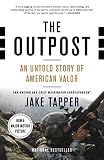
Rod Lurie’s The Outpost translates one of the war’s most infamous engagements, the 2009 Battle of Kamdesh, into a traditional narrative film. Based on Jake Tapper’s nonfiction account, it reconstructs the tactical disaster of Combat Outpost Keating with procedural clarity and physical intensity. The geography alone explains much of the tragedy.
While more conventional than the documentaries, The Outpost avoids easy hero worship. Its soldiers are professional, frustrated, and acutely aware that they are defending indefensible ground. The film’s realism lies in its depiction of systemic failure rather than individual incompetence, making it one of the most credible studio portrayals of the war.
Lone Survivor (2013)
Peter Berg’s Lone Survivor occupies a more contested place in the Afghanistan canon. Adapted from Marcus Luttrell’s memoir, it dramatizes a doomed Navy SEAL mission with visceral action and operatic intensity. The film prioritizes physical endurance and loyalty under fire, often at the expense of nuance.
The Tool Desk
Outbyte Driver Updater FREEFix the driver behind crashes, sound loss and screen glitchesFind Drivers →Outbyte PC Repair FREEClear out junk files and repair common Windows errorsFree Scan →Yet Lone Survivor is revealing precisely because of its perspective. It reflects how the war was often framed within American popular culture, emphasizing sacrifice and martial valor while sidelining Afghan civilian context. As a cultural artifact, it shows how myth-making coexisted with mounting strategic doubt.
Kajaki (2014)
Paul Katis’s Kajaki, also released as Kilo Two Bravo, shifts attention to British forces operating in Helmand Province. Based on a true incident involving a landmine disaster, the film unfolds almost in real time, focusing on improvisation and restraint rather than combat heroics. Violence is ever-present but largely unseen.
Kajaki captures a quieter form of courage rooted in discipline and patience. Its emphasis on procedural realism and collective effort reflects a distinctly British military ethos, while underscoring how coalition forces shared similar vulnerabilities. The film’s tension emerges not from enemy engagement but from the environment itself, a reminder of how the landscape shaped the war.
Together, these films present soldiers not as avatars of policy but as human beings navigating chaos with limited information and finite control. They reveal a conflict defined less by decisive battles than by endurance, uncertainty, and the bonds formed in isolation. On the ground, Afghanistan was a war of moments rather than milestones, and these films understand that distinction with sobering clarity.
Crashes, No Sound, or Screen Glitches?
Random freezes, missing sound and display glitches usually trace back to one bad driver. Find and replace yours safely.Free scan · under a minutePC Slower Than It Used to Be?
A free scan shows the junk files, broken settings and background clutter dragging Windows down - then fixes them in one click.Free scan · Windows 10 & 11Afghans at the Center: Civilian Lives, Local Power, and the Cost of Occupation
If the previous films frame Afghanistan through the experience of foreign soldiers, the most essential counterweight comes from stories that place Afghan civilians at the narrative core. These works confront the war not as a series of missions but as a condition imposed on everyday life, shaped by local power brokers, shifting alliances, and the long shadow of foreign intervention. They are often quieter, more intimate, and ultimately more destabilizing in their moral clarity.
Osama (2003)
Siddiq Barmak’s Osama remains one of the most devastating films ever made about life under Taliban rule. Told through the eyes of a young girl forced to disguise herself as a boy to survive, the film strips away geopolitical abstraction in favor of stark, lived reality. There is no spectacle here, only fear, hunger, and the suffocating weight of religious authoritarianism.
What makes Osama indispensable is its timing and authenticity. Shot shortly after the Taliban’s initial fall, using mostly non-professional actors, it captures a society traumatized not only by extremism but by decades of abandonment. The film refuses sentimentality, presenting survival itself as a moral burden in a world with no safe choices.
Kabul Express (2006)
Siddiq Barmak’s follow-up, Kabul Express, adopts a radically different tone without losing its political edge. Structured as a road movie, it brings together an Afghan journalist, a former Taliban soldier, and foreign reporters navigating post-invasion Afghanistan. The film uses dark humor and confrontation to expose the uneasy coexistence of occupiers, collaborators, and the newly displaced.
Kabul Express is particularly valuable for how it depicts Afghan masculinity fractured by war. Former enemies share space not because of reconciliation, but because survival demands it. The presence of Western journalists is not romanticized; instead, they become part of the terrain, observers whose freedom of movement contrasts sharply with local precarity.
The Kite Runner (2007)
Marc Forster’s adaptation of Khaled Hosseini’s novel offers a more conventional dramatic structure, but its emotional reach made Afghan history accessible to a global audience. Spanning pre-Soviet Kabul, Taliban rule, and the diaspora experience, the film frames the war as a rupture in cultural continuity rather than a single political event. Its focus on guilt, loyalty, and memory situates violence within families and friendships.
While softened by Hollywood aesthetics, The Kite Runner matters because it insists on Afghan interiority. The trauma it depicts is not incidental to geopolitics but foundational to identity, shaping lives long after the headlines move on. It underscores how exile and return are inseparable from the war’s legacy.
Afghan Star (2009)
Havana Marking’s documentary Afghan Star approaches post-Taliban Afghanistan through popular culture rather than combat. Following contestants on a televised singing competition, the film reveals a society negotiating freedom, gender norms, and national identity in real time. Music becomes both an outlet for expression and a flashpoint for conservative backlash.
The film’s power lies in its ordinariness. Votes, performances, and public opinion become acts of political participation in a country where formal democracy often felt imposed and fragile. Afghan Star captures a moment when optimism flickered amid instability, offering a rare view of aspiration under occupation.
Sonita (2015)
Rokhsareh Ghaem Maghami’s Sonita shifts the lens to Afghan refugees living in Iran, expanding the war’s geography beyond national borders. The documentary follows a teenage girl who dreams of becoming a rapper while facing pressure to be sold into marriage. Her struggle is shaped by displacement, poverty, and patriarchal tradition, all intensified by decades of conflict.
Sonita exposes how the war’s consequences extend into private life and future generations. The absence of soldiers on screen only sharpens the film’s indictment; occupation and collapse echo through migration, gendered violence, and stolen possibility. It is a reminder that Afghanistan’s story does not end at withdrawal or regime change.
Together, these films challenge the idea that Afghanistan was merely a theater for foreign agendas. By centering Afghan voices, they reveal a conflict experienced as erosion rather than explosion, where power is local, survival is negotiated daily, and the cost of occupation is measured in lost childhoods, fractured identities, and fragile hopes.
The Intelligence, Policy, and Nation-Building Lens: How Strategy Failed on Screen
If Afghan-centered stories reveal the war’s lived consequences, a parallel body of films interrogates the architects of intervention itself. These works shift focus upward, into intelligence agencies, diplomatic cables, briefing rooms, and development programs where abstraction often replaced understanding. On screen, Afghanistan becomes a case study in how strategy, severed from culture and accountability, quietly collapsed.
This Is What Winning Looks Like (2013)
Benjamin Anderson’s documentary is among the most devastating portraits of American-led nation-building ever filmed. Embedded with U.S. advisors training Afghan police and military units, the film observes corruption, abuse, and dysfunction with an almost unbearable intimacy. There is no narration, no editorial framing, only the slow realization that the mission’s stated goals no longer align with reality.
What makes the film essential is its refusal to dramatize failure. The collapse unfolds through casual conversations, hollow metrics, and a chilling normalization of brutality by supposed partners. It exposes how policy language about stability and progress masked a system propped up by denial and inertia.
War Machine (2017)
David Michôd’s War Machine approaches the same strategic terrain through satire, fictionalizing the tenure of General Stanley McChrystal. Brad Pitt’s performance captures the performative confidence of modern military leadership, where media narratives and PowerPoint optimism substitute for political clarity. The film’s tone is uneasy, often lurching between absurdity and despair.
While divisive, War Machine is one of the few narrative films to directly confront the managerial culture of the Afghan war. Its critique lands not on battlefield decisions but on the myth of technocratic control, where charisma and data dashboards promise victory without grappling with history or local reality.
The Report (2019)
Scott Z. Burns’ The Report widens the lens to include the intelligence failures that shaped the post-9/11 wars, including Afghanistan. Centered on the Senate investigation into CIA torture, the film traces how fear-driven policy metastasized into institutionalized abuse. Adam Driver’s restrained performance underscores the moral exhaustion of working within a system designed to avoid responsibility.
Though not Afghanistan-exclusive, the film is crucial to understanding the occupation’s ethical foundation. It reveals how secrecy and legal manipulation at the highest levels corroded credibility abroad and accountability at home. The war’s strategic failure is shown to be inseparable from its moral compromises.
Zero Dark Thirty (2012)
Kathryn Bigelow’s controversial thriller remains one of the most influential depictions of post-9/11 intelligence work. Its procedural focus and relentless pacing mirror the obsession that drove America’s counterterrorism apparatus, much of it rooted in Afghan theaters and black sites. The film’s ambiguity, however, sparked fierce debate over whether it interrogates or tacitly endorses torture.
Recommended Free Tools
As a cultural artifact, Zero Dark Thirty matters less for what it concludes than for what it reflects. It captures a moment when results eclipsed ethics, and intelligence success was framed as justification for systemic abuse. In doing so, it inadvertently mirrors the logic that prolonged the war itself.
Lessons of Darkness: Policy Without People
Across these films, Afghanistan is often reduced to a problem set rather than a place. Metrics replace meaning, allies become liabilities, and success is endlessly deferred. The absence of Afghan civilian perspectives in many policy-focused narratives is not a flaw of filmmaking alone, but a mirror of how strategy was conceived.
Together, these works argue that the occupation did not fail for lack of effort or resources, but for lack of humility and comprehension. On screen, as in life, the war unravels not with a single decision, but through accumulated evasions, where no one quite admits that the mission no longer makes sense.
Independent reader supportYour contribution helps us test, update, and keep practical guides available for everyone.Documentaries That Redefined the Narrative of the American Occupation
If narrative features often frame the war through institutions and decision-makers, documentaries about Afghanistan dismantle that distance. Embedded journalism, longitudinal observation, and post-withdrawal retrospection collectively reshaped how audiences understood the occupation’s lived reality. These films replace abstraction with immediacy, forcing viewers to confront the human cost of policies that rarely accounted for the terrain, culture, or people they affected.
Free tools Windows power users keep installed
One-click scans. No signup required.
Restrepo (2010)
Sebastian Junger and Tim Hetherington’s Restrepo remains the definitive frontline document of the war’s middle years. Embedded with a U.S. Army platoon in the Korengal Valley, the film strips away strategy and politics in favor of raw, sustained exposure to daily combat. There is no narration, no punditry, only the grinding rhythm of patrols, firefights, and exhaustion.
What makes Restrepo so enduring is its refusal to impose meaning on chaos. The soldiers fight not for ideology but for survival and for each other, a framing that quietly indicts the larger mission’s opacity. Afghanistan becomes not a battlefield to be won, but an environment that consumes clarity and certainty alike.
Korengal (2014)
Junger’s follow-up, assembled from footage shot during Restrepo, deepens the psychological portrait of war without advancing the timeline. Korengal is less concerned with what happened than with what remains, lingering on boredom, fear, and the emotional residue left behind. The film’s pacing is slower, its tone more reflective, mirroring the way combat memories settle unevenly over time.
Together, Restrepo and Korengal form an unintentional diptych about endurance and aftermath. They reveal how the occupation functioned tactically while remaining strategically incoherent. In doing so, they challenge the myth that proximity to combat yields clarity about purpose.
Quick wins for a faster PC:
Repair Windows errors before they cause bigger problemsFix Now →Scan for outdated or missing drivers - takes under a minuteDriver Scan →This Is What Winning Looks Like (2013)
Where Restrepo embeds with American troops, This Is What Winning Looks Like turns its camera toward Afghan institutions built under U.S. supervision. Shot largely at military academies and training centers, the documentary exposes the fragile, often performative nature of nation-building. Corruption, abuse, and cultural misunderstanding are not anomalies here but systemic features.
The film’s power lies in its devastating irony. The title echoes official rhetoric, yet what unfolds is a portrait of hollow metrics and moral abdication. Winning, as defined by reports and press briefings, bears little resemblance to stability or legitimacy on the ground.
No Good Men Among the Living (2012)
Based on Anand Gopal’s reporting, this documentary reconstructs how misinformation and personal vendettas shaped early U.S. military actions. Through interviews with Afghan civilians, former detainees, and American officials, it traces how false intelligence cascaded into deadly consequences. The film foregrounds Afghan voices often erased from Western war narratives.
Its central argument is quietly radical: that much of the violence attributed to insurgency was manufactured by misunderstanding and convenience. The occupation’s moral failure is shown not only in what was done, but in who was believed. Truth becomes collateral damage long before civilians do.
Do these 3 things before closing this tab:
1Clear out junk files and repair common Windows errors2Scan for outdated or missing drivers - takes under a minute3Repair Windows errors before they cause bigger problemsRetrograde (2022)
Matthew Heineman’s Retrograde captures the final months of the American withdrawal, documenting the collapse of the Afghan military infrastructure left behind. The film observes advisors scrambling to train partners as timelines shrink and assurances ring hollow. There is no suspense about the outcome, only a mounting sense of inevitability.
What distinguishes Retrograde is its restraint. Rather than assign blame, it records the emotional dissonance of leaving, the quiet recognition that years of effort cannot be condensed into a functioning exit. The occupation’s end is depicted not as defeat or betrayal, but as the logical conclusion of a project built on unsustainable assumptions.
Across these documentaries, the American occupation is no longer a geopolitical abstraction but a series of human encounters shaped by power imbalance and cultural dissonance. They do not argue from ideology, but from accumulation, letting patterns emerge through repetition and failure. In redefining the narrative, they reveal that understanding Afghanistan requires listening longer than strategy ever allowed.
Legacy and Reckoning: How These Films Shape Our Understanding of America’s Longest War
Taken together, these films perform a task that official histories and after-action reports often avoid: they force a reckoning with consequences rather than intentions. By centering lived experience over strategic abstraction, they reframe the War in Afghanistan as a story of cumulative choices, misread cultures, and deferred accountability. The legacy they construct is not one of singular failure or heroism, but of systems repeatedly privileging process over people.
What’s actually slowing this PC down?
Pick the symptom - the matching free tool is one click away.
From Strategy to Human Cost
One of the most significant contributions these films make is collapsing the distance between policy and pain. Decisions made in air-conditioned briefing rooms ripple outward into villages, detention facilities, and fractured families. By tracing those lines clearly, the films undermine the myth that civilian harm and institutional dysfunction were unforeseeable side effects rather than predictable outcomes.
Challenging the Official Narrative
These works also serve as a corrective to the language of progress that defined much of the occupation’s public messaging. Metrics, benchmarks, and “turning points” dissolve under scrutiny when placed beside testimony from Afghan civilians and disillusioned soldiers. What emerges is a portrait of a war sustained by optimism bias and bureaucratic inertia long after its premises had eroded.
Whose Story Gets Remembered
Crucially, the most enduring films about Afghanistan resist the urge to center American experience alone. By amplifying Afghan perspectives, they expose how rarely local realities shaped decision-making. Memory, the films suggest, is itself a contested space, and whose voices are preserved will determine how the war is ultimately understood.
Cinema as Moral Record
Unlike journalism constrained by immediacy or politics constrained by consensus, cinema allows for reflection without resolution. These films do not offer solutions or easy lessons, but they insist on documentation. In doing so, they function as a moral record, preserving questions that might otherwise be buried by time or reframed by convenience.
The Tool Desk
Outbyte Driver Updater FREEFix the driver behind crashes, sound loss and screen glitchesFind Drivers →Outbyte PC Repair FREERepair Windows errors before they cause bigger problemsFix Now →As the War in Afghanistan recedes from headlines, its cinematic legacy becomes more vital, not less. These films ensure that the conflict is remembered not as a footnote or a failure to be quickly moved past, but as a defining episode that reshaped lives on both sides of the occupation. In their accumulated weight, they argue that understanding America’s longest war begins not with why it started or how it ended, but with an honest accounting of what it became.
Quick Recap
Product prices and availability are accurate as of the date/time indicated and are subject to change. Any price and availability information displayed on Amazon at the time of purchase will apply.




