Chaos is the point in Beetlejuice 2’s final act, and Tim Burton leans into that philosophy hard as the film barrels toward its curtain call. The climactic showdown in the Afterlife doesn’t resolve itself with clean victories or permanent consequences so much as a frantic rebalancing of worlds, where the living and the dead once again slam into each other. By the time the dust settles, several characters have technically gotten what they want, but nothing feels definitively finished.
At the center of it all is the film’s refusal to permanently contain Betelgeuse himself. The title ghoul is thwarted, humiliated, and forcibly removed from the board, yet the movie is careful to avoid the word “ended.” His fate feels more like a bureaucratic setback than a cosmic punishment, echoing the Afterlife’s endlessly circular rules and reinforcing the idea that chaos, like Betelgeuse, is never fully eradicated.
| # | Preview | Product | Price | |
|---|---|---|---|---|
| 1 |

|
Beetlejuice Beetlejuice (2024) (Blu-ray) | $9.99 | Buy on Amazon |
| 2 |

|
Beetlejuice (4K Ultra HD + Blu-ray + Digital) | $16.99 | Buy on Amazon |
| 3 |
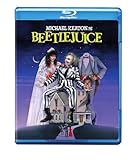
|
Beetlejuice | $3.00 | Buy on Amazon |
| 4 |
![Beetlejuice [Blu-ray]](https://m.media-amazon.com/images/I/51iI4zjCZBL._SL160_.jpg)
|
Beetlejuice [Blu-ray] | $18.61 | Buy on Amazon |
| 5 |
![Beetlejuice Beetlejuice (2024) + Beetlejuice (1988) [Blu-ray -2 sets]](https://m.media-amazon.com/images/I/41ghloqXnGL._SL160_.jpg)
|
Beetlejuice Beetlejuice (2024) + Beetlejuice (1988) [Blu-ray -2 sets] | $39.88 | Buy on Amazon |
Just as importantly, the emotional resolution belongs to Lydia and the next generation pulled into her supernatural orbit. Choices are made that reaffirm life over escapism, responsibility over rebellion, and connection over isolation, but Burton leaves behind a handful of dangling threads and visual winks that suggest the door between worlds is still cracked open. Whether intentional sequel bait or simply Burtonian mischief, the ending positions Beetlejuice 2 less as a final chapter and more as a mischievous pause before the next haunting.
The Ending, Explained: Breaking Down the Final Confrontation and Resolution
What makes Beetlejuice 2’s ending feel so deliberately unsettled is how it refuses to treat the final confrontation as a win-or-lose scenario. Instead of a single villain being vanquished, the climax plays like an administrative meltdown, with the Afterlife’s rules buckling under their own absurdity. Burton stages the chaos as both spectacle and satire, reminding us that in this universe, order is always temporary.
Recommended Free Tools
#1 Best Overall
Betelgeuse’s Fate: Contained, Not Conquered
Betelgeuse’s ultimate defeat is intentionally unsatisfying in a narrative sense, and that’s very much the point. He’s outmaneuvered, embarrassed, and forcibly removed from the immediate conflict, but never destroyed or meaningfully reformed. The Afterlife bureaucracy treats him like a recurring problem file, not an existential threat, reinforcing the idea that Betelgeuse is a symptom of the system rather than an anomaly.
The film’s final images of him suggest suspension, not imprisonment. He’s sidelined by rules that are clearly flexible and inconsistently enforced, a far cry from a locked door or a definitive exile. It’s a clever echo of the original film’s ending, where Betelgeuse was punished, not erased, and it keeps the character mythically alive.
Lydia’s Choice and the Weight of Adulthood
While Betelgeuse may be the face of the franchise, the emotional resolution belongs squarely to Lydia. Her arc in Beetlejuice 2 culminates in a reaffirmation of life, but not the naïve optimism of her youth. This time, choosing the living world comes with a conscious acceptance of responsibility, grief, and imperfection.
The film is careful to show that Lydia hasn’t “outgrown” the supernatural. Instead, she’s learned how to coexist with it without letting it define her. That distinction matters, especially in a sequel that could have easily turned nostalgia into stasis.
The Next Generation and the Cycle of Temptation
The younger characters drawn into the Afterlife drama serve as both mirrors and warnings. They’re tempted by escape, power, and the seductive logic of opting out of reality altogether. The ending pulls them back just in time, framing the Afterlife not as a solution, but as a seductive distraction from unresolved pain.
This generational parallel reinforces one of the franchise’s core ideas: the dead don’t envy life because it’s easy, but because it’s unfinished. The ending suggests that every generation will be tempted by that shortcut, and every generation has to decide whether to take it.
Easter Eggs, Loose Threads, and Open Doors
Burton peppers the final moments with visual callbacks that longtime fans will immediately clock. Familiar Afterlife locations reappear with subtle alterations, background gags hint at unseen stories, and certain supporting characters are conspicuously left mid-journey. None of these elements demand immediate follow-up, but they’re far too intentional to ignore.
Even the way the living and dead worlds separate feels provisional. Doors close, but locks are never shown, and the rules governing those boundaries remain as inconsistent as ever. It’s a classic Burton move, ending not on closure, but on implication.
Is This Setting Up Beetlejuice 3?
Narratively, Beetlejuice 2 absolutely leaves room for another chapter. Betelgeuse is still active within the cosmic filing system, the Deetz family’s connection to the Afterlife remains intact, and the film goes out of its way to avoid finality. Nothing feels like a farewell, especially for a character whose entire appeal lies in his inability to stay gone.
From a real-world perspective, the ending also functions as a franchise hedge. It satisfies as a standalone continuation while quietly testing whether audiences are ready for more. If Beetlejuice 3 happens, this ending won’t need to be undone, only reopened, which may be the most Beetlejuice-friendly resolution possible.
Character Fates and Arcs: Lydia, Beetlejuice, and the New Generation
Lydia Deetz: Choosing Life Without Losing the Ghosts
Lydia’s arc in Beetlejuice 2 is less about confronting the supernatural and more about renegotiating her relationship with it. She no longer romanticizes death the way she once did, but she hasn’t shut herself off from it either. The ending places her firmly in a middle space, someone who understands the Afterlife’s pull without mistaking it for an answer.
What’s crucial is that Lydia isn’t punished for her sensitivity or rewarded for abandoning it. Instead, she learns to live with the knowledge she has, accepting that being attuned to the dead doesn’t mean belonging among them. It’s a quiet evolution that honors who she was in the original film while acknowledging the emotional cost of carrying that awareness into adulthood.
Beetlejuice: Permanently Temporary
Beetlejuice’s fate is, fittingly, unresolved in the most intentional way possible. He’s thwarted, sidelined, and momentarily contained, but never truly defeated or erased. The film understands that finality would betray the character’s entire function as an agent of chaos who thrives in loopholes and half-rules.
Rather than offering closure, the ending reframes Beetlejuice as a constant pressure on the edges of the story. He’s less a villain to be vanquished than a force that resurfaces whenever the living start bargaining with death. That ambiguity keeps him narratively alive and thematically relevant, especially if temptation remains part of the franchise’s DNA.
Rank #2
- Item Name: Beetlejuice
- Product Type: PHYSICAL FILM
- Brand: Warner Brothers
The New Generation: Tempted, Not Lost
The younger characters introduced in Beetlejuice 2 function as emotional test cases rather than full cautionary tales. Each of them flirts with the idea that the Afterlife offers clarity, control, or escape from pain they don’t yet know how to process. The ending deliberately pulls them back before that temptation hardens into a choice.
Their survival isn’t just literal, it’s ideological. By choosing to remain among the living, they reinforce the film’s central argument that unresolved pain doesn’t disappear just because reality does. In doing so, they become narrative inheritors of Lydia’s original journey, suggesting that the cycle continues, but growth is possible.
What’s actually slowing this PC down?
Pick the symptom - the matching free tool is one click away.
Themes in the Finale: Legacy, Chaos, and the Price of Resurrection
The closing stretch of Beetlejuice 2 isn’t just about where the characters land, but what the film ultimately believes about death, memory, and the dangerous comfort of shortcuts. Beneath the gags and grotesquerie, the finale quietly interrogates why the living keep peeking behind the curtain, and what it costs them every time they do. Tim Burton and the filmmakers use the ending to fold character resolution into broader thematic stakes that feel deliberately open-ended rather than neatly resolved.
Legacy as Inheritance, Not Imitation
One of the film’s most thoughtful ideas is that legacy isn’t about repeating the past, it’s about reckoning with it. Lydia’s arc makes clear that she doesn’t need to become her younger self again to honor who she was. Instead, her sensitivity to the Afterlife becomes something she carries responsibly, aware of both its insight and its dangers.
That idea extends to the younger characters, who aren’t asked to mirror Lydia’s original journey beat-for-beat. They inherit the knowledge that the barrier between worlds is thin, but they’re given the chance to respond differently. The film resists nostalgia as a trap, suggesting that true legacy lies in evolution rather than reenactment.
Chaos as a Feature, Not a Bug
Beetlejuice himself remains the embodiment of disorder, but the ending reframes chaos as something more cyclical than catastrophic. He doesn’t bring about the apocalypse, nor does he get the grand banishment some legacy sequels opt for. Instead, he’s returned to his natural state: waiting, watching, exploiting cracks when they appear.
Do these 3 things before closing this tab:
1Scan for outdated or missing drivers - takes under a minute2Clear out junk files and repair common Windows errors3Fix the driver behind crashes, sound loss and screen glitchesThis treatment positions chaos as an ever-present temptation rather than an external invasion. The Afterlife bureaucracy, the summoning rules, and Beetlejuice’s own survival all suggest a system that pretends to be orderly while relying on instability to function. It’s a sly acknowledgment that in this universe, control is always an illusion, and chaos is simply better dressed now.
The Price of Resurrection and the Illusion of Escape
Resurrection, both literal and emotional, is treated with caution in the finale. Characters who flirt with undoing death or pain are repeatedly shown that shortcuts come with strings attached. The Afterlife isn’t a refuge, it’s a mirror that amplifies unresolved trauma rather than erasing it.
By ending on restraint instead of indulgence, the film argues that survival isn’t the same as healing. Choosing life means choosing uncertainty, grief, and unfinished business, but it also means growth. The refusal to offer an easy resurrection reinforces the franchise’s long-standing belief that meddling with death rarely delivers what it promises.
An Ending Designed to Stay Open
Thematically, the finale’s refusal to close every door feels intentional rather than evasive. Beetlejuice’s continued existence, the lingering curiosity of the younger generation, and Lydia’s unresolved awareness all function as narrative pressure points. They don’t demand immediate continuation, but they certainly allow for it.
The Tool Desk
Outbyte Driver Updater FREEFix the driver behind crashes, sound loss and screen glitchesFind Drivers →Outbyte PC Repair FREERepair Windows errors before they cause bigger problemsFix Now →From a franchise perspective, that openness reads like a hedge rather than a cliffhanger. The film satisfies its emotional arcs while leaving enough conceptual real estate for Beetlejuice 3 to explore new bargains, new generations, and new consequences. In keeping with the film’s themes, the ending doesn’t resurrect the franchise outright, it simply leaves it resting uncomfortably close to the surface, waiting to be disturbed again.
Unresolved Threads and Easter Eggs You Might Have Missed
For all its thematic closure, Beetlejuice 2 leaves behind a trail of loose threads that feel deliberately planted rather than accidentally forgotten. Tim Burton and the returning creative voices seem acutely aware of how closely fans scrutinize this world, and they reward that attention with visual callbacks, bureaucratic curiosities, and character beats that linger just long enough to feel intentional.
These moments don’t scream sequel bait, but they quietly widen the mythology. If the ending frames chaos as dormant instead of defeated, these details are the cracks where it could seep back in.
The Afterlife Is Still Expanding
One of the film’s most telling background details is how much larger and more layered the Afterlife bureaucracy appears compared to the original. New departments, updated signage, and throwaway lines about policy changes suggest an evolving system rather than a static one. That evolution implies future stories don’t need to retread old ground.
Quick wins for a faster PC:
Clear out junk files and repair common Windows errorsFree Scan →Scan for outdated or missing drivers - takes under a minuteDriver Scan →Rank #3
- Factory sealed DVD
More importantly, it hints that the rules governing Beetlejuice’s containment aren’t absolute. Bureaucracies change, loopholes multiply, and inefficiency is practically a supernatural force in this universe.
Beetlejuice’s Name Is Never Truly Neutralized
While the film avoids the obvious temptation of another summoning gag, it conspicuously refuses to establish that Beetlejuice’s name has lost its power. Characters skirt around it, joke about it, or stop just short of saying it aloud. That avoidance feels purposeful.
The implication is unsettling: the rules still work, people still know them, and temptation still exists. All it takes is grief, curiosity, or arrogance for someone to test the system again.
Lydia’s Awareness Is the Real Cliffhanger
Lydia’s arc ends quietly, but not cleanly. She may choose restraint, but the film repeatedly emphasizes that she still sees more than she lets on. Her sensitivity to the Afterlife hasn’t faded; it’s matured.
Free tools Windows power users keep installed
One-click scans. No signup required.
That lingering awareness positions her less as a participant and more as a potential gatekeeper. Whether that makes her a protector, an enabler, or something in between is left unresolved, and that ambiguity feels ripe for future conflict.
Generational Curiosity Never Really Dies
The sequel subtly shifts its focus toward what gets passed down, not just genetically, but emotionally and mythologically. Younger characters flirt with the idea of the Afterlife the way Lydia once did, with fascination rather than fear. The film never punishes that curiosity outright.
That matters because Beetlejuice has always thrived on the curious, not the evil. By letting that interest linger without resolution, the film suggests the cycle isn’t broken, just delayed.
Visual Callbacks With Narrative Weight
Eagle-eyed fans will notice familiar artifacts resurfacing in unexpected places, from recognizable Afterlife manuals to distorted visual motifs that echo the original film’s most iconic sequences. These aren’t just nostalgic winks. They function as reminders that nothing in this universe ever truly disappears.
PC Slower Than It Used to Be?
A free scan shows the junk files, broken settings and background clutter dragging Windows down - then fixes them in one click.Free scan · Windows 10 & 11Outdated Drivers Are Slowing You Down
One free scan finds every outdated or missing driver and matches the right update for your exact hardware.Free scan · exact hardware matchEven background gags reinforce the idea that the Afterlife retains memory. Past chaos leaves stains, and those stains don’t fade just because the immediate crisis is over.
Why These Threads Matter for a Third Film
Taken together, these unresolved elements don’t point to a single, obvious next chapter. Instead, they outline a flexible framework: a world where Beetlejuice remains contained but not erased, and where human characters still possess the means to invite him back. That’s a safer, smarter foundation for a legacy sequel than a blunt cliffhanger.
From a real-world franchise standpoint, it also keeps options open. Burton and the studio can gauge audience response without having painted themselves into a narrative corner. True to the film’s themes, Beetlejuice 2 doesn’t force resurrection, it leaves the door ajar and trusts that curiosity, eventually, will do the rest.
Is the Ending a Setup? Narrative Clues Pointing Toward Beetlejuice 3
The final moments of Beetlejuice 2 don’t explode into a traditional sequel hook, but they absolutely hum with possibility. Instead of undoing its chaos or sealing the supernatural world shut, the film opts for a quieter, more mischievous choice: it restores balance just enough to make future imbalance inevitable. That restraint feels intentional, especially in a franchise built on temptation and curiosity.
What makes the ending compelling is how little it resolves emotionally. Characters survive, roles shift, and consequences linger, but no one walks away feeling finished. In Beetlejuice terms, that’s practically an engraved invitation.
Beetlejuice Isn’t Gone, He’s Repositioned
Crucially, Beetlejuice is not destroyed, redeemed, or permanently banished. He’s sidelined, constrained, and irritated, which is arguably his most dangerous state. The film makes a point of showing that the rules keeping him in check still rely on human behavior, not cosmic absolutes.
Rank #4
That distinction matters. If the system depends on people not saying his name, not opening doors, and not pushing their luck, then the threat is never neutralized. It’s merely deferred.
Lydia’s Role Feels Transitional, Not Final
Lydia’s arc ends on a note of control rather than closure. She understands the Afterlife better than ever, but she hasn’t rejected it, nor has she fully embraced the responsibility that knowledge brings. The ending frames her less as a hero who’s won and more as a custodian who knows how fragile the balance really is.
For a third film, that puts her in a dramatically rich position. She’s no longer the curious outsider, but she’s also not the unquestioned authority. That tension feels designed to be tested.
The Afterlife Remains Bureaucratic and Broken
One of the sequel’s smartest choices is refusing to “fix” the Afterlife. The rules are still arbitrary, the systems are still flawed, and enforcement remains inconsistent. The ending reinforces that this world runs on patchwork solutions, not lasting reform.
From a storytelling perspective, that’s fertile ground. A functional Afterlife would close the door on future chaos, but a dysfunctional one guarantees it.
Easter Eggs That Feel Like Breadcrumbs
Several background details in the final act feel pointed rather than playful. Manuals reappear with altered text, familiar locations are shown with subtle distortions, and throwaway jokes hint at unresolved cases and lingering entities. None of these elements demand immediate payoff, but they quietly suggest stories still in motion.
What’s actually slowing this PC down?
Pick the symptom - the matching free tool is one click away.
Burton has always used production design as narrative foreshadowing. Here, the world itself seems to be whispering that it hasn’t said its last word.
A Franchise Ending Built for Optional Continuation
From a real-world perspective, the ending is engineered for flexibility. It works as a stopping point if Beetlejuice 2 is meant to be a final bow, but it also preserves every tool needed for a sequel without retconning or escalation. No multiverse cracks, no apocalyptic stakes, just unfinished business.
That approach mirrors modern legacy sequel strategy, especially for cult properties. Leave the audience satisfied, but curious. In Beetlejuice’s universe, curiosity has always been the most reliable way to summon trouble.
Independent reader supportYour contribution helps us test, update, and keep practical guides available for everyone.The Real-World Sequel Question: Cast Interest, Tim Burton’s Vision, and Studio Realities
All of that narrative flexibility leads to the question hovering over the credits: does Beetlejuice 2 actually want to be the middle chapter of a trilogy, or is this where the curtain comes down? The answer, as with most legacy sequels, sits at the intersection of creative appetite, actor availability, and how much chaos Warner Bros. thinks audiences still want.
PC Slower Than It Used to Be?
A free scan shows the junk files, broken settings and background clutter dragging Windows down - then fixes them in one click.Free scan · Windows 10 & 11Crashes, No Sound, or Screen Glitches?
Random freezes, missing sound and display glitches usually trace back to one bad driver. Find and replace yours safely.Free scan · under a minuteMichael Keaton and the “Only If It Works” Factor
Michael Keaton’s return was always the biggest hurdle, and it’s telling that Beetlejuice 2 doesn’t overuse him. The film treats Beetlejuice as a destabilizing force rather than a constant presence, which aligns with Keaton’s long-stated reluctance to repeat roles unless the angle feels fresh.
That restraint also leaves the door open. Keaton has made it clear in past interviews across his career that he’s open to revisiting characters when the material surprises him, not when it simply repeats a greatest hits reel. If a third film pushes Beetlejuice into unfamiliar territory, his involvement feels possible rather than obligatory.
Winona Ryder, Jenna Ortega, and a Generational Hand-Off
Winona Ryder’s Lydia sits at the emotional center of the sequel, but the ending subtly loosens her grip on the narrative. That’s not an accident. Beetlejuice 2 positions her as a bridge between eras, not necessarily the engine of future stories.
Jenna Ortega’s character, by contrast, feels engineered for longevity. She’s embedded in the mythology, emotionally unresolved, and uniquely positioned to navigate the Afterlife’s absurdities without being overwhelmed by them. If a third film happens, the balance would likely shift further toward her perspective, with Ryder’s Lydia functioning as a guide rather than a lead.
Free tools Windows power users keep installed
One-click scans. No signup required.
Best Value
- Widescreen
- Dolby Audio
- 1080 High Definition
Tim Burton’s Relationship With Sequels
Tim Burton has never been a filmmaker driven by franchise math. His filmography is full of one-and-done worlds, and even when he returns, it’s usually because the visual or thematic possibilities still excite him.
Beetlejuice is different. It’s one of the few Burton creations that feels elastic enough to grow without losing its identity. Beetlejuice 2 suggests Burton is interested in expanding the margins of this universe rather than escalating its stakes, which is exactly the kind of low-pressure sandbox that might tempt him back again.
Warner Bros., Box Office Reality, and Cult Property Logic
From a studio standpoint, Beetlejuice occupies a rare lane. It’s not a four-quadrant blockbuster, but it’s also far more than a nostalgia play. Merchandise, Halloween ubiquity, and decades of cultural presence give it a long tail that executives understand very well.
If Beetlejuice 2 performs solidly rather than spectacularly, that may actually work in its favor. A modestly budgeted, director-driven third film aimed at fans rather than mass domination fits the current industry appetite for reliable IP that doesn’t require cinematic-universe commitments. In that sense, the ending doesn’t just tease a sequel narratively; it aligns with how studios now think about sustainable franchises.
Do these 3 things before closing this tab:
1Clear out junk files and repair common Windows errors2Scan for outdated or missing drivers - takes under a minute3Repair Windows errors before they cause bigger problemsSo…Will There Be a Beetlejuice 3? Final Verdict on the Franchise’s Future
The ending of Beetlejuice 2 doesn’t slam the door shut, but it doesn’t fling it open either. Instead, it leaves that very Beetlejuice-specific crack: enough unresolved weirdness to imagine more, without turning the finale into a commercial cliffhanger.
Several character arcs find emotional closure, yet the rules of the Afterlife remain conveniently unfinished. That’s important. In this universe, stability is the exception, not the goal, and the film clearly understands that leaving systems slightly broken is more on-brand than tying everything up neatly.
The Final Moments: Closure With a Wink
The last stretch of the film plays like a farewell and a tease at the same time. Key relationships settle into a new equilibrium, but the world around them keeps humming with strange, unresolved energy. It’s less “to be continued” and more “this place never really rests.”
There are visual and dialogue-based Easter eggs that longtime fans will clock immediately. Familiar bureaucratic absurdities resurface, background gags hint at stories happening offscreen, and Beetlejuice himself ends the film in a position that feels… temporarily contained rather than definitively finished.
Quick wins for a faster PC:
Scan for outdated or missing drivers - takes under a minuteDriver Scan →Clear out junk files and repair common Windows errorsFree Scan →Fix the driver behind crashes, sound loss and screen glitchesFind Drivers →Is the Ending Intentionally Setting Up Beetlejuice 3?
Narratively, the sequel is careful not to overpromise. There’s no post-credits stinger spelling out a sequel hook, no sudden new villain introduced just to justify another chapter. That restraint actually strengthens the case for a third film, because it suggests confidence rather than desperation.
What Beetlejuice 2 does plant are character-based questions rather than plot-based ones. Who truly belongs in the living world versus the Afterlife? Can generational handoffs in this universe ever be clean? Those thematic threads are far richer fuel for a third film than a simple escalation of chaos.
The Real-World Odds: Cautious Optimism
If Beetlejuice 3 happens, it will likely follow the same logic as the sequel. Expect time, patience, and a clear creative reason rather than a rapid-fire rollout. Burton’s involvement would be essential, and the studio knows that forcing this property risks draining the very eccentricity that makes it valuable.
The good news is that Beetlejuice 2 proves the concept still works. The tone translates, the audience appetite exists, and the franchise has shown it can evolve without betraying its DNA. That’s a rare trifecta in legacy sequel land.
The Tool Desk
Outbyte Driver Updater FREEScan for outdated or missing drivers - takes under a minuteDriver Scan →Outbyte PC Repair FREEClear out junk files and repair common Windows errorsFree Scan →Final Verdict
So, will there be a Beetlejuice 3? The most honest answer is: possibly, and that’s exactly how this franchise should operate. The ending leaves the door ajar, not because it has to, but because the world of Beetlejuice is never truly finished.
If this is the last chapter, it’s a fitting one. If it isn’t, the foundation is quietly, cleverly in place. In true Beetlejuice fashion, the future remains unpredictable, a little messy, and just strange enough to make us say his name one more time.
Quick Recap
Product prices and availability are accurate as of the date/time indicated and are subject to change. Any price and availability information displayed on Amazon at the time of purchase will apply.




