Art the Clown didn’t crawl out of an urban legend or a forgotten true-crime file. He was engineered, deliberately and obsessively, by filmmaker Damien Leone, a lifelong horror devotee with a background in special effects and creature design. From the beginning, Art was less about realism and more about pushing slasher iconography into an uncomfortably extreme, almost confrontational space.
Leone first introduced the character in his 2008 short film The 9th Circle, later expanding Art’s presence in the anthology All Hallows’ Eve, where audiences responded viscerally to the mime-like killer’s silent cruelty. The choice to make Art mute was intentional, stripping away dialogue to let physical performance, facial expression, and brutality do all the work. Leone has been clear that Art isn’t based on a real person or specific crime, but rather on a collision of horror traditions: silent film villains, classic clowns, and the raw shock value of grindhouse exploitation cinema.
| # | Preview | Product | Price | |
|---|---|---|---|---|
| 1 |

|
Terrifier DVD | $7.73 | Buy on Amazon |
| 2 |
![Terrifier 2 [DVD]](https://m.media-amazon.com/images/I/51AZUmYNtiL._SL160_.jpg)
|
Terrifier 2 [DVD] | $9.96 | Buy on Amazon |
| 3 |

|
Terrifier 3 | $15.23 | Buy on Amazon |
| 4 |
![Terrifier 3-Movie Collection [DVD]](https://m.media-amazon.com/images/I/519M8g7OVQL._SL160_.jpg)
|
Terrifier 3-Movie Collection [DVD] | $21.30 | Buy on Amazon |
| 5 |
|
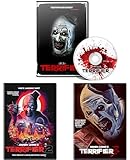
Terrifier Trilogy DVD Set: Terrifier, Terrifier 2 and Terrifier 3 | $58.74 | Buy on Amazon |
What separates Art from earlier killer clowns is Leone’s fixation on craft and control. As a practical effects artist, he designed Art to be grotesquely expressive, using exaggerated makeup, elastic body language, and prolonged violence to unsettle rather than merely scare. The result is a character born not from reality, but from horror history itself, a deliberate attempt to resurrect the outlaw spirit of slasher cinema in an era that had largely moved on from it.
Is Art the Clown Based on a True Story? Separating Internet Myth From Reality
Despite persistent online rumors, Art the Clown is not rooted in a real-life killer, unsolved crime, or historical case. His rise in popularity, combined with the extremity of the Terrifier films, has led some viewers to assume there must be a darker, factual origin lurking beneath the makeup. In reality, those claims are a byproduct of internet folklore rather than documented truth.
Quick wins for a faster PC:
Repair Windows errors before they cause bigger problemsFix Now →Fix the driver behind crashes, sound loss and screen glitchesFind Drivers →#1 Best Overall
- A maniacal clown named ART terrorizes three young women on Halloween night and everyone else who stands in his way. Not for the squeamish.
Where the “True Story” Rumors Come From
Much of the confusion stems from how convincingly Art feels like something that already existed. Horror fans are conditioned to expect slasher icons to carry some grim real-world inspiration, from Ed Gein’s influence on Leatherface to Ted Bundy’s shadow over countless 1970s thrillers. Art’s cruelty and unsettling realism invite that same assumption, even though no evidence supports it.
Social media and content farms have only fueled the myth, often framing Terrifier as “inspired by disturbing true events” to boost clicks. These claims typically cite unnamed crimes, vague circus legends, or alleged sightings of “real killer clowns,” none of which trace back to Damien Leone or any verified source. It’s a modern urban legend built on repetition rather than research.
Damien Leone’s Actual Inspirations
Leone has consistently stated that Art the Clown is a fictional construct, shaped by horror cinema rather than real violence. His influences are cinematic and theatrical: silent-era villains, grotesque clowns, and the exaggerated cruelty of grindhouse and splatter films. Art is designed to feel archetypal, as if he’s been lurking in horror’s collective memory all along.
There’s also a strong visual lineage at play. Art echoes the physicality of silent film performers like Lon Chaney Sr., the unsettling cheer of circus clowns, and the sadistic showmanship of exploitation-era antagonists. These influences create the illusion of authenticity without ever crossing into true-crime territory.
The Killer Clown Archetype vs. Real-Life Fear
Part of Art’s effectiveness comes from tapping into an already existing cultural fear of clowns. High-profile moral panics, like the sporadic “killer clown” sightings reported in various decades, have blurred the line between fiction and reality for some audiences. Art feels plausible because the fear is real, even if the character is not.
However, those real-world clown scares were largely hoaxes or isolated incidents, not the foundation for Terrifier. Leone didn’t adapt a headline or police report; he amplified a cultural anxiety and filtered it through slasher aesthetics. Art isn’t a reflection of a specific event, but an exaggeration of a shared discomfort.
A Modern Myth, Not a Historical One
Art the Clown exists firmly in the realm of modern horror mythology. Like Freddy Krueger or Michael Myers before him, he feels timeless precisely because he isn’t tethered to a single true story. His power comes from abstraction, from being less a person and more a force operating by slasher logic.
By divorcing Art from real-world origins, Leone gave himself freedom to push the character into extreme, almost surreal territory. That creative decision is what allows Art to stand apart from true-crime-inspired villains and instead join the ranks of purely cinematic monsters. The terror may feel real, but its roots are entirely fictional, forged in film history rather than police files.
What’s actually slowing this PC down?
Pick the symptom - the matching free tool is one click away.
Real-World Influences: Clown Panic, True Crime, and Exploitation Horror DNA
While Art the Clown isn’t ripped from any police blotter, he didn’t emerge in a vacuum either. His power lies in how he distills several real-world anxieties and horror traditions into a single, grotesque figure. The result is a villain that feels disturbingly familiar without being traceable to one specific source.
Clown Panic and the Fear of Forced Joy
Public discomfort with clowns long predates Terrifier, rooted in the unsettling contradiction of painted smiles masking unreadable intent. From childhood birthday parties to circuses, clowns occupy a strange cultural space where joy feels mandatory and artificial. Horror has repeatedly exploited that tension, turning the clown into a symbol of distrust and suppressed fear.
Periodic “killer clown” panics, particularly the widely reported sightings in the 1980s and mid-2010s, amplified this unease. Though almost entirely fueled by hoaxes and social media hysteria, those moments reinforced the idea that clowns are inherently suspect. Art taps into that existing paranoia, not by referencing those incidents directly, but by embodying the fear they stirred.
True Crime Echoes Without True Crime Roots
Unlike characters inspired by real murderers, Art has no documented true-crime blueprint. There’s no Ed Gein parallel, no composite of serial killer traits lifted from case files. His violence is exaggerated beyond realism, operating on slasher logic rather than criminal psychology.
That separation is intentional. By avoiding true-crime specificity, Art becomes less about motive or backstory and more about spectacle and cruelty. He feels closer to a nightmare caricature of violence than a human predator, which keeps Terrifier firmly in the realm of cinematic horror rather than exploitative reenactment.
Exploitation Horror and Grindhouse Cruelty
The strongest real-world influence on Art comes not from history, but from exploitation cinema itself. Terrifier wears the DNA of grindhouse splatter films openly, embracing shock, endurance-test gore, and transgressive imagery. Art functions like an old-school exploitation villain, less concerned with plausibility than with pushing boundaries.
Rank #2
This lineage places Art alongside the sadistic antagonists of drive-in horror and VHS-era nasties, where excess was the point. Leone’s approach mirrors that philosophy, crafting Art as a performer of violence rather than a character bound by realism. It’s this exploitation heritage, more than any real event, that gives Art his raw, confrontational edge.
By blending cultural fear, moral panic, and exploitation tradition, Art the Clown feels disturbingly grounded without ever being real. He’s a reflection of horror’s past refracted through modern extremity, shaped by the fears we recognize rather than the crimes we can document.
The Tool Desk
Outbyte Driver Updater FREEFix the driver behind crashes, sound loss and screen glitchesFind Drivers →Outbyte PC Repair FREEClear out junk files and repair common Windows errorsFree Scan →From Short Films to Slasher Icon: Art’s Evolution Before and Beyond Terrifier
Art the Clown didn’t arrive fully formed with Terrifier. His origins trace back to director Damien Leone’s early short films, where the character existed as a disturbing visual idea rather than a fully realized slasher villain. Those early appearances laid the groundwork for Art’s defining traits: silence, exaggerated expressions, and a sense of theatrical cruelty.
The 9th Circle and Art’s First Appearance
Art first surfaced in Leone’s 2008 short film The 9th Circle, where he appeared in a brief but memorable role as a sadistic, silent tormentor. This version of Art was less iconic but already unsettling, positioned as part of a nightmarish descent into Hell rather than the centerpiece attraction. His presence was fleeting, yet striking enough to linger.
What mattered most wasn’t screen time but tone. Art was framed as something uncanny and inhuman, more demon than man. Even then, Leone treated him as a visual weapon, designed to unsettle without explanation.
Refinement Through Shorts and All Hallows’ Eve
Leone revisited the character in the 2011 Terrifier short, refining Art’s look and behavior into something closer to what audiences recognize today. The mime-like silence became more deliberate, and his cruelty more playful. Art wasn’t just killing; he was performing.
Outdated Drivers Are Slowing You Down
One free scan finds every outdated or missing driver and matches the right update for your exact hardware.Free scan · exact hardware matchWindows Errors? Fix Them Before They Spread
Repair common Windows errors and clear accumulated junk for a smoother, more stable PC - no reinstall needed.Free scan · no reinstallThat version carried over into All Hallows’ Eve (2013), the anthology film that effectively introduced Art to a wider horror audience. Framed as a recurring figure lurking within a cursed VHS tape, Art gained mythic distance. He felt less like a character and more like an entity, appearing across segments without clear rules or origin.
David Howard Thornton and the Final Form of Art
A major turning point came when David Howard Thornton took over the role for Terrifier (2016). Thornton’s background in physical comedy and mime fundamentally reshaped Art’s presence. His exaggerated facial expressions, childlike curiosity, and sudden mood shifts gave Art a perverse charisma rarely seen in slasher villains.
This performance completed the transformation. Art became funny and horrifying at the same time, weaponizing slapstick timing against extreme violence. That tonal contradiction is central to why the character stands out in modern horror.
From Cult Curiosity to Modern Horror Icon
Following Terrifier’s underground success, Art quickly escaped the confines of low-budget exploitation. Sequels expanded his screen time and brutality, while fan culture elevated him into a recognizable horror mascot. Merchandise, convention appearances, and viral clips cemented his image alongside legacy slashers.
What’s notable is that Art’s rise wasn’t driven by mainstream studio backing, but by audience endurance and word-of-mouth fascination. His evolution mirrors the grindhouse-to-icon trajectory of earlier horror legends, updated for the streaming era. Art the Clown didn’t emerge from reality or folklore, but from persistence, performance, and a deliberate embrace of horror’s most transgressive traditions.
Why Art the Clown Is So Disturbing: Silence, Sadism, and the Subversion of Slasher Rules
Art the Clown unsettles audiences not because he breaks new ground in violence, but because he strips away the familiar guardrails of slasher storytelling. He looks like a joke, behaves like a cartoon, and then commits acts of cruelty with no visible motive. That collision between playful imagery and extreme harm destabilizes how viewers are conditioned to process horror villains.
Unlike slashers rooted in revenge, trauma, or supernatural logic, Art offers no narrative comfort. He does not explain himself, and the films refuse to explain him either. That absence of meaning becomes its own form of menace.
The Power of Silence
Art’s most defining trait is his refusal to speak. In a genre filled with iconic one-liners and vocal tics, his silence feels aggressive, as if communication itself has been weaponized against the audience. Without dialogue, viewers are denied emotional cues that would normally signal intent or escalation.
Rank #3
- Genre: Horror
- Number of Discs: 1
- Number of Tracks: 0
- Playback Duration: 120
- Rating: NR
This silence also pushes attention onto physical performance. Every grin, shrug, and exaggerated gesture becomes a form of storytelling, forcing the audience to read his body language instead of listening for clues. The effect recalls silent-era villains and mime traditions, but twisted into something hostile rather than whimsical.
Sadism Without Motivation
What truly distinguishes Art from his slasher predecessors is the absence of justification. He is not avenging a wrong, enforcing a moral code, or targeting a specific type of victim. His violence feels exploratory, as if he is testing how far cruelty can go simply because he can.
This places Art closer to exploitation horror than traditional slashers. The emphasis is not on suspense or mystery, but on endurance and discomfort. Viewers aren’t invited to solve him, only to survive the experience of watching him.
Breaking the Slasher Playbook
Classic slasher villains operate within recognizable rules. They stalk, they punish transgression, and they often disappear when confronted with innocence or resilience. Art ignores these conventions entirely, showing no preference, restraint, or predictable rhythm.
Recommended Free Tools
Even the idea of a “final girl” becomes unstable in his presence. Survival does not come from moral purity or cleverness, but from chance or interruption. By undermining these genre expectations, the Terrifier films remove the psychological safety net longtime horror fans rely on.
Clown Imagery as Cultural Weapon
Art’s design taps into a deep cultural discomfort with clowns, but not in a way tied to any real-life killer or documented event. Unlike figures such as John Wayne Gacy, whose crimes permanently stained clown imagery, Art is a purely fictional construction drawing from broader anxieties about forced joy and artificial cheer.
The grin is permanent, the makeup is stark, and the emotions never align with the situation. That disconnect turns the clown from entertainer into predator. Art doesn’t mock fear; he enjoys it.
A Modern Monster Built From Old Fears
Art the Clown is not based on a real person or historical case, but he is assembled from horror history’s most unsettling components. Silent film grotesques, grindhouse excess, mime performance, and slasher brutality all converge in one figure. The result feels familiar yet alien, as if something ancient has been repackaged without explanation.
Free tools Windows power users keep installed
One-click scans. No signup required.
That deliberate refusal to ground Art in realism or mythology is what makes him linger. He isn’t scary because he could exist, but because the films never tell you why he shouldn’t.
Art vs. Horror History: How He Draws From—and Defies—Classic Slashers and Killer Clowns
Art the Clown feels instantly recognizable, yet oddly untethered from any single horror lineage. That tension is intentional. He borrows pieces from slasher tradition, exploitation cinema, and clown mythology, then strips away the narrative logic that usually keeps those figures contained.
What remains is a villain who looks like he belongs to horror history, but behaves as if he’s stepped outside of it.
The Slasher DNA Without the Rules
On the surface, Art resembles classic slasher icons: a distinctive look, ritualized violence, and an uncanny ability to endure punishment. Like Michael Myers or Jason Voorhees, he moves with purpose and returns no matter how badly damaged. But unlike them, Art lacks a mythic backstory or symbolic motivation.
Do these 3 things before closing this tab:
1Fix the driver behind crashes, sound loss and screen glitches2Clear out junk files and repair common Windows errors3Scan for outdated or missing drivers - takes under a minuteThere is no childhood trauma, no moral code, no revenge narrative. His violence isn’t triggered by trespass or sin; it’s opportunistic and playful. By removing motive, the Terrifier films deny viewers the comfort of pattern recognition.
Killer Clowns Without the Real-World Anchor
Horror history is already haunted by killer clown imagery, most notoriously through John Wayne Gacy and the cultural aftershocks that followed. Many viewers assume Art must be tied to that legacy, but the connection is superficial rather than direct. Art isn’t rooted in true crime or social commentary about hidden monsters in plain sight.
Rank #4
Instead, he reflects a broader unease with performance itself. The clown persona becomes a mask that never drops, a permanent act that replaces human emotion with exaggerated mimicry. His silence amplifies this, turning every gesture into a threat rather than a punchline.
Exploitation Horror as a Creative Blueprint
Art’s lineage runs especially deep into exploitation and grindhouse cinema, where shock value outweighs narrative restraint. Films from the 1970s and early 1980s often prioritized endurance over elegance, daring audiences to keep watching. Terrifier embraces that philosophy openly.
Quick wins for a faster PC:
Repair Windows errors before they cause bigger problemsFix Now →Scan for outdated or missing drivers - takes under a minuteDriver Scan →Clear out junk files and repair common Windows errorsFree Scan →The violence isn’t stylized to be cool or operatic. It’s messy, prolonged, and deliberately uncomfortable. In that sense, Art functions less like a slasher villain and more like a provocation, testing the limits of what modern horror audiences will tolerate.
Defying Iconography in the Age of Lore
Modern horror icons are typically defined by expansive lore and interconnected mythologies. Art resists that trend. Even as the Terrifier films expand his presence, they remain evasive about his origins and nature.
This refusal to explain is part of his power. Art exists in contrast to a genre obsessed with answers, embodying a throwback sensibility where fear doesn’t require justification. He isn’t meant to be decoded, only endured, placing him at once inside horror history and defiantly apart from it.
Independent reader supportYour contribution helps us test, update, and keep practical guides available for everyone.The Supernatural Question: Is Art Human, Demon, or Something Worse?
As Terrifier unfolds across multiple films, the question viewers can’t avoid is whether Art the Clown ever belonged to the human world at all. His physical endurance, apparent resurrection, and indifference to mortal limits push him beyond traditional slasher logic. Yet the films stop short of giving him a clean supernatural label.
That uncertainty is deliberate. Art occupies a space where explanation feels withheld rather than forgotten, forcing audiences to wrestle with possibilities instead of answers.
The Case for Art as Human, at Least at First
In his earliest appearances, Art can still be read as a flesh-and-blood killer operating at the extreme edge of plausibility. He bleeds, sustains injuries, and interacts with the world in ways that suggest physical presence rather than spectral intrusion. This grounds the initial horror in something uncomfortably tangible.
If Art begins as human, his brutality feels more obscene because it lacks supernatural justification. There’s no curse, possession, or tragic transformation to soften the blow. He is simply a person who chooses cruelty as performance.
Resurrection as Narrative Provocation
The Terrifier sequels complicate that reading by refusing to let Art stay dead. His returns are not framed as miracles or rituals but as disruptions, moments that break the assumed contract between violence and consequence. The films never show how or why he comes back, only that he does.
The Tool Desk
Outbyte Driver Updater FREEScan for outdated or missing drivers - takes under a minuteDriver Scan →Outbyte PC Repair FREERepair Windows errors before they cause bigger problemsFix Now →This approach echoes exploitation cinema’s disregard for continuity logic. Survival and resurrection aren’t mythic rewards; they’re tools to keep the nightmare going. Art’s persistence becomes less about immortality and more about inevitability.
Demonic Readings Without Theology
Many fans interpret Art as demonic, especially as the series leans further into surreal and infernal imagery. Yet Terrifier avoids traditional religious frameworks. There is no hell hierarchy, no summoning, no explicit pact that explains his existence.
Art doesn’t tempt, judge, or punish. He doesn’t claim souls or speak in riddles. If he is a demon, he is one stripped of doctrine, operating purely on impulse and spectacle rather than cosmic purpose.
Something Worse Than a Monster
What ultimately makes Art unsettling is that he resists classification altogether. He isn’t bound by slasher rules, demonology, or psychological profiling. His silence denies confession or motive, while his exaggerated expressions parody emotion without ever revealing it.
Recommended Free Tools
Best Value
- Terrifier Trilogy DVD Set
- Terrifier, Terrifier 2 and Terrifier 3
In that sense, Art functions as a void rather than a villain. He reflects horror back at the audience without context, explanation, or moral framing. Whether human or supernatural matters less than the fact that he exists purely to endure and to inflict, an entity defined by presence alone rather than origin.
Art the Clown’s Legacy: How Terrifier Reshaped Indie Horror and Created a New Icon
Art’s refusal to explain himself didn’t just unsettle audiences; it rewired expectations for what a modern slasher could be. In an era dominated by prestige horror and metaphor-heavy storytelling, Terrifier arrived as a blunt instrument. Its success proved there was still room for raw, confrontational horror that prioritized sensation over allegory.
More importantly, Art emerged without studio backing, franchise nostalgia, or a pre-sold IP. His rise happened in real time, fueled by word of mouth, midnight screenings, and viewers daring each other to endure what the films promised. That grassroots growth is now inseparable from his legacy.
Reclaiming the Extremes of Exploitation Horror
Terrifier openly resurrected the spirit of grindhouse and VHS-era splatter cinema. The films wear their low-budget origins proudly, favoring practical effects, prolonged set pieces, and an unapologetic fixation on physical suffering. In doing so, they rejected the notion that horror must be tasteful or restrained to be valid.
What’s actually slowing this PC down?
Pick the symptom - the matching free tool is one click away.
Art’s violence isn’t symbolic in the traditional sense. It recalls the transgressive shock tactics of films like The Texas Chain Saw Massacre and Maniac, where endurance itself became part of the viewing experience. That lineage places Terrifier firmly within exploitation history rather than outside of it.
A New Slasher Icon Without a Studio Machine
What makes Art remarkable is how quickly he crossed from niche character to recognizable icon. Within a decade, his image joined the visual shorthand of horror alongside Michael Myers’ mask and Freddy Krueger’s glove. That ascent happened without merchandising saturation or mainstream marketing.
Instead, Art thrived through fan art, cosplay, memes, and social media clips that highlighted his unsettling physicality. David Howard Thornton’s mime-like performance gave fans something instantly legible and endlessly repeatable. Art became iconic not because he spoke, but because he didn’t.
Separating Myth from Reality
Despite persistent rumors, Art the Clown is not based on a real serial killer, urban legend, or historical crime. His origins are purely creative, born from director Damien Leone’s love of silent-era villains, slasher cinema, and old-school physical comedy twisted into something grotesque.
That misconception speaks to the character’s effectiveness. Art feels real because he operates without explanation, not because he has a factual counterpart. The horror comes from familiarity, not authenticity.
Influence on the Modern Indie Horror Landscape
Terrifier’s success changed what independent horror filmmakers believed was possible. It demonstrated that uncompromising vision, however polarizing, could still find an audience outside traditional distribution paths. Streaming platforms and theatrical re-releases only amplified that lesson.
In Art’s wake, indie horror has grown bolder, less apologetic, and more willing to challenge audience comfort. The character didn’t invent extremity, but he normalized its return to the mainstream conversation.
An Icon Defined by Absence
Art’s legacy ultimately rests in what he withholds. No backstory, no moral logic, no finality. Each film reinforces that he exists outside the usual rules that govern slasher villains and cinematic monsters.
Do these 3 things before closing this tab:
1Scan for outdated or missing drivers - takes under a minute2Clear out junk files and repair common Windows errors3Fix the driver behind crashes, sound loss and screen glitchesThat absence invites projection, debate, and endurance. Art the Clown endures not because he evolves, but because he doesn’t have to. In redefining what a horror icon can be, Terrifier didn’t just introduce a villain. It exposed how fragile the boundaries of horror still are, and how easily they can be torn open by something that refuses to explain itself.
Quick Recap
Product prices and availability are accurate as of the date/time indicated and are subject to change. Any price and availability information displayed on Amazon at the time of purchase will apply.




