Recommended Free Tools
The Arrowverse is DC’s most ambitious television experiment, a sprawling shared universe that unfolded across nearly a decade of interconnected superhero series. It began modestly with Arrow in 2012, reimagining Green Arrow as a grounded vigilante drama, before expanding into a multi-show saga spanning cities, timelines, and even entire Earths. What followed was a weekly television event that functioned more like a serialized comic book line than a traditional set of standalone shows.
As the universe grew, The Flash, Supergirl, Legends of Tomorrow, Batwoman, and several short-form and animated projects joined the continuity. Characters regularly crossed paths, storylines spilled from one series into another, and annual crossover events became must-watch chapters that advanced the overarching narrative. Watching these shows in isolation is possible, but doing so often strips major moments of their emotional and narrative payoff.
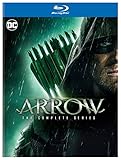
![Arrow: Complete First Season [Blu-ray]](https://m.media-amazon.com/images/I/01RmK+J4pJL.gif._SL160_.jpg)
That interconnectivity is what makes the Arrowverse rewarding and, for new or returning viewers, uniquely confusing. Streaming platforms separate the series, crossovers are scattered across seasons, and the timeline isn’t always intuitive. This guide exists to untangle that complexity, laying out a clear viewing order by release and recommended chronology so the Arrowverse can be experienced as it was designed: one continuous, evolving story.
Two Ways to Watch: Release Order vs. Recommended Chronological Order
There is no single “correct” way to experience the Arrowverse, but there are two approaches that consistently work best depending on what kind of viewer you are. One mirrors how audiences originally watched the shows week to week, while the other smooths out the timeline for maximum story clarity. Understanding the difference will help you decide how deep you want to go into the shared universe.
Windows Errors? Fix Them Before They Spread
Repair common Windows errors and clear accumulated junk for a smoother, more stable PC - no reinstall needed.Free scan · no reinstallCrashes, No Sound, or Screen Glitches?
Random freezes, missing sound and display glitches usually trace back to one bad driver. Find and replace yours safely.Free scan · under a minute#1 Best Overall
Release Order: Watching the Arrowverse as It Aired
The release order follows the original broadcast schedule, episode by episode, across all series. This means alternating between Arrow, The Flash, Supergirl, Legends of Tomorrow, and later Batwoman based on air dates rather than sticking with one show at a time. It recreates the real-time experience fans had as the universe expanded year by year.
This method is ideal if you want the most authentic Arrowverse experience. Crossovers unfold exactly as intended, surprises land without foreknowledge, and character introductions happen organically. The downside is convenience, as streaming platforms rarely present episodes in this order, requiring frequent manual switching between shows.
Recommended Chronological Order: A Cleaner Narrative Flow
The recommended chronological order groups episodes by season blocks while still weaving in crossover chapters at the correct moments. You might watch most of a season of one show before briefly jumping to another for a crossover event, then returning once that storyline concludes. This approach preserves continuity while reducing constant platform hopping.
For new viewers, this is often the most accessible way in. Character arcs feel more cohesive, major events like Invasion!, Elseworlds, and Crisis on Infinite Earths land with full context, and emotional beats carry more weight. It also makes the Arrowverse feel less like a scheduling puzzle and more like a unified saga.
Quick wins for a faster PC:
Clear out junk files and repair common Windows errorsFree Scan →Fix the driver behind crashes, sound loss and screen glitchesFind Drivers →Repair Windows errors before they cause bigger problemsFix Now →Why Crossovers Dictate the Viewing Order
Crossover episodes are not optional side stories; they are structural pillars of the Arrowverse timeline. Major character deaths, status quo shifts, and even entire reboots of reality occur within these events. Skipping or misplacing them can make later episodes feel confusing or emotionally hollow.
Both viewing methods account for crossovers, but the recommended chronological order is designed to highlight their importance. By treating them as essential chapters rather than detours, viewers can follow the Arrowverse the way it was narratively engineered, not just episodically released.
The Definitive Arrowverse Watch Order (Season-by-Season Timeline)
What follows is the recommended chronological watch order, organized by season blocks and anchored around the major crossover events. This structure balances narrative clarity with practicality, allowing you to stay immersed in each show while still hitting every essential crossover at the right moment.
Phase One: The Foundation Years (2012–2014)
Start with Arrow Season 1. This is the true beginning of the Arrowverse, introducing Oliver Queen and establishing the grounded tone that defined the early universe.
Do these 3 things before closing this tab:
1Clear out junk files and repair common Windows errors2Fix the driver behind crashes, sound loss and screen glitches3Repair Windows errors before they cause bigger problemsContinue with Arrow Season 2, which expands the mythology and quietly sets the stage for a larger shared world. The Flash makes his first appearance here, acting as a soft pilot for the next series.
Next, watch The Flash Season 1 alongside Arrow Season 3. Alternate between seasons as needed, but make sure to include the first crossover event, Flash vs. Arrow, which spans The Flash Season 1, Episode 8 and Arrow Season 3, Episode 8.
Phase Two: Expansion and Team-Building (2015–2016)
Begin with The Flash Season 2 and Arrow Season 4. These seasons deepen the science-fiction elements and push both shows toward larger ensemble storytelling.
Legends of Tomorrow Season 1 should be added next, following characters spun off from both Arrow and The Flash. Watch it after the early portions of Arrow Season 4 and Flash Season 2.
Free tools Windows power users keep installed
One-click scans. No signup required.
This phase culminates in the Invasion! crossover. Watch in this order: Supergirl Season 2, Episode 8 (optional but recommended), The Flash Season 3, Episode 8, Arrow Season 5, Episode 8, and Legends of Tomorrow Season 2, Episode 7.
Phase Three: Multiverse Era (2016–2018)
Supergirl becomes fully integrated at this point. Watch Supergirl Season 2, The Flash Season 3, Arrow Season 5, and Legends of Tomorrow Season 2 in parallel.
Proceed into Supergirl Season 3, The Flash Season 4, Arrow Season 6, and Legends of Tomorrow Season 3. The annual crossover here is Crisis on Earth-X, which should be watched in this order: Supergirl Season 3, Episode 8; Arrow Season 6, Episode 8; The Flash Season 4, Episode 8; Legends of Tomorrow Season 3, Episode 8.
This crossover is one of the Arrowverse’s most character-driven events and heavily impacts relationships moving forward.
The Tool Desk
Outbyte PC Repair FREERepair Windows errors before they cause bigger problemsFix Now →Outbyte Driver Updater FREEFix the driver behind crashes, sound loss and screen glitchesFind Drivers →Phase Four: Reality Rewritten (2018–2019)
Continue with Supergirl Season 4, The Flash Season 5, Arrow Season 7, and Legends of Tomorrow Season 4.
Rank #2
![Stranger Things: The Complete Series [Deluxe Edition] [Blu-ray]](https://m.media-amazon.com/images/I/51vN8PZKSJL._SL160_.jpg)
- In 1980s Indiana a group of friends witness supernatural forces and government exploits. In searching for answers, they unravel a series of mysteries.
The crossover event for this era is Elseworlds. Watch in order: The Flash Season 5, Episode 9; Arrow Season 7, Episode 9; Supergirl Season 4, Episode 9. This storyline directly sets up the endgame of the Arrowverse.
Elseworlds introduces Batwoman, whose series will soon join the rotation.
Phase Five: Crisis and Aftermath (2019–2020)
Begin Batwoman Season 1 alongside Supergirl Season 5, The Flash Season 6, Arrow Season 8, and Legends of Tomorrow Season 5.
Crisis on Infinite Earths is the centerpiece of the entire franchise. Watch in this order: Supergirl Season 5, Episode 9; Batwoman Season 1, Episode 9; The Flash Season 6, Episode 9; Arrow Season 8, Episode 8; Legends of Tomorrow Season 5, Episode 1.
Arrow concludes shortly after Crisis, making Season 8 essential viewing even if you’ve fallen behind on other shows.
Phase Six: The Final Chapters (2020–2023)
Post-Crisis, continue with The Flash Seasons 7 through 9, Supergirl Season 6, Legends of Tomorrow Seasons 6 and 7, and Batwoman Seasons 2 and 3.
While large-scale crossovers become less frequent, character continuity and Crisis fallout remain important. Armageddon, which spans the first five episodes of The Flash Season 8, functions as the Arrowverse’s final crossover-style event.
What’s actually slowing this PC down?
Pick the symptom - the matching free tool is one click away.
At this stage, the viewing order becomes more flexible, but watching each season in release order preserves character growth and long-term consequences established since Crisis.
Crossover Events Explained: When and How to Watch the Major Crossovers
Arrowverse crossovers are not optional side stories. They function as chapter breaks in the franchise’s larger narrative, often advancing character arcs, changing the status quo, and setting up entire future seasons. Watching them in the correct order is the key to avoiding confusion and fully appreciating how the shared universe evolves.
Below is a breakdown of the major crossover events, when they occur, and how to approach them within your watch order.
Flash vs. Arrow (2014)
The first true Arrowverse crossover bridges The Flash Season 1 and Arrow Season 3. Watch The Flash Season 1, Episode 8, followed by Arrow Season 3, Episode 8.
This event establishes the template for future crossovers, blending tone and mythology while firmly linking the two shows. It works best when watched immediately after the surrounding episodes, rather than as a standalone detour.
Heroes Join Forces (2015)
This two-part crossover connects The Flash Season 2, Episode 8 and Arrow Season 4, Episode 8. It introduces major DC concepts that ripple through later seasons, including time travel consequences and mystical threats.
Viewing both episodes back-to-back is essential, as the story directly continues from one series into the other without narrative downtime.
Invasion! (2016)
The Arrowverse’s first four-show crossover spans The Flash Season 3, Episode 8; Arrow Season 5, Episode 8; and Legends of Tomorrow Season 2, Episode 7. Supergirl Season 2, Episode 8 acts as a thematic prologue rather than a required chapter.
This event expands the universe’s scope dramatically and solidifies the team dynamic across shows. Watching it in release order preserves character motivations and evolving relationships.
Crisis on Earth-X (2017)
Set during Phase Three, this crossover is one of the most emotionally driven events in the franchise. Watch Supergirl Season 3, Episode 8; Arrow Season 6, Episode 8; The Flash Season 4, Episode 8; and Legends of Tomorrow Season 3, Episode 8.
Rank #3
![Arrow (Complete Seasons 1-3) - 12-Disc Box Set ( Arrow - Seasons One, Two & Three ) [ Blu-Ray, Reg.A/B/C Import - Belgium ]](https://m.media-amazon.com/images/I/51Ve2JBC3OL._SL160_.jpg)
- Arrow (Complete Seasons 1-3) - 12-Disc Box Set ( Arrow - Seasons One, Two & Three )
- Arrow (Complete Seasons 1-3) - 12-Disc Box Set
- Arrow - Seasons One, Two & Three
Beyond its action-heavy premise, this storyline delivers lasting consequences that echo through subsequent seasons. Skipping it creates noticeable gaps in character development.
Elseworlds (2018)
Elseworlds unfolds across The Flash Season 5, Episode 9; Arrow Season 7, Episode 9; and Supergirl Season 4, Episode 9. It serves as a narrative bridge between earlier crossovers and the franchise’s endgame.
This event introduces Batwoman and directly sets up the stakes for Crisis on Infinite Earths. It should be watched immediately before the final Arrow season arc begins to maintain momentum.
Crisis on Infinite Earths (2019–2020)
The most important crossover in the Arrowverse spans five episodes: Supergirl Season 5, Episode 9; Batwoman Season 1, Episode 9; The Flash Season 6, Episode 9; Arrow Season 8, Episode 8; and Legends of Tomorrow Season 5, Episode 1.
This event restructures the entire universe, rewriting continuity and redefining character histories. Watching it in exact order is critical, as each episode directly flows into the next without recap or reset.
Armageddon (2021)
Armageddon functions as a late-era crossover contained entirely within The Flash Season 8, Episodes 1 through 5. Characters from across the Arrowverse appear, making it a spiritual successor to earlier multi-show events.
While not labeled as a traditional crossover, it addresses unresolved Crisis fallout and serves as the final large-scale interconnected storyline. It works best when viewed after completing the earlier post-Crisis seasons.
Optional crossovers, such as the musical episode Duet from The Flash Season 3, Episode 17, are enjoyable character pieces but not essential to the main continuity. For viewers focused on narrative clarity, prioritizing the major events above ensures the Arrowverse unfolds as intended.
Optional vs. Essential Viewing: Which Shows and Seasons Matter Most
With more than 700 episodes across multiple series, the Arrowverse rewards commitment but does not demand total completion. Some shows and seasons form the backbone of the shared universe, while others function more like companion pieces. Knowing the difference helps streamline your watch order without sacrificing narrative clarity.
The Essential Core: Required for Full Continuity
Arrow, The Flash, and Supergirl make up the narrative spine of the Arrowverse. Arrow Seasons 1 through 8 are foundational, as the series launches the universe and drives every major crossover through its final season. Skipping Arrow creates immediate gaps, especially once the multiverse storyline begins to dominate.
PC Slower Than It Used to Be?
A free scan shows the junk files, broken settings and background clutter dragging Windows down - then fixes them in one click.Free scan · Windows 10 & 11Crashes, No Sound, or Screen Glitches?
Random freezes, missing sound and display glitches usually trace back to one bad driver. Find and replace yours safely.Free scan · under a minuteThe Flash Seasons 1 through 6 are equally essential, particularly due to Barry Allen’s central role in Flashpoint, Crisis on Infinite Earths, and the post-Crisis status quo. Supergirl becomes required viewing starting with Season 2, when it officially joins Earth-1 continuity and begins participating in crossovers that reshape the entire franchise.
Important but Selective: Watch Strategically
Legends of Tomorrow is crossover-critical but season-flexible. While its tone shifts toward comedy, its participation in every major crossover means viewers should at least watch its crossover episodes and the seasons surrounding them, particularly Seasons 2 through 5. Outside of those moments, Legends can be enjoyed independently without harming continuity comprehension.
Batwoman is necessary primarily for Elseworlds and Crisis on Infinite Earths. Season 1 provides essential context for Gotham’s role in the multiverse, while later seasons become more isolated. Watching the crossover episodes alone is sufficient for viewers focused on the broader Arrowverse arc.
Largely Optional: Self-Contained or Late-Era Series
Black Lightning exists on the fringes of the Arrowverse until Crisis on Infinite Earths brings it into the fold. Seasons 1 through 3 can be watched at any time, as they remain largely standalone. Only Season 4 benefits from Crisis context, making the show optional unless you are following every universe affected by the multiverse merge.
Recommended Free Tools
Superman & Lois occupies a unique space. Although initially presented as part of the Arrowverse, it later establishes its own continuity. It is best viewed after Crisis but does not meaningfully interact with other series, making it optional for continuity-focused viewers.
Completionist Notes for Returning Fans
Constantine, Vixen, and Freedom Fighters: The Ray add texture to the universe but are never mandatory. Their characters are reintroduced cleanly within the main shows, ensuring casual viewers are never lost. These titles are best treated as bonus world-building rather than required chapters.
For newcomers, prioritizing the core series and crossover episodes delivers a coherent, emotionally complete Arrowverse experience. Everything else enhances the universe but does not define it, allowing viewers to tailor their watch order without breaking continuity.
Post-Crisis Timeline Shifts and How They Affect Viewing Order
Crisis on Infinite Earths fundamentally reshapes the Arrowverse, collapsing the multiverse into a single shared reality known as Earth-Prime. This event is not just a crossover but a narrative reset that alters histories, character relationships, and even which shows now coexist in the same continuity. For viewers, this means the Arrowverse effectively splits into two eras: pre-Crisis and post-Crisis, with a clear viewing pivot point.
Quick wins for a faster PC:
Fix the driver behind crashes, sound loss and screen glitchesFind Drivers →Repair Windows errors before they cause bigger problemsFix Now →Earth-Prime Changes What Counts as “Chronological”
Before Crisis, each series largely operates on its own Earth, intersecting only during crossovers. After Crisis, Arrow, The Flash, Supergirl, Batwoman, and Legends of Tomorrow all share a unified timeline. From this point forward, watching episodes strictly by release order becomes far more important, as references and character knowledge now carry across shows without explanation.
This is especially true during the immediate post-Crisis stretch, when multiple series deal with altered memories, rewritten pasts, and the consequences of the new world. Characters remember different versions of history, and some supporting players simply exist without origin stories. Skipping around after Crisis increases the risk of confusion.
Recommended Viewing Shift After Crisis
Once Crisis on Infinite Earths concludes, the cleanest approach is to follow release order across all active series rather than focusing on one show at a time. Episodes begin to assume familiarity with events happening elsewhere, even outside formal crossover weeks. This is most noticeable in The Flash Season 6B, Supergirl Season 5B, and Legends of Tomorrow Season 5.
Arrow concludes shortly after Crisis, and its final episodes function as an epilogue to the entire pre-Crisis era. Watching Arrow’s finale immediately after Crisis provides emotional closure and context for the new status quo, even though the series no longer drives the larger narrative.
Post-Crisis Continuity Simplifies, Then Fragments Again
Ironically, while Crisis unifies the timeline, the Arrowverse gradually becomes more fragmented afterward. Supergirl ends in Season 6, Black Lightning concludes, and Batwoman evolves into a more self-contained story. As these exits occur, cross-series dependencies decrease, allowing viewers to return to more flexible, show-by-show viewing.
The Flash remains the primary continuity anchor in the post-Crisis era, especially through its later seasons. If you are selectively watching after Crisis, keeping pace with The Flash while sampling other series as desired preserves the clearest sense of the shared world.
What Crisis Means for New and Returning Viewers
For newcomers, Crisis acts as a narrative dividing line rather than a starting point. Watching it without pre-Crisis buildup diminishes its impact and can make the aftermath feel disorienting. For returning viewers, it offers a natural checkpoint: everything before builds the multiverse, everything after explores life within its aftermath.
Understanding this structural shift is key to mastering the Arrowverse watch order. Crisis is not just an event to slot into the schedule, but the moment that changes how the entire franchise should be viewed from that point forward.
Where the Arrowverse Ends: Final Seasons, Endpoints, and Epilogues
After Crisis reshapes the universe, the Arrowverse enters its winding-down phase. What follows is less about maintaining a single, tightly interlocked narrative and more about giving each series space to land its own ending. For viewers following a chronological order, this era is defined by staggered finales rather than one definitive stopping point.
Arrow: The First and Most Intentional Farewell
Arrow is the first series to truly say goodbye, concluding with Season 8 shortly after Crisis on Infinite Earths. Its finale functions as both a character-driven epilogue for Oliver Queen and a thematic capstone for the entire pre-Crisis Arrowverse. Even though Arrow no longer fuels ongoing storylines, its ending reframes the franchise’s origins and is essential viewing for emotional closure.
For watch-order purposes, Arrow Season 8 should be viewed alongside Crisis, with its final episode watched immediately after the crossover concludes. This placement reinforces its role as a bridge between eras rather than just another season finale.
Supergirl and Black Lightning: Quiet, Self-Contained Endings
Supergirl runs through Season 6, ending well after Crisis but largely disengaged from major crossover events. Its final season focuses on personal arcs, legacy, and found family, making it easy to watch straight through once you reach that point in release order. Aside from minor references, it no longer drives shared-universe continuity.
Black Lightning similarly concludes with Season 4, wrapping up its story without a crossover sendoff. While the series is retroactively folded into the Arrowverse via Crisis, its ending stands alone. Viewers can treat it as a parallel endpoint rather than a mandatory final chapter.
Legends of Tomorrow: An Abrupt but Tonally Consistent Exit
Legends of Tomorrow ends with Season 7, and its cancellation results in a finale that feels more like a pause than a planned goodbye. Tonally, however, it remains true to the show’s identity, prioritizing character and absurdity over franchise-wide stakes.
From a viewing-order perspective, Legends can be followed straight through after Crisis without worrying about synchronization with other shows. Its late seasons have minimal impact on broader continuity, making it one of the easiest series to finish independently.
Batwoman: A Midstream Conclusion
Batwoman concludes after Season 3, ending its run without a formal Arrowverse finale moment. By this stage, the show has become largely insular, with Gotham-focused storytelling and limited crossover relevance.
What’s actually slowing this PC down?
Pick the symptom - the matching free tool is one click away.
Best Value
![Stranger Things: The Complete Series [Blu-ray]](https://m.media-amazon.com/images/I/31Ph4iUbmSL._SL160_.jpg)
- In 1980s Indiana a group of friends witness supernatural forces and government exploits. In searching for answers, they unravel a series of mysteries.
Viewers watching in order should simply continue Batwoman by release date until its conclusion. There is no larger narrative consequence tied to where it ends, which reflects the Arrowverse’s increasingly decentralized structure.
The Flash: The De Facto Final Chapter
Although multiple series end earlier, The Flash ultimately becomes the Arrowverse’s last ongoing pillar. Running through Season 9, it serves as the closest thing the franchise has to a final chapter. Its later seasons frequently acknowledge the legacy of the shared universe, even as active crossovers fade away.
For most viewers, The Flash Season 9 functions as the emotional and chronological endpoint of the Arrowverse. Watching it last, after all other series have concluded or disengaged, provides the strongest sense of finality and franchise-wide reflection.
Optional Epilogues and Legacy Viewing
Beyond the core Arrowverse, shows like Superman & Lois exist in a adjacent continuity shaped by Crisis but not bound to Arrowverse chronology. These series are best treated as spiritual successors rather than required epilogues.
Free tools Windows power users keep installed
One-click scans. No signup required.
Once you reach the end of The Flash, the Arrowverse story is effectively complete. Anything watched beyond that point is an exploration of legacy, not a continuation of the same shared narrative structure.
Tips for Streaming the Arrowverse Without Confusion
Follow Release Order, Not In-Universe Timelines
The Arrowverse was designed to be watched in broadcast order, and that remains the simplest rule to follow. Episodes often reference events from other shows that aired the same week, especially during crossover seasons. Watching by release date preserves character continuity and prevents spoilers that can arise from strict in-universe chronology.
If you are ever unsure where to jump next, defaulting to airdate order will almost always give you the intended narrative flow.
Treat Crossovers as Mini-Events
Major crossovers like Invasion!, Elseworlds, and Crisis on Infinite Earths function as self-contained story arcs spread across multiple series. When you reach a crossover, pause your current show and watch all crossover episodes in order before returning to regular seasons. This avoids emotional whiplash and ensures character arcs make sense when you resume.
Do these 3 things before closing this tab:
1Clear out junk files and repair common Windows errors2Fix the driver behind crashes, sound loss and screen glitches3Repair Windows errors before they cause bigger problemsMany streaming platforms separate shows by season, so keeping a simple crossover checklist nearby can be extremely helpful.
Don’t Stress Over Missing Minor Tie-Ins
Not every Arrowverse episode is equally essential to the shared narrative. Some seasons include light crossover references or background cameos that enhance the world but are not required viewing. If a side episode feels disconnected, it usually is by design.
The franchise increasingly shifts toward standalone storytelling after Crisis, so it is perfectly fine to focus on core arcs rather than chasing every reference.
Use Platform Watchlists Strategically
Streaming services often group shows individually, which can make crossover viewing clunky. Creating a custom watchlist or manual viewing order solves most problems, especially during Seasons 4 through 8 of the Arrowverse era. This is particularly useful during Crisis, where five episodes span multiple series in rapid succession.
Taking a few minutes to organize your queue upfront can save hours of confusion later.
Know When the Universe Becomes Optional
After The Flash enters its final seasons, the Arrowverse becomes more reflective than interconnected. At that point, viewers can comfortably finish remaining shows at their own pace without worrying about strict synchronization. This shift is intentional and reflects the franchise’s gradual winding down.
Understanding when shared continuity stops being mandatory helps you enjoy the later years without overthinking the order.
Ultimately, the Arrowverse rewards consistency more than perfection. Watching in release order, respecting crossover breaks, and allowing yourself flexibility in the later seasons creates the smoothest experience. Treated this way, the franchise becomes less of a logistical puzzle and more of what it was always meant to be: a sprawling, character-driven superhero saga with a clear beginning, middle, and end.
The Tool Desk
Outbyte Driver Updater FREEScan for outdated or missing drivers - takes under a minuteDriver Scan →Outbyte PC Repair FREEClear out junk files and repair common Windows errorsFree Scan →Quick Recap
Product prices and availability are accurate as of the date/time indicated and are subject to change. Any price and availability information displayed on Amazon at the time of purchase will apply.




