Rabindranath Tagore’s achievement as a Bengali songwriter, Amit Chaudhuri argues, was to turn varied musical traditions into a distinctive art-song form: concise, carefully shaped songs that were not simply folk, devotional or classical music in another guise. Chaudhuri makes that case in his introduction to a Folio Society edition of Gitanjali, excerpted by Scroll.in on 27 November 2024. His reading also depends on a distinction easy to miss: the Bengali collection published in 1910 and Tagore’s English Gitanjali: Song Offerings, published in 1912, are related but not identical books.
What was Tagore’s achievement as a Bengali songwriter?
“What is Tagore’s achievement as a Bengali songwriter? It is to be the first major creator, possibly anywhere, of the art-song,” Chaudhuri writes in his introduction to Gitanjali. The phrase “possibly anywhere” matters: it marks a critic’s assessment, not an uncontested historical ranking.
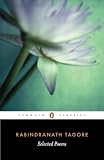


Chaudhuri’s argument is that Tagore drew on folk and devotional music, classical traditions and music from other cultures, but transformed those resources into short, exact songs belonging to a new artistic domain. In Chaudhuri’s account, the achievement lies not in reproducing any single tradition, but in making songs whose shape and identity stand on their own.
He characterizes these songs as unsuited to improvisation in the way he understands the musical traditions behind them. That is part of his critical interpretation, rather than a technical rule about every performance or a settled musicological consensus. His essay is about what Tagore made from musical forms, not a guide to raga or performance practice. Read Chaudhuri’s introduction excerpt at Scroll.in.
Free tools Windows power users keep installed
One-click scans. No signup required.
#1 Best Overall
What does “Gitanjali” mean?
The title combines geet, meaning song, and anjali, an offering. Chaudhuri begins from the image of flowers offered in worship, then reads the act of offering as a literary and musical metaphor. The gift matters even if its recipient is not specified: the songs can express celebration without becoming a particular prayer or a lesson with a fixed moral.
How do the Bengali and English books differ?
There are two books commonly referred to as Gitanjali, and their titles should not obscure their different contents. The Bengali collection appeared in 1910. Tagore’s English Gitanjali: Song Offerings followed in 1912 and was his own rendering, drawing on poems and songs from several Bengali collections. It shares some material with the Bengali Gitanjali, but it is not a complete translation of that single book.
Rank #2
| Book | Language and date | Contents and relationship |
|---|---|---|
| Gitanjali | Bengali; 1910 | A Bengali collection. It is not identical to the later English book. |
| Gitanjali: Song Offerings | English; 1912 | Tagore’s own English renderings, selected from more than one Bengali collection; some contents overlap with the 1910 book. |
The Nobel Prize in Literature was awarded to Tagore in 1913. The English Song Offerings was his most acclaimed English rendering and helped establish his reputation in Britain and the United States; that context should not be mistaken for saying the Bengali 1910 collection alone was the exact text honored by the prize. The Nobel Prize biography describes the English book and Tagore’s role in translating it. A Government of India biographical feature lists the 1910 and 1912 works separately.
Independent reader supportYour contribution helps us test, update, and keep practical guides available for everyone.What changes in Chaudhuri’s reading of Song 16?
Chaudhuri’s clearest example of the difference between Tagore’s Bengali and English wording comes from Song 16. The English opens: “I have had my invitation to this world’s festival, and thus my life has been blessed.” Chaudhuri gives the Bengali sense as: “I am invited to the world’s festival, / blessed is human life.”
Windows Errors? Fix Them Before They Spread
Repair common Windows errors and clear accumulated junk for a smoother, more stable PC - no reinstall needed.Free scan · no reinstallOutdated Drivers Are Slowing You Down
One free scan finds every outdated or missing driver and matches the right update for your exact hardware.Free scan · exact hardware matchRank #3
He draws attention to two changes: the Bengali has “human life” where the English has “my life,” and it does not include “thus.” In his reading, those choices broaden the thought beyond one speaker and avoid making blessedness sound like the consequence of a prior event. The invitation and the blessing remain, but the Bengali phrasing presents blessed human life as a wider affirmation rather than a personal conclusion supported by “thus.”
Quick Recap
Best Value
Rank #4
Product prices and availability are accurate as of the date/time indicated and are subject to change. Any price and availability information displayed on Amazon at the time of purchase will apply.




