Amazon Music Maestro is a prompt-based AI playlist generator, announced on April 16, 2024. It turns descriptions of a mood, activity, genre, era, or situation into a playlist. The feature began as a limited U.S. beta on iOS and Android; Amazon later said all Amazon Music subscription tiers have access, but has not published a clear current rollout map or guaranteed app path. Alexa+ now offers a broader conversational way to create and manage music playlists in the Amazon Music app.
What is Amazon Music Maestro?
Maestro is Amazon Music’s AI-assisted playlist generator. Instead of choosing every track yourself, you describe what you want to hear and the service creates a playlist intended to match. Amazon called it an “AI playlist generator” when it announced the feature; “personal AI playlist assistant” is a description, not the product’s formal name. Amazon’s April 16, 2024 announcement introduced it as Project Maestro.
Prompts can describe moods, emotions, activities, musical eras, genres, sounds, themes, or situations. The launch also supported emojis and voice input. For example, a listener might ask for upbeat 1980s pop for cleaning, piano-led indie for a rainy Sunday, or nostalgic late-1990s alternative rock. Those are starting points: Amazon cautioned that the technology might not get a prompt right on the first try.
How to use Maestro
Amazon’s launch instructions described this workflow in the Amazon Music mobile app. These are original launch-era labels, not a guarantee that the same controls remain in the current interface.
#1 Best Overall

- Your favorite music and content – Play music, audiobooks, and podcasts from Amazon Music, Apple Music, Spotify and others or via Bluetooth throughout your home.
- Alexa is happy to help – Ask Alexa for weather updates and to set hands-free timers, get answers to your questions and even hear jokes. Need a few extra minutes in the morning? Just tap your Echo Dot to snooze your alarm.
- Keep your home comfortable – Control compatible smart home devices with your voice and routines triggered by built-in motion or indoor temperature sensors. Create routines to automatically turn on lights when you walk into a room, or start a fan if the inside temperature goes above your comfort zone.
- Do more with device pairing – Fill your home with music using compatible Echo devices in different rooms, or create a home theatre system with Fire TV.
- Say goodbye to drop-offs and buffering - With eero Built-in, Echo Dot doubles as a mesh wifi extender, adding up to 1,000 sq. ft. of wifi coverage to your existing eero network.
- Install or update the Amazon Music app on an iOS or Android device.
- If Maestro is available to your account, look for it on the home screen or tap the plus sign used to create a playlist.
- Type or speak a playlist idea. Be specific about the sound, mood, era, or activity you want.
- Tap “Let’s go!” to generate the playlist.
- Stream the result if your plan permits it, then save or share it where those options are available.
If Maestro is not visible, access may depend on your account or location, the feature may have moved, or Amazon may be presenting music discovery through Alexa+ instead. Amazon’s public material does not establish a guaranteed current Maestro path for every app version, country, or account. The original directions cover mobile apps, not the web player or desktop app.
Who can access it, and what can each plan play?
At launch, Maestro was a beta for a subset of U.S. customers on Amazon Music Free, Prime, and Unlimited, using the iOS or Android app. Amazon’s later Amazon Music overview says all subscription tiers have access to Maestro. That is a later, broader description, but it does not establish universal availability worldwide or confirm that every account currently sees the feature.
Rank #2

- Your favorite music and content – Play music, audiobooks, and podcasts from Amazon Music, Apple Music, Spotify and others or via Bluetooth throughout your home.
- Alexa is happy to help – Ask Alexa for weather updates and to set hands-free timers, get answers to your questions and even hear jokes. Need a few extra minutes in the morning? Just tap your Echo Dot to snooze your alarm.
- Keep your home comfortable – Control compatible smart home devices with your voice and routines triggered by built-in motion or indoor temperature sensors. Create routines to automatically turn on lights when you walk into a room, or start a fan if the inside temperature goes above your comfort zone.
- Do more with device pairing – Fill your home with music using compatible Echo devices in different rooms, or create a home theatre system with Fire TV.
- Say goodbye to drop-offs and buffering - With eero Built-in, Echo Dot doubles as a mesh wifi extender, adding up to 1,000 sq. ft. of wifi coverage to your existing eero network.
Access to playlist generation is not the same as unrestricted on-demand playback. Amazon’s launch announcement said Unlimited subscribers could listen to generated playlists immediately, while Prime and ad-supported customers could hear 30-second previews before saving. Treat those as launch-era rules: the available sources do not confirm that this exact playback behavior remains unchanged. Amazon’s plan FAQ describes Prime listening as more restricted than Unlimited, including shuffle-based listening in many contexts and on-demand access to selected All-Access Playlists.
- Free and Prime: Amazon included both in the original beta, but documented preview-only listening before saving at launch. Check the current app and plan terms for playback rules.
- Unlimited: Amazon documented immediate listening to generated playlists at launch. Unlimited is the clearest fit if you want on-demand playback, not simply access to playlist generation.
- Outside the United States: The original beta was U.S.-only. Amazon’s later all-tier statement does not, by itself, confirm current availability in every country.
Is Maestro still a standalone feature?
Amazon continues to reference Maestro in its general Amazon Music material, so there is no basis in the cited sources to say it was discontinued or renamed. At the same time, Amazon’s newer Alexa+ music experience covers much of the same playlist-generation use case with a conversational interface. Amazon has not announced that Alexa+ replaced Maestro; the safest reading is that Maestro remains referenced while Alexa+ adds another, broader route to music discovery.
Quick wins for a faster PC:
Repair Windows errors before they cause bigger problemsFix Now →Scan for outdated or missing drivers - takes under a minuteDriver Scan →Rank #3
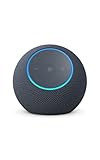
- Meet Echo Dot Max: Experience rich room-filling sound that automatically adapts to your space and fine-tunes playback. Features a built-in smart home hub and Omnisense technology for highly personalized experiences.
- Music to your ears: With nearly 3x the bass versus Echo Dot (2022 release), it fits beautifully in any space, delivering your personal sound stage with deep bass and enhanced clarity. Listen to streaming services, such as Amazon Music, Apple Music, Spotify, and SiriusXM. Encore!
- Do more with device pairing: Connect compatible Echo smart speakers and smart displays in different rooms, or pair with a second Echo Dot Max to enjoy even richer sound. Pair your Echo Dot Max with compatible Fire TV devices to create a home theater system that brings scenes to life.
- Simple smart home control: Set routines, pair and control lights, locks, and thousands of smart home devices that work with Alexa without needing a separate smart home hub. With Omnisense technology, you can activate routines via temperature or presence detection.
- Say goodbye to drop-offs and buffering - With eero Built-in, Echo Dot Max doubles as a mesh wifi extender, adding up to 1,000 sq. ft. of wifi coverage to your existing eero network.
What Alexa+ adds to Amazon Music
In an announcement dated November 4, 2025, Amazon described Alexa+ as a conversational music assistant in the Amazon Music app. In the United States, Amazon says Alexa+ is available in the iOS and Android app across subscription tiers at no additional cost. Its playlist tools go beyond a one-shot prompt: Alexa+ can create playlists from natural-language requests, save and rename them, and add tracks later. It can also identify songs and answer questions about lyrics, genres, artist influences, discographies, and sample origins. See Amazon’s Alexa+ and Amazon Music announcement for its feature description.
Amazon’s examples include music for a Pacific Coast Highway drive, relaxing R&B for a dog, French café music, and ambient electronic music mixed with classical piano. The company also reported that customers explored music three times as much with Alexa+ as with the original Alexa, and that people seeking music recommendations listened to nearly 70% more music. Those are Amazon-reported figures, not independent measurements.
Rank #4

- Your favorite music and content – Play music, audiobooks, and podcasts from Amazon Music, Apple Music, Spotify and others or via Bluetooth throughout your home.
- Alexa is happy to help – Ask Alexa for weather updates and to set hands-free timers, get answers to your questions and even hear jokes. Need a few extra minutes in the morning? Just tap your Echo Dot to snooze your alarm.
- Keep your home comfortable – Control compatible smart home devices with your voice and routines triggered by built-in motion or indoor temperature sensors. Create routines to automatically turn on lights when you walk into a room, or start a fan if the inside temperature goes above your comfort zone.
- Do more with device pairing – Fill your home with music using compatible Echo devices in different rooms, or create a home theatre system with Fire TV.
- Say goodbye to drop-offs and buffering - With eero Built-in, Echo Dot doubles as a mesh wifi extender, adding up to 1,000 sq. ft. of wifi coverage to your existing eero network.
Maestro’s documented role is prompt-to-playlist generation. Alexa+ is described as a wider conversation: listeners can ask follow-up questions and request playlist changes as well as discover tracks. If Maestro is missing from your app, checking whether Alexa+ is available is a practical alternative, but it does not prove that Maestro has been removed.
How personal are the playlists?
Maestro clearly personalizes around the prompt: the listener specifies a particular feeling, setting, or kind of music rather than relying only on a general recommendation feed. Amazon also says Unlimited recommendations can reflect listening habits in its Music FAQ. However, Amazon’s Maestro launch announcement does not detail how the generator weighs listening history against the prompt, how tracks are ranked, or what technical model it uses. It is more accurate to call Maestro prompt-driven playlist generation than to claim that it fully understands a listener’s musical identity.
Free tools Windows power users keep installed
One-click scans. No signup required.
Best Value

- MEET ECHO SPOT - A sleek smart alarm clock with Alexa and big vibrant sound. Ready to help you wake up, wind down, and so much more.
- CUSTOMIZABLE SMART CLOCK - See time, weather, and song titles at a glance, control smart home devices, and more. Personalize your display with your favorite clock face and fun colors.
- BIG VIBRANT SOUND - Enjoy rich sound with clear vocals and deep bass. Just ask Alexa to play music, podcasts, and audiobooks. See song titles and touch to control your music.
- EASE INTO THE DAY - Set up an Alexa routine that gently wakes you with music and gradual light. Glance at the time, check reminders, or ask Alexa for weather updates.
- KEEP YOUR HOME COMFORTABLE - Control compatible smart home devices. Just ask Alexa to turn on lights or touch the screen to dim. Create routines that use motion detection to turn down the thermostat as you head out or open the blinds when you walk into a room.
Maestro and Spotify AI Playlist: what is documented?
Both services turn prompts into playlists, but their documented access and controls differ. Spotify’s cited rollout described AI Playlist as a Premium feature in supported markets, with tools to preview and remove tracks, refine results with more prompts, and save a playlist. The table compares those published descriptions; it does not rank which service makes better playlists.
| Feature | Amazon Music Maestro | Spotify AI Playlist |
|---|---|---|
| Launch timing | Announced April 16, 2024. Amazon announcement | Introduced in beta in April 2024; the cited expansion covered the U.S., Canada, Ireland, and New Zealand. Spotify expansion announcement |
| Documented initial access | Beta for a subset of U.S. Free, Prime, and Unlimited customers on iOS and Android. | Premium users in supported markets. |
| Prompt and refinement | Text, voice, emojis, moods, activities, eras, genres, and situations. Launch instructions say to generate, then stream, save, or share; iterative refinement was not detailed there. | Text prompts and suggested prompts; users could refine with additional prompts. |
| Track controls documented in the cited launch materials | Save and share; Amazon described different listening access by tier. Track removal controls were not stated. | Preview and delete tracks, then save the playlist. |
| Current-status caveat | Amazon’s later overview says all subscription tiers have access, while its newer Alexa+ experience also creates and manages playlists. | The cited materials document Spotify’s feature and initial market expansion; they do not establish availability in every country or account today. |
For Spotify’s initial feature description, see its April 2024 AI Playlist announcement. Availability and interfaces can change, so check each service’s current app and plan details before switching.
What to do when a playlist misses the mark
Amazon warned that the technology might not interpret a prompt correctly on the first attempt. A result may take a metaphor literally, fit a genre but miss the requested mood, repeat familiar songs, or misunderstand an artist, era, or cultural reference. Catalog rights, region, and plan restrictions can also affect what is playable. Amazon said it uses systems to block offensive language and inappropriate prompts, so a request may be rejected or altered.
- Make the request more precise. Name a mood, era, activity, and genre rather than relying on an ambiguous phrase.
- Add an anchor. Include one or two artists or songs that show the sound you mean.
- Reduce competing requirements. If a long prompt combines many styles and constraints, try a shorter version that prioritizes the most important ones.
- State exclusions when useful. You can try requests such as “no vocals” or “no explicit lyrics,” but support for each constraint is not guaranteed.
- Check playback separately from generation. A playlist appearing does not mean your plan allows every track on demand; verify the current plan rules if you see previews or restrictions.
- Try Alexa+ or adjust the playlist manually. Alexa+ may allow follow-up requests where available. Track editing controls depend on the current app experience; Amazon’s Alexa+ announcement specifically documents adding tracks later, not a universal set of Maestro editing controls.
Does Maestro alone make Unlimited worthwhile?
Not necessarily. Amazon’s Unlimited signup page lists U.S. monthly pricing of $11.99 for non-Prime customers and $10.99 for Prime members after the promotional period; offers can change. The feature itself was designed for multiple Amazon Music tiers, and Amazon’s later overview says all subscription tiers have access. The practical reason to pay for Unlimited is broader on-demand playback and its catalog, rather than access to AI playlist generation alone. Prime listeners may find its more restricted playback sufficient for casual listening; someone who wants a generated playlist to play on demand should check the current plan terms before upgrading.
Quick Recap
Product prices and availability are accurate as of the date/time indicated and are subject to change. Any price and availability information displayed on Amazon at the time of purchase will apply.