In a 2021 personal essay, Padmini Mongia remembers meeting poet Agha Shahid Ali at Penn State in 1981 and becoming his close friend. Her account is intimate rather than comprehensive: it follows their everyday life in State College, their conversations about poetry and identity, and the trust that shaped their friendship.
How Mongia met Agha Shahid Ali
Mongia writes that she arrived from New Delhi in August 1981 to begin a PhD in English at Penn State. Seeking contact with Indian graduate students in her department, she called them; Ali called her back and came to her dorm. She remembers that they became close almost immediately. These details, like the private conversations and scenes that follow, are Mongia’s recollections in her Scroll.in essay, published November 27, 2021.
| # | Preview | Product | Price | |
|---|---|---|---|---|
| 1 |

|
The Country without a Post Office: Poems (Agha Shahid Ali) | $13.83 | Buy on Amazon |
| 2 |

|
The Rebel's Silhouette: Selected Poems | $25.95 | Buy on Amazon |
| 3 |

|
Call Me Ishmael Tonight: A Book of Ghazals | $15.99 | Buy on Amazon |
| 4 |

|
The Half-Inch Himalayas (Wesleyan New Poets) | $6.95 | Buy on Amazon |
| 5 |
|
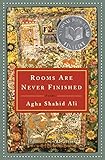
Rooms Are Never Finished: Poems | $11.94 | Buy on Amazon |
A friendship built from ordinary routines
The essay gives the friendship texture through shared activities rather than a formal account of Ali’s career. Mongia recalls meals and cooking, dinners, readings, concerts, holidays, visits to friends, and long sessions playing Ms. Pac-Man. State College and Penn State were the center of their early life together, with trips and social connections reaching Pittsburgh and New York, as well as Delhi and Srinagar.
That mix of the ordinary and the literary matters to Mongia’s portrait. Ali is not presented only as a poet remembered after his death, but as a friend encountered over food, music, travel, and an arcade game. Mongia sums up her affection in the essay with the line, “to know Shahid was to love him.”
Free tools Windows power users keep installed
One-click scans. No signup required.
#1 Best Overall
Coming out and the question of privacy
Mongia recalls that about a month after they met, Ali came out to her. In her account, he worried that she might tell family and friends whose connections extended to Kashmir. This is a sensitive memory of a private conversation, and it should be understood as Mongia’s recollection—not as an independently verified account of Ali’s disclosure or of the people around him.
She places that exchange among broader conversations about sexuality, T. S. Eliot, popular music, and American life in the early 1980s. The essay describes the trust between two young writers and students as it developed within overlapping personal and cultural circles.
Poetry, teaching, and the work of revision
Mongia remembers Ali as devoted to writing while teaching Business Writing and taking writing courses. She recalls his correspondence with Palestinian poet Mahmoud Darwish and Pakistani poet Faiz Ahmed Faiz, and his work on “The Dacca Gauzes.” Her account also preserves a playful remark he made about keeping drafts: “Someday I’ll be famous and these will be valuable.” The line is dialogue remembered by Mongia, not a separately documented quotation.
The poem’s craft appears alongside the friendship’s humor and routine. In Mongia’s telling, Ali’s literary life was not separate from the everyday world of classes, meals, and conversations; it ran through it.
“All routes to death” and last call
The essay’s title comes from a passage Mongia quotes while recalling Ali’s explanation of bar closing time and a conversation about Eliot’s The Waste Land. She presents the lines as a way of linking the closing of bars across Pennsylvania to the poem’s fatalistic image:
“all routes to death
will open up, again,
as the bars close all over
Pennsylvania.”
The image gathers the essay’s recurring contrasts: friendship and loss, wit and mortality, the social ritual of last call and the more enduring work of poetry. It is a remembered conversation and quoted passage in Mongia’s essay, not a general biography of Ali.
Independent reader supportYour contribution helps us test, update, and keep practical guides available for everyone.What this memoir can—and cannot—tell readers
Mongia’s essay is valuable as a first-person account of a friendship that began at Penn State in 1981. It offers scenes and personal memories, including Ali’s coming out to her, their routines, and his writing life. It is not a full chronology of his literary career, and the personal episodes are presented through her perspective.
Do these 3 things before closing this tab:
1Repair Windows errors before they cause bigger problems2Scan for outdated or missing drivers - takes under a minute3Clear out junk files and repair common Windows errorsBest Value
For a separate piece of literary context, Yale University Press has written about Ali’s friendship with James Merrill; that article concerns a different relationship and does not independently corroborate Mongia’s memories. A Ravi Magazine interview excerpt identifies Ali’s poetry collection The Country Without a Post Office and says it was released in 1997. These sources offer limited context rather than verification of the private events Mongia describes.
Quick Recap
Product prices and availability are accurate as of the date/time indicated and are subject to change. Any price and availability information displayed on Amazon at the time of purchase will apply.




