Recommended Free Tools
Spoilers through the series finale: Ranked by agency, reach, danger to the protagonists, and strength as screen antagonists, the seven most consequential threats in Stranger Things are Vecna, the Mind Flayer, Dr. Martin Brenner, the Demogorgon, Billy Hargrove while possessed, the Russian operation, and Jason Carver. This is an editorial shortlist, not an official Netflix ranking or a claim to include every monster or enemy.
How this ranking works
The list focuses on seven antagonists with the clearest effect on the central story: supernatural forces, a human experimenter, and human groups or individuals who directly endanger the protagonists. The order weighs how much agency each has, how broadly its actions shape events, how immediate the danger feels, and how fully the show develops it as an antagonist. Those judgments are interpretive; Netflix has not published a definitive seven-villain list.
Possessed people are treated separately from the force controlling them. That distinction matters especially for Billy: his actions make him dangerous, but the Mind Flayer is the supernatural power behind his season-three possession. Netflix’s finale account also leaves open a question about how much control the Mind Flayer exerted over Henry from the beginning.
The seven villains, ranked
1. Vecna
Vecna takes the top spot because he combines personal agency with a direct, sustained campaign against the people of Hawkins. Unlike a creature that functions chiefly as a physical threat, he is an intelligent adversary whose history and choices connect the supernatural conflict to Eleven and the laboratory’s past. He is also central to the final confrontation.
Free tools Windows power users keep installed
One-click scans. No signup required.
#1 Best Overall

- DUSTIN HENDERSON: Keep the team united with Stranger Things Dustin Henderson Upside Down Collector Figures
- SHOW INSPIRED: 6-inch highly detailed figures are based on Season Five of Stranger Things
- ARTICULATED: Features 33+ points of articulation to recreate iconic poses
- SOFT CLOTHING: Includes soft good clothing to highlight authentic character details
- ACCESSORIES: Packed with alternate faceplates and unique accessories
One qualification is essential: the show’s final-season account distinguishes the Abyss from the Upside Down. Netflix says Henry was banished to the Abyss before the Upside Down formed; it is therefore inaccurate to reduce the revelation to “Vecna created the Upside Down.” The distinction is laid out in Netflix’s explainer on the Upside Down and the Abyss.
2. The Mind Flayer
The Mind Flayer ranks just behind Vecna because it is a vast supernatural threat with influence extending beyond a single confrontation. It can act through hosts, which makes the danger harder for the protagonists to identify and resist. Its relationship with Henry remains deliberately ambiguous: Ross Duffer said the creators wanted viewers to decide whether young Henry chose his path or was controlled from the beginning. Netflix’s finale explainer reports that Henry ultimately chooses the Mind Flayer’s side, without resolving every stage of that relationship.
Rank #2

- GOURDE HORDE: Lord over Hawkins with the Stranger Things: Tales from ‘85 Gourde Horde
- SHOW INSPIRED: 4-inch figure is based on the Stranger Things: Tales from ‘85 animated series
- ARTICULATED: Features 15+ points of articulation for play and display
- ACTION FEATURE: Press down on the figure's stem trigger to open its grisly mouth
- CROSS PLAY: Compatible with all other 4-inch scale figures, vehicles, and playsets
3. Dr. Martin Brenner
Brenner is the ranking’s most consequential human villain. He is not a monster from another dimension; his power comes from directing Hawkins Lab and exercising control over children, especially Eleven. That institutional cruelty gives the conflict a different kind of weight from the supernatural threats. Netflix describes him as the mastermind of Hawkins Lab and says the creators brought him back to complete the relationship between him and Eleven in its season-four questions-and-answers feature.
4. The Demogorgon
The season-one Demogorgon earns fourth place as the series’ defining early physical menace. It gives the first season a focused, frightening antagonist: a creature hunting people in Hawkins, with Will’s disappearance at the center of the mystery. Its reach is narrower than Vecna’s or the Mind Flayer’s, and it has less characterization, but its role as an immediate threat is unusually clear.
The Tool Desk
Outbyte Driver Updater FREEScan for outdated or missing drivers - takes under a minuteDriver Scan →Outbyte PC Repair FREEClear out junk files and repair common Windows errorsFree Scan →Rank #3
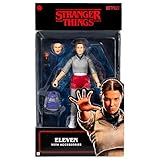
- ELEVEN: Unleash your full potential with Stranger Things Eleven Upside Down Collector Figures!
- SHOW INSPIRED: 6-inch highly detailed figures are based on Season Five of Stranger Things
- ARTICULATED: Features 33+ points of articulation to recreate iconic poses
- SOFT CLOTHING: Includes soft good clothing to highlight authentic character details
- ACCESSORIES: Packed with alternate faceplates and unique accessories
5. Billy Hargrove, while possessed
Billy is a dangerous antagonist in season three, but the ranking counts him specifically as a possessed host rather than treating his actions as wholly his own. Netflix’s character guide identifies him as possessed by the Mind Flayer. That distinction both limits his agency in this role and makes his story more affecting: the conflict involves a person under supernatural control, not simply an independent monster. The creators also considered Billy’s redemption when discussing Henry’s arc, according to Netflix’s finale coverage.
6. The Russian operation
The Russian operation represents organized human antagonism rather than one fully developed villain. Its place here reflects the danger created by people pursuing a project that threatens Hawkins, not a claim that every Russian character in the series is an enemy. As an institutional adversary, it adds a human strand to the show’s threats, but it is less individually characterized than Brenner and less narratively central than the two endgame forces.
Rank #4

- RADIO STATION: Tune into the Upside Down with the Stranger Things WSQK Radio Station Playset
- SHOW INSPIRED: Three-level two-sided playset is based on Season Five of Stranger Things
- PLAY ZONES: Features radio tower, DJ station, basement, tendril trap, and Upside Down
- BONUS FIGURE: Includes 4-inch articulated figure of Robin Buckley
- CROSS PLAY: Compatible with all other 4-inch scale figures and vehicles
7. Jason Carver
Jason makes the list as a bounded human antagonist: his pursuit of Eddie and hostility toward the people he suspects turn fear and grief into a danger for the Hawkins group. He is not in the same category of power as the supernatural entities, and he does not carry the story across multiple seasons. His inclusion recognizes the harm a human antagonist can cause without equating his reach with that of Vecna or the Mind Flayer.
Independent reader supportYour contribution helps us test, update, and keep practical guides available for everyone.Who is the main villain?
For the series’ final conflict, Vecna is the clearest individual answer: he is the central personal adversary, and the Hawkins group’s final stand is against him and the Mind Flayer. But the finale frames the threat as a confrontation with both. Netflix’s recap reports that Joyce kills Vecna, the Mind Flayer is also slain, and the bridge between worlds collapses. Calling Vecna the main villain is a useful shorthand, not a reason to treat the Mind Flayer as secondary or irrelevant.
Do these 3 things before closing this tab:
1Fix the driver behind crashes, sound loss and screen glitches2Repair Windows errors before they cause bigger problems3Scan for outdated or missing drivers - takes under a minuteIs Vecna more powerful than the Mind Flayer?
The series does not establish a clean, measurable power ranking between them. The comparison depends on what “powerful” means: Vecna has focused agency and a personal connection to the protagonists, while the Mind Flayer represents a broader supernatural force capable of acting through hosts. The finale places both in the final battle and defeats both, so the evidence supports calling them joint endgame threats rather than declaring one definitively stronger.
What “all seven” means here
“All seven” refers to this article’s selected set of major antagonists, not every creature, possessed person, or hostile human in the show. Other choices are possible: counting Demodogs or Demobats separately, for example, would shift the list from character-based antagonists toward creature types. Netflix’s cast guide and final-season coverage discuss key characters and threats, but do not set out an authoritative ranking of seven villains.
Quick Recap
Product prices and availability are accurate as of the date/time indicated and are subject to change. Any price and availability information displayed on Amazon at the time of purchase will apply.




