Few modern franchises feel as deliberately anti-franchise as Knives Out, yet that’s precisely why Rian Johnson’s whodunit series has become one of the most fascinating case studies in contemporary studio filmmaking. Built around Daniel Craig’s Benoit Blanc rather than a single ongoing storyline, the trilogy embraces reinvention over escalation, treating each installment as a fresh genre remix instead of a sequel chasing bigger stakes. In an era dominated by cinematic universes and lore overload, Knives Out thrives by keeping its formula flexible and its satire razor-sharp.
The trilogy also represents a rare bridge between prestige filmmaking and mainstream crowd-pleasing entertainment. Johnson uses the familiar pleasures of murder mysteries to explore class, power, tech culture, and performative morality, while still delivering twisty, audience-friendly storytelling. That balance has helped the series survive a major shift from theatrical success to Netflix-backed streaming spectacle without losing its identity, proving that star-driven, director-led franchises can still thrive outside traditional studio playbooks.

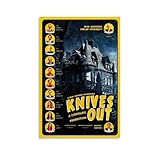
Ranking the three Knives Out films isn’t just about deciding which mystery is cleverest or which ensemble shines brightest. It’s about examining how each entry pushes or pulls against the core idea of what this franchise should be, where its satire lands most effectively, and how its evolving scale either sharpens or softens its bite. Taken together, the trilogy offers a snapshot of modern franchise filmmaking at its most playful, self-aware, and quietly radical.
How We Ranked Them: Mystery Craft, Social Satire, Rewatch Value, and Blanc Factor
Ranking the Knives Out films isn’t about box office totals or meme longevity. Each entry is deliberately built to feel different, which means judging them by a single metric would miss what Rian Johnson is actually doing with the franchise. Instead, we weighed four core elements that define how well each film functions as both a standalone mystery and a chapter in an evolving cinematic experiment.
Free tools Windows power users keep installed
One-click scans. No signup required.
#1 Best Overall
![Knives Out [Blu-ray]](https://m.media-amazon.com/images/I/51t2wYWUKCL._SL160_.jpg)
- When renowned crime novelist Harlan Thrombey is found dead at his estate, the inquisitive Detective Benoit Blanc is mysteriously enlisted to investigate.
Mystery Craft: Fair Play, Structure, and Surprise
First and foremost, these are whodunits, and the strength of the central mystery matters. We looked at how cleverly each film constructs its puzzle, how honest it plays with audience expectations, and whether its twists feel earned rather than merely shocking. A great Knives Out mystery doesn’t just hide the answer; it invites the viewer to engage, misdirects with purpose, and reveals its hand in a way that feels inevitable in hindsight.
Equally important is structure. Johnson often bends traditional mystery frameworks, sometimes revealing information early or shifting perspectives midstream. When those gambits deepen tension and theme, the film rises in the ranking. When they blunt suspense or overcomplicate the game, it costs the film points.
Social Satire: Target, Precision, and Bite
Every Knives Out movie is a social satire wearing a murder mystery mask, but not all targets are equally sharp. We considered what each film is satirizing, how clearly its critique comes through, and whether the humor punches up with specificity or drifts into broad caricature. The strongest entries use their ensemble casts to embody real-world power structures, hypocrisies, and cultural anxieties without stopping the story dead to make a point.
Tone matters here as well. Satire works best in this franchise when it’s woven seamlessly into character and plot, rather than feeling like commentary layered on top of the mystery. When the social critique enhances the stakes and deepens the characters, it elevates the entire film.
What’s actually slowing this PC down?
Pick the symptom - the matching free tool is one click away.
Rewatch Value: Comfort, Clarity, and Layered Detail
A great mystery doesn’t lose its appeal once you know the solution. We weighed how enjoyable each film remains on repeat viewings, paying attention to performances, visual storytelling, and the density of planted clues and thematic callbacks. The best Knives Out entries reward familiarity, revealing new jokes, background details, and character beats each time through.
There’s also a comfort factor at play. Some entries invite repeat visits because of their warmth, rhythm, and ensemble chemistry, even when the murder itself fades into the background. Rewatch value is where these films prove whether they’re clever exercises or lasting crowd-pleasers.
The Blanc Factor: Benoit Blanc’s Narrative Gravity
Daniel Craig’s Benoit Blanc is the connective tissue of the trilogy, but his role shifts significantly from film to film. We evaluated how effectively each movie uses Blanc, not just as a detective, but as a tonal anchor and thematic guide. When Blanc is allowed to be eccentric, observant, and quietly compassionate, the film tends to find its footing more easily.
Crucially, we also looked at balance. The strongest entries understand that Blanc works best when he enhances the ensemble rather than dominating it. His presence should sharpen the mystery and illuminate the story’s moral center, not overwhelm the characters he’s investigating.
Windows Errors? Fix Them Before They Spread
Repair common Windows errors and clear accumulated junk for a smoother, more stable PC - no reinstall needed.Free scan · no reinstallOutdated Drivers Are Slowing You Down
One free scan finds every outdated or missing driver and matches the right update for your exact hardware.Free scan · exact hardware matchTaken together, these four criteria allow for a ranking that reflects what makes the Knives Out trilogy so distinctive. Each film succeeds in different ways, and their placement isn’t about declaring a failure so much as recognizing which entries most fully realize the franchise’s playful, pointed, and ever-evolving potential.
3. ‘Glass Onion: A Knives Out Mystery’ (2022) — Bigger, Louder, and More Divisive
If Knives Out was a sharply honed blade, Glass Onion is a neon-lit sledgehammer. Rian Johnson deliberately scales everything up for the sequel, from the sun-drenched Greek island setting to the heightened performances and overt satire. The result is a film that’s undeniably entertaining, but also the most polarizing entry in the trilogy.
Glass Onion isn’t short on ambition. It wants to be broader, angrier, and more directly engaged with contemporary culture, and that reach sometimes stretches the mystery thinner than the film realizes.
A Satire Turned Up to Eleven
Where the first film let its social commentary emerge organically from character and circumstance, Glass Onion foregrounds its targets. Tech billionaires, influencer culture, performative activism, and empty genius myths are all skewered with relish. The satire is clear, accessible, and often very funny in the moment.
The downside is that subtlety becomes collateral damage. Several characters are intentionally one-note, designed more as archetypes than evolving suspects, which limits the emotional and narrative complexity that defines the best whodunits.
A Mystery That Deconstructs Itself
Johnson once again plays games with structure, including a bold mid-film reset that reframes what the audience thinks it knows. Conceptually, it’s clever and thematically aligned with the film’s obsession with misdirection and perceived brilliance. Practically, it diffuses tension rather than escalating it.
The central puzzle is less intricate than it appears, leaning on irony more than deduction. When the solution arrives, it’s intellectually coherent but emotionally muted, lacking the cumulative satisfaction that comes from watching a tightly wound mystery snap into place.
The Ensemble and the Blanc Balance
Daniel Craig remains immensely watchable as Benoit Blanc, here presented in a more overtly comedic mode. He’s looser, louder, and occasionally closer to a caricature, which works for the film’s heightened tone but softens his role as a grounding force. Blanc feels less like the quiet observer and more like a participant in the spectacle.
The supporting cast is game and charismatic, particularly Janelle Monáe, whose role adds welcome texture and moral weight. Still, the ensemble chemistry never fully gels, largely because the characters are designed to represent ideas first and people second.
Rewatch Value: Fun Over Finesse
Glass Onion remains breezy and enjoyable on repeat viewings, especially as a comfort watch or social satire. The jokes land quickly, the performances are colorful, and the film’s self-awareness keeps it moving at a lively pace.
What it lacks is density. There are fewer background clues, fewer behavioral tells, and fewer rewards for close attention, making rewatches pleasant but not revelatory. It’s a Knives Out film that prioritizes immediacy over longevity, spectacle over precision, and provocation over puzzle craftsmanship.
2. ‘Knives Out’ (2019) — A Modern Whodunit That Revived the Genre
After the maximalist satire and loosened mechanics of Glass Onion, returning to Knives Out feels like stepping back into a carefully arranged crime scene. Rian Johnson’s 2019 breakout is more disciplined, more emotionally grounded, and far more attentive to the pleasures of classic mystery construction. It doesn’t just reference Agatha Christie and Clue-era storytelling; it actively restores faith that a theatrical whodunit can still play to modern audiences.
Recommended Free Tools
Where the sequel favors spectacle and provocation, Knives Out thrives on control. Every glance, interruption, and line reading is calibrated, building a narrative that rewards attention without ever feeling smug. The film understands that mystery isn’t just about surprise, but about trust between storyteller and viewer.
A Murder Mystery With a Beating Heart
What ultimately separates Knives Out from many contemporary whodunits is its emotional clarity. Beneath the puzzle box mechanics lies a story about inheritance, entitlement, and decency in the face of corrosive privilege. Ana de Armas’ Marta Cabrera is not just a clever narrative device, but the moral center of the film, grounding the twists in genuine human stakes.
The choice to reveal key information early is a gamble that pays off. Rather than deflating suspense, it redirects it, shifting tension from “what happened” to “what will happen to her.” That structural confidence is what makes the film feel both classical and quietly radical.
The Ensemble as Character Study, Not Caricature
Unlike Glass Onion’s more overt archetypes, the Thrombey family feels uncomfortably real. Each member is sharply defined, yet layered enough to evolve as their desperation surfaces. Johnson allows their worst instincts to emerge gradually, making the film as much a social autopsy as a murder investigation.
Daniel Craig’s Benoit Blanc is also at his most effective here. Dialed back from later flamboyance, Blanc operates as an observer first, allowing the ensemble to expose itself. His Southern-fried eccentricities are memorable, but they never overwhelm his function as a razor-sharp detective.
Precision, Rewatchability, and Franchise Foundations
Knives Out is densely packed with visual clues, behavioral tells, and narrative misdirection, making it immensely rewarding on repeat viewings. Details that feel decorative at first reveal themselves as essential, reinforcing the film’s craftsmanship and respect for the genre’s traditions. It’s a movie that trusts its audience to keep up, and rewards them when they do.
So why isn’t it the top-ranked entry? Simply put, it’s the most classical of the three. Its ambitions are executed beautifully, but they’re intentionally contained, more focused on revival than reinvention. Knives Out laid the foundation for what the franchise could be, proving the genre’s vitality and giving Benoit Blanc a world worth returning to.
1. ‘Wake Up Dead Man: A Knives Out Mystery’ (2025) — The Franchise at Its Darkest and Sharpest
If Knives Out laid the foundation and Glass Onion stretched the walls outward, Wake Up Dead Man digs straight down. This is the franchise at its most controlled, most morally abrasive, and most confident about how far it can push its audience. Rian Johnson strips away the vacation sheen and social-media satire to deliver a colder, more inward-looking mystery that feels both intimate and bruising.
The Tool Desk
Outbyte PC Repair FREEClear out junk files and repair common Windows errorsFree Scan →Outbyte Driver Updater FREEScan for outdated or missing drivers - takes under a minuteDriver Scan →Rank #3

- ICONIC MOVIE REPLICA: Designed by master knife maker Gil Hibben for the 2010 "Expendables" movie, this bowie knife is a must-have for fans and collectors.
- PREMIUM STAINLESS STEEL BLADE: Features a polished 14" blade made from 3Cr13 stainless steel, offering durability and a sharp edge for any cutting task.
- UNIQUE ARTWORK HANDLE: The synthetic ivory handle is adorned with "Expendables" artwork, adding a distinctive touch to this collector's piece.
- ELEGANT GOLD PLATED DETAILS: The knife is enhanced with a gold-plated blade catcher and guard, showcasing its exquisite craftsmanship and attention to detail.
- CUSTOM LEATHER SHEATH INCLUDED: Comes with a custom leather sheath featuring the Hibben Knives logo, ensuring the knife is protected and displayed with pride.
The ranking comes down to ambition meeting execution. Wake Up Dead Man doesn’t just tweak the formula; it interrogates it, asking what a Benoit Blanc mystery looks like when comfort, irony, and performative cleverness are removed. The result is the series’ most mature entry, one that lingers longer than its twists.
A Noir Turn That Actually Earns Its Darkness
Set against a somber, almost funereal backdrop, the film leans into noir influences without abandoning the pleasures of a classic whodunit. The humor is drier, the violence more unsettling, and the emotional consequences far heavier than in previous entries. This isn’t darkness for shock value, but a tonal recalibration that aligns the mystery with themes of guilt, faith, and moral compromise.
Johnson’s direction is notably restrained here. The camera lingers, scenes breathe, and the pacing trusts silence as much as dialogue. It’s a reminder that suspense doesn’t always need spectacle, just the creeping realization that everyone has something to lose.
Benoit Blanc, Finally Exposed
Daniel Craig gives his most layered performance as Blanc to date. The accent and eccentricities remain, but they’re no longer the point; instead, the film places Blanc under ethical pressure, forcing him to confront the cost of his own detachment. He’s still brilliant, but no longer invulnerable.
This shift deepens the franchise in a crucial way. Blanc is no longer simply the constant around which different worlds orbit; he’s part of the moral equation. That evolution makes Wake Up Dead Man feel less like an episodic sequel and more like a meaningful chapter.
An Ensemble Built Around Consequence, Not Satire
Where Glass Onion thrived on exaggerated archetypes, Wake Up Dead Man opts for quieter, more unsettling character work. The ensemble feels grounded, their motivations rooted in fear, shame, and self-preservation rather than caricatured ego. Every performance is calibrated to the film’s heavier tone, making even minor characters feel essential.
The mystery itself reflects that philosophy. The solution isn’t flashy or smug; it’s sobering. Answers arrive with weight, not applause, reinforcing the idea that truth, once uncovered, doesn’t always bring relief.
Why It Stands Above the Rest
Wake Up Dead Man earns its top spot by doing what the best franchise entries do: redefining the ceiling. It proves Knives Out can evolve without losing its identity, embracing discomfort and ambiguity while remaining deeply entertaining. The film respects the audience’s intelligence and emotional stamina, trusting them to follow it somewhere less cozy.
Do these 3 things before closing this tab:
1Fix the driver behind crashes, sound loss and screen glitches2Repair Windows errors before they cause bigger problems3Scan for outdated or missing drivers - takes under a minuteIn ranking the trilogy from weakest to strongest, this entry wins because it feels necessary. It doesn’t just continue the series; it challenges it, leaving the impression that Benoit Blanc’s world is larger, darker, and far more interesting than we initially imagined.
The Evolution of Benoit Blanc: From Southern Gentleman Sleuth to Cultural Mirror
Across the Knives Out trilogy, Benoit Blanc evolves from an eccentric genre throwback into something far more reflective. What begins as a charming exercise in classic whodunit storytelling gradually transforms into a lens for examining privilege, power, and moral responsibility. Tracking Blanc’s journey is essential to understanding why each film lands where it does in the ranking.
Knives Out: The Gentleman Detective as Comfort Food
In Knives Out, Blanc is deliberately opaque. He’s a Southern-fried Hercule Poirot, defined by mannerisms, verbal flourishes, and an almost mythic reputation for brilliance. The film uses him as an anchor, a reassuring presence amid the chaos of the Thrombey family’s infighting.
That distance is part of the appeal. Blanc functions less as a character than as a narrative instrument, guiding the audience through a tightly wound puzzle while allowing the film’s real emotional focus to rest on Marta and the corrosive entitlement surrounding her. It’s elegant, immensely rewatchable, and intentionally safe.
Quick wins for a faster PC:
Clear out junk files and repair common Windows errorsFree Scan →Fix the driver behind crashes, sound loss and screen glitchesFind Drivers →Glass Onion: Blanc as Satirical Observer
Glass Onion cracks that reserve by leaning into self-awareness. Blanc is still emotionally guarded, but the film places him in a world so nakedly performative that his detachment becomes a form of commentary. Surrounded by hollow disruptors and self-mythologizing elites, Blanc is less detective than witness.
This is where the character starts reflecting the times. His boredom, his impatience with faux genius, and his eventual unraveling of the mystery all mirror the film’s disdain for performative intelligence. It’s clever and timely, but Blanc remains reactive rather than transformed, which keeps the sequel from reaching the emotional heights of the top-ranked entry.
Wake Up Dead Man: Blanc as Moral Participant
Wake Up Dead Man completes the evolution by forcing Blanc inward. For the first time, his detachment is treated as a liability rather than a quirk. The film challenges the idea that intellectual superiority is morally neutral, asking what responsibility a man like Blanc bears once he understands the harm beneath the puzzle.
This shift elevates both the character and the franchise. Blanc is no longer a charming constant dropped into new social ecosystems; he’s implicated in the outcome. That transformation is a major reason the film ranks highest, turning Benoit Blanc from a genre pleasure into a cultural mirror reflecting complicity, conscience, and consequence.
Seen together, the trilogy charts a deliberate progression. Each film peels back another layer of Benoit Blanc, and with it, the franchise’s ambitions grow bolder. What starts as affectionate homage becomes pointed satire, and ultimately, a character-driven reckoning that redefines what a modern whodunit protagonist can be.
Recurring Themes Across the Trilogy: Wealth, Power, and the Illusion of Intelligence
Across all three films, Rian Johnson uses the whodunit framework less as an end goal and more as a delivery system for cultural critique. The murders matter, but they’re rarely the point. What binds the trilogy together is its fixation on how wealth distorts morality, how power insulates bad actors, and how intelligence is often confused with status or self-belief.
Wealth as a Shield, Not a Virtue
In Knives Out, money functions as inheritance, something fought over and weaponized through entitlement. The Thrombeys believe proximity to wealth equals worth, and their cruelty toward Marta exposes how quickly civility evaporates when comfort is threatened. Wealth doesn’t make them clever or deserving; it simply gives them leverage.
Glass Onion escalates this idea by shifting from old money to tech wealth and influence. Miles Bron’s fortune isn’t inherited but mythologized, built on branding rather than substance. The film argues that modern wealth doesn’t just shield people from consequences; it actively rewrites reality around them.
Wake Up Dead Man brings the theme full circle by showing wealth as systemic power rather than personal excess. Here, money operates through institutions, philanthropy, and moral compromise. The question isn’t who deserves wealth, but who benefits when wrongdoing is quietly ignored.
Power and the Performance of Genius
Each film dismantles the idea that power correlates with intelligence. In Knives Out, Harlan Thrombey is genuinely sharp, but his heirs are only clever in self-defense. Their perceived intelligence collapses the moment the system stops favoring them.
Glass Onion turns this critique into outright satire. Miles Bron is not a misunderstood visionary; he’s an empty vessel surrounded by people incentivized to pretend otherwise. The mystery’s simplicity is the joke, exposing how power relies on others to maintain the illusion of brilliance.
Wake Up Dead Man reframes intelligence as responsibility. Knowing the truth is no longer enough, and the film interrogates what happens when smart people choose comfort over confrontation. Intelligence without ethics becomes just another tool of harm.
The Illusion of Cleverness in Modern Society
What ultimately links the trilogy is its skepticism toward cleverness itself. These films aren’t impressed by fast talkers, disruptors, or even master detectives unless their insight leads to meaningful action. Wit, status, and self-awareness are repeatedly shown to be cosmetic without accountability.
That throughline is why the ranking makes sense. Knives Out is elegant and contained, Glass Onion is louder and sharper in its satire, and Wake Up Dead Man is the most ambitious in what it asks of its characters and audience. Together, they transform a playful genre revival into a pointed examination of who we trust, who we admire, and why being smart has never been the same as being right.
Independent reader supportYour contribution helps us test, update, and keep practical guides available for everyone.How Rian Johnson Reinvented the Whodunit Without Breaking It
What makes the Knives Out trilogy such a rare modern franchise success is that Rian Johnson never treats the whodunit as a puzzle to be “solved” once and moved on from. Instead, he treats it as a flexible framework—one sturdy enough to hold shifting tones, evolving themes, and increasingly pointed social commentary. Each film honors the genre’s mechanics while rethinking what a mystery is actually for.
Rather than escalating scale for its own sake, Johnson escalates intention. The mysteries grow less about surprise twists and more about moral exposure, which is why the ranking isn’t just about which movie is cleverest, but which uses the genre most effectively at its moment in the trilogy.
Best Value

- Grading Scale: Mint, Near Mint, Very Good, Fair & Poor
- Original Promo Movie Poster - Not a Reprint
- Posters come rolled in a plastic sleeve and shipped in a sturdy cardboard tube
- Posters are from Movie Studios and sizes are approximate.
- Poster is in Mint Condition
The Mechanics Stay Classic, the Perspective Shifts
At a structural level, all three films are comfortingly old-school. There’s a murder, a circle of suspects, hidden motives, and Benoit Blanc calmly observing while everyone else performs. Johnson never abandons those pleasures, which is why even the weakest entry still feels satisfying as a mystery.
What changes is where the tension comes from. Knives Out generates suspense by letting the audience think they know too much too early, Glass Onion hides its simplicity behind chaos and spectacle, and Wake Up Dead Man withholds clarity to force ethical unease. Each approach reflects Johnson’s growing interest in how truth functions, not just how it’s revealed.
Benoit Blanc as an Evolving Lens, Not a Static Detective
Blanc himself is key to how the trilogy reinvents the genre. He’s not a genius imposed on the story, but a lens that adapts to it. In Knives Out, he’s almost classical—a gentleman detective restoring moral order. In Glass Onion, he becomes reactive, openly frustrated by stupidity masquerading as complexity.
By Wake Up Dead Man, Blanc is no longer just solving a case; he’s navigating complicity. The detective’s role shifts from observer to participant, which subtly redefines the genre. The mystery no longer exists solely to be cracked—it exists to test whether uncovering the truth actually changes anything.
PC Slower Than It Used to Be?
A free scan shows the junk files, broken settings and background clutter dragging Windows down - then fixes them in one click.Free scan · Windows 10 & 11Crashes, No Sound, or Screen Glitches?
Random freezes, missing sound and display glitches usually trace back to one bad driver. Find and replace yours safely.Free scan · under a minuteWhy the Ranking Reflects Johnson’s Growing Ambition
This evolution is why the trilogy naturally invites comparison and ranking. Knives Out remains the most elegant and airtight, a near-perfect modern whodunit that reintroduces the genre with confidence and clarity. Glass Onion ranks lower not because it lacks intelligence, but because its satire sometimes overwhelms its emotional stakes, even as it sharpens the franchise’s thematic bite.
Wake Up Dead Man rises above both by daring to complicate the genre’s moral comfort. It’s less immediately crowd-pleasing, but more resonant, using the whodunit to interrogate power, silence, and responsibility in ways the earlier films only gesture toward. Johnson doesn’t break the whodunit—he stretches it, proving that a genre built on revelation can still surprise by asking harder questions about what happens after the truth comes out.
Final Verdict: What the ‘Knives Out’ Ranking Says About the Franchise’s Legacy
Taken together, the ranking reveals a franchise that refuses to stay comfortable. From the precision-engineered elegance of Knives Out, through the chaotic satire of Glass Onion, to the moral complexity of Wake Up Dead Man, Rian Johnson uses each entry to push the whodunit into new thematic territory. The films aren’t just sequels; they’re arguments with the genre itself.
Weakest to Strongest: Growth, Not Diminishment
At the bottom of the ranking, Glass Onion earns its placement not because it’s a misfire, but because its spectacle-forward approach sometimes blunts its emotional impact. Its strengths lie in audacity, commentary, and playfulness, even when its mystery mechanics feel intentionally loose. It’s a film more interested in exposing hollow brilliance than crafting airtight suspense.
The Tool Desk
Outbyte PC Repair FREERepair Windows errors before they cause bigger problemsFix Now →Outbyte Driver Updater FREEFix the driver behind crashes, sound loss and screen glitchesFind Drivers →Knives Out sits comfortably in the middle of the legacy conversation, even if it remains the most beloved. As a modern classic, it reestablished the whodunit as both commercially viable and culturally relevant, balancing clever plotting with genuine warmth. Its lower placement in the ranking isn’t a knock on quality, but a reflection of how far the series has since evolved.
At the top, Wake Up Dead Man stands as the franchise’s most ambitious and challenging entry. It sacrifices some immediate gratification in favor of thematic weight, forcing viewers to sit with uncomfortable truths rather than tidy resolutions. As a result, it feels less like a puzzle box and more like a reckoning.
What Benoit Blanc Ultimately Represents
This ranking also reframes Benoit Blanc’s role within modern mystery storytelling. He’s not just a recurring detective; he’s a vehicle for exploring how truth operates in different cultural moments. Each film reshapes him slightly, allowing the franchise to comment on morality, power, and accountability without losing its genre roots.
That flexibility is the series’ secret weapon. By letting Blanc evolve alongside the stories, the films avoid stagnation and resist turning him into a caricature. The detective adapts because the world around him does, and the mysteries follow suit.
Do these 3 things before closing this tab:
1Fix the driver behind crashes, sound loss and screen glitches2Repair Windows errors before they cause bigger problems3Scan for outdated or missing drivers - takes under a minuteA Franchise Defined by Curiosity, Not Comfort
Ultimately, the Knives Out ranking says less about which film is “best” and more about what the franchise values. It rewards ambition over repetition, discomfort over familiarity, and ideas over formulas. Even at its weakest, the series remains intellectually engaged and entertaining, a rarity in modern franchise filmmaking.
That’s the true legacy of Knives Out. It proves that a whodunit can be funny, furious, humane, and unsettling—all at once—and still leave audiences eager for the next question rather than just the next answer.
Quick Recap
Product prices and availability are accurate as of the date/time indicated and are subject to change. Any price and availability information displayed on Amazon at the time of purchase will apply.




