Free tools Windows power users keep installed
One-click scans. No signup required.
When James Cameron says a long-gestating sequel is making “progress,” fans have learned to listen carefully, not just to the word itself, but to the context around it. In Cameron’s vocabulary, progress rarely means a rushed greenlight or a vague expression of hope. It usually signals that a project has moved past pure intention and into a tangible phase of development, even if cameras are still a long way off.
What makes this particular comment matter right now is where Cameron is in his career cycle. He is deep into the Avatar machine, juggling multiple sequels that demand years of planning, post-production, and technological innovation. For Alita: Battle Angel 2 to earn a mention at all within that crowded slate suggests it has retained creative priority, likely in the form of active scripting, story development, or collaboration with key partners like producer Jon Landau and director Robert Rodriguez.
The credibility of the update also stems from Cameron’s track record of not overpromising. He has consistently acknowledged that Alita’s continuation depends on timing, resources, and studio alignment, rather than fan demand alone. By framing the sequel as “progressing” instead of “happening,” Cameron is effectively signaling that the pieces are quietly being put in place, which meaningfully improves the sequel’s chances while still setting expectations for a patient, multi-year timeline and a story that can evolve beyond the first film’s cliffhanger.
What Exactly Did Cameron Say — And What He Didn’t Say
James Cameron’s recent comment about Alita: Battle Angel 2 making “progress” came during a broader conversation about his active and upcoming projects, not as part of a dedicated sequel announcement. That context matters. Cameron was careful to frame Alita alongside other long-term developments, suggesting steady movement rather than a sudden shift in priority.
The Tool Desk
Outbyte PC Repair FREERepair Windows errors before they cause bigger problemsFix Now →Outbyte Driver Updater FREEScan for outdated or missing drivers - takes under a minuteDriver Scan →#1 Best Overall
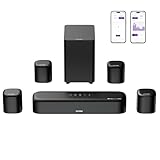
- 7.1ch Dolby Atmos Surround Sound System for TV: This 7.1ch sound bar features 3 main channels for crisp dialogue and 4 surround speakers. Power the rear right surround speaker to pair it wirelessly with sound bar. The setup delivers an immersive surround sound audio experience, making you feel fully engaged in the action. Note: Recommended for space of 108 to 270 ft².
- 4 Surround Speakers for Home Theater Sound System: The Aura A60 Pro soundbar for tv comes with 2 wired front surround speakers and 2 wired rear surround speakers, positioned to create a wide, room-filling soundstage. The rear speakers connect wirelessly with the soundbar, minimizing cable clutter and optimizing space efficiency.
- Dolby Atmos Delivers an Immersive 3D Soundscape: This 7.1ch dolby atmos soundbar enhances your listening experience with multidimensional audio that surrounds you from every direction, upgrading your home theater with powerful, dynamic sound that brings each scene to life.
- 5.25-inch Wired Subwoofer with BassMX Technology: The Aura A60 Pro sound bar comes with a 5.25" wired subwoofer powered by BassMX technology to boost low-frequency performance. An optimized magnetic structure and diaphragm produce deep, powerful bass. Enjoy enhanced low-end sound and experience the impact of every beat.
- Precision Audio Tuning Redefined: Customize your audio experience with the Ultimea App, designed for precise sound control. It provides 121 professionally tuned EQ presets across styles such as Bass, Pop, Classical, and Rock, along with 10-band control and 6 tailored EQ modes including Movie, Music, Voice, Sport, Game, and Night. Using the advanced “Customize” option, you can adjust audio details to suit your personal taste, ensuring every sound is tuned exactly how you prefer.
The Meaning Behind “Progress”
In Cameron’s language, “progress” typically points to creative groundwork rather than logistical momentum. This most likely means story development, outlining, or scripting is underway in some form, potentially building on the manga material the first film only began to explore. It signals that the sequel is being actively thought about, shaped, and refined, even if it remains behind the scenes.
Importantly, Cameron did not attach a timetable to that progress. There was no mention of pre-production, casting, or visual effects planning, all of which would indicate a more advanced phase. Instead, the emphasis was on forward motion without locking the project into a specific window.
What Cameron Didn’t Commit To
Just as telling as what Cameron said is what he avoided saying. He did not confirm a greenlight from Disney, nor did he announce a director’s return, even though Robert Rodriguez has long expressed interest in continuing Alita’s story. Cameron also avoided referencing budget discussions or release strategies, both of which would suggest studio-level momentum.
This restraint is consistent with how Cameron manages expectations. He tends to speak publicly only about elements he has direct creative control over, leaving business decisions unaddressed until they are finalized. For fans, that means reading the update as a sign of intent rather than confirmation.
Recommended Free Tools
How This Fits Into Cameron’s Larger Slate
The update becomes more meaningful when viewed against Cameron’s packed roadmap. With multiple Avatar sequels in various stages of production and post-production, any project making “progress” alongside them is doing so in limited but valuable windows of attention. Alita continuing to exist within that ecosystem suggests it has not been sidelined or forgotten.
That positioning also hints at a sequel that may aim higher and broader than its predecessor. With Cameron’s continued involvement and the evolving landscape of big-budget sci-fi, Alita 2 could be shaped to feel more expansive, more serialized, and more deeply connected to its source material. While nothing is locked in, Cameron’s carefully chosen words suggest a sequel that is slowly but deliberately being built, not quietly shelved.
Defining ‘Progress’: Script Development, World-Building, and Early Planning
When James Cameron says Alita: Battle Angel 2 is making “progress,” the most credible interpretation points to creative development rather than logistical movement. In Cameron’s vocabulary, progress typically begins on the page, with story refinement, structural problem-solving, and long-term planning taking shape well before studios or production crews get involved. It’s the quiet but essential phase where a sequel earns the right to exist.
Script Work Comes First
Cameron has been clear in past interviews that he does not push projects forward without a story that justifies the scale. For Alita, that likely means ongoing script development, whether through new drafts, expanded outlines, or deeper exploration of where the character’s arc ultimately leads. Given how much of Yukito Kishiro’s manga remains untouched, narrative decisions here carry unusual weight.
Windows Errors? Fix Them Before They Spread
Repair common Windows errors and clear accumulated junk for a smoother, more stable PC - no reinstall needed.Free scan · no reinstallOutdated Drivers Are Slowing You Down
One free scan finds every outdated or missing driver and matches the right update for your exact hardware.Free scan · exact hardware matchThis stage also allows Cameron and his collaborators to address one of the first film’s most common criticisms: that it felt like the opening chapter of a much larger saga. A sequel script would need to function as both continuation and escalation, delivering payoff while setting the foundation for potential future installments. That kind of balancing act takes time, especially for a filmmaker known for meticulous structure.
Expanding the World Beyond Iron City
World-building is another area where Cameron’s definition of progress becomes especially relevant. The original film only scratched the surface of the Alita universe, hinting at Zalem, Motorball’s larger political ecosystem, and the broader class divide shaping this future society. Developing a sequel means mapping those spaces in greater detail, both narratively and visually.
This kind of groundwork doesn’t require cameras or sets, but it does demand significant creative investment. Concept art, lore development, and thematic alignment all happen here, often years before audiences see tangible results. If Cameron is actively engaged in this process, it suggests the sequel is being designed to feel bigger and more immersive, not simply iterative.
Early Planning Without Studio Signals
What’s notably absent from Cameron’s update is any indication that Alita 2 has entered formal pre-production. There’s no suggestion of scheduling, budgeting, or coordination with Disney’s release calendar, which keeps expectations grounded. That absence reinforces the idea that progress is happening within Cameron’s creative circle rather than at a corporate level.
Still, that kind of internal momentum matters. In an industry where dormant sequels often fade without a trace, continued script and world-building work keeps Alita alive as a viable project. It positions the film to move quickly if and when a studio greenlight arrives, rather than starting from scratch.
Rank #2

- Simplified 5.1ch Dolby Atmos Setup: Enjoy immersive 4D sound with real Dolby Atmos and 5.1-channel audio. Five built-in speakers, including two side-firing drivers, create wide surround without rear speakers. Precision DSP ensures <0.5 ms latency for smooth, theater-like sound. Setup takes less than 1 minute.
- Voice Clarity Enhancement: VoiceMX technology uses advanced DSP algorithms to isolate and enhance vocal frequencies in real time. Dialogue remains crisp and easy to follow by separating speech from background effects and music, even at low volumes or during intense scenes.
- 300W Output with 6-Driver System: Featuring five precision-tuned full-range drivers and a dedicated wired wooden subwoofer, the system delivers up to 300W of peak power for bold, room-filling sound. With a frequency response of 45 Hz–18 kHz and a maximum SPL of 99 dB, it reproduces everything from subtle nuances to explosive cinematic effects.
- 18 mm High-Excursion Driver: Powered by BassMX technology, the wired wooden subwoofer features a 18 mm high-excursion driver, a 5.3L tuned cabinet, and a high-density magnetic circuit. This design delivers deeper, tighter bass with greater air displacement and enhanced low-frequency performance—bringing more realism to every scene.
- HDMI eARC for True Dolby Atmos: HDMI eARC supports up to 37 Mbps of bandwidth, unlocking the full potential of lossless Dolby Atmos 5.1-channel audio. Compared to standard ARC, eARC delivers richer surround effects and greater detail. CEC integration allows the TV and soundbar to work together with unified control.
Why This Kind of Progress Is Credible
Cameron’s reputation gives his wording added significance. He rarely speaks casually about projects that are no longer on his radar, and he’s known for abandoning ideas that don’t meet his standards. The fact that Alita is still being actively shaped suggests a level of commitment beyond polite acknowledgment.
For fans, that means this update should be read as meaningful, even if it’s not immediately actionable. Progress, in this case, isn’t about release dates or casting announcements. It’s about a sequel quietly being built from the inside out, waiting for the right moment to surface.
How Alita 2 Fits Into Cameron’s Packed Avatar-First Roadmap
Any discussion of Alita: Battle Angel 2 has to contend with the reality of James Cameron’s near-term priorities. For the better part of the next decade, Avatar is not just a franchise for Cameron, it’s a production pipeline. With multiple sequels in various stages of filming and post-production, his calendar is effectively locked around Pandora.
That doesn’t mean Alita is sidelined indefinitely, but it does explain why “progress” looks different here than it would for a director juggling standalone projects. Cameron’s involvement is less about day-to-day filmmaking and more about strategic authorship, shaping the story now so it can be executed later without friction.
An Avatar-First Strategy, Not an Alita Roadblock
Cameron has been transparent that Avatar will remain his directing focus for the foreseeable future. Avatar 3 is already shot, Avatar 4 is deep into development, and Avatar 5 is mapped out conceptually. From a scheduling standpoint, that makes it nearly impossible for him to personally direct Alita 2 anytime soon.
However, Alita was never structured as a Cameron-directed vehicle in the first place. Robert Rodriguez remains the logical choice to return to the director’s chair, with Cameron continuing as producer and co-writer. That division of labor is what makes incremental progress on Alita feasible even while Avatar dominates Cameron’s workload.
Producer Mode: Where Cameron Can Still Move the Needle
Cameron’s producer role is where this update carries real weight. As a writer and world-builder, he can advance Alita’s story in parallel with Avatar without splitting his attention across sets. Script development, long-term arcs, and thematic continuity all fall squarely within that lane.
This is likely what Cameron means when he talks about progress. Not a countdown to cameras rolling, but a refinement phase where the sequel’s scope, tone, and endpoint are being clarified so that, when the window opens, the film is creatively ready.
Timing the Sequel Around Disney’s Release Calendar
Disney’s stewardship of both Avatar and Alita adds another layer of complexity. Avatar films are tentpoles that claim prime release windows years in advance, which naturally limits where another effects-heavy sci-fi epic could fit. Alita 2 would need breathing room, both commercially and culturally, to justify its budget.
From that perspective, slow-burn development is a feature, not a flaw. If Alita is positioned as a post-Avatar event rather than a stopgap, it benefits from Cameron’s renewed box office dominance and Disney’s confidence in large-scale original sci-fi.
What This Means for Alita’s Realistic Timeline
The most grounded expectation is that Alita 2 remains a mid-to-late decade project at best. Avatar commitments suggest no immediate greenlight, but they don’t rule out steady advancement behind the scenes. If Cameron continues refining the sequel while Avatar 3 and 4 roll out, Alita could be poised to move quickly once his slate lightens.
In that sense, the sequel isn’t competing with Avatar, it’s waiting in its shadow. Cameron’s roadmap leaves little room for speed, but it does allow for precision, and that may ultimately give Alita 2 the strongest possible foundation when the moment finally arrives.
Robert Rodriguez, Rosa Salazar, and the Creative Team: Who’s Still Attached?
If Cameron’s involvement defines Alita 2’s long-term viability, the question of who else is still in orbit around the sequel is just as crucial. Alita: Battle Angel was a uniquely collaborative project, and any genuine forward momentum would almost certainly hinge on keeping its core creative voices aligned.
Rank #3

- Your purchase includes: 1 AV receiver, 5 speakers, 1 Sub-Woofer and Speaker wire.Waterproof : No
- Dimensions: AV Receiver – 17” W x 6” H x 12” D | Four Speakers (each) – 4” W x 6” H x 4” D | Center speaker – 10” W x 4” H x 4” D | Subwoofer – 11” W x 11” H x 13” D
- Technical specs: HDMI – 4 | Standby Power Consumption – ≤ 0.2 W | Frequency Response – 28Hz/25kHz
- Bluetooth for streaming all your favorite music and podcasts. No wireless functionality
- Easy setup with Yamaha YPAO room optimization and flexible speaker placement options, including virtual cinema front
Robert Rodriguez’s Role: Director in Waiting
Robert Rodriguez has consistently signaled that his door remains open. Since the first film’s release, he has publicly expressed interest in returning, framing Alita as a passion project rather than a contractual obligation. That kind of enthusiasm matters, especially for a sequel that would need a filmmaker comfortable balancing cutting-edge VFX with a character-driven spine.
Rodriguez’s schedule also works in Alita’s favor. Unlike Cameron, he tends to juggle multiple projects across different scales, which makes him far more flexible when a greenlight finally arrives. If Cameron is laying the narrative track, Rodriguez remains the most logical choice to bring it to the screen.
What’s actually slowing this PC down?
Pick the symptom - the matching free tool is one click away.
Rosa Salazar’s Commitment to Alita
Rosa Salazar has been the sequel’s most visible and vocal advocate. She has repeatedly reaffirmed her willingness to return, even as her career has expanded into television, animation, and studio features. Importantly, her connection to Alita appears deeply personal, rooted in the character’s emotional arc rather than franchise calculus.
From a studio perspective, Salazar’s continued availability and enthusiasm remove a major obstacle. Alita is not a role that can be easily recast or reimagined without losing continuity, and having its lead fully aligned keeps the sequel creatively intact.
The Writers, World-Builders, and Cameron’s Long Game
Beyond the marquee names, the sequel’s progress likely lives in quieter places. Cameron and Jon Landau have long spoken about mapping Alita as a multi-film saga, with the original movie deliberately ending mid-journey. That implies that story outlines, thematic beats, and even specific set pieces may already exist in some form.
This is where Cameron’s recent comments gain credibility. “Progress” does not require a locked cast or a production start date; it requires a shared creative roadmap. If the filmmakers remain aligned on where Alita’s story is going, the sequel retains its identity even while sitting dormant.
Quick wins for a faster PC:
Fix the driver behind crashes, sound loss and screen glitchesFind Drivers →Clear out junk files and repair common Windows errorsFree Scan →Why Creative Continuity Matters More Than Speed
In an industry prone to soft reboots and tonal pivots, Alita’s strength lies in its specificity. The original film earned its cult following because it felt authored, not algorithmic. Preserving that voice means keeping Rodriguez’s style, Cameron’s mythology, and Salazar’s performance intact.
Measured against that standard, the fact that the key players are still attached, at least in intent, is not trivial. It suggests that when Cameron talks about progress, he’s describing a sequel that is being protected, not rushed, waiting for the moment when ambition, timing, and creative alignment finally converge.
The Business Case: Box Office Legacy, Streaming Performance, and Fan Demand
A Box Office That Aged Better Than Its Opening Narrative
Alita: Battle Angel’s theatrical run has often been framed as a disappointment, but the numbers tell a more nuanced story. The film earned roughly $400 million worldwide, with a disproportionately strong international performance, particularly in markets like China and Japan. For a Fox-era release that arrived during a crowded blockbuster window, that global footprint matters more than its modest domestic showing.
More importantly, the movie never collapsed under its own weight. While it didn’t launch a franchise overnight, it demonstrated durability and broad appeal, the kind studios often reassess once initial expectations cool. In hindsight, Alita looks less like a misfire and more like an underleveraged asset.
Streaming and Home Media Gave Alita a Second Life
If Alita’s theatrical run planted the seed, streaming helped it grow roots. The film has consistently performed well on home media and later found new audiences through digital rentals, Blu-ray, and streaming platforms following Disney’s acquisition of Fox. This long-tail engagement is exactly the kind of data studios quietly track when evaluating sequel viability.
James Cameron’s use of the word “progress” fits neatly here. In today’s ecosystem, progress isn’t just about box office projections; it’s about sustained audience discovery. Alita has proven it can attract viewers beyond its opening weekend, a key factor in determining whether a sequel can thrive in a post-theatrical-first landscape.
The Alita Army and the Power of Persistent Fan Demand
Few mid-range sci-fi films generate the kind of grassroots advocacy Alita still enjoys. The so-called Alita Army has kept the sequel conversation alive for years through petitions, social media campaigns, and coordinated fan events. While fan movements don’t greenlight movies on their own, they do signal risk mitigation in an era of audience fragmentation.
Rank #4

- An all-in-one home theater package - The YHT-4970U comes with a Dolby Atmos AV Receiver (Yamaha RX300A), a 5.1 speaker package (two front channel speakers, a center channel speaker, two surround channel speakers, and a powered subwoofer), plus a subwoofer cable and speaker wire all in one box.
- Step into lifelike sonic worlds - Dolby Atmos and DTS Virtual:X for deeply dimensional, lifelike sound that draws you into every moment of your favorite entertainment, plus crystal-clear dialogue so you can hear every word.
- Stunning visual realism - Supports ultra-high definition 4K/120 and 8K/60 video, high-performance HDMI switching, advanced Dolby Vision and HDR10+ dynamic range technologies, HDMI eARC/ARC and next-gen gaming features like ALLM and VRR.
- Room Correction - Experience perfect sound in any room. An included setup microphone measures your room’s acoustics and speaker characteristics, allowing the receiver to automatically optimize sound performance.
- Easy streaming with Bluetooth Multipoint - Stream all your favorite music, podcasts and audiobooks wirelessly. Built-in Bluetooth Multipoint lets you pair two source devices and instantly switch between them.
For Cameron, whose career has been defined by betting big on audience commitment, that loyalty carries weight. It suggests that a sequel wouldn’t need to rebuild awareness from scratch. The audience is already waiting, and more importantly, still talking.
Do these 3 things before closing this tab:
1Repair Windows errors before they cause bigger problems2Scan for outdated or missing drivers - takes under a minute3Clear out junk files and repair common Windows errorsHow Cameron’s Slate Shapes the Timeline, Not the Outcome
Cameron’s Avatar sequels remain his primary focus, and that reality shapes expectations around Alita 2’s timing. However, the success of Avatar: The Way of Water reinforced Cameron’s leverage within Disney, not diminished it. A filmmaker delivering multi-billion-dollar hits gains latitude to nurture passion projects on a longer runway.
Seen through that lens, “progress” likely means Alita has survived internal triage. It hasn’t been shelved, forgotten, or quietly written off. Instead, it appears to be positioned as a strategic follow-up, waiting for a window where budget, technology, and Cameron’s availability align.
A Sequel That Makes Sense on Paper and in Practice
Taken together, Alita’s box office resilience, streaming longevity, and vocal fan base form a business case that is stronger now than it was in 2019. This isn’t a sequel chasing redemption; it’s one building on a foundation that has steadily gained value. Studios rarely ignore assets that age well, especially in genre spaces hungry for distinctive worlds.
That context gives Cameron’s comments real substance. “Progress” may be incremental and behind the scenes, but it aligns with how modern franchises are revived. Alita: Battle Angel 2 doesn’t feel like a long shot anymore; it feels like a calculated wait.
The Tool Desk
Outbyte Driver Updater FREEFix the driver behind crashes, sound loss and screen glitchesFind Drivers →Outbyte PC Repair FREERepair Windows errors before they cause bigger problemsFix Now →Potential Story Direction: Where a Sequel Would Likely Go Next
If Alita: Battle Angel was an origin story, a sequel would almost certainly be about escalation. The first film ended deliberately mid-journey, with Alita looking skyward toward Zalem and its unseen power structure. That final image wasn’t symbolic closure; it was narrative intent.
James Cameron has been clear in past interviews that the original film was conceived as the opening chapter of a larger arc. Any real “progress” on a sequel strongly implies that those long-mapped story beats are still guiding development.
Zalem as the Inevitable Next Frontier
The most obvious destination for a sequel is Zalem itself, the floating city that functions as both myth and machine. In the film, Zalem represents unreachable power, but in the manga, it becomes a space where Alita’s understanding of the world is fundamentally challenged. Moving the story upward, both literally and politically, would naturally raise the stakes.
From a filmmaking perspective, Zalem also offers Cameron what he thrives on: a chance to design an entirely new environment with its own rules, hierarchies, and visual language. It’s the kind of world-building leap that justifies a sequel rather than repeating the scrapyard setting.
Nova, Motorball, and the Shift From Survival to Resistance
Edward Norton’s Nova looms large despite limited screen time, positioning himself as the architect behind Alita’s suffering. A sequel would almost certainly bring him into direct conflict with Alita, transforming the story from personal survival into systemic rebellion. That shift aligns with Cameron’s long-standing interest in resistance narratives against entrenched power.
Motorball also remains an open narrative lane. While it served as a character crucible in the first film, its deeper ties to Zalem’s economy and control systems were only hinted at. Expanding Motorball into a tool of manipulation rather than just spectacle would give the sequel both action continuity and thematic depth.
Alita’s Evolution Beyond the Question of Identity
The first film centered on Alita discovering who she was. A sequel would likely ask a more difficult question: what responsibility comes with knowing that truth. In the source material, Alita’s arc shifts from self-definition to moral reckoning, as her actions begin to affect entire populations rather than just her inner circle.
That progression fits Cameron’s storytelling instincts. His protagonists often start reactive and become transformative figures over time. If Alita 2 is moving forward, it’s reasonable to expect a story that treats her less as a found weapon and more as a conscious force challenging the system that built her.
Best Value

- 5.1.2ch Surround Sound System: A 5.1.2-channel system featuring up-firing speakers, surround sound, and a powerful subwoofer creates lifelike, multidimensional audio. Feel the Sky Around You—raindrops falling from above, helicopters circling overhead, thunder rumbling in all directions. Sound isn’t just around you, it engulfs you, as if the ceiling disappeared. This is Dolby Atmos: not just heard, but felt.
- Up-Firing Drivers with Neodymium Core: The up-firing channels use neodymium internal magnets and 18-core large voice coils to enhance height precision and vertical throw. This aerospace-grade configuration ensures better high-frequency dynamics, delivering focused and elevated sound images that unlock the true potential of Dolby Atmos.
- 360° SurroundX Audio: SurroundX technology combines two rear surround speakers and dual up-firing Atmos drivers to build a true 360° sound field. Powered by intelligent spatial algorithms, the system precisely positions audio around and above you—enhancing Dolby Atmos with a more natural, three-dimensional soundstage. Note: Not compatible with DTS.
- Lossless Audio Transmission: Unlock full Dolby Atmos performance with HDMI eARC, supporting up to 37Mbps bandwidth for lossless 5.1.2-channel audio. Compared to regular ARC, eARC delivers richer detail and better surround effects with no compression. With CEC, your TV and soundbar work as one—power, volume, and input sync automatically for effortless control.
- Advanced App Control: Customize every detail of your audio experience with the Ultimea App. Fine-tune your surround sound with 13-step level adjustment (-6 to +6), optimize with a 10-band graphic EQ, and choose from 121 preset sound settings. Enjoy seamless OTA updates that unlock new features and keep your system performing at its peak.
Why This Direction Matches Cameron’s Idea of “Progress”
Story development is often the quietest but most crucial form of progress in blockbuster filmmaking. Before budgets, schedules, or directors are locked, studios need clarity on whether a sequel meaningfully advances the narrative. The fact that Cameron is talking about progress at all suggests those story questions are being answered, not avoided.
A sequel that pushes Alita toward Zalem, deepens the Nova conflict, and evolves her role in the world would justify the wait. It wouldn’t just continue the story; it would complete the promise the first film deliberately left hanging.
Realistic Timeline and Odds: Is Alita: Battle Angel 2 Truly Moving Forward?
For fans who have tracked every update since 2019, the key question isn’t whether James Cameron still loves Alita. It’s whether that affection translates into real forward motion inside a notoriously slow blockbuster pipeline. Cameron’s recent use of the word “progress” is meaningful, but understanding what that progress actually represents requires an industry-grounded lens.
What “Progress” Usually Means in Cameron’s World
When Cameron talks about progress, he’s rarely referring to casting calls or imminent production dates. Historically, his updates point to story work, long-term planning, and strategic alignment with studio partners. That kind of progress happens quietly and can stretch for years before the public sees tangible movement.
What’s actually slowing this PC down?
Pick the symptom - the matching free tool is one click away.
In the case of Alita 2, it likely means the sequel’s narrative foundation is being actively shaped rather than sitting in limbo. That alone is a notable shift after years of uncertainty, especially given how easily dormant projects can fade without sustained creative attention.
The Avatar Factor: The Biggest Obstacle and the Biggest Asset
Any realistic assessment has to account for Cameron’s Avatar commitments. With multiple Avatar sequels in various stages of production and post-production, his calendar is among the most crowded in the industry. That reality makes an immediate Alita sequel highly unlikely.
At the same time, Cameron’s ongoing partnership with Disney through Avatar strengthens Alita’s odds rather than weakening them. Alita: Battle Angel has performed exceptionally well on streaming and home media, and Disney has shown patience with long-gestating, effects-driven franchises. If Cameron champions the project internally, it benefits from a level of institutional trust most sci-fi sequels never receive.
A Plausible Timeline, Not an Imminent One
Based on Cameron’s workload and typical blockbuster development cycles, the most realistic window for Alita: Battle Angel 2 would be late this decade. That places potential production after at least one more Avatar release, assuming the sequel remains a priority rather than a side passion.
While that may test fan patience, it also suggests a more deliberate sequel rather than a rushed follow-up. Cameron’s films tend to arrive when the technology, the script, and the cultural moment align, not simply when demand exists.
How Strong Are the Odds, Really?
Measured against industry norms, Alita 2 sits in a cautiously optimistic position. It’s a sequel to a profitable cult hit with unfinished story threads, strong international appeal, and an outspoken creator who continues to publicly advocate for it. Those are rare advantages in an era where many sequels vanish without explanation.
The primary risk isn’t lack of interest but timing. If Cameron’s creative bandwidth narrows or studio priorities shift dramatically, progress could stall again. Still, the fact that Alita is being discussed as an active future project rather than a nostalgic “maybe someday” places it ahead of most dormant franchises.
What This Means for Fans Right Now
The clearest takeaway is that Alita: Battle Angel 2 is no longer in narrative limbo. It appears to be in that crucial, fragile middle stage where a sequel is being justified creatively before the industry commits its full weight. That stage is slow, but it’s also where sequels are either quietly abandoned or finally locked into existence.
PC Slower Than It Used to Be?
A free scan shows the junk files, broken settings and background clutter dragging Windows down - then fixes them in one click.Free scan · Windows 10 & 11Outdated Drivers Are Slowing You Down
One free scan finds every outdated or missing driver and matches the right update for your exact hardware.Free scan · exact hardware matchCameron signaling progress suggests Alita has cleared the most important hurdle: relevance in his long-term vision. The wait may still be long, but for the first time in years, the sequel’s future feels less like a wish and more like a plan waiting for its moment to surface.
Quick Recap
Product prices and availability are accurate as of the date/time indicated and are subject to change. Any price and availability information displayed on Amazon at the time of purchase will apply.




