Quick wins for a faster PC:
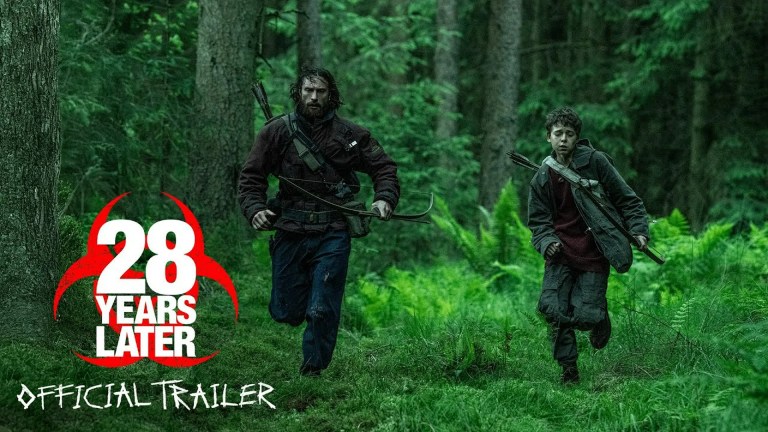
Clear out junk files and repair common Windows errorsFree Scan →Scan for outdated or missing drivers - takes under a minuteDriver Scan →28 Years Later depicts the Rage Virus changing how infected people survive, but it does not present a complete, official catalogue of variant types. The clearest distinctions are behavioral: some infected hunt in packs, sometimes under a larger, stronger Alpha; others survive by going to ground and foraging. They are living people, not undead zombies.
Are the infected in 28 Years Later zombies?
No. Director Danny Boyle has emphasized that the film’s infected are not undead corpses. In a TIME interview, he said: “We had this thing about, ‘No, they’re not zombies. They’re infected,’” adding that they “weren’t undead” and “could die.” The danger is that the virus changes living people, not that the dead return to life.
| # | Preview | Product | Price | |
|---|---|---|---|---|
| 1 |

|
28 Years Later - Blu-ray + Digital | $18.89 | Buy on Amazon |
| 2 |

|
28 Years Later: The Bone Temple - Blu-ray + Digital | $20.00 | Buy on Amazon |
| 3 |

|
28 Years Later - 4K + Blu-ray + Digital | $22.00 | Buy on Amazon |
| 4 |

|
28 Years Later - 4K + Blu-ray + Digital | $38.49 | Buy on Amazon |
| 5 |
![28 Weeks Later [Blu-Ray]](https://m.media-amazon.com/images/I/51ph8zkJRmL._SL160_.jpg)
|
28 Weeks Later [Blu-Ray] | $25.99 | Buy on Amazon |
Sony’s official film description says the infection has mutated since the Rage Virus escaped a biological weapons laboratory. That establishes change within the film’s premise, but it does not enumerate infected types.
What kinds of infected does the film describe?
The most useful way to understand the infected is through two contrasts: how they find food and what role they occupy in a hunting group. These are explanatory categories based on Boyle’s account, not an exhaustive or formally named taxonomy.
What’s actually slowing this PC down?
Pick the symptom - the matching free tool is one click away.
#1 Best Overall
- Decades after the rage virus outbreak, survivors live in isolation. When one leaves his ruthlessly quarantined island sanctuary, he uncovers haunting secrets and mutations in both the infected and the remaining humans. From director Danny Boyle and writer Alex Garland comes a bold return to the world of 28 Days Later.
| Description | What is established | How to understand it |
|---|---|---|
| Pack hunters | Boyle describes infected learning to hunt in organized packs. | A group survival behavior, rather than a separately named species. |
| Ground-foraging infected | Boyle says infected unable to hunt may go to ground and eat berries, worms, snails and insects. | An alternative survival behavior; no formal variant name is established in the interview. |
| Alphas | Boyle describes a larger, stronger infected emerging as a dominant pack leader. | A social and physical role within the infected, not evidence of a complete biological classification. |
What is an Alpha?
An Alpha is a dominant infected associated with leading a pack. Boyle describes some individuals as changed by the virus “like a steroid,” becoming larger and stronger. In a VPM/NPR interview, he puts the social pattern this way: “A dominant will emerge – an alpha will emerge out of that.” These are descriptions of the film’s fictional virus, not claims about real-world virology.
The sources do not provide a biological mechanism, a total number of Alphas, or a rule that every pack must have one. The term is best read as describing a dominant leader, rather than a fully specified subspecies.
Rank #2
- Dr. Kelson finds himself in a shocking new relationship - with consequences that could change the world as they know it - and Spike's encounter with Jimmy Crystal becomes a nightmare he can't escape. In the world of The Bone Temple, the infected are no longer the greatest threat to survival - the inhumanity of the survivors can be stranger and more terrifying.
Who is Samson?
Samson is the named Alpha encountered in the story. Netflix Tudum’s ending explainer identifies him as the massive, exceptionally strong Alpha who kills Erik and notes that Dr. Kelson calls him Samson. It also describes Samson’s pregnant partner. Samson is a specific character, not evidence that the film defines a separate Samson-type variant.
What does “going to ground” mean?
Boyle describes infected who cannot hunt surviving by going to ground and scavenging small food sources, including “berries and worms and snails and bugs.” This gives them a different survival pattern from pack hunters, but the interview does not assign them a canonical name such as “slow low.” Treat that label, if encountered elsewhere, as an interpretation rather than a confirmed official category.
Rank #3
- Decades after the rage virus outbreak, survivors live in isolation. When one leaves his ruthlessly quarantined island sanctuary, he uncovers haunting secrets and mutations in both the infected and the remaining humans. From director Danny Boyle and writer Alex Garland comes a bold return to the world of 28 Days Later.
Does 28 Years Later give a definitive number of variants?
No definitive count or complete official list is established by the film description and interviews cited here. Boyle’s comment to TIME that “The virus is alive, so it will mutate” explains the premise of change, not a numbered taxonomy. The safest summary is that the story supports distinct survival behaviors and the Alpha role, while leaving the broader range and classification of infected unspecified.
Quick Recap
Best Value
- Blu-Ray
Rank #4
- Decades after the rage virus outbreak, survivors live in isolation. When one leaves his ruthlessly quarantined island sanctuary, he uncovers haunting secrets and mutations in both the infected and the remaining humans. From director Danny Boyle and writer Alex Garland comes a bold return to the world of 28 Days Later.
Product prices and availability are accurate as of the date/time indicated and are subject to change. Any price and availability information displayed on Amazon at the time of purchase will apply.