Some television predictions are easy to dismiss as coincidence. Others are so close to technologies and institutions that later appeared in the real world that they deserve a closer look. The important distinction is between a show that literally forecast an invention and one that recognized a social direction early.
These seven examples cover both. They include handheld communicators, video calls, robotic household appliances, algorithmic surveillance, reputation scoring, bionic limbs and autonomous vehicles. None came true exactly as shown. That gap between the fictional version and the real one is often the most revealing part.

1. Star Trek: the handheld communicator
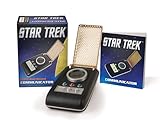
When Star Trek premiered on September 8, 1966, its crew could contact one another by opening a small handheld communicator. The device was not a mobile phone in the modern technical sense, but it presented wireless voice communication as something compact, personal and ordinary.
The closest real-world milestone came on April 3, 1973, when Motorola engineer Martin Cooper made the first handheld mobile-phone call. Cooper has often been quoted saying that the Star Trek communicator influenced him. Later accounts complicate that story: he also cited the wrist radio used by the comic-strip character Dick Tracy, and portable communication concepts existed long before the television series.
#1 Best Overall
The defensible claim is not that Star Trek invented the mobile phone. It helped popularize the idea of a small wireless communicator that a person could carry anywhere, and it may have encouraged engineers who later built one. The franchise also anticipated tablet-like computers, voice-operated systems, videoconferencing, diagnostic scanners and automatic translation. The Smithsonian has documented how several of these fictional devices later acquired recognizable modern equivalents.
What it got right: personal wireless communication became a normal part of daily life.
What remained fictional: the communicator’s effortless range, reliability and integration with a starship-wide system.
NASA’s account of Martin Cooper, the Washington Post and the Smithsonian provide useful context.
Recommended Free Tools
2. The Jetsons: video calls and household robots
The first season of The Jetsons aired on ABC from September 23, 1962, to March 17, 1963. Its characters routinely used videophones for family and business conversations. The calls took place through dedicated appliances rather than smartphones or laptops, but the social prediction was striking: seeing the person on the other end of a call would become an unremarkable part of home and workplace life.
The show did not invent the videophone. Experiments and public demonstrations had already taken place, including at the 1939 and 1964 World’s Fairs. What The Jetsons anticipated was widespread acceptance. Video calling is now built into computers, tablets and phones, and became particularly familiar through services such as Zoom, FaceTime and Google Meet.
Rosie, the family’s robot maid, represents a second prediction. Modern domestic robots are much less capable, but the basic category exists. iRobot launched the Roomba robotic vacuum in 2002, and robotic vacuums are now a recognizable counterpart to the automated household assistants shown in the cartoon.
What it got right: video communication became routine, and limited-purpose household robots became commercially viable.
What’s actually slowing this PC down?
Pick the symptom - the matching free tool is one click away.
What remained fictional: a general-purpose robot that cooks, cleans, understands context and manages a home like a human employee.
See the Smithsonian’s history of videophones and the National Air and Space Museum’s discussion of science-fiction technology.
Rank #2
3. The Simpsons: Donald Trump becomes president
In “Bart to the Future,” which originally aired on March 19, 2000, the adult Lisa Simpson is president of the United States. During a conversation about the country’s financial problems, she says she inherited a budget crunch from “President Trump.” Donald Trump was elected the 45th president on November 8, 2016, and served from January 20, 2017, to January 20, 2021.
That places the episode more than 16 years ahead of Trump’s presidency. It is one of the clearest examples of a television show naming a future president before that person held the office.
Free tools Windows power users keep installed
One-click scans. No signup required.
It was not, however, a supernatural forecast. Trump was already a nationally recognized celebrity and had publicly explored presidential politics before the episode aired. In 2000, he even pursued the Reform Party nomination. The episode used a familiar public figure as part of a satirical flash-forward, and the scenario later acquired an uncanny appearance because the unlikely outcome actually occurred.
The distinction matters because images circulating online have sometimes credited The Simpsons with predicting Trump’s death, usually showing him lying in a coffin. That scene was not part of the original aired episode and should not be treated as evidence.
What it got right: Trump eventually became president.
What it was: topical satire and extrapolation, not a statistical political forecast.
TIME’s episode analysis explains both the prediction and its context.
4. Person of Interest: surveillance systems that assess future risk
CBS premiered Person of Interest on September 22, 2011. Across five seasons and 103 episodes, the drama followed “the Machine,” a government-built system that processed surveillance-camera feeds, communications and other data to identify people connected to future violent crimes.
The Machine was more capable than any publicly documented system, but its basic premise became increasingly recognizable. Predictive-policing programs have used historical crime data, geographic information, surveillance technologies, facial or vehicle identification and algorithmic risk assessments to estimate where crime may occur or which people may be considered high risk.
The show’s relevance increased after Edward Snowden’s 2013 disclosures about extensive National Security Agency surveillance programs. A series that initially looked like a paranoid technological thriller began to resemble real arguments about mass data collection, government access and automated analysis.
Crashes, No Sound, or Screen Glitches?
Random freezes, missing sound and display glitches usually trace back to one bad driver. Find and replace yours safely.Free scan · under a minuteWindows Errors? Fix Them Before They Spread
Repair common Windows errors and clear accumulated junk for a smoother, more stable PC - no reinstall needed.Free scan · no reinstallRank #3
There is a crucial limitation. Existing predictive-policing systems do not reliably identify a specific future crime with the certainty shown on television. Their results are statistical estimates, and researchers have raised concerns about biased historical data, feedback loops, privacy and disproportionate surveillance of already over-policed communities. If a police department sends more officers to an area because an algorithm labels it high risk, the additional patrols may produce more recorded incidents there, reinforcing the original prediction.
What it got right: governments and companies would combine enormous data sets with automated surveillance and risk scoring.
What remained fictional: a machine that can identify the exact people involved in a future crime and distinguish victims from perpetrators with near certainty.
Research from the Oxford Research Encyclopedia outlines the real-world controversy surrounding predictive policing.
Quick wins for a faster PC:
Repair Windows errors before they cause bigger problemsFix Now →Scan for outdated or missing drivers - takes under a minuteDriver Scan →Clear out junk files and repair common Windows errorsFree Scan →5. Black Mirror: reputation scores controlling everyday life
“Nosedive,” the first episode of Black Mirror’s third season, was released on Netflix on October 21, 2016. Its society rates every interaction on a five-point scale. A person’s average score determines access to better housing, employment, travel and social opportunities.
The episode’s world has not appeared in precisely that form, but its underlying mechanism is familiar. Social platforms expose users to likes, ratings, reviews, follower counts and other measures of approval. These numbers influence visibility, status and commercial opportunity. A driver, seller, restaurant or freelancer may depend on a platform-generated reputation score, while ordinary users increasingly encounter pressure to present an attractive, highly approved version of their lives.
Instagram CEO Adam Mosseri said the company’s experiments with hiding public like counts had been influenced by a Black Mirror episode. Reporting identified “Nosedive” as the likely reference. That is an interesting case of fiction influencing a product decision, although Instagram’s change was much narrower than the episode’s universal rating system.
The episode’s writer Michael Schur described its setting as a “parallel present,” rather than a distant future. That may be the most accurate way to understand the story. It did not predict one government-backed score that controls every citizen. It dramatized the psychological and economic consequences of turning social approval into a visible metric.
What it got right: quantified reputation can shape behavior, opportunity and self-presentation.
What remains fictional: one universal score that governs nearly every part of a person’s life.
Rank #4

- The original Star Trek has been a pop culture phenomenon for over forty years
- The iconic Communicator inspired today's cell phones
- Replica features authentic sounds from the Star Trek series
- Features a flip-open top ; A Diamond Select Toys release
- Remove the item from the box and remove the plastic strip to use completely. Item should be taken off the 'Try me' state to listen to all sounds from the Star Trek series.**
TIME’s discussion of the episode covers its deliberately near-present setting.
6. The Six Million Dollar Man: bionic prosthetic limbs
The Six Million Dollar Man began with a 1973 television movie, followed by a weekly ABC series that ran from 1974 to 1978. Astronaut Steve Austin survived catastrophic injuries and was rebuilt with a bionic arm, two bionic legs and a bionic eye. The replacements gave him extraordinary strength, speed and vision.
Do these 3 things before closing this tab:
1Repair Windows errors before they cause bigger problems2Fix the driver behind crashes, sound loss and screen glitches3Clear out junk files and repair common Windows errorsModern prosthetic engineering has moved in the same general direction, though not to Austin’s fictional level. Powered limbs can assist movement, control multiple joints and, in some cases, provide forms of sensory feedback. DARPA’s Revolutionizing Prosthetics program helped produce the LUKE arm, an advanced electromechanical prosthesis. The first veterans received the system in 2017.
The resemblance is therefore functional rather than literal. Current bionic limbs can restore or assist selected movements, but they do not combine a natural appearance with superhuman strength, high-speed running and zoom or infrared vision. They also require careful fitting, training and maintenance, and their control remains more limited than the effortless body integration shown in the series.
What it got right: prosthetic limbs would become powered, computer-controlled and increasingly responsive.
What remained fictional: the complete, superhuman cyborg body.
The Tool Desk
Outbyte PC Repair FREEClear out junk files and repair common Windows errorsFree Scan →Outbyte Driver Updater FREEScan for outdated or missing drivers - takes under a minuteDriver Scan →DARPA’s prosthetics timeline documents the engineering progress behind modern bionic arms.
Independent reader supportYour contribution helps us test, update, and keep practical guides available for everyone.7. Knight Rider: the conversational autonomous car
NBC’s Knight Rider aired from 1982 to 1986. Its central character was KITT, a car capable of conversation, navigation, autonomous driving and independent decision-making. KITT was not merely a vehicle with cruise control; he was presented as an intelligent partner with a personality.
Some parts of that concept now exist. Waymo says fully autonomous rides are available to customers in defined service areas, including parts of San Francisco, Los Angeles and Phoenix. Passengers in those areas can take a ride without a human driver at the wheel.
That achievement should not be confused with buying a KITT-like car. The National Highway Traffic Safety Administration states that no fully automated or “self-driving” vehicle is currently available for sale in the United States. Vehicles currently sold to consumers still require the driver’s full attention for safe operation. Autonomous ride services operate within controlled geographic and operational boundaries, using vehicles and systems designed for those conditions.
Best Value

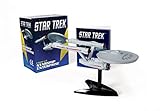
- A Diamond Select release
- Packaged together in a deluxe window box
- Each replica features working lights and sound effects taken from the original star trek series
- Use the Phaser's detachable Type 1 Phaser and the Communicator's auto-distress call for all those landing party emergencies
- Two of the most iconic and recognizable accessories used by the Enterprise crew
KITT’s general-purpose reasoning, human-like personality, unrestricted ability to drive on any road and near-indestructibility remain fictional. The accurate prediction is narrower but significant: vehicles could communicate naturally with passengers and drive without a human at the controls in limited areas.
What it got right: autonomous ride services and increasingly natural voice interaction with vehicles.
What remains fictional: an all-purpose, self-aware car that can handle every road and situation without supervision.
Waymo’s customer guidance describes where autonomous rides operate, while NHTSA explains the current limits of consumer self-driving technology.
FAQ
Did Star Trek invent the mobile phone?
No. Portable radio and telephone concepts existed earlier, and the first handheld mobile-phone call was made by Martin Cooper in 1973. Star Trek helped popularize the idea of a compact personal wireless communicator and may have influenced engineers.
Did The Jetsons invent video calling?
No. Videophone experiments and demonstrations predated the cartoon. Its more accurate prediction was that video calls would become a routine part of family and professional communication.
Did The Simpsons really predict Donald Trump’s presidency?
The 2000 episode “Bart to the Future” did show Trump as a former president, years before his 2016 election. However, Trump was already a prominent celebrity who had explored presidential politics, so the episode was satirical extrapolation rather than a precise forecast.
Are predictive-policing systems as accurate as the Machine in Person of Interest?
No. Real systems generate statistical risk estimates and do not identify future crimes with certainty. Their effectiveness is disputed, and researchers have raised concerns about bias, feedback loops, privacy and civil rights.
Are there real cars like KITT from Knight Rider?
Only in limited respects. Autonomous ride services operate in defined areas, and vehicles can respond to voice commands. No consumer vehicle currently combines KITT’s general intelligence, unrestricted autonomy, personality and near-indestructibility.
The Bottom Line
The strongest television predictions were not always the most technically exact. Star Trek captured the personal nature of mobile communication; The Jetsons understood that video calls would become mundane; Person of Interest anticipated the political consequences of automated surveillance; and Black Mirror recognized how reputation metrics could become behavioral pressure.
The future usually arrives in pieces. A fictional device may appear first as a limited commercial product, a service available only in a few cities or a technology that works while lacking the show’s reliability and intelligence. That is why the most credible examples are not claims that television predicted everything. They are demonstrations of how writers noticed a direction before the hardware, infrastructure or institutions were ready to follow it.
Quick Recap
Product prices and availability are accurate as of the date/time indicated and are subject to change. Any price and availability information displayed on Amazon at the time of purchase will apply.
Quick wins for a faster PC:
Repair Windows errors before they cause bigger problemsFix Now →Fix the driver behind crashes, sound loss and screen glitchesFind Drivers →Clear out junk files and repair common Windows errorsFree Scan →
