Quick wins for a faster PC:
Fix the driver behind crashes, sound loss and screen glitchesFind Drivers →Clear out junk files and repair common Windows errorsFree Scan →Scan for outdated or missing drivers - takes under a minuteDriver Scan →From its opening season, Stranger Things has thrived on the illusion of danger while quietly mastering the art of survival. Characters have been maimed, traumatized, and dragged to the brink, only to pull back at the last moment, reinforcing the show’s Spielbergian belief in hope and endurance. That optimism has been a strength, but as the series enters its final chapter, it risks undercutting the gravity of the war it’s been building since the Upside Down first bled into Hawkins.
Season 5 isn’t just another escalation; it’s the end of a story about growing up, about innocence colliding with irreversible change. For a finale to feel earned, victories must carry weight, and weight often comes from loss that can’t be undone by a last-minute rescue or supernatural loophole. Without real consequences, Vecna becomes just another obstacle, and the apocalypse becomes a theme park ride rather than a reckoning.


That’s why Season 5 needs to be willing to break hearts. Not for shock value, but to honor the emotional contract the show has made with its audience over nearly a decade. As we look at which characters feel narratively safest and which are walking into danger, the question isn’t who deserves to die, but whose story feels complete enough, symbolic enough, or tragic enough to make the ending resonate long after the lights in Hawkins finally go out.
How We’re Ranking the Death Odds: Narrative Arcs, Genre Tropes, and Duffer Brothers Patterns
Speculating about who might die in Stranger Things Season 5 isn’t about wish fulfillment or cheap shock predictions. It’s about reading the language of the show itself: how stories have been structured, which arcs feel like they’re reaching a natural endpoint, and how the Duffer Brothers have historically balanced peril with preservation. This ranking weighs narrative logic over popularity, and thematic resonance over raw screen time.
#1 Best Overall

- Season 1 Complete Collection – Includes all episodes from the first season
- Blu-ray and DVD Combo – Multiple viewing formats for convenience
- Collector’s Edition Packaging – Retro VHS-style box designed for display
- Bonus Collectibles Included – Features poster and themed puzzle
- Great for Fans & Collectors – Perfect gift for sci-fi and TV series enthusiasts
Narrative Completion vs. Narrative Momentum
One of the clearest indicators of danger in serialized storytelling is narrative closure. Characters whose emotional journeys feel resolved, or who have articulated a clear sense of purpose, often stand closest to the exit when a finale arrives. In Stranger Things, that can look like finally confronting long-held guilt, repairing a fractured relationship, or finding peace after years of running from trauma.
By contrast, characters still in the middle of defining who they are, especially younger ones whose arcs are tied to adulthood and identity, tend to carry more narrative momentum. The Duffers have repeatedly shown reluctance to cut short a coming-of-age story before it fully lands. When ranking survival odds, unfinished growth arcs act as a form of protection.
The Show’s Relationship With Sacrifice
Stranger Things doesn’t kill indiscriminately, but it does believe in sacrifice as a storytelling device. Bob Newby, Alexei, and Eddie Munson weren’t random casualties; they were characters whose deaths reinforced the season’s themes and reshaped the emotional landscape for those left behind. Each loss served a purpose beyond shock, often crystallizing the cost of heroism or the cruelty of the Upside Down.
Season 5 raises the stakes by placing long-standing characters into that same sacrificial framework. The question isn’t whether the show will kill someone important, but whether a death would function as emotional punctuation rather than narrative derailment. Characters positioned as protectors, mentors, or emotional anchors are often the ones the story asks the most of in the end.
Genre Tropes the Duffers Rarely Ignore
As avid students of ’80s genre cinema, the Duffer Brothers embrace tropes even as they remix them. The selfless guardian, the redeemed loner, the soldier who knows too much, the psychic whose power comes at a cost, these archetypes carry expectations, and finales tend to fulfill them rather than subvert them entirely. Season 5, as the ultimate genre payoff, is likely to lean into that tradition.
At the same time, Stranger Things has consistently protected its core ensemble of kids more than genre precedent might suggest. That pattern matters. When ranking death odds, characters who exist slightly outside the original nucleus, or who have gradually shifted into more archetypal roles, statistically face greater risk.
Emotional Fallout as a Storytelling Tool
Finally, every potential death is evaluated by what it would do to the survivors. The Duffers prioritize aftermath as much as the act itself, using grief to propel character development rather than closing the book on it. A loss that meaningfully alters the trajectory of multiple characters carries more narrative weight than one that exists in isolation.
That lens helps separate genuine danger from performative peril. If a character’s death would fundamentally change how Hawkins, or the core group, moves forward into the final moments of the story, their odds increase. Season 5 isn’t just about who survives the Upside Down, but who has to live with what it takes to end it.
Free tools Windows power users keep installed
One-click scans. No signup required.
Rank #6 (Safest): Will Byers — The Emotional Survivor Who May Finally Break Free
If Stranger Things were a traditional horror series, Will Byers would have been its most obvious early casualty. Instead, he became its emotional barometer, the character through whom the audience experiences fear, vulnerability, and the long-term cost of supernatural trauma. That positioning has only strengthened his survival odds heading into the final season.
Will has already endured what most genre narratives would reserve for a fatal arc. Abduction, possession, lingering psychic scars, and years of emotional isolation have defined his journey, making another round of suffering feel redundant rather than revelatory. From a storytelling perspective, killing Will now would read less like tragic inevitability and more like emotional overkill.
Too Central to the Show’s Emotional Resolution
More than any other character, Will embodies the unresolved heart of Stranger Things. His connection to the Upside Down isn’t just supernatural, it’s thematic, representing the way trauma refuses to stay buried. Season 5 isn’t just about defeating a villain; it’s about healing, and Will remains essential to that process.
His survival allows the series to complete an arc that began in episode one. The boy who vanished into the dark deserves to step fully back into the light, not be consumed by it. That kind of closure carries more emotional resonance than martyrdom.
Recommended Free Tools
A Character Defined by Endurance, Not Sacrifice
Unlike characters framed as protectors or warriors, Will has never been positioned as someone destined to die for others. His strength has always been quieter: empathy, sensitivity, and an ability to endure when the world refuses to make space for him. Stranger Things has consistently rewarded those traits with survival rather than punishment.
Season 5 appears poised to let Will finally articulate who he is, both to others and to himself. Cutting that journey short would undermine years of careful character work and sidestep the show’s broader themes of acceptance and belonging.
Thematic Freedom as His True Endgame
If Will faces danger in the final season, it’s likely symbolic rather than fatal. His lingering psychic connection makes him a narrative conduit, but not necessarily a sacrifice. The more meaningful payoff is separation, not death, a final breaking of ties with the Upside Down that has haunted him since childhood.
In a series built on nostalgia and emotional continuity, Will Byers surviving feels less like safety and more like intention. Stranger Things doesn’t need his death to prove the stakes. It needs his freedom to prove the story was worth telling.
Rank #2

- Printed in the U.S.A. with Eco-Friendly Inks
- Stranger Things
- Fifth Sun
Rank #5: Dustin Henderson — Fan Favorite, Narrative Glue, and the High Cost of Heartbreak
Dustin Henderson sits in a precarious narrative position going into Season 5. He’s beloved, deeply integrated into every major character cluster, and functions as the show’s emotional connective tissue. That combination makes him feel relatively safe, but also dangerously potent if the writers ever wanted to make a point about loss.
Killing Dustin wouldn’t just hurt. It would ripple outward, destabilizing nearly every relationship that defines Stranger Things.
The Beating Heart of the Ensemble
More than any other member of the original party, Dustin bridges worlds. He connects the kids to the teens, grounds the adults through Steve, and translates high-concept sci-fi into human terms with humor and curiosity. Removing him would create a vacuum the show would struggle to fill, especially in a final season that needs cohesion.
Narratively, that makes him valuable alive. Stranger Things thrives on group dynamics, and Dustin is often the glue that keeps scenes buoyant rather than bleak.
Comedy as Emotional Armor
Dustin’s role as comic relief has never meant he lacks depth. In fact, the show has repeatedly used humor as a shield for trauma, and Dustin has absorbed more than his share. The loss of Eddie Munson marked a turning point, forcing him to confront guilt, grief, and the cost of surviving when others don’t.
Season 5 could continue exploring that weight. Letting Dustin live with it aligns more closely with the show’s emotional language than ending his story in tragedy.
The Steve Harrington Factor
Any discussion of Dustin’s mortality inevitably circles back to Steve. Their relationship is one of the show’s most organic evolutions, transforming a high school archetype into something tender and meaningful. Killing Dustin would retroactively darken that arc, reframing Steve’s growth as preparation for failure rather than found family.
Stranger Things tends to reward relationships that grow unexpectedly. Preserving Dustin keeps that ethos intact.
The Tool Desk
Outbyte Driver Updater FREEScan for outdated or missing drivers - takes under a minuteDriver Scan →Outbyte PC Repair FREEClear out junk files and repair common Windows errorsFree Scan →Too Cruel for the Kind of Show This Is
While the series has proven it’s willing to kill beloved characters, it typically does so when their arcs are complete or when their deaths reinforce a larger theme. Dustin’s story still feels open-ended, defined by curiosity and emotional maturation rather than sacrifice. His death would feel less like narrative necessity and more like emotional punishment.
That doesn’t mean he’s immune to danger. It means the cost of losing him may outweigh the storytelling benefits.
High Stakes, Low Odds
At Rank #5, Dustin occupies the space between vulnerability and protection. He will almost certainly be placed in peril, perhaps even forced to confront the consequences of his intellect and bravery. But odds are, the show needs him standing at the end, wounded but wiser, to help carry the emotional resolution home.
Stranger Things knows how much heartbreak its audience can take. Losing Dustin might be one loss too far.
Do these 3 things before closing this tab:
1Clear out junk files and repair common Windows errors2Scan for outdated or missing drivers - takes under a minute3Repair Windows errors before they cause bigger problemsRank #4: Steve Harrington — The Classic Redemption Arc That Screams Final Sacrifice
If Dustin represents the heart the show protects, Steve Harrington increasingly feels like the shield it’s willing to break. His arc has quietly shifted from redemption to guardianship, a role that historically comes with a heavy price in genre storytelling. Season 5 may finally ask whether Steve’s growth ends with a future, or with a choice.
From Archetype to Emotional Anchor
Steve began as a familiar ’80s cliché: the popular jock with a cruel streak and a fragile ego. Over four seasons, he’s become something far rarer in genre TV, a male character allowed to evolve without irony or regression. He learns accountability, vulnerability, and selflessness, often at personal cost.
That journey feels complete in a way that’s both satisfying and dangerous. Characters whose growth arcs resolve early are often repositioned as sacrificial pillars, stabilizing the narrative before it collapses into chaos.
The Protector Pattern
Steve’s defining trait is no longer charm or bravado, but protection. He runs toward danger so others don’t have to, whether that’s babysitting the kids, charging demobats, or physically placing himself between his friends and death. Season 4 doubled down on this instinct, leaving him battered, poisoned, and emotionally exposed.
Windows Errors? Fix Them Before They Spread
Repair common Windows errors and clear accumulated junk for a smoother, more stable PC - no reinstall needed.Free scan · no reinstallOutdated Drivers Are Slowing You Down
One free scan finds every outdated or missing driver and matches the right update for your exact hardware.Free scan · exact hardware matchRank #3
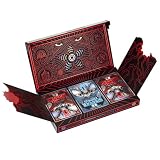
- WELCOME TO THE UPSIDE DOWN – Bring Hawkins energy to every shuffle with a Stranger Things playing card box set made for poker nights, blackjack, solitaire, magic practice, cardistry, party games, display, and gifting. A bold choice for fans who want cards with real story and atmosphere.
- THREE DECK COLLECTOR SET – This box set includes three themed playing card decks, including the blue holographic foil Upside Down Special Edition. It gives fans more than a single deck, making it stronger for display, collecting, gift baskets, game night, and fan collections.
- VHS-STYLE DISPLAY BOX – Housed in a nostalgic VHS-style box with red and holographic silver foil details and embossed accents, this set feels pulled straight from the world of Hawkins. It stands out on a shelf, desk, collector case, coffee table, or game room display.
- STRANGER THINGS ARTWORK – Featuring characters, moments, and supernatural atmosphere from the Stranger Things universe, this set brings more personality than ordinary playing cards. Great for fans of Hawkins, the Upside Down, Eleven, Demogorgon stories, and retro sci-fi horror.
- READY FOR PLAY, MAGIC & GIFTS – Use the decks for poker, rummy, blackjack, solitaire, beginner magic tricks, card flourishes, cardistry practice, family game night, travel entertainment, party games, collector shelves, birthdays, holidays, stocking stuffers, and fan gifts.
Television rarely hands a character that many near-death experiences without building toward something final. Each survival feels less like plot armor and more like narrative foreshadowing.
Love, Loss, and the Unfinished Future
Steve’s romantic limbo is telling. While other characters move toward defined futures, Steve remains suspended between who he was and who he wants to be. His dreams of a large family feel almost too pure for the world Stranger Things inhabits now.
That kind of unfulfilled hope is often weaponized in finales. Losing Steve would hurt precisely because it denies him the life he’s finally ready for, reinforcing the show’s recurring theme that not everyone gets to see the future they imagine.
The Dustin Variable
Steve’s bond with Dustin complicates the math. As established earlier, killing Dustin would fracture the show’s emotional core. Killing Steve, however, could preserve that relationship while transforming it into legacy.
What’s actually slowing this PC down?
Pick the symptom - the matching free tool is one click away.
Steve’s death would echo forward, shaping Dustin’s adulthood, bravery, and sense of responsibility. It’s a tragic but narratively efficient way to pass the torch without erasing the relationship’s meaning.
High Risk, Not Inevitable
At Rank #4, Steve sits in the danger zone, beloved enough to matter, complete enough to lose. His death would feel earned rather than gratuitous, a final act of protection consistent with everything he’s become.
Still, Stranger Things understands the power of letting a hero live. Steve’s odds aren’t grim, but they’re far from safe. If Season 5 needs a loss that devastates without breaking the show’s soul, Steve Harrington may be standing exactly where the story needs him to fall.
Rank #3: Nancy Wheeler — Leadership, Guilt, and the Tragic Heroine Trajectory
If Steve represents protection, Nancy represents responsibility. She’s the one who gathers the facts, connects the dots, and makes the call when hesitation could cost lives. As the show has escalated, Nancy has quietly become one of Stranger Things’ most reliable leaders, and that evolution carries a dangerous narrative price.
Nancy’s growth has been steady and deliberate, pushing her from determined investigator to frontline decision-maker. By Season 4, she’s no longer reacting to horror but anticipating it, often placing herself directly in harm’s way. Characters who step into that role rarely get to step back out unchanged.
The Weight of Survivor’s Guilt
Nancy has carried guilt longer than almost anyone on the show. Barb’s death didn’t just motivate her; it reshaped her entire worldview, instilling a belief that inaction is a moral failure. Every choice Nancy makes feels haunted by the idea that she has to be braver, smarter, and faster than she was before.
Season 4 amplifies that burden. Nancy is repeatedly confronted with visions of death, responsibility, and inevitability, blurring the line between foresight and fatalism. When a character starts internalizing the idea that sacrifice may be necessary, the story often listens.
The Tragic Heroine Pattern
Stranger Things has always flirted with classic tragedy, and Nancy fits that mold disturbingly well. She’s capable, principled, and emotionally isolated by the very clarity that makes her effective. Her leadership doesn’t inspire comfort; it demands hard choices, often at her own expense.
Television finales frequently turn characters like Nancy into symbols rather than survivors. A self-sacrificial death wouldn’t just be shocking, it would crystallize her role as the one who saw the truth and paid the price for acting on it. That kind of ending lingers in a way survival sometimes can’t.
Love Triangles and Narrative Resolution
Nancy’s unresolved romantic tension adds another layer of risk. Her connection to both Steve and Jonathan represents two possible futures, neither fully claimed. That emotional limbo mirrors her broader arc: always moving forward, never settling into safety.
Stories often resolve complicated triangles through choice or loss. Removing Nancy from the equation would freeze those relationships in meaning rather than logistics, allowing her influence to shape others without requiring a neat, conventional ending. It’s a harsh solution, but one serialized dramas use when emotional symmetry matters more than comfort.
Essential, But Exposed
At Rank #3, Nancy occupies a precarious space. She’s central enough that her death would devastate the group, yet structurally complete enough that the story could survive it. Her leadership has already reshaped the narrative; losing her would force others to grow into the void she leaves behind.
Rank #4
Nancy Wheeler doesn’t feel doomed, but she does feel narratively vulnerable. When a character embodies truth, accountability, and sacrifice this fully, the question isn’t whether the story needs her, but whether it’s brave enough to let her live.
Rank #2: Eleven — The Living Weapon Whose Power Comes at a Price
If Nancy represents hard-earned truth, Eleven embodies raw consequence. From the very beginning, Stranger Things has framed her power as both miracle and curse, a force that solves problems while quietly demanding payment. As the series moves toward its endgame, that balance feels increasingly unstable.
Eleven isn’t just a character; she’s the axis the entire mythology turns on. That centrality is precisely what makes her vulnerable. When a story invests this much meaning into one person, it inevitably flirts with the idea that only a final, irreversible act can resolve it.
Power That Always Extracts a Toll
Every major victory Eleven has delivered has come with visible cost: physical collapse, emotional isolation, or the loss of control over her own life. Her abilities are never free; they drain her, fracture her, and leave her dependent on others to survive the aftermath. Season 5 doesn’t need to invent new rules to endanger her, it only needs to push the existing ones to their logical extreme.
What’s actually slowing this PC down?
Pick the symptom - the matching free tool is one click away.
Narratively, that makes her the most plausible candidate for a sacrificial climax. When power has been treated like borrowed time for four seasons, the idea that it eventually runs out feels less like shock and more like structure.
The Weapon Versus the Girl
Eleven’s defining conflict has never been the monsters. It’s the tension between who she is and what the world keeps demanding she be. The lab, the government, and even the people who love her often frame her value in terms of usefulness rather than humanity.
Final seasons love forcing that question into a breaking point. Does Eleven get to exist beyond her power, or does she spend what’s left of herself to end the threat forever? A story this thematically consistent may not allow her to have both.
Found Family and the Cost of Protection
Hopper’s role in Eleven’s life complicates her odds. He represents the future she was never supposed to have: safety, rules, and unconditional love. But protective relationships in genre finales often raise the stakes rather than lower them.
Eleven has repeatedly shown a willingness to suffer so others don’t have to. If the choice becomes protecting her family versus preserving herself, the show’s emotional language suggests she already knows which one she’d make.
A Symbol Too Big to Ignore
At Rank #2, Eleven sits just below the most likely casualty, but far above narrative safety. Her survival would signal a hopeful thesis about healing and autonomy. Her death would transform her into the ultimate symbol of resistance, a living weapon who chose to be human one last time.
Stranger Things doesn’t need to kill Eleven to be powerful. But if it does, the groundwork has been laid with unsettling care.
Independent reader supportYour contribution helps us test, update, and keep practical guides available for everyone.Rank #1 (Most Likely to Die): Max Mayfield — Between Life, Death, and the Upside Down
If Stranger Things has been quietly preparing the audience for a loss that feels both devastating and inevitable, Max Mayfield stands at the center of that design. Unlike shock deaths meant to jolt the viewer, Max’s danger has been slow, thematic, and emotionally explicit. Season 5 doesn’t need to put her in new peril; it only needs to decide whether the story believes she can come back from what she’s already endured.
Free tools Windows power users keep installed
One-click scans. No signup required.
Her status is more than physical injury. Max exists in a narrative limbo that feels intentional, a space between life, death, and the psychic echo of the Upside Down that the show has never explored this deeply before.
Suspended Between Worlds
Max’s condition places her in an unresolved state that genre storytelling rarely leaves untouched. Characters who linger between realms often become symbols rather than survivors, vessels through which larger forces resolve themselves. In Stranger Things, the Upside Down has always demanded balance, and Max may be the toll already paid but not yet collected.
Her connection to Vecna was personal, invasive, and incomplete. That unfinished link suggests her fate isn’t just medical, but metaphysical, tied to how the final conflict closes rather than whether her body heals.
Trauma Without a Clean Escape
Max’s arc has been one of grief without shortcuts. She didn’t conquer her depression; she learned to live inside it, a distinction the show treated with rare sincerity. Allowing her to simply wake up, recover, and move on risks undermining the weight Stranger Things placed on mental health as something that leaves scars.
Do these 3 things before closing this tab:
1Repair Windows errors before they cause bigger problems2Scan for outdated or missing drivers - takes under a minute3Clear out junk files and repair common Windows errorsBest Value
There’s also the uncomfortable truth that Max has already said goodbye. Letters written, emotions resolved, distance made with intention. Narratively, those are often the signs of a character preparing the audience for absence, not return.
The Emotional Epicenter Problem
From a structural standpoint, Max sits at the emotional crossroads of multiple characters. Lucas’s growth, Eleven’s guilt, and the group’s shared trauma all orbit her condition. Final seasons often crystallize pain into a single, irreversible moment, and Max’s loss would ripple outward with devastating efficiency.
Importantly, her death wouldn’t feel random or cruel. It would feel mournful, tragic, and purposeful, the kind of loss that defines an ending rather than cheapens it.
A Mercy, Not a Punishment
If Max dies, it likely won’t be framed as punishment or failure. Stranger Things has consistently treated her with empathy, and any final choice would likely lean toward release rather than cruelty. In a story obsessed with memory, pain, and the cost of survival, letting Max rest may be the hardest, and most honest, resolution the show can offer.
That’s what makes her the most vulnerable character heading into Season 5. Not because she’s weak, but because her story already feels complete in a way that makes survival feel like the harder narrative sell.
What These Possible Deaths Mean for the Series Finale: Themes of Growth, Sacrifice, and Letting Go
If Season 5 does claim lives, it won’t be about raising the body count. Stranger Things has never treated death as spectacle; it uses loss as punctuation, marking the moments where childhood ends and something heavier takes its place. Any final-season casualties would exist to complete arcs, not shock audiences into silence.
More than anything, these potential deaths would clarify what the show has been building toward since Episode 1: growing up means surviving things you shouldn’t have had to face, and sometimes surviving isn’t the same as winning.
Growth Through Loss, Not Victory
The kids of Hawkins have spent four seasons fighting monsters with bikes, walkie-talkies, and bravado. Season 5 is where that innocence finally collapses under consequence. Losing someone permanent would cement the transition from adventure story to coming-of-age tragedy, underscoring that bravery doesn’t always earn a clean reward.
This kind of growth aligns with the show’s most honest moments, where courage is defined not by triumph, but by endurance. The survivors don’t become heroes because they saved the world; they become adults because they learned how to carry what the world took from them.
Sacrifice as Choice, Not Punishment
Stranger Things has always been careful about how it frames death. Its most impactful losses are chosen, not inflicted, shaped by agency rather than inevitability. A final sacrifice in Season 5 would likely follow that pattern, transforming death into an act of protection rather than defeat.
This distinction matters. When a character chooses to stay behind, to hold the line, or to give something up so others can escape, the show reframes loss as love in action. That’s the emotional language Stranger Things speaks fluently, especially at its most devastating.
Letting Go of Childhood, and of Hawkins
The series began as a love letter to small-town childhood, but it has slowly become a story about outgrowing the places that made you. Hawkins itself now feels unsalvageable, scarred beyond repair, mirroring the characters who can’t return to who they were before the Upside Down broke through.
Crashes, No Sound, or Screen Glitches?
Random freezes, missing sound and display glitches usually trace back to one bad driver. Find and replace yours safely.Free scan · under a minutePC Slower Than It Used to Be?
A free scan shows the junk files, broken settings and background clutter dragging Windows down - then fixes them in one click.Free scan · Windows 10 & 11Deaths in the finale would symbolize that final severing. You don’t just leave childhood behind; you mourn it. Stranger Things understands that letting go is rarely clean, and often comes with grief you carry long after the danger is gone.
Why Survival Still Matters
Importantly, the possibility of death gives survival its weight. Characters who make it out alive don’t do so untouched; they carry responsibility, memory, and absence forward. That emotional residue is the true ending, not the final battle or the last shot of the Upside Down.
In that sense, Season 5 doesn’t need to be merciless to be meaningful. It just needs to be honest about what survival costs.
As Stranger Things approaches its endgame, the question isn’t who dies, but why. Any losses the show chooses to make will be in service of closure, not cruelty, reinforcing its central truth: growing up means learning when to fight, when to sacrifice, and when to finally let go.
The Tool Desk
Outbyte PC Repair FREERepair Windows errors before they cause bigger problemsFix Now →Outbyte Driver Updater FREEScan for outdated or missing drivers - takes under a minuteDriver Scan →Quick Recap
Product prices and availability are accurate as of the date/time indicated and are subject to change. Any price and availability information displayed on Amazon at the time of purchase will apply.




