Recommended Free Tools
The 2026 Oscars race is taking shape in an industry still recalibrating after years of disruption, consolidation, and creative realignment. Studios are cautiously returning to prestige-first strategies, while filmmakers are once again embracing theatrical-first releases as both a financial and awards-season signal. That tension between commercial recovery and artistic credibility is already defining which films are being positioned as serious contenders.
Early narratives point to an Academy increasingly comfortable with international voices, genre-bending storytelling, and filmmakers who straddle the line between art-house respectability and mainstream appeal. Recent voting trends suggest a body that values ambition and cultural relevance over traditional Oscar bait, especially as its membership grows younger and more globally diverse. At the same time, there remains a clear appetite for emotionally accessible films that feel urgent without being alienating.
Campaigns are also evolving, with studios leaning heavily on festival momentum, curated critics’ screenings, and long-tail word of mouth rather than brute-force marketing. Performances that spark conversation, films that reflect contemporary anxieties, and projects that signal “importance” without self-seriousness are emerging as early favorites. With that landscape in mind, forecasting the likely winners means reading not just the films themselves, but the mood of an Academy deciding what kind of Oscars it wants to be in 2026.
Best Picture: The Films Defining the Year and the Likeliest Consensus Winner
If any category reflects the Academy’s evolving identity, it is Best Picture. The 2026 race already feels less about a single, towering juggernaut and more about a cluster of films that speak to different branches of the voting body. What unites the early contenders is a shared sense of scale and seriousness, whether through ambitious filmmaking, cultural relevance, or emotional immediacy.
#1 Best Overall

- Breathtaking picture: Sharp 4K brings out rich detail on our 55" flat screen TV, while the QLED screen and HDR10 create bright, accurate colors. Roku Smart Picture cleans up incoming TV signals, optimizes them, and chooses the right picture mode.
- Seamless streaming: With fast Wi-Fi and apps that launch in a snap, Roku Select Series TVs get you to your entertainment quickly. You get excellent picture quality, clear sound, automatic updates, and more. It’s simple to use. Hard to outgrow.
- TV, simplified: With setup that only takes minutes, a simple-to-navigate Home Screen, and an uncluttered remote control that does all you need—Roku makes it easier to watch the TV you love.
- A world of free entertainment: Enjoy a huge selection of free live TV, news, sports, movies, shows, and much more—all just a click away.
- More streaming, less searching: With personalized picks right on your Home Screen, quick access to the sports and entertainment you watch most, and fast and easy search in one place—the days of endless scrolling are over.
Festival premieres and early industry screenings have clarified one thing: this is a year where craft, thematic weight, and accessibility are intersecting more cleanly than they have in recent seasons. The likely winner will not just be admired, but broadly liked, a film that plays equally well to directors, actors, and the increasingly international membership.
The Prestige Frontrunners
At the center of the conversation is Terrence Malick’s long-gestating The Way of the Wind, which has emerged as both an artistic event and an unexpected crowd-pleaser. Early reactions suggest a more emotionally legible Malick, blending spiritual inquiry with a narrative clarity that has historically eluded some voters. The Academy has often rewarded late-career auteurs when accessibility finally meets ambition, and this feels like that moment.
Close behind is Steve McQueen’s Blitz, a sweeping World War II drama anchored by human-scale storytelling rather than spectacle. The Academy’s enduring affection for historical narratives, combined with McQueen’s established prestige and the film’s strong ensemble performances, positions it as a formidable alternative, especially with older and international voters.
Bold, Contemporary Challengers
On the more contemporary side, Sean Baker’s Anora has surged from indie darling to serious Best Picture threat. Its mix of social realism, dark humor, and electric performances aligns neatly with recent winners that feel modern without being niche. The film’s strong showing with critics’ groups could translate into broad preferential-ballot support.
Quick wins for a faster PC:
Fix the driver behind crashes, sound loss and screen glitchesFind Drivers →Clear out junk files and repair common Windows errorsFree Scan →Scan for outdated or missing drivers - takes under a minuteDriver Scan →Meanwhile, Denis Villeneuve’s Dune: Messiah, assuming a late-year release as expected, represents the high-end studio epic option. If it delivers the emotional payoff many anticipate, it could benefit from the same craft-driven enthusiasm that propelled its predecessor, while appealing to voters eager to reward blockbuster filmmaking done with artistic rigor.
The Likeliest Consensus Winner
As the race currently stands, The Way of the Wind appears best positioned to emerge as the consensus choice. It checks multiple Academy boxes at once: visionary direction, philosophical depth, undeniable craft, and a narrative framing that invites rather than challenges viewers. Crucially, it feels like a film voters would be proud to rally behind as a statement of what cinema can be in 2026.
That does not make it inevitable. Best Picture races are often decided by momentum shifts, guild alignment, and the preferential ballot’s tendency to reward the least polarizing option. But in a year defined by recalibration and reflection, the Academy may be inclined to crown a film that embodies both artistic ambition and communal resonance, and right now, no contender does that more convincingly.
Best Director: Vision, Prestige, and the Academy’s Auteur Bias
Best Director is where the Academy most openly indulges its auteur instincts. While Best Picture often rewards consensus and accessibility, this category routinely favors singular vision, technical command, and filmmakers whose style feels unmistakably their own. It is also the branch most resistant to sentimentality, privileging ambition over likability and difficulty over comfort.
Outdated Drivers Are Slowing You Down
One free scan finds every outdated or missing driver and matches the right update for your exact hardware.Free scan · exact hardware matchWindows Errors? Fix Them Before They Spread
Repair common Windows errors and clear accumulated junk for a smoother, more stable PC - no reinstall needed.Free scan · no reinstallThis year’s race mirrors that tension perfectly, with visionary veterans, prestige craftsmen, and one insurgent indie voice all vying for dominance. The question is not who made the most popular film, but who the directors’ branch believes best represents the art of filmmaking in 2026.
The Visionary Frontrunner
Terrence Malick stands as the clearest embodiment of the Academy’s auteur bias with The Way of the Wind. Even by his standards, the film’s meditative scope, spiritual ambition, and radical visual language mark it as a career-capping statement rather than a conventional awards play. Directors tend to reward precisely this kind of uncompromising authorship, particularly when it arrives late in a filmmaker’s career.
Malick has never won Best Director, a fact that quietly strengthens his case. The branch has a long history of honoring overdue masters when the work feels both monumental and unmistakably personal, and The Way of the Wind fits that lineage almost too cleanly.
Prestige Craft and Controlled Power
Steve McQueen’s Blitz represents the more classical prestige alternative. His direction is disciplined, emotionally precise, and rooted in performance and historical texture rather than overt formal experimentation. That restraint plays well with voters who value command and seriousness over aesthetic maximalism.
Do these 3 things before closing this tab:
1Clear out junk files and repair common Windows errors2Scan for outdated or missing drivers - takes under a minute3Repair Windows errors before they cause bigger problemsHowever, McQueen’s style, while respected, may lack the sense of directorial event that often defines winners in this category. Blitz feels more like a masterfully executed film than a manifesto, which could leave it just short in a year dominated by bigger artistic swings.
The Epic Technician and the Indie Provocateur
Denis Villeneuve remains a formidable presence if Dune: Messiah lands as expected. The directors’ branch has steadily warmed to large-scale studio filmmaking that bears an auteur stamp, and Villeneuve’s control of scale, tone, and world-building is undeniable. If the film delivers a more emotionally resonant arc than its predecessor, his case strengthens considerably.
Sean Baker, meanwhile, represents the category’s wildcard. Anora showcases his signature blend of intimacy, social observation, and kinetic energy, and directors admire filmmakers who extract power from modest means. Still, Baker’s work traditionally fares better with critics than with Oscar voters, and breaking through here would require an unusually strong late-season surge.
The Most Likely Outcome
As it stands, Best Director appears primed to reward singular vision over consensus appeal. While Villeneuve and McQueen remain viable, and Baker embodies the category’s progressive edge, this feels like the Academy’s moment to anoint Malick as a defining artist of modern cinema.
Rank #2
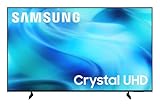
- CRYSTAL PROCESSOR: Powerful processor enhances colors and sharpens details for a vibrant 4K viewing experience. Experience every shade of color as it was meant to be seen in dazzling 4K. Plus, make your movies, TV shows, games and sports look even better with powerful 4K upscaling.
- ENDLESS FREE CONTENT: Watch 2,700+ free streaming options, including 750+ subscription-free channels on Samsung TV Plus. Enjoy news, sports, movies, kids' shows and reality TV — all without a subscription. Discover endless entertainment with new content added regularly, tailored to your mood and interests.*
- MOTION XCELERATOR: Experience clear picture and smooth motion in games and sports. Enjoy smooth motion and clear visuals with technology that estimates and adjusts frame transitions in real time. Whether gaming or watching sports, enjoy up to 4K 60Hz performance that brings every play, move and scene to life with realistic clarity and motion.
- COLOR BOOSTER: Supercharge your color. From fiery reds to sparkling blues, make every color come to life with intensity. Color Booster transforms your content into a visual masterpiece.
- 4K UPSCALING: Upgrades what you watch to crisp 4K clarity. Upgrade your favorite shows, movies and more. Experience incredible details and clarity in every frame, even from lower-quality sources, with advanced upscaling technology.
If Best Picture reflects collective taste, Best Director often reflects aspiration. In 2026, that aspiration looks meditative, spiritual, and defiantly personal, and no nominee embodies those qualities more completely than Terrence Malick.
Acting Races Breakdown: Best Actor and Best Actress Frontrunners, Spoilers, and Career Narratives
If Best Director often rewards aspiration, the acting categories reward timing, narrative, and emotional access. The 2026 acting races are already shaping up as a clash between overdue veterans, carefully curated prestige performances, and one or two breakout turns that could disrupt the entire field.
Both Best Actor and Best Actress feel unusually fluid at this stage, with no single consensus frontrunner but several performances positioned to peak at exactly the right moment in the season.
Best Actor: The Weight of Legacy Versus the Power of Transformation
The early gravitational center of Best Actor sits with Leonardo DiCaprio, whose performance in Paul Thomas Anderson’s One Battle After Another is already being framed as a return to the volatile, character-driven work that defined his pre-Oscar era. Academy voters remain deeply receptive to DiCaprio when he pairs intensity with psychological complexity, and Anderson’s direction offers exactly the kind of actor-centric showcase that thrives with the acting branch.
The Tool Desk
Outbyte Driver Updater FREEFix the driver behind crashes, sound loss and screen glitchesFind Drivers →Outbyte PC Repair FREEClear out junk files and repair common Windows errorsFree Scan →If the film lands as a major Best Picture contender, DiCaprio’s path becomes extremely clear. His advantage lies not in being overdue, but in reminding voters why he was once considered the defining movie star of his generation.
Close behind is Colman Domingo, whose continued ascent makes him one of the most respected actors in the industry right now. His rumored leading role in a socially charged historical drama positions him squarely in the Academy’s comfort zone: commanding, articulate, and emotionally calibrated. After recent nominations, a win would feel less like a surprise and more like a culmination.
Then there is the transformation factor. Joaquin Phoenix, in Todd Haynes’ psychological drama, is expected to deliver another unsettling, interior performance that critics adore. Phoenix is always dangerous in this category, though voters sometimes hesitate to reward repeat winners unless the performance feels culturally unavoidable.
The Spoilers: Youth, Genre, and the Unexpected Turn
The spoiler lane could belong to Paul Mescal, whose carefully chosen roles continue to build toward a major industry moment. If his upcoming period film connects emotionally, Mescal could benefit from a narrative the Academy increasingly embraces: rewarding the next generation before they become inevitable.
Free tools Windows power users keep installed
One-click scans. No signup required.
There is also quiet curiosity around genre-adjacent performances breaking through. If a science-fiction or thriller performance carries enough emotional gravitas, the Academy has shown a growing willingness to look past traditional boundaries, especially when the actor anchors the film’s prestige ambitions.
Best Actress: A Category Defined by Precision and Perspective
Best Actress, as usual, feels more tightly curated and more sensitive to cultural context. The early conversation centers on Saoirse Ronan, whose lead role in an intimate literary adaptation is being described as controlled, devastating, and technically immaculate. Ronan remains one of the Academy’s most admired performers without a win, and that narrative alone gives her a formidable edge.
Her greatest asset is consistency. Voters trust her taste, her restraint, and her ability to elevate refined material into something emotionally piercing.
Equally compelling is Emma Stone, whose post-Oscar career choices have only sharpened her standing within the industry. Her latest collaboration with an auteur filmmaker offers a performance that blends risk, vulnerability, and formal experimentation. While Stone already has a win, the Academy has shown a willingness to reward actors who redefine themselves after initial success.
Breakouts, Comebacks, and Career Chapters Closing
The wildcard energy in Best Actress comes from performers reasserting themselves. A veteran actress returning with a late-career performance in a prestige drama could easily dominate the narrative if the role feels like a summation of decades of work. The Academy consistently responds to performances framed as emotional farewells or artistic reckonings.
Meanwhile, a breakout contender from the festival circuit cannot be discounted. If a Cannes or Venice premiere delivers a revelation performance anchored in realism and emotional specificity, critics’ groups could elevate that actor into serious contention before the studios fully mobilize.
Where the Momentum Currently Points
At this stage, Best Actor appears tilted toward a high-profile collaboration between star and auteur, with DiCaprio holding the clearest line to industry-wide consensus if the film fulfills expectations. Best Actress feels more narrative-driven, with Ronan slightly ahead due to timing, material, and the persistent sense that her Oscar moment has been patiently waiting.
Still, acting races are the most volatile categories in any Oscar season. All it takes is one perfectly timed speech, one devastating scene that becomes impossible to forget, or one campaign that reframes a performance as essential viewing, and the entire race can shift overnight.
What’s actually slowing this PC down?
Pick the symptom - the matching free tool is one click away.
Rank #3

- 4k Ultra HD (2160p resolution): Enjoy breathtaking HDR10 4K movies and TV shows at 4 times the resolution of Full HD, and upscale your current content to Ultra HD-level picture quality.
- High Dynamic Range: Provides a wide range of color details and sharper contrast, from the brightest whites to the deepest blacks.
- All-in-one: Get right to your good stuff. With Fire TV, you can enjoy a world of entertainment from apps like Prime Video, Netflix, Disney+, Hulu, and HBO Max. Plus, stream for free with Fire TV Channels, Pluto TV, Tubi, and more. Access over 1.8 million movies and TV episodes. Subscriptions may be required. Feature and content availability may vary.
- Smart Home: Your smart home hub. Pair Fire TV with compatible smart home devices to see live camera feeds, use AirPlay, control your lighting and thermostat, and more.
- Free Content: Stream for free. Access over 1 million free movies and TV episodes from popular ad-supported streaming apps like Fire TV Channels, Tubi, and Pluto TV. Subscriptions may be required. Feature and content availability may vary.
Supporting Performances: Scene-Stealers, Sweeps, and the Power of Screen Time
If lead acting races are built on sustained presence and narrative arcs, the supporting categories thrive on impact. These are the performances that dominate conversations after screenings, fuel viral clips, and often become shorthand for a film’s emotional core. Historically, the Academy has shown little concern for screen time totals, instead gravitating toward clarity, memorability, and momentum across the season.
Supporting races are also where sweeps are born. Once a consensus forms, it tends to harden quickly through critics’ groups, televised precursors, and guild recognition, leaving little oxygen for late challengers.
Best Supporting Actor: Authority, Transformation, and Scene Control
Early industry chatter points toward a commanding veteran turn in a prestige ensemble drama as the category’s gravitational center. These performances often function as narrative anchors, offering moral weight or quiet devastation that lingers well beyond their final scene. When paired with a Best Picture contender, that combination has historically proven difficult to beat.
Also firmly in the conversation is the transformative supporting role that blurs the line between lead and secondary status. If a high-profile actor disappears into an unexpected physical or psychological reinvention, especially under an auteur’s direction, voters have repeatedly shown a willingness to reward ambition over subtlety.
Best Supporting Actress: Emotional Precision and the Breakout Factor
Supporting Actress remains the Academy’s most receptive category for discovery. A breakout performer emerging from a festival favorite, particularly in a role defined by emotional specificity and restraint, can rapidly consolidate critical support before the studios fully deploy their campaigns. This pathway has become increasingly common in the past decade.
At the same time, a respected industry mainstay delivering a finely tuned, quietly devastating performance should not be underestimated. When the narrative frames the role as a culmination of years of character work rather than a career correction, voters often respond with enthusiasm rather than sentimentality.
Why Momentum Matters More Than Minutes
What ultimately separates winners from nominees in supporting categories is not visibility, but inevitability. Performances that feel essential to a film’s identity tend to accumulate recognition organically, making their wins feel like confirmations rather than surprises. Once that perception sets in, the race often shifts from competition to coronation.
As the season unfolds, expect these categories to clarify faster than the leads. Supporting performances reward decisiveness, and when one performance captures the collective imagination, the Academy rarely resists following where the momentum leads.
Screenplay Showdown: Original vs. Adapted and How Writing Prizes Shape Oscar Night
If acting categories thrive on visibility, the screenplay races are driven by narrative consensus. These are the categories where critics’ groups, guild recognition, and festival juries quietly shape the Oscar outcome months in advance. By the time ballots are cast, writing winners often feel preordained, not because they lack competition, but because the industry has already agreed on what kind of storytelling deserves to be crowned.
The Original and Adapted races also serve distinct functions within the larger Best Picture ecosystem. Original Screenplay frequently rewards tonal control and conceptual confidence, while Adapted Screenplay becomes the Academy’s preferred space to honor literary prestige, real-world complexity, or formally daring reinterpretation.
Original Screenplay: Where Voice and Vision Converge
Original Screenplay is traditionally the Academy’s way of rewarding films that feel authored rather than assembled. Sharp dialogue, structural ambition, and a clearly identifiable voice tend to dominate here, particularly when paired with a director who is also the writer. Films that premiere strongly at Cannes, Venice, or Telluride often establish early credibility, especially if critics frame them as bold or idiosyncratic rather than merely polished.
For the 2026 ceremony, expect the frontrunner to emerge from a film that blends emotional accessibility with a distinct worldview. Satirical dramas, socially attuned character studies, and elevated genre entries have all performed well in recent years. When a screenplay feels both timely and timeless, it becomes easy for voters to rally around it as a statement win.
Adapted Screenplay: Prestige, Perspective, and Reinterpretation
Adapted Screenplay remains the Academy’s most elastic category, capable of rewarding everything from historical epics to intimate literary translations. What matters most is not fidelity, but transformation. Voters respond when a screenplay reframes familiar material through a contemporary lens or finds cinematic urgency in a well-known story.
Biographical adaptations and novels with built-in literary respectability often dominate the conversation, especially when the adaptation clarifies complex themes or moral ambiguity. A strong Adapted Screenplay contender frequently aligns with Best Picture strength, even if it lacks the directorial bravura to win the top prize.
The Role of Precursors: Critics, Guilds, and the Domino Effect
Writing prizes are uniquely sensitive to momentum. Wins from critics’ circles can quickly establish a screenplay as the “serious” choice, while a WGA victory often signals industry-wide alignment. Once a script begins collecting these markers, it becomes difficult for the Academy to ignore, particularly if the film itself remains competitive across multiple categories.
Importantly, screenplay wins are also where the Academy balances its ballot. When a Best Picture frontrunner appears dominant elsewhere, voters may spread the wealth by awarding its screenplay to a more writer-driven alternative. This dynamic frequently turns the writing categories into strategic pressure valves rather than pure popularity contests.
What’s actually slowing this PC down?
Pick the symptom - the matching free tool is one click away.
Rank #4
- CRYSTAL PROCESSOR: Powerful processor enhances colors and sharpens details for a vibrant 4K viewing experience. Experience every shade of color as it was meant to be seen in dazzling 4K. Plus, make your movies, TV shows, games and sports look even better with powerful 4K upscaling.
- ENDLESS FREE CONTENT: Watch 2,700+ free streaming options, including 750+ subscription-free channels on Samsung TV Plus. Enjoy news, sports, movies, kids' shows and reality TV — all without a subscription. Discover endless entertainment with new content added regularly, tailored to your mood and interests.*
- MOTION XCELERATOR: Experience clear picture and smooth motion in games and sports. Enjoy smooth motion and clear visuals with technology that estimates and adjusts frame transitions in real time. Whether gaming or watching sports, enjoy up to 4K 60Hz performance that brings every play, move and scene to life with realistic clarity and motion.
- COLOR BOOSTER: Supercharge your color. From fiery reds to sparkling blues, make every color come to life with intensity. Color Booster transforms your content into a visual masterpiece.
- 4K UPSCALING: Upgrades what you watch to crisp 4K clarity. Upgrade your favorite shows, movies and more. Experience incredible details and clarity in every frame, even from lower-quality sources, with advanced upscaling technology.
Why Screenplay Wins Often Predict the Night’s Final Shape
While screenplay awards rarely command the spotlight, they often forecast how Oscar night will unfold. A film that secures a writing win early in the ceremony gains an aura of legitimacy that can ripple outward, reinforcing its standing in Picture or acting races. Conversely, a surprise screenplay victory can signal that the Academy’s taste has shifted in subtle but meaningful ways.
As the season progresses, watch for scripts that inspire passionate advocacy rather than broad admiration. In both Original and Adapted Screenplay, intensity of support matters more than consensus, and once a screenplay becomes the one voters feel compelled to defend, its path to the stage becomes remarkably clear.
Below-the-Line Powerhouses: Cinematography, Editing, Score, and Technical Dominance
If the above-the-line races define the narrative of Oscar night, the below-the-line categories reveal the Academy’s deeper aesthetic preferences. These awards often reward ambition, craft, and immersive filmmaking rather than star power, and they tend to cluster around films with strong directorial identities. Tracking these races is essential, because technical dominance frequently signals which movies voters truly respect as cinematic achievements.
Cinematography: Scale, Texture, and Visual Identity
The Cinematography Oscar increasingly favors films that marry technical precision with unmistakable visual personality. Large-format photography, expressive lighting, and bold compositional choices tend to outperform subtle realism, especially when the imagery becomes central to the film’s emotional language. Recent Academy history suggests voters are drawn to cinematography that feels authored rather than invisible.
Free tools Windows power users keep installed
One-click scans. No signup required.
For 2026, visually commanding epics and prestige genre films are likely to dominate the conversation. Directors who work closely with signature cinematographers, particularly on projects shot on film or with daring color palettes, will have a clear edge. If a Best Picture contender also boasts instantly recognizable visuals, it often becomes the default choice in this category.
Film Editing: Narrative Control Over Flash
Editing remains one of the Academy’s most misunderstood categories, but patterns are clear. Voters respond to editing that enhances storytelling clarity, manages complex timelines, or sustains emotional momentum across long runtimes. Flashy montage work matters less than the feeling that a film “moves” with purpose and confidence.
Historically, Editing aligns closely with Best Picture winners or serious contenders, especially when the film features multiple perspectives or structural risks. For 2026, expect the race to narrow around films whose editing choices feel essential rather than decorative. A late-breaking guild win, particularly from ACE, could decisively shape the outcome.
Original Score: Emotional Memory and Musical Identity
The Original Score category often rewards composers who create a musical world that lingers long after the credits roll. The Academy favors thematic clarity over experimentation, with memorable motifs and emotional accessibility frequently winning out. Scores that function as narrative glue rather than background texture tend to resonate most strongly.
Crashes, No Sound, or Screen Glitches?
Random freezes, missing sound and display glitches usually trace back to one bad driver. Find and replace yours safely.Free scan · under a minuteWindows Errors? Fix Them Before They Spread
Repair common Windows errors and clear accumulated junk for a smoother, more stable PC - no reinstall needed.Free scan · no reinstallEstablished composers returning with career-best work are perennial threats, but breakthrough scores from prestige dramas or elevated genre films can also surge late in the season. If a film’s music becomes part of its cultural footprint, featured heavily in marketing and audience discussion, it immediately strengthens its Oscar prospects.
Technical Dominance and the Best Picture Connection
What ultimately ties these categories together is momentum. When a film begins accumulating nominations across cinematography, editing, score, and other crafts, it signals broad Academy respect that often translates into wins. Voters may not consciously “check boxes,” but patterns of admiration tend to consolidate around a few technical standouts.
For the 2026 Oscars, expect at least one major contender to emerge as a below-the-line juggernaut, potentially sweeping multiple craft categories even if it falls short in acting or directing. These wins often shape the night’s rhythm, reinforcing which films the Academy views not just as good stories, but as lasting works of cinema.
Independent reader supportYour contribution helps us test, update, and keep practical guides available for everyone.Wildcard Factors: Festival Launches, Studio Campaigns, Controversies, and Late-Breaking Momentum
Even the most meticulously forecasted Oscar races can be upended by forces that emerge late or operate outside pure artistic merit. Festival debuts, campaign muscle, industry narratives, and unexpected controversies routinely reshape the field between fall premieres and final ballots. For the 2026 Oscars, these variables may prove just as decisive as performances or filmmaking craft.
Festival Launches and the Power of First Impressions
A strong festival debut remains one of the clearest accelerants of Oscar momentum. Films that premiere at Venice, Telluride, Toronto, or Cannes often benefit from months of sustained critical conversation, allowing narratives to solidify early. Venice in particular has become a kingmaker for Best Picture and Best Actor contenders, while TIFF’s audience awards continue to function as reliable bellwethers.
That said, early launches carry risk. Films unveiled too soon can peak prematurely, leaving space for later releases to overtake them with fresher enthusiasm. The challenge for 2026 contenders will be sustaining relevance from fall festivals through the final stretch of voting.
Studio Campaigns and Strategic Positioning
No factor quietly shapes Oscar outcomes more than campaign execution. Studios with deep awards-season experience, particularly those like Searchlight, Focus Features, Netflix, and Warner Bros., know how to tailor messaging to different Academy branches. Strategic screenings, targeted Q&As, and carefully framed narratives can elevate a contender from nominee to winner.
Category placement also matters. Decisions around lead versus supporting acting, original versus adapted screenplay, and even score eligibility can subtly influence a film’s overall awards haul. A disciplined campaign that avoids internal vote-splitting often proves more valuable than sheer critical acclaim.
Best Value

- A treat for the eyes: Sharp 4K brings out rich detail on our 43" flat screen TV, while colors pop off in lifelike clarity with HDR10. Roku Smart Picture cleans up incoming TV signals, optimizes them, and chooses the right picture mode.
- Seamless streaming: With fast Wi-Fi and apps that launch in a snap, Roku Select Series TVs get you to your entertainment quickly. You get excellent picture quality, clear sound, automatic updates, and more. It’s simple to use. Hard to outgrow.
- TV, simplified: With setup that only takes minutes, a simple-to-navigate Home Screen, and an uncluttered remote control that does all you need—Roku makes it easier to watch the TV you love.
- A world of free entertainment: Enjoy a huge selection of free live TV, news, sports, movies, shows, and much more—all just a click away.
- More streaming, less searching: With personalized picks right on your Home Screen, quick access to the sports and entertainment you watch most, and fast and easy search in one place—the days of endless scrolling are over.
Controversies, Narratives, and Voter Sensitivity
Oscar voters are increasingly attentive to off-screen narratives, sometimes to a film’s benefit and sometimes to its detriment. Public controversies involving filmmakers or cast can stall momentum, especially in close races, while stories of artistic perseverance or cultural relevance can galvanize support. The Academy’s evolving demographics suggest a growing sensitivity to representation, authorship, and industry ethics.
However, controversy does not always derail a contender. If a film is widely perceived as artistically essential, voters have historically shown a willingness to separate the work from the noise. In 2026, the key question will be whether any high-profile projects face scrutiny severe enough to fracture consensus support.
Late-Breaking Momentum and the Final Stretch
Some films simply peak at the right time. December releases, last-minute guild wins, or unexpected box office surges can dramatically alter the awards landscape in the final weeks. Strong showings at SAG, DGA, PGA, or BAFTA often recalibrate perceptions of inevitability, especially in Best Picture and acting races.
This late momentum is particularly influential for films that appeal emotionally rather than intellectually. When voters connect with a movie during the final phase of voting, recency bias can quietly overpower months of earlier consensus. For the 2026 Oscars, at least one contender is likely to surge late, forcing last-minute recalibrations across multiple major categories.
The Tool Desk
Outbyte Driver Updater FREEScan for outdated or missing drivers - takes under a minuteDriver Scan →Outbyte PC Repair FREERepair Windows errors before they cause bigger problemsFix Now →Final Predictions Snapshot: Who’s Winning, Who’s Upsetting, and What Could Still Change
With momentum patterns, campaign discipline, and Academy psychology all in play, the 2026 Oscars are shaping up as a year defined by narrow margins rather than runaway sweeps. Several categories appear to have soft frontrunners rather than locked winners, leaving room for guilds, late-breakers, and voter sentiment to reshuffle expectations right up to final ballots. What follows is a clear-eyed snapshot of where the races stand now, who’s best positioned to win, and where surprises feel most likely.
Best Picture: A Prestige Favorite With Vulnerabilities
At this stage, the Best Picture race appears to favor a critically respected, director-driven drama that has played well across festivals and industry screenings. Its broad craft support and thematic seriousness align closely with recent Academy trends toward prestige consensus picks. However, it lacks the undeniable cultural footprint of recent winners, leaving it exposed if a more emotionally accessible or commercially resonant challenger catches fire late.
The most credible upset scenario comes from a crowd-pleasing studio release that blends strong box office with genuine artistic ambition. If it secures PGA or SAG Ensemble momentum, it could replicate the path of recent populist winners that peaked precisely when voting began.
Best Director: Auteur Respect Versus Narrative Momentum
Best Director currently leans toward an established filmmaker delivering a technically confident, stylistically controlled work. Directors Branch voters tend to reward formal command and career consistency, especially when paired with a film that feels unmistakably authored. That said, this category remains susceptible to narrative shifts.
Quick wins for a faster PC:
Repair Windows errors before they cause bigger problemsFix Now →Fix the driver behind crashes, sound loss and screen glitchesFind Drivers →A younger or internationally celebrated director could surge if their film is perceived as the year’s most daring or formally innovative achievement. Should critics’ prizes and BAFTA align behind that vision, Director may diverge from Picture in a way that reshapes the night’s overall narrative.
Acting Categories: Career Moments and Vote Consolidation
In the acting races, Best Actor feels closest to a coronation, favoring a transformative performance by a respected veteran whose overdue narrative resonates strongly. The role’s emotional range and visibility make it an easy default choice for voters seeking to reward craftsmanship and longevity.
Best Actress is far more volatile. A breakout performance from a younger star has critical enthusiasm, but a seasoned performer anchoring a prestige drama remains a threat if voters gravitate toward emotional heft over novelty. Supporting categories, meanwhile, may hinge less on performance quality than on strategic category placement and which film consolidates acting votes without internal competition.
Screenplay Races: Where the Academy Signals Its Taste
Original Screenplay appears primed for a dialogue-driven, thematically contemporary film that reflects the Academy’s increasing appetite for socially conscious storytelling. Writers Branch voters often act independently of Picture consensus, making this category a prime spot for a passion pick.
Adapted Screenplay, by contrast, favors a structurally impressive adaptation that demonstrates clear authorial transformation rather than fidelity alone. However, if a Best Picture frontrunner needs a consolation prize or momentum anchor, this is where voters may reward it.
Technical Categories and the Quiet Shape of the Night
While craft races rarely dominate headlines, they often reveal where industry-wide admiration truly lies. A visually ambitious genre film could quietly rack up wins in cinematography, sound, and visual effects, reinforcing its overall strength even if it falls short in above-the-line categories.
These wins matter. They influence perceptions of dominance and can subtly frame the night’s winners and losers, especially if Best Picture remains closely contested until the final envelope.
What Could Still Change Everything
The clearest wild card remains timing. A late-breaking guild sweep, a surprise SAG Ensemble win, or even a viral moment that reframes a film’s cultural relevance could upend multiple categories at once. Equally important is what does not happen: a frontrunner losing momentum at a key precursor can suddenly look vulnerable.
Do these 3 things before closing this tab:
1Repair Windows errors before they cause bigger problems2Fix the driver behind crashes, sound loss and screen glitches3Clear out junk files and repair common Windows errorsUltimately, the 2026 Oscars feel less about inevitability and more about alignment. The winners will be the films and performances that peak emotionally, narratively, and strategically at the exact moment voters are paying closest attention. In a year this fluid, certainty is an illusion, and that unpredictability may be what makes this Oscar season especially compelling.
Quick Recap
Product prices and availability are accurate as of the date/time indicated and are subject to change. Any price and availability information displayed on Amazon at the time of purchase will apply.




