Taylor Sheridan’s Yellowstone universe has always treated American history as a living force, and 1944 is positioned to be its most pivotal chapter yet. Following 1883’s frontier origins and 1923’s Prohibition-era survival story, the newly announced spinoff moves the Dutton saga squarely into the shadow of World War II, a moment when global conflict collided with seismic change at home. It’s the first Yellowstone series designed to bridge the early prequels directly toward the modern era of John Dutton III.
At its core, 1944 is intended to explore how the Dutton family endures one of the most turbulent periods in 20th-century history. While details remain tightly guarded, the title alone signals a wartime setting that could reshape the ranch, the family hierarchy, and the legacy that Yellowstone has built across generations. This is not just another historical chapter; it’s a narrative hinge point for the entire franchise.
Where 1944 Fits in the Yellowstone Timeline
Chronologically, 1944 takes place roughly two decades after the events of 1923, placing it at a moment when the Duttons are no longer pioneers but not yet the modern power players seen in Yellowstone. America’s entry into World War II created labor shortages, economic strain, and generational upheaval, all of which would directly impact a Montana ranch fighting to survive. The era allows the franchise to explore how war, modernization, and shifting land politics tested the Dutton claim in ways previous generations never faced.
This placement also makes 1944 the clearest connective tissue between the prequel era and the flagship series. It’s the most likely spinoff to show how the ranch transitions from a hard-earned inheritance into the fortified empire later defended by Kevin Costner’s John Dutton. In franchise terms, it’s the missing link fans have been waiting for.
#1 Best Overall
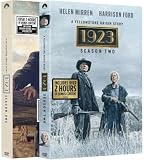
- 1923: A Yellowstone Origin Story: Season One and Two, Complete Box Set, DVD Disc Collection
Characters, Creative Leadership, and What’s Confirmed
Taylor Sheridan remains the creative architect behind 1944, continuing his hands-on approach to shaping the Yellowstone timeline. While no casting announcements have been confirmed, the timeframe opens the door for descendants of Jacob and Cara Dutton, and possibly the next generation after Spencer Dutton, assuming 1923 carries its story forward into parenthood and legacy. Any returning characters would be historically plausible only if their ages align, making this a natural point for new leads to emerge.
Paramount+ has not announced a release date, but the series is expected to follow the platform’s established Yellowstone rollout strategy. As with previous spinoffs, production timing will likely depend on the conclusion of 1923’s storyline and Sheridan’s broader slate. What is clear is that 1944 isn’t a side story; it’s being positioned as a cornerstone chapter, designed to deepen the mythology and solidify Yellowstone as a generational American epic.
Where ‘1944’ Fits in the Dutton Family Saga: Timeline Connections to ‘1883,’ ‘1923,’ and ‘Yellowstone’
Taylor Sheridan’s Yellowstone universe has always been built like a historical relay, with each series handing the ranch—and its burdens—to the next generation. Set during World War II, 1944 occupies a pivotal middle chapter, positioned after the frontier survival of 1883 and the industrial-era conflicts of 1923, but decades before the modern-day warfare waged by John Dutton III. Its placement is deliberate, designed to show how the Dutton legacy hardens under national crisis rather than frontier expansion.
More than any previous spinoff, 1944 is poised to explain how the Yellowstone ranch evolves from a hard-won homestead into an entrenched institution. This is the era where tradition, land ownership, and political influence begin to matter as much as grit and gunfire. In timeline terms, it is the hinge on which the entire saga swings.
From ‘1883’: The Inheritance of Sacrifice
The roots of 1944 stretch directly back to 1883, where James and Margaret Dutton’s brutal journey west established the moral backbone of the franchise. That series framed the land as something paid for in blood, loss, and perseverance, an idea that continues to define every generation that follows. By 1944, the original pioneers are long gone, but the weight of their sacrifice still dictates how the family views ownership and loyalty.
What changes is the scale of the threat. Unlike 1883’s external dangers, 1944 explores how national and global forces challenge the ranch from the outside in. The land is no longer wild, but it is far from secure.
Building on ‘1923’: A Ranch Under Pressure
1923 introduced the Duttons as reluctant participants in a modernizing America, facing industrialists, government interference, and economic collapse. That series positions Jacob and Cara Dutton as transitional figures, fighting to keep the ranch intact while the world accelerates around them. 1944 inherits those unresolved tensions and amplifies them through the lens of war.
World War II brings labor shortages, military service, and shifting power dynamics, all of which threaten the ranch’s continuity. If 1923 is about survival through adaptation, 1944 becomes about endurance through absence, with entire generations potentially pulled away from Montana to fight overseas.
The Bridge to ‘Yellowstone’: Foundations of a Dynasty
Perhaps most importantly, 1944 lays the groundwork for the Yellowstone viewers know today. This is the era where the Duttons likely begin consolidating political influence, formalizing land protections, and adopting the uncompromising mindset later embodied by John Dutton III. The show has the opportunity to dramatize how the ranch transforms from a family operation into a symbol of inherited power.
In franchise terms, 1944 is not just connective tissue; it is structural support. By filling in this historical gap, the series can retroactively deepen the motivations, fears, and obsessions that define the modern Duttons, making Yellowstone feel less like a standalone neo-Western and more like the inevitable outcome of nearly a century of conflict.
Historical Context: World War II, the American West, and What 1944 Means for the Duttons
Set against the final full year of World War II, 1944 places the Duttons at a crossroads where personal legacy collides with global upheaval. America is fully mobilized, and even the relative isolation of Montana offers no insulation from rationing, conscription, and federal oversight. For a family defined by control of land and lineage, the war represents an invisible but existential threat.
Unlike the frontier dangers of 1883 or the economic predators of 1923, World War II reframes conflict on a national scale. The enemy is no longer a neighboring ranch, corporation, or government agent, but time, absence, and the possibility that the next generation may never return home.
Recommended Free Tools
Montana on the Home Front
Historically, Montana played a significant role in the wartime American West, hosting military training facilities, prisoner-of-war camps, and expanded rail infrastructure. Ranches across the state faced acute labor shortages as young men enlisted or were drafted, forcing women, older family members, and hired hands to shoulder unprecedented responsibility.
For the Duttons, this reality likely reshapes power within the family. With male heirs potentially overseas, the ranch’s survival may depend on figures previously operating in the margins, echoing Cara Dutton’s expanded authority in 1923. This shift would align with Yellowstone’s long-running theme that strength within the family often emerges during moments of forced transition.
Rank #2
![1923: A Yellowstone Origin Story: Season One [DVD]](https://m.media-amazon.com/images/I/41NXkT8NRuL._SL160_.jpg)
- Genre: Drama
- Number of Discs: 3
- Playback Duration: 465
- Rating: NR
- Number of Albums: Yes
The War’s Influence on Land and Power
World War II also accelerated federal involvement in land use, production quotas, and infrastructure expansion across the West. Ranchers were encouraged, and sometimes pressured, to prioritize output for the war effort, blurring the line between private property and national resource.
Speculation suggests that 1944 could explore early tensions between the Duttons and the federal government that later calcify into the deep-seated distrust seen in Yellowstone. The seeds of land conservation battles, eminent domain fears, and political maneuvering may be planted here, not as ideology, but as survival instinct.
A Generational Fault Line
Timeline-wise, 1944 occupies a critical gap between the aging leadership of 1923 and the as-yet-unseen generation that eventually produces John Dutton III. This period likely introduces younger Duttons whose experiences of war fundamentally alter how they view loyalty, sacrifice, and inheritance.
Confirmed details about specific characters remain under wraps, but the series’ placement strongly implies a story shaped by loss and return, or the absence of both. In Taylor Sheridan’s universe, what a character survives matters less than what they carry home, and 1944 is positioned to redefine the emotional DNA of the family.
Why 1944 Matters in the Sheridan Timeline
Paramount+ has confirmed 1944 as the next chronological chapter in the Yellowstone saga, with Taylor Sheridan continuing as the franchise’s guiding creative force. That continuity suggests the series will treat historical authenticity not as backdrop, but as narrative pressure applied directly to the Duttons’ core identity.
Rather than serving as a standalone wartime drama, 1944 is poised to explain why the modern Duttons rule through fear of loss more than ambition. In that sense, World War II is not just a setting; it is the crucible that hardens the dynasty Yellowstone viewers recognize, long before the land wars of the present day begin.
Free tools Windows power users keep installed
One-click scans. No signup required.
Which Duttons Could Return? Characters, Generations, and Casting Possibilities
With 1944 positioned between the events of 1923 and the birth era of Yellowstone’s modern patriarchs, the biggest question for fans is simple: which members of the Dutton family are still alive, and which ones matter most to this chapter? While Paramount+ has not confirmed any returning characters, the timeline offers several compelling possibilities rooted firmly in established canon.
This era is less about familiar faces holding power and more about who inherits responsibility when the old guard fades. That transition has always been the emotional engine of the Yellowstone universe, and 1944 may be where it turns irreversible.
The Fate of the 1923 Generation
By 1944, Jacob and Cara Dutton would almost certainly be gone or near the end of their lives. Jacob was already an aging patriarch in 1923, and while the franchise has occasionally bent timelines for dramatic effect, a central role for Harrison Ford’s character would defy both history and internal logic.
Cara Dutton is more complicated. Helen Mirren’s formidable matriarch could plausibly appear in a limited capacity, potentially as a symbolic presence rather than an active force. If she does appear, it would likely be to pass judgment, issue warnings, or represent the last living memory of the family’s earlier wars.
The Tool Desk
Outbyte Driver Updater FREEFix the driver behind crashes, sound loss and screen glitchesFind Drivers →Outbyte PC Repair FREEClear out junk files and repair common Windows errorsFree Scan →Spencer Dutton and the War Connection
Spencer Dutton stands as the most narratively viable returning character. A decorated World War I veteran in 1923, Spencer would be in his early-to-mid 50s during World War II, placing him squarely in an era where his military experience still carries weight.
Speculation suggests Spencer could serve in a stateside command, intelligence role, or as a reluctant advisor tied to wartime land use and federal oversight. Whether Brandon Sklenar would reprise the role or an older actor would be cast depends on how large a time jump the series makes within the 1944 setting.
The Next-Before-John Dutton Generation
More likely, 1944 will introduce sons and daughters of the 1923 generation who have only been referenced indirectly. These characters would be the immediate predecessors to John Dutton II, the largely unseen but crucial father of Kevin Costner’s John Dutton III.
This is the generation shaped not by frontier survival, but by global conflict and institutional power. If Yellowstone is about holding land through force of will, 1944 may show how the Duttons learned to hold it through strategy, bureaucracy, and sacrifice.
Crashes, No Sound, or Screen Glitches?
Random freezes, missing sound and display glitches usually trace back to one bad driver. Find and replace yours safely.Free scan · under a minuteWindows Errors? Fix Them Before They Spread
Repair common Windows errors and clear accumulated junk for a smoother, more stable PC - no reinstall needed.Free scan · no reinstallRank #3

- 1883 & 1923: A Yellowstone Origin Complete DVD Disc Collection (Bonus Content Included)
Casting Strategy: Prestige Over Recognition
Taylor Sheridan’s recent casting philosophy suggests that 1944 will blend established prestige actors with breakout leads rather than rely on pure stunt casting. Much like 1883 and 1923, the focus will likely be on performance credibility over direct fan service.
Expect casting announcements to prioritize actors who can carry emotional gravity rather than mirror earlier portrayals. In this period of the Dutton legacy, resemblance matters less than thematic continuity, and 1944 appears designed to reinforce that evolution rather than revisit it nostalgically.
Taylor Sheridan’s Vision: Creative Leadership, Tone, and Storytelling Approach
Taylor Sheridan remains the undisputed creative architect of the Yellowstone universe, and 1944 is firmly positioned within his long-form design rather than as a standalone experiment. While Paramount has not announced a separate showrunner, Sheridan’s direct involvement is expected, continuing the hands-on approach he maintained with 1883 and 1923. This consistency matters, because 1944 is less about novelty and more about narrative continuity across decades of American change.
At this stage, what is confirmed is the setting and placement: World War II-era Montana, nested between the frontier collapse of 1923 and the modern institutional battles of Yellowstone. Everything else flows from Sheridan’s established storytelling priorities.
What’s actually slowing this PC down?
Pick the symptom - the matching free tool is one click away.
A Wartime Shift in Tone and Scale
Tonally, 1944 is expected to be more restrained and procedural than its predecessors. Where 1883 embraced mythic tragedy and 1923 leaned into operatic survival, World War II introduces systems, hierarchies, and consequences beyond individual control. Sheridan has consistently shown interest in how institutions shape people, and this era allows that theme to fully mature.
Speculation points to a series less driven by open-range violence and more by moral pressure, bureaucratic conflict, and quiet sacrifice. The danger may not always come from an enemy at the gate, but from decisions made in offices, courtrooms, and military command rooms.
Power, Land, and the Federal Government
One of Sheridan’s most persistent fixations is the tension between private land ownership and expanding federal authority. In 1944, that conflict becomes unavoidable. Wartime land requisitions, infrastructure demands, and national security priorities would have placed ranchers like the Duttons in direct conflict with the U.S. government.
This is where 1944 could quietly redefine the Yellowstone saga. Rather than defending land with rifles and fists, the Duttons may be forced to defend it with contracts, alliances, and political leverage. That evolution directly feeds into the worldview John Dutton III later inherits.
Do these 3 things before closing this tab:
1Fix the driver behind crashes, sound loss and screen glitches2Clear out junk files and repair common Windows errors3Scan for outdated or missing drivers - takes under a minuteCharacter-First Storytelling Over Historical Spectacle
Despite the massive historical backdrop, Sheridan’s track record suggests the war itself will remain largely offscreen. Like the ocean voyage in 1883 or Africa in 1923, World War II is likely to function as a pressure system rather than a battlefield showcase. The emotional cost of war, not the combat, is where Sheridan tends to focus.
Expect intimate character studies set against a national crisis, with long-term consequences rippling forward through the Dutton bloodline. If 1944 succeeds, it will not be because it recreates history, but because it shows how history permanently reshaped the people who survived it.
Why 1944 Fits the Endgame of Yellowstone
More than any prior prequel, 1944 appears designed to explain how the Duttons learned to endure a modern America. This is the chapter where survival stops being instinctual and becomes strategic. Sheridan has repeatedly framed Yellowstone as a story about inheritance, not just of land, but of mindset.
By anchoring this spinoff in World War II, Sheridan isn’t expanding the universe outward. He’s reinforcing its spine, filling in the philosophical gap between frontier survival and modern domination. In that sense, 1944 may be the most quietly important Yellowstone series yet.
Quick wins for a faster PC:
Repair Windows errors before they cause bigger problemsFix Now →Scan for outdated or missing drivers - takes under a minuteDriver Scan →Clear out junk files and repair common Windows errorsFree Scan →How ‘1944’ Could Reshape the Yellowstone Mythology and Ranch Legacy
If 1883 explained how the Duttons arrived and 1923 explored how they survived, 1944 is positioned to explain how they learned to control their future. This chapter sits at a turning point where brute endurance gives way to institutional power. That shift has enormous implications for how the Yellowstone Ranch ultimately becomes untouchable.
The mythology of Yellowstone has always been less about land itself and more about the systems built to protect it. World War II represents the moment when those systems became unavoidable. For the first time, the Duttons would be forced to think beyond family and violence and start operating within modern America.
Rank #4
![1923 - A Yellowstone Origin Story: Season Two [DVD]](https://m.media-amazon.com/images/I/51rARI9eCvL._SL160_.jpg)
- 1923: A Yellowstone Origin Story
- Season Two
The Birth of the Modern Dutton Playbook
One of the clearest ways 1944 could reshape the franchise is by showing how the Duttons transitioned from frontier survivalists into strategic landholders. Wartime America was defined by contracts, government oversight, and permanent bureaucracy. That environment would have demanded a new kind of leadership from the ranch.
This is likely where the foundations of trusts, legal structures, and political alliances were first established. While earlier generations fought threats they could see, the 1944 Duttons would be learning to anticipate enemies on paper. That mindset becomes essential to understanding John Dutton III’s long-game philosophy decades later.
Recommended Free Tools
Connecting the Bloodline Across Eras
While no casting has been confirmed, 1944 is uniquely positioned to bridge characters introduced in 1923 with the modern Yellowstone timeline. Depending on how the story unfolds, younger versions of known ancestors could step into leadership roles shaped by wartime loss. That continuity is central to Sheridan’s generational storytelling.
Speculation points toward this era clarifying which branch of the family ultimately inherits the ranch’s authority. The war likely thins the bloodline, making succession less about tradition and more about necessity. Those decisions echo all the way to Kevin Costner’s John Dutton.
War as the Catalyst for Moral Hardening
Every Yellowstone series examines the cost of survival, but 1944 may be the first to frame that cost as unavoidable. War doesn’t just take people away; it changes the people who remain. The Duttons who come out the other side would be more guarded, more pragmatic, and less idealistic than their predecessors.
This is where the ranch stops being symbolic and becomes sacred. Land isn’t just inherited; it’s preserved as a memorial to those who didn’t return. That emotional weight helps explain why later Duttons defend the ranch with such uncompromising intensity.
Do these 3 things before closing this tab:
1Repair Windows errors before they cause bigger problems2Fix the driver behind crashes, sound loss and screen glitches3Clear out junk files and repair common Windows errorsWhy 1944 Matters to the Franchise’s Future
From a franchise perspective, 1944 isn’t just another prequel. It’s a narrative hinge that connects Sheridan’s historical storytelling to the political and corporate warfare of modern Yellowstone. Without this chapter, the evolution feels incomplete.
Confirmed details remain intentionally sparse, but what is known is enough to signal importance. Set during World War II, overseen creatively by Taylor Sheridan, and designed as a direct lineage story, 1944 appears built to redefine how viewers understand the Dutton legacy. Rather than expanding the universe sideways, it deepens it, reinforcing the idea that Yellowstone has always been a story about adaptation disguised as a Western.
Independent reader supportYour contribution helps us test, update, and keep practical guides available for everyone.Production Status and Release Expectations: What Paramount Has (and Hasn’t) Confirmed
Despite mounting fan interest, Paramount+ has been deliberately cautious about formal announcements surrounding 1944. The series has been acknowledged internally as part of the Yellowstone franchise’s long-term roadmap, but key production details remain tightly controlled. That silence appears strategic rather than uncertain, consistent with how the platform rolled out both 1883 and 1923.
What Has Been Officially Confirmed
Paramount has confirmed that 1944 is set during World War II and functions as a direct prequel within the Yellowstone timeline, following the events of 1923. Taylor Sheridan remains creatively involved, continuing his role as architect of the Dutton saga across eras. Like its predecessors, the series is intended for Paramount+ as an original drama.
The Tool Desk
Outbyte PC Repair FREEClear out junk files and repair common Windows errorsFree Scan →Outbyte Driver Updater FREEFix the driver behind crashes, sound loss and screen glitchesFind Drivers →Beyond that framework, the studio has not released casting announcements, episode counts, or a production start date. There is also no confirmed showrunner beyond Sheridan’s oversight, though his established creative structure suggests a familiar production model.
Production Timing: Reading Between the Lines
While Paramount has not publicly greenlit cameras to roll, industry patterns offer clues. Sheridan typically develops his Yellowstone projects well in advance, often overlapping writing and pre-production across multiple series. The timing of 1944’s reveal suggests it was conceived to follow 1923 narratively, not simply capitalize on Yellowstone’s popularity.
Given Sheridan’s production slate and Paramount+’s scheduling priorities, 1944 is unlikely to begin filming until other flagship projects clear the pipeline. That measured pacing allows the series to feel intentional rather than rushed, especially given the historical scope and wartime setting.
Release Window Expectations
No release date has been announced, and Paramount has avoided even broad window projections. Based on the rollout cadence of previous Yellowstone spinoffs, a premiere at least a year after formal production begins is the most realistic scenario. A late-2026 or 2027 debut is frequently cited by industry observers, though this remains speculative.
Best Value

- 1923: A Yellowstone Origin Story
The lack of urgency does not signal hesitation. Instead, it reflects Paramount’s confidence in the brand’s longevity. Yellowstone has become a generational franchise, and 1944 is positioned as a foundational chapter meant to last, not a quick turnaround release.
Why the Silence Matters
Paramount’s restraint mirrors how it handled 1923 before its formal unveiling. By withholding details, the studio preserves narrative surprise while allowing Sheridan to shape expectations organically. In a franchise built on legacy and consequence, overexposure would undermine impact.
For now, what matters most is intent. 1944 is confirmed, canon, and designed to fill a critical gap in the Dutton timeline. Everything else, from casting to release timing, will arrive when Paramount believes the story is ready to stand alongside the most defining chapters of the Yellowstone universe.
Why ‘1944’ Matters: The Future of the Yellowstone Universe After the Flagship Series
With Yellowstone reaching the end of its flagship run, 1944 represents more than just another spinoff. It is a strategic pivot point for the franchise, one that re-centers the Dutton saga around legacy rather than continuity with the present-day series. Paramount+ is not replacing Yellowstone so much as recontextualizing it, using history to reinforce why the modern-day conflicts mattered in the first place.
Taylor Sheridan’s expanding universe has always treated time as a storytelling weapon. By moving deeper into the past, 1944 allows the franchise to explore how the Duttons survived moments that threatened not just their land, but their identity. In a post-Yellowstone era, that sense of earned legacy becomes the connective tissue holding the brand together.
A Narrative Bridge Between Generations
Chronologically, 1944 sits at a critical midpoint between 1923 and the modern Yellowstone timeline. The series is expected to examine the Dutton family during World War II, a period defined by global upheaval, economic strain, and generational transition. That placement gives the show a unique responsibility: it must explain how the hard-won survival of the early Duttons evolved into the entrenched power structure seen decades later.
While character details remain unconfirmed, it is widely assumed that descendants or younger versions of 1923’s surviving Duttons will anchor the story. This is not merely backstory for its own sake. It is an opportunity to dramatize how sacrifice, trauma, and adaptation shaped the family’s philosophy long before John Dutton ever took control of the ranch.
Reframing the Dutton Mythology
What makes 1944 particularly important is its ability to reframe the Duttons not as inevitabilities, but as survivors of circumstance. World War II introduces external forces far beyond Montana’s borders, challenging the idea that the ranch exists in isolation. Sheridan has consistently used historical pressure points to test his characters, and this era may be the most unforgiving yet.
This perspective deepens the emotional stakes of the entire franchise. When viewers look back at Yellowstone, the land disputes and family feuds gain new weight when seen as the latest chapter in a fight that once involved war, displacement, and national transformation.
The Franchise After Yellowstone
From an industry standpoint, 1944 signals Paramount+’s long-term confidence in the Yellowstone brand beyond its original series. Rather than extending the flagship indefinitely, the studio is leaning into an anthology-style model anchored by eras, themes, and generational storytelling. That approach keeps the universe flexible while avoiding creative stagnation.
It also positions Taylor Sheridan as a curator of American myth rather than a showrunner tied to a single narrative. Each prequel becomes a standalone entry point, allowing new audiences to engage without requiring full knowledge of the modern series.
Why This Chapter Cannot Miss
There is a quiet pressure surrounding 1944 that did not exist for earlier spinoffs. With Yellowstone concluded, this series must justify the franchise’s future on its own terms. It needs to feel essential, not supplemental, and meaningful rather than nostalgic.
PC Slower Than It Used to Be?
A free scan shows the junk files, broken settings and background clutter dragging Windows down - then fixes them in one click.Free scan · Windows 10 & 11Crashes, No Sound, or Screen Glitches?
Random freezes, missing sound and display glitches usually trace back to one bad driver. Find and replace yours safely.Free scan · under a minuteThat expectation may explain Paramount’s deliberate pace and limited disclosures. 1944 is not being rushed because it is meant to anchor the next phase of the Yellowstone universe, proving that the Dutton story remains compelling even without the contemporary characters who made it a cultural phenomenon.
In that sense, 1944 is both a reflection and a promise. It looks backward to understand how the Duttons endured, while signaling that Yellowstone’s end was not a conclusion, but a transition. If the franchise is truly about legacy, then this chapter may ultimately define how that legacy is remembered.
Quick Recap
Product prices and availability are accurate as of the date/time indicated and are subject to change. Any price and availability information displayed on Amazon at the time of purchase will apply.

