1923 gives Donald Whitfield a clear role in its central conflict: he and Banner Creighton want control of the valley, putting them against the Duttons. The Season 1 finale synopsis says that feud reaches a point of no return. That escalation makes the case that the series is taking things too far with Whitfield—but the judgment depends on whether his growing menace deepens the story or overwhelms it.
Who is Whitfield, and what is he after?
Donald Whitfield, played by Timothy Dalton, is one of the forces challenging the Duttons in 1923, the Yellowstone origin story. Paramount’s official Season 2 overview identifies Dalton as Whitfield. In its Season 1 episode description for “Ghost of Zebrina,” Paramount says Whitfield and Banner plot their next move to control the valley. That gives Whitfield’s threat a concrete purpose: power over land and the people whose lives depend on it.
Why the escalation can feel excessive
There is a difference between a formidable antagonist and a story that keeps raising the stakes simply to make him more frightening. Paramount’s Season 1 episode listings describe Whitfield, Banner, and the Duttons’ feud as reaching a “point of no return” in the finale. TheWrap likewise characterizes the Whitfield-Jacob Dutton conflict as reaching a boiling point in its Season 1 finale coverage.
Those descriptions establish a story built around escalation, not whether that escalation is earned. A viewer can reasonably find Whitfield’s presence too much if each increase in menace makes the conflict feel less like a struggle over the valley and more like a test of how far the series can push its antagonist. The crucial question is whether the pressure changes the characters and their choices, or merely turns the dial higher.
What the story needs to make Whitfield’s menace work
Consequences, not just threat
Whitfield’s actions should matter beyond establishing that he is dangerous. The consequences for the Duttons and other people caught in the conflict need room to register. If the show moves quickly from one shock to the next, a severe act can feel like spectacle rather than a turning point.
![1923: A Yellowstone Origin Story: Season Two [Blu-Ray]](https://m.media-amazon.com/images/I/619A8r4OcSL._SL160_.jpg)
![1923: A Yellowstone Origin Story: Season One [Blu-ray]](https://m.media-amazon.com/images/I/41H2zQEP+4L._SL160_.jpg)
A conflict with more than one dimension
Because the stated aim is control of the valley, the feud has stakes beyond a personal clash. The series is strongest when Whitfield’s threat makes that struggle tangible and forces characters into difficult decisions. If menace eclipses the land, the community, and the people at risk, the antagonist can start to feel like an end in himself.
Proportion between severity and purpose
“Taking things too far” is ultimately a critical judgment, not an objective verdict established by a synopsis. The Season 1 finale’s point-of-no-return framing supports the view that the show wants the conflict to feel extreme. Whether that extremity works depends on whether it serves the drama and receives adequate weight afterward.
#1 Best Overall
![1923: A Yellowstone Origin Story: Season One [Blu-ray]](https://m.media-amazon.com/images/I/416g58MqmGL._SL160_.jpg)
- Genre: TV Drama
- Number of Discs: 3
- Playback Duration: 465
- Rating: NR
- Movie Title: 1923: A Yellowstone Origin Story: Season One
What can—and cannot—be concluded from the available descriptions
The official episode summaries confirm Whitfield’s identity, his alliance with Banner, their goal of controlling the valley, and the feud’s escalation. They do not identify which particular scene or action a viewer might mean by “too far,” nor do they establish a general audience consensus. A scene-specific argument should therefore name the moment being judged rather than treating the headline as proof that viewers agree.
Paramount’s official pages list the series and its episodes on Paramount+. Availability can vary by region, so check the service’s local catalog before relying on it as a watch option.
Quick Recap
Best Value
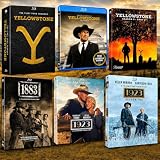
- Includes all 53 episodes and over 19 hours of special features, with interviews, behind-the-scenes footage, and more.
Rank #4
![1923 - A Yellowstone Origin Story: Season Two [Blu-ray]](https://m.media-amazon.com/images/I/51as6beBdyL._SL160_.jpg)
- 1923: A Yellowstone Origin Story
- Season Two
Rank #2
Product prices and availability are accurate as of the date/time indicated and are subject to change. Any price and availability information displayed on Amazon at the time of purchase will apply.




