Horror has a peculiar relationship with death: it rarely sticks. Slashers return from the grave, cursed objects resurface, and monsters adapt to new eras, new fears, and new audiences. More than any other genre, horror has mastered the art of cinematic survival, building franchises that stretch across decades, generations, and shifting cultural tastes.
From drive-in exploitation roots to billion-dollar global brands, horror franchises thrive because they are endlessly flexible. A masked killer or supernatural threat can be rebooted, reimagined, legacy-sequeled, or expanded into increasingly elaborate mythologies without losing its core appeal. These series grow not just through sequels, but through remakes, reboots, spin-offs, and alternate timelines, often reflecting the anxieties of the era in which they’re revived.
| # | Preview | Product | Price | |
|---|---|---|---|---|
| 1 |

|
Horror 20 Movie Collection | $15.96 | Buy on Amazon |
| 2 |
|
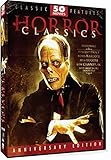
HORROR CLASSICS 50 MOVIE MEGAPACK | $15.79 | Buy on Amazon |
| 3 |
|
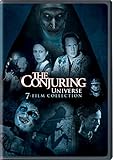
Conjuring 7-Film Collection, The (DVD) | $25.49 | Buy on Amazon |
| 4 |

|
Friday The 13th The Ultimate Collection | $13.49 | Buy on Amazon |
| 5 |

|
5 Film Collection: Harrowing Horror Collection (DVD) | $8.93 | Buy on Amazon |
This article ranks and explores the horror franchises with the highest number of films, tracing how each one expanded over time and why audiences keep coming back. Along the way, it highlights defining entries, infamous misfires, surprise comebacks, and the cultural impact that turned simple scares into long-running cinematic institutions. In a genre where resurrection is practically a rule, these are the franchises that refused to stay buried.
How We Ranked Them: What Counts as a Franchise Film (Sequels, Reboots, Crossovers & Spin-Offs)
Before counting bodies, box office totals, or continuity tangles, we had to answer a deceptively tricky question: what actually counts as a franchise film? Horror history is messy by design, full of retcons, alternate timelines, and “final” chapters that absolutely were not final. To keep this list both fair and useful, we applied a consistent set of rules across every series.
#1 Best Overall
Our goal wasn’t to judge quality or popularity here, but longevity and expansion. If a film meaningfully belongs to a larger horror lineage, contributes to that property’s cinematic footprint, and is officially connected by rights holders or creators, it counts.
Straight Sequels and Numbered Continuations
Traditional sequels form the backbone of most horror franchises, from the early rapid-fire follow-ups of the ’80s slasher boom to modern long-gap returns. Whether they continue a single storyline or loosely build on the same premise, direct sequels were always included. Even entries that shift tone, setting, or killer often reflect the genre’s evolving tastes and still advance the franchise’s film count.
This also includes late-era sequels released decades after the original, often marketed as returns to form or legacy follow-ups. If it’s officially part of the series, it earns its place.
Reboots, Remakes, and Alternate Timelines
Horror loves the reset button, and we treated reboots and remakes as core franchise entries rather than side projects. Films that restart continuity, modernize mythology, or reinterpret iconic villains were counted as long as they retained the franchise identity. Alternate timelines, continuity wipes, and “ignoring all previous sequels” scenarios still belong to the same cinematic lineage.
These films are often crucial to a franchise’s survival, introducing classic monsters to new generations and keeping dormant properties commercially viable.
Spin-Offs and Expanded Universes
Spin-offs were included when they clearly branched from an established franchise rather than existing as loosely inspired imitators. This covers character-focused offshoots, prequels, and universe expansions that share lore, antagonists, or explicit narrative connections. If the marketing, creators, and canon treat it as part of the same world, we do too.
In recent years, shared horror universes have become a key strategy for franchise growth, dramatically inflating film counts while deepening mythology.
Crossovers and Franchise Collisions
When horror icons collide, the result often feels like an event, and those films were fully counted toward each involved franchise. Crossovers may blur continuity lines, but they represent a franchise’s cultural weight and its ability to coexist with other horror legends. These entries often serve as high-profile milestones rather than narrative endpoints.
They also highlight how horror franchises evolve from simple stories into pop-culture institutions.
What We Didn’t Count
We excluded unofficial adaptations, international knockoffs, and films merely inspired by a concept without legal or canonical ties. Television series, animated projects, and short films were also left out to keep the focus strictly on theatrical and feature-length film output. The goal was clarity, not inflation.
By setting these boundaries, the rankings reflect genuine franchise endurance rather than creative loopholes.
With the rules established, the following rankings trace how these horror franchises kept expanding, mutating, and resurrecting themselves across decades of sequels, reinventions, and cinematic reinventions.
The Heavyweights (Ranked 1–5): Horror Franchises With Double-Digit Film Counts
These are the giants of horror cinema, franchises that didn’t just survive shifting tastes and generational turnover but expanded through sheer adaptability. Each of the following series boasts double-digit theatrical entries, built across decades of sequels, reboots, crossovers, and tonal reinventions. Their longevity isn’t accidental; it’s the result of icons, formulas, and mythologies that proved endlessly reusable.
5. Saw (2004–Present) — 10 Films and Counting
What began as a low-budget, high-concept shocker quickly evolved into one of the most structurally ambitious horror franchises ever produced. The Saw series didn’t just rely on gore; it thrived on serialized storytelling, intricate timelines, and soap-opera-level continuity that rewarded dedicated viewers.
From Saw II through Saw VII, the franchise leaned into annual releases, turning Halloween season into a recurring ritual of traps and twists. Later entries like Jigsaw and Spiral attempted soft reboots and genre pivots, while Saw X re-centered the series around Tobin Bell’s Jigsaw, proving the brand’s core appeal still has teeth.
4. Friday the 13th (1980–2009) — 12 Films
Jason Voorhees may not have even been the killer in the original film, but he quickly became one of horror’s most durable mascots. The Friday the 13th franchise leaned unapologetically into repetition, offering familiar kills, camp settings, and a rotating cast of doomed teens across the 1980s.
Recommended Free Tools
The series survived creative downturns, genre fatigue, and even a space-set sequel before culminating in the crossover event Freddy vs. Jason. Despite being dormant theatrically since the 2009 reboot, the franchise’s influence and fan demand remain strong, cementing its place among horror’s most prolific legacies.
Rank #2
- An instant library of 50 horrorics assembled on 12 DVD's.
3. Halloween (1978–2022) — 13 Films
Few franchises embody the concept of cinematic reinvention like Halloween. John Carpenter’s original remains one of the most influential horror films ever made, but its sequels splintered into multiple timelines, retcons, and continuity resets.
From cult-favorite oddities like Season of the Witch to Rob Zombie’s gritty reimagining and the recent David Gordon Green trilogy, Halloween has repeatedly reshaped itself while preserving Michael Myers as an unstoppable force. Its willingness to erase and rebuild its own history has become part of the franchise’s identity.
2. Puppet Master (1989–2022) — 14 Films
Often overlooked in mainstream discussions, Puppet Master is one of horror’s most quietly prolific franchises. Anchored by Full Moon Features, the series embraced direct-to-video production, allowing it to expand aggressively without studio constraints.
The Tool Desk
Outbyte PC Repair FREEClear out junk files and repair common Windows errorsFree Scan →Outbyte Driver Updater FREEFix the driver behind crashes, sound loss and screen glitchesFind Drivers →Across its many sequels, prequels, and wartime-set spinoffs, the franchise leaned into pulpy lore, killer doll mythology, and schlocky charm. Its sheer volume is a testament to how alternative distribution models can sustain horror properties far beyond theatrical cycles.
1. Godzilla (1954–Present) — Over 30 Films
No horror franchise comes close to Godzilla’s cinematic output. While often categorized as science fiction or kaiju spectacle, Godzilla was born from horror, a metaphor for nuclear annihilation that stomped its way into global pop culture.
Spanning Japanese eras, Hollywood reboots, tonal shifts from terror to camp to mythic destruction, and countless reinventions, Godzilla has remained culturally relevant for over 70 years. Its film count dwarfs every other franchise on this list, making it the undisputed heavyweight of horror-adjacent cinema.
Together, these five franchises represent horror at its most resilient, adaptable, and commercially savvy, proving that fear, when packaged correctly, can be truly immortal.
Free tools Windows power users keep installed
One-click scans. No signup required.
The Long Haulers (Ranked 6–12): Slashers, Monsters, and Supernatural Series That Refused to End
If the top tier represents horror’s industrial giants, the next wave is defined by endurance. These franchises didn’t just rack up sequels; they survived tonal whiplash, shifting audiences, critical backlash, and long dormancy periods. Slashers, supernatural nightmares, and extreme horror concepts dominate this stretch, proving that longevity often comes from sheer stubbornness.
12. Phantasm (1979–2016) — 5 Films
Phantasm never chased mainstream appeal, and that’s precisely why it endured. Don Coscarelli’s surreal saga of the Tall Man, sentient silver spheres, and interdimensional horror became a cult staple thanks to its dream-logic storytelling and recurring cast.
Though its film count is modest compared to others here, the series’ commitment to continuity and its decades-spanning narrative give it an outsized legacy. Phantasm feels less like a franchise and more like a singular, evolving nightmare that refused to fade away.
11. The Omen (1976–2006) — 6 Films
The Omen tapped into religious terror with operatic seriousness, turning the rise of the Antichrist into prestige horror long before the term existed. Its original trilogy charted Damien’s life from childhood to adulthood, a rare attempt at serialized storytelling in studio horror.
Windows Errors? Fix Them Before They Spread
Repair common Windows errors and clear accumulated junk for a smoother, more stable PC - no reinstall needed.Free scan · no reinstallCrashes, No Sound, or Screen Glitches?
Random freezes, missing sound and display glitches usually trace back to one bad driver. Find and replace yours safely.Free scan · under a minuteLater sequels and the 2006 remake leaned harder into spectacle than theology, but the franchise’s influence on satanic horror remains undeniable. Few series made biblical dread feel so mainstream.
10. Child’s Play (1988–Present) — 8 Films
Chucky’s longevity comes from his willingness to evolve. What began as a straightforward killer doll slasher gradually morphed into self-aware horror-comedy, embracing absurdity without abandoning brutality.
From Bride of Chucky’s genre pivot to Cult of Chucky’s asylum-set madness and a modern TV continuation, the franchise survived by letting its villain grow with the audience. Chucky didn’t just adapt to changing tastes; he mocked them.
9. A Nightmare on Elm Street (1984–2010) — 9 Films
Freddy Krueger transformed the slasher villain into a pop culture icon, blending sadism with stand-up comedy and surreal dream imagery. The early sequels expanded the dream-world concept with creative kills and increasingly outrageous mythology.
What’s actually slowing this PC down?
Pick the symptom - the matching free tool is one click away.
While later entries struggled to balance humor and horror, the franchise’s influence on visual storytelling and meta-horror is enormous. Even its missteps cemented Freddy as one of horror’s most recognizable figures.
8. The Texas Chainsaw Massacre (1974–2022) — 9 Films
Few franchises have reinvented themselves as radically or as often as The Texas Chainsaw Massacre. Tobe Hooper’s original remains a raw, almost documentary-like descent into terror, while sequels veered into satire, nihilism, or glossy brutality.
Rank #3
- The Conjuring Universe: 7 Film Collection
- Product type: PHYSICAL MOVIE
- Brand: WB
Reboots, prequels, timeline resets, and legacy sequels followed, each chasing a different version of Leatherface. Consistency was never the goal; survival was.
7. Friday the 13th (1980–2009) — 12 Films
Friday the 13th perfected the slasher assembly line. Once Jason Voorhees took center stage, the franchise leaned into formula, delivering body counts with mechanical efficiency.
Do these 3 things before closing this tab:
1Clear out junk files and repair common Windows errors2Fix the driver behind crashes, sound loss and screen glitches3Repair Windows errors before they cause bigger problemsFrom Manhattan detours to outer space absurdity and crossover spectacle, the series thrived on familiarity. Its endurance proves that horror audiences often value ritual as much as innovation.
6. Saw (2004–Present) — 10 Films
Saw redefined modern franchise horror by turning elaborate cruelty into serialized storytelling. What started as a gritty indie thriller evolved into an annual theatrical event built around continuity, twists, and increasingly complex moral games.
Later entries doubled down on lore, timelines, and legacy characters, culminating in soft reboots that attempted to refresh the formula without abandoning its roots. Few franchises turned narrative bookkeeping into such a central selling point.
These seven franchises form horror’s middle ironmen, not always critically beloved, but endlessly persistent. They expanded through reinvention, repetition, or sheer audacity, proving that in horror, survival is often the most impressive kill of all.
Quick wins for a faster PC:
Scan for outdated or missing drivers - takes under a minuteDriver Scan →Repair Windows errors before they cause bigger problemsFix Now →The Cult Survivors (Ranked 13–18): Niche Franchises That Quietly Built Massive Filmographies
Not every long-running horror series dominates pop culture or merchandise shelves. Some endure in the margins, sustained by cult loyalty, direct-to-video resilience, or international appeal rather than box office dominance.
These franchises didn’t always feel like juggernauts, but film by film, sequel by sequel, they quietly amassed surprisingly deep catalogs. Their longevity speaks less to trend-chasing and more to horror’s unique ability to reward devotion.
13. Leprechaun (1993–2018) — 8 Films
What began as a modest creature feature became one of horror’s strangest endurance tests. Leprechaun survived tonal whiplash, budget drops, and increasingly absurd premises by fully embracing its own ridiculousness.
From space to the hood to reboot territory, the franchise thrived on camp appeal rather than fear. Warwick Davis’ gleefully unhinged performance turned the character into a cult icon who outlasted many more respectable peers.
14. Child’s Play (1988–2019) — 7 Films
Few franchises reinvented themselves as boldly as Child’s Play. What started as a straightforward slasher evolved into a self-aware horror-comedy hybrid before swinging back toward seriousness in later entries.
Chucky’s endurance comes from personality as much as premise. By allowing the series to age, fracture, and comment on itself, the franchise avoided stagnation and remained culturally relevant across decades and even into television.
15. The Omen (1976–2006) — 6 Films
The Omen traded gore for operatic dread, anchoring its terror in biblical prophecy and inevitability. Early sequels leaned heavily into mythology, chronicling Damien’s rise rather than repeating the original’s structure.
Though the franchise never reached the sequel saturation of slashers, its steady continuation and eventual remake cemented its place as a foundational religious horror series. Its influence is felt in everything from possession films to prestige Satanic thrillers.
What’s actually slowing this PC down?
Pick the symptom - the matching free tool is one click away.
16. Paranormal Activity (2007–2021) — 7 Films
Minimalism became its weapon. Paranormal Activity expanded not through spectacle, but through expanding perspectives, timelines, and mythology built from domestic unease.
Later sequels and spin-offs broadened the scope while retaining the found-footage aesthetic that made the original a phenomenon. Its legacy lies in proving that restraint and serialized myth-building could sustain a mainstream horror franchise.
17. Phantasm (1979–2016) — 5 Films
Phantasm is less a franchise than a fever dream stretched across decades. Don Coscarelli’s singular vision gave the series a dream logic that resisted easy explanation or formula.
Rank #4
- Friday the 13th - 8 Movie Collection - Part 1 / Part 2 / Part 3 3D / The Final Chapter / A New Begin
The Tall Man became an enduring symbol of existential horror, with sequels that felt more like fragments of a continuing nightmare than traditional follow-ups. Its longevity is a testament to how far atmosphere alone can carry a series.
18. The Grudge (2002–2020) — 8 Films
Crossing cultures and timelines, The Grudge exists in both Japanese and American forms, each feeding into the other. Its non-linear storytelling and inescapable curse allowed endless variations without breaking internal logic.
Though later entries diminished returns, the franchise’s sheer volume underscores the global appeal of J-horror aesthetics. Its influence helped normalize bleak, nihilistic horror in mainstream Western cinema.
Together, these franchises represent horror’s deep bench. They may not headline every Halloween marathon, but their survival proves that passion, persistence, and a devoted audience can be just as powerful as box office domination.
Key Patterns Across the Rankings: Reboots, Direct-to-Video Eras, and International Expansions
Across these 18 franchises, longevity rarely came from repeating the same trick forever. Instead, survival depended on flexibility, format shifts, and a willingness to reintroduce familiar nightmares to new audiences under changing industry conditions.
Recommended Free Tools
The Reboot as Lifeline, Not Replacement
Reboots appear repeatedly across the rankings, but rarely as clean slates. Halloween, The Texas Chainsaw Massacre, Hellraiser, and The Grudge all used reboots to course-correct continuity, modernize themes, or reclaim tonal credibility after sequel fatigue set in.
What’s notable is how few reboots actually erased their predecessors entirely. Most functioned as selective memory, honoring iconography while discarding convoluted timelines. In horror, reinvention often means refinement rather than reinvention from scratch.
The Direct-to-Video Era Kept Franchises Alive
If theatrical releases built franchises, home video sustained them. Series like Hellraiser, Children of the Corn, Puppet Master, and Amityville owe much of their sheer volume to the VHS and DVD boom, where lower budgets and niche audiences made continued production viable.
These entries were rarely critical darlings, but they maintained brand visibility and expanded mythology. More importantly, they preserved rights, fan engagement, and continuity during years when theatrical horror favored new IP over aging icons.
International Expansions and Cross-Cultural Longevity
Several franchises expanded not just in number, but in geography. The Grudge and Ring franchises evolved through Japanese originals, American remakes, and hybrid co-productions, creating parallel canons that fed off one another.
This international elasticity allowed concepts to transcend language and cultural boundaries. The core fears, curses, spirits, possession, remained intact, while aesthetics and storytelling rhythms shifted to suit different markets.
Icons Outlast Trends
The franchises with the highest film counts almost always revolve around a central figure or concept strong enough to withstand tonal shifts. Freddy Krueger, Jason Voorhees, Michael Myers, Pinhead, and even abstract forces like cursed houses or videotapes provided an anchor audiences could return to.
As trends moved from slashers to found footage to elevated horror, these icons adapted. Their persistence proves that in horror, a memorable monster or mythology can be more durable than any single filmmaking style.
The Tool Desk
Outbyte PC Repair FREEClear out junk files and repair common Windows errorsFree Scan →Outbyte Driver Updater FREEScan for outdated or missing drivers - takes under a minuteDriver Scan →Mythology Expansion Over Escalation
Rather than endlessly raising body counts, many long-running franchises survived by deepening lore. Paranormal Activity mapped timelines. Phantasm leaned into dream logic. The Omen reframed its narrative around prophecy and legacy.
This shift toward serialized storytelling allowed franchises to grow horizontally instead of vertically. Horror’s longest-running series didn’t just get louder, they got broader, stranger, and more self-aware over time.
Independent reader supportYour contribution helps us test, update, and keep practical guides available for everyone.Why These Franchises Endured: Icons, Mythology, and the Economics of Fear
Longevity in horror has never been accidental. The franchises with the most entries survived because they balanced creativity with commerce, iconography with flexibility, and audience loyalty with the cold realities of the marketplace. Their endurance reveals as much about how horror works as it does about what audiences fear.
The Power of Recognizable Icons
At the center of nearly every long-running horror franchise is a figure, symbol, or concept that can be instantly recognized on a poster or streaming thumbnail. Jason’s hockey mask, Freddy’s glove, Michael Myers’ blank stare, and Pinhead’s grid-marked face became shorthand for entire cinematic experiences. Even franchises without a single villain, like Amityville or Paranormal Activity, relied on equally potent icons: the haunted house, the night-vision bedroom, the sense that evil waits in familiar spaces.
PC Slower Than It Used to Be?
A free scan shows the junk files, broken settings and background clutter dragging Windows down - then fixes them in one click.Free scan · Windows 10 & 11Crashes, No Sound, or Screen Glitches?
Random freezes, missing sound and display glitches usually trace back to one bad driver. Find and replace yours safely.Free scan · under a minuteBest Value
These icons functioned as guarantees. Audiences didn’t need reinvention every time, they needed reassurance that the core promise of the franchise was intact. That familiarity allowed studios to experiment around the edges while keeping the brand stable.
Mythology That Invited Expansion
The most prolific franchises were built on mythologies flexible enough to grow without collapsing under their own weight. Halloween’s shifting timelines, Hellraiser’s expanding cosmology, and Phantasm’s surreal logic all allowed sequels to reinterpret rather than strictly continue previous entries. This elasticity meant continuity errors were less damaging than they might be in other genres.
Importantly, mythology gave fans something to track beyond kill counts. Lore, prophecy, timelines, and recurring rules rewarded repeat viewings and franchise loyalty. Horror fans became archivists, mapping canon and debating which entries “count,” keeping the conversation alive between releases.
The Economics of Low Risk and High Return
Horror has always thrived on modest budgets, and these franchises exploited that advantage ruthlessly. A recognizable name could turn a small investment into reliable profit, especially during the home video era and later on streaming platforms. Even poorly reviewed sequels often turned a profit simply by existing under a familiar banner.
This economic model encouraged volume. A Puppet Master sequel didn’t need to reinvent the genre, it just needed to deliver enough of what fans expected to justify the next installment. Over time, consistency mattered more than prestige.
Reboots, Remakes, and Strategic Resets
When continuity became too tangled or audience interest waned, franchises learned to reset without erasing themselves. Friday the 13th, Halloween, The Texas Chainsaw Massacre, and The Ring all used reboots or reimaginings to reintroduce their core ideas to new generations. These weren’t failures of imagination so much as survival strategies.
Reboots allowed franchises to align with contemporary tastes, whether that meant grittier realism, elevated themes, or modern pacing. Crucially, they also preserved intellectual property value, ensuring that these icons never stayed dormant for long.
Fear That Evolves With Its Audience
What ultimately sustained these franchises was their ability to reflect changing anxieties. Early sequels leaned into slasher excess, while later entries explored surveillance, technology, trauma, and generational guilt. Paranormal Activity shifted fear into the digital age, while The Exorcist and Omen franchises reframed evil through legacy and inheritance.
Quick wins for a faster PC:
Scan for outdated or missing drivers - takes under a minuteDriver Scan →Repair Windows errors before they cause bigger problemsFix Now →These series endured because they didn’t just repeat scares, they recontextualized them. Horror franchises with the most films survived by understanding that fear is cyclical, but never static, and that the right icon can carry audiences through decades of change.
Where to Start Watching: Essential Entries and Smart Viewing Orders for Newcomers
With decades of sequels, reboots, spin-offs, and alternate timelines, jumping into a long-running horror franchise can feel more intimidating than the monsters themselves. Fortunately, most of these series offer clear entry points that balance accessibility with historical significance. Whether you want the purest version of the myth or a streamlined modern take, there’s almost always a smart place to begin.
Start With the Original When Possible
For franchises like Halloween, Friday the 13th, A Nightmare on Elm Street, and The Texas Chainsaw Massacre, the original film remains the cleanest introduction. These movies establish the tone, iconography, and thematic DNA that every sequel riffs on, for better or worse. Watching the first entry gives newcomers an immediate sense of why these properties endured long enough to spawn double-digit installments.
In many cases, the original is also the most restrained and effective entry, before mythology and continuity complications set in. Even when later films surpass it in scale or ambition, the starting point provides essential context for the franchise’s evolution.
Free tools Windows power users keep installed
One-click scans. No signup required.
The “Best of” Shortcut for Massive Series
Some franchises simply ask too much of first-time viewers if approached chronologically. Puppet Master, Hellraiser, Children of the Corn, and Amityville all ballooned into sprawling, uneven collections with wildly shifting quality. For these, a curated approach works best.
Typically, that means watching the first film, then skipping ahead to a fan-favorite sequel or notable reinvention. Hellraiser, for example, rewards viewers who pair the original with Hellbound: Hellraiser II and then jump to the 2022 reboot for a modern reinterpretation. You’ll absorb the core mythology without drowning in diminishing returns.
Follow the Reboot Timeline, Not the Entire Timeline
Several franchises effectively rebooted themselves multiple times, creating parallel continuities. Halloween alone has at least three distinct timelines, making a full chronological watch unnecessary for newcomers. Instead, pick one narrative path and commit to it.
A common recommendation is the 1978 Halloween followed by the 2018 sequel and its follow-ups, ignoring the rest until curiosity kicks in. The same logic applies to The Texas Chainsaw Massacre and The Ring, where modern reimaginings serve as clean entry points without requiring encyclopedic knowledge of past sequels.
Do these 3 things before closing this tab:
1Scan for outdated or missing drivers - takes under a minute2Repair Windows errors before they cause bigger problems3Fix the driver behind crashes, sound loss and screen glitchesFound Footage and Anthology Series Play by Different Rules
Franchises like Paranormal Activity and V/H/S are more forgiving when it comes to viewing order. While Paranormal Activity benefits from a loose chronological approach once you’re invested, its early entries are self-contained enough to stand alone. V/H/S functions as an anthology, meaning newcomers can sample the strongest installments without worrying about continuity at all.
These series thrive more on concept and execution than ongoing narrative, making them ideal for casual viewers testing the waters.
When Completion Is Optional, Curiosity Wins
Not every franchise rewards full completion, and that’s okay. Part of the appeal of horror franchises with massive film counts is the freedom to explore selectively. You can trace the evolution of a character, observe how fear changes across decades, or simply enjoy the weirdest detours without obligation.
Ultimately, the smartest viewing order is the one that keeps you engaged. These franchises survived because they adapted, fractured, reset, and reinvented themselves, and newcomers should feel empowered to do the same. Horror history isn’t a test to pass, it’s a playground to explore, one sequel at a time.
Quick Recap
Product prices and availability are accurate as of the date/time indicated and are subject to change. Any price and availability information displayed on Amazon at the time of purchase will apply.




