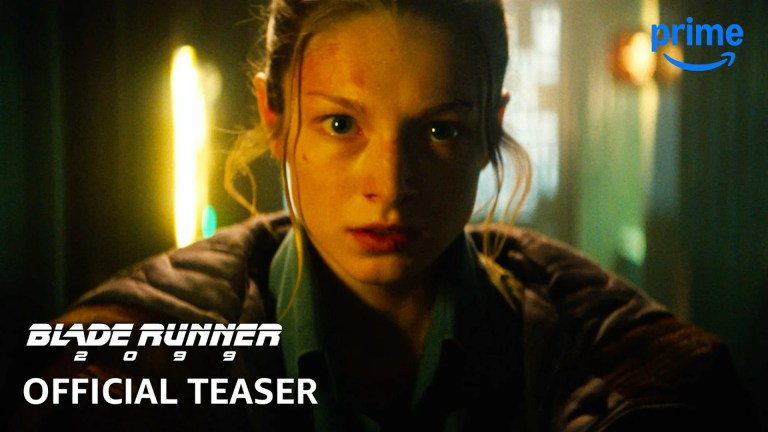
These 12 science-fiction selections use memory in sharply different ways: some erase or implant it, others record experience, disrupt recollection, or pass memories between people. The list comes from Cheryl Eddy’s September 24, 2018 Gizmodo/io9 article, so it is best read as an editorial selection rather than a current consensus ranking. Its paired entries—Blade Runner with Blade Runner 2049, and the 1972 and 2002 versions of Solaris—remain grouped below.
Memory as a test of identity and reality
In these films, a remembered past can be a manufactured product, an unreliable guide, or the very thing that makes someone feel human. Their mechanisms differ, but each asks how securely identity rests on memory.
| # | Preview | Product | Price | |
|---|---|---|---|---|
| 1 |
![Sci-Fi Classics [DVD]](https://m.media-amazon.com/images/I/51d07WmsohL._SL160_.jpg)
|
Sci-Fi Classics [DVD] | $12.85 | Buy on Amazon |
| 2 |

|
Sci-Fi Classics 50 Movie Pack | $43.39 | Buy on Amazon |
| 3 |

|
Science Fiction Classics Collection (DVD) | $46.95 | Buy on Amazon |
| 4 |
![Colossus: The Forbin Project [DVD]](https://m.media-amazon.com/images/I/41l1k8qzU6L._SL160_.jpg)
|
Colossus: The Forbin Project [DVD] | $7.99 | Buy on Amazon |
| 5 |

|
Paul | $5.68 | Buy on Amazon |
Total Recall (1990)
Paul Verhoeven’s film follows Douglas Quaid, who turns to Rekall for an implanted “dream vacation.” The procedure appears to surface memories that may be genuine, leaving Quaid unsure whether his experience is a fantasy or evidence of a life he has forgotten. This is the 1990 film, not the 2012 remake.
Blade Runner and Blade Runner 2049
Considered together, the two films use replicants’ vivid memories to probe identity and authenticity. If a memory can be constructed, does its origin determine whether it matters—or whether the person who carries it is real?
The Tool Desk
Outbyte Driver Updater FREEFix the driver behind crashes, sound loss and screen glitchesFind Drivers →Outbyte PC Repair FREERepair Windows errors before they cause bigger problemsFix Now →#1 Best Overall
Dark City
A man wakes with amnesia in a city where the Strangers alter residents’ identities and insert memories. The premise turns a noir-tinged science-fiction mystery into a question about how much of the self can survive when both personal history and the world around it are being rewritten.
Vanilla Sky
David Aames’s memories and subconscious distort what he—and the audience—take to be real. Rather than treating memory as a stable record, the film makes it part of an unsettling puzzle about perception and identity.
Erasing, sharing, and inheriting memories
Other entries imagine memory as something that can be removed, replayed for someone else, or transferred across a community. The consequences range from private heartbreak to social control.
Rank #2
- Extensive Movie Collection: Features 50 classic science fiction movies spanning multiple genres including space adventures, monster films, and mythological epics
- Convenient Storage Format: Twelve double-sided DVDs provide an instant library of entertainment in a compact and organized format
- Diverse Film Selection: Includes iconic titles such as Santa Claus Conquers the Martians, Gamera the Invincible, Hercules Unchained, and many other cult classics from the golden age of sci-fi cinema
Eternal Sunshine of the Spotless Mind (2004)
After a breakup, Joel and Clementine undergo memory erasure. The story follows Joel as the procedure removes his memories of Clementine and he tries to hold on to some of them. The science-fiction device gives the film’s emotional conflict a specific shape: forgetting may seem like relief, but the memories being erased are also part of a relationship’s meaning.
Universal’s official home-entertainment page lists Blu-ray and DVD formats for the film. That confirms a physical-media format path, not current retailer stock, price, or regional compatibility. See Universal’s official film page.
Strange Days
In this thriller, illegal brain-jacking technology records a person’s experiences so someone else can replay them. When recordings become evidence in a murder investigation, memory is no longer only private: a captured point of view can be replayed, scrutinized, and used to expose a crime.
Rank #3
The Giver
Adapted from Lois Lowry’s novel, the film follows a boy in a controlled society as he receives the community’s memories. What he learns about the past reveals what has been lost through suppressing memory—not just individual experience, but the shared inheritance that gives a society context.
Men in Black
The neuralyzer is the series’ recurring memory-erasure device, used within a broader alien-investigation comedy. Here memory manipulation is an operational tool: the films play with the oddity and consequences of wiping people’s recollections while keeping the larger story comic.
Recommended Free Tools
Amnesia, grief, and the weight of remembering
In these films, memory loss or disruption bears directly on relationships and grief. The speculative premise is less a puzzle to solve than a way to examine what people need from their past.
Rank #4
- Factory sealed DVD
The Forgotten
A grieving mother remembers her son, but people around her deny that he existed. When another parent reports a similar experience, her private grief becomes a mystery that challenges the reliability of everyone else’s account.
Embers
After a global epidemic, survivors live with different forms of amnesia. The film follows how disrupted memory affects relationships and the search for meaning, making memory loss a condition people must live with rather than a single mystery to unravel.
Solaris (1972 and 2002)
Both adaptations center on astronauts who encounter apparitions shaped by their memories. The versions are separate films, but each uses those encounters to explore the emotional force of remembered people and the difficulty of distinguishing what is present from what the past brings back.
Best Value
- Factory sealed DVD
Pandorum
This deep-space mission story combines memory loss with an identity crisis. As recollection fails, the question of who the characters are becomes part of the mission’s central uncertainty.
Independent reader supportYour contribution helps us test, update, and keep practical guides available for everyone.How the films approach memory differently
The selection is not a ranking of which film handles memory “best.” Its value is in the range of questions the device can raise: whether a past is authentic, whether forgetting can ease pain, who controls a person’s memories, and what shared history makes possible.
- Implantation and altered identity: Total Recall, the Blade Runner films, and Dark City use constructed or inserted memories to unsettle identity and reality.
- Erasure and relationships: Eternal Sunshine of the Spotless Mind and Men in Black imagine memory removal in very different registers, from breakup drama to comedy.
- Recorded experience: Strange Days makes memory replayable and potentially evidentiary.
- Collective inheritance: The Giver links memory to a community’s understanding of its own past.
- Amnesia and emotional disruption: The Forgotten, Embers, Solaris, and Pandorum connect memory problems to grief, relationships, meaning, or identity.
That spread is what makes the 12-film selection useful: memory is not one science-fiction plot device, but a way to tell stories about personhood, intimacy, evidence, and social power.
Quick Recap
Product prices and availability are accurate as of the date/time indicated and are subject to change. Any price and availability information displayed on Amazon at the time of purchase will apply.