Recommended Free Tools
These are the 100 greatest feature films released from 2000 through 2025, ranked as a researched critical canon rather than an objective scientific measurement. The list uses the 2026 edition of They Shoot Pictures, Don’t They?‘s The 21st Century’s Most Acclaimed Films as its transparent consensus baseline, then considers formal achievement, influence, emotional range, geographic breadth, and the difference between a film’s importance and its accessibility.
Wong Kar-wai’s In the Mood for Love leads, followed by David Lynch’s Mulholland Dr., Edward Yang’s Yi Yi, Hayao Miyazaki’s Spirited Away, and Paul Thomas Anderson’s There Will Be Blood. The selection includes fiction, animation, documentary, experimental cinema, blockbusters, and difficult works that have helped define what 21st-century film can be.
How this ranking was assembled
The strongest current data anchor is the 2026 edition of They Shoot Pictures, Don’t They? (TSPDT), published February 1, 2026. Its aggregation covers 1,000 films released between 2000 and 2025, drawing on 7,329 end-of-year ballots from 2,025 critics and filmmakers and an initial pool of 13,420 films. TSPDT is not measuring objective quality; it is counting and weighting critical appearances across end-of-year, end-of-decade, all-time, and miscellaneous lists.
This article follows the eligible feature-film order of that consensus backbone while applying editorial judgment in five areas:
#1 Best Overall

- PREMIUM PRINTED SATIN FINISH provides dynamic colors without the reflective glare
- POSTER FRAME is a clean and modern design offered in a variety of colors to showcase the art and compliment any room decor
- LIGHTWEIGHT & EASY TO HANG construction allows for a quick installation of this framed poster using the attached sawtooth hanger so you can enjoy your wall art immediately
- PERFECT SIZE for any room; poster is 22.375" x 34" and finished size is 24.25" x 35.75" x .75"
- EASILY DECORATE any space to create the perfect decor for a party, bedroom, bathroom, kids room, living room, office, dorm, and more
- Durability: whether a film continues to recur across major polls and critical lists.
- Formal achievement: direction, writing, performance, editing, cinematography, sound, production design, and control of cinematic form.
- Influence: whether a film changed a genre, expanded representation, altered production or distribution practice, or became a reference point for later filmmakers.
- Range: a canon should include ecstatic popular cinema, intimate drama, comedy, animation, horror, documentary, and experimental work.
- Breadth: the list makes room for major films from Asia, Latin America, Africa, Europe, the Middle East, and diasporic cinema, while acknowledging that the critical field remains uneven.
Television entries are excluded. TSPDT includes Twin Peaks: The Return among its highly ranked 21st-century works and labels it television; this is a feature-film list, so The Hurt Locker is used as the eligible replacement.
The critical landscape behind the list
The consensus is real, but it is not singular. TSPDT’s top 10 are In the Mood for Love, Mulholland Dr., Yi Yi, Spirited Away, There Will Be Blood, Tropical Malady, Portrait of a Lady on Fire, The Tree of Life, The Gleaners & I, and Moonlight. Other major surveys produce different emphases.
The British Film Institute’s Sight and Sound poll began in 1952 and is conducted every ten years. In its eighth and largest edition, held in 2022, only two 21st-century films reached the critics’ all-time top 10: In the Mood for Love at number five and Mulholland Dr. at number eight. The 2016 BBC critics’ poll placed Mulholland Dr., In the Mood for Love, There Will Be Blood, Spirited Away, and Boyhood in its top five.
A 2025 New York Times exercise surveyed more than 500 influential directors, actors, and other figures worldwide. Its list began with Superbad at number 100, while Parasite was widely treated as a leading contender for the top position. The Hollywood Reporter’s 2023 critics’ list placed Yi Yi first. Boyhood is also the only 21st-century film to receive a 100 Metascore, though that is a platform-specific aggregation of published reviews, not a universal quality score.
What’s actually slowing this PC down?
Pick the symptom - the matching free tool is one click away.
These disagreements are useful. TSPDT measures accumulated critical recurrence; Sight and Sound asks voters to place newer films inside an all-time canon; the New York Times foregrounds influential contemporary practitioners and cultural figures; and Metacritic aggregates reviews rather than asking voters to name a personal canon. Greatness is plural, and a serious list should show that rather than hide it.
100 greatest movies of the 21st century
Content note: Several films address war, genocide, racism, colonialism, addiction, self-harm, sexual violence, psychological abuse, death, or graphic violence. Individual entries flag the most significant concerns, but the notes are not exhaustive. Films are listed by release year and retain their original accents, diacritics, and credited directors.
-
In the Mood for Love (2000) — Wong Kar-wai
Wong Kar-wai turns an affair that may never happen into a film about time, restraint, repetition, and the lives people construct around desire. Christopher Doyle and Ping Bin Lee’s saturated corridors, recurring musical phrases, slow-motion walks, and obstructed compositions make absence tactile. Its Hong Kong setting is not decorative: apartments, stairwells, neighbors, and social codes create the emotional pressure of a city in transition.
Quick wins for a faster PC:
Repair Windows errors before they cause bigger problemsFix Now →Fix the driver behind crashes, sound loss and screen glitchesFind Drivers →Clear out junk files and repair common Windows errorsFree Scan →Special offer. See more information about Outbyte and uninstall instructions. Please review EULA and Privacy policy.Why it matters: It is both a perfectly controlled romance and a film about the impossibility of recovering the past. Its influence can be felt in contemporary color design, elliptical storytelling, and the modern cinema of longing.
-
Mulholland Dr. (2001) — David Lynch
What begins as a Hollywood mystery gradually becomes a fractured dream of ambition, identity, performance, and disappointment. Lynch uses doubling, abrupt tonal shifts, sound design, and apparently impossible spaces to make cinematic form behave like an unconscious mind. The film refuses to turn its ambiguity into a puzzle with one official solution.
Why it matters: It is one of the century’s most influential demonstrations that popular genres can become psychological architecture.
Free tools Windows power users keep installed
One-click scans. No signup required.
Special offer. See more information about Outbyte and uninstall instructions. Please review EULA and Privacy policy. -
Yi Yi (2000) — Edward Yang
Edward Yang’s Taipei family drama follows several generations through love, illness, business, adolescence, and bereavement. Its measured pacing and lucid compositions allow apparently minor events to acquire the weight of life itself. A child’s camera becomes a quiet philosophical device, revealing the parts of other people that ordinary vision misses.
Why it matters: Few films balance a large social canvas with such intimate attention to individual uncertainty. It is a family epic without melodramatic shortcuts.
-
Spirited Away (2001) — Hayao Miyazaki
Miyazaki’s animated masterpiece sends Chihiro into a spirit world where names, labor, greed, appetite, and ecological damage are intertwined. The world feels immense because it is not reduced to a single moral system: frightening creatures can be kind, and apparent safety can be corrupting. Movement, architecture, food, weather, and silence all carry narrative meaning.
Why it matters: It demonstrated that animation could be simultaneously a family adventure, a coming-of-age story, an ecological fable, and a work of profound visual ambiguity.
Special offer. See more information about Outbyte and uninstall instructions. Please review EULA and Privacy policy. -
There Will Be Blood (2007) — Paul Thomas Anderson
Daniel Plainview’s rise through California’s oil fields becomes a brutal study of extraction, religious performance, capitalism, and loneliness. Anderson’s wide landscapes and abrasive soundscape make industrial power feel physically invasive, while Daniel Day-Lewis builds a character whose charisma and emptiness are inseparable.
Why it matters: It revives the scale of the American epic without nostalgia. The film’s formal confidence turns historical ambition into a modern horror story.
-
Tropical Malady (2004) — Apichatpong Weerasethakul
The film’s striking two-part structure begins as a tender romance between two men and transforms into a nocturnal jungle fable. Apichatpong lets desire, myth, animality, and landscape blur together rather than explaining how one becomes the other.
Why it matters: It expanded the vocabulary of queer and national cinema by treating memory, folklore, and supernatural experience as ordinary parts of emotional life.
Do these 3 things before closing this tab:
1Fix the driver behind crashes, sound loss and screen glitches2Repair Windows errors before they cause bigger problems3Scan for outdated or missing drivers - takes under a minuteSpecial offer. See more information about Outbyte and uninstall instructions. Please review EULA and Privacy policy.Content note: Sexual themes, violence, and psychologically intense animal imagery.
-
Portrait of a Lady on Fire (2019) — Céline Sciamma
Sciamma constructs a love story around looking: an artist studies her subject, the subject studies the artist, and both understand that their time together is limited. The film’s precise blocking, controlled color, and use of music make the act of remembering as important as the romance itself.
Why it matters: It places female desire, artistic collaboration, abortion, friendship, and authorship at the center of a period film without allowing historical setting to contain them.
-
The Tree of Life (2011) — Terrence Malick
Terrence Malick moves between a family’s grief in 1950s Texas and images of cosmic and biological creation. Whispered voice-over, flowing camera movement, natural light, and non-linear montage turn memory into a form of prayer and inquiry.
The Tool Desk
Outbyte PC Repair FREERepair Windows errors before they cause bigger problemsFix Now →Outbyte Driver Updater FREEScan for outdated or missing drivers - takes under a minuteDriver Scan →Special offer. See more information about Outbyte and uninstall instructions. Please review EULA and Privacy policy.Why it matters: Its ambition is not merely narrative. It asks whether cinema can hold private pain, evolutionary time, religious doubt, and forgiveness in the same visual experience.
-
The Gleaners & I (2000) — Agnès Varda
Varda’s digital-camera essay travels among people who collect what agriculture and consumer society leave behind. She includes herself as a curious, aging participant rather than pretending to be an invisible observer. The film’s small camera, playful editing, and ethical attention transform discarded objects into a meditation on value.
Why it matters: It helped show how lightweight digital filmmaking could support personal documentary, social observation, humor, and self-reflection without sacrificing artistic rigor.
-
Moonlight (2016) — Barry Jenkins
Divided into three chapters, Jenkins’s film follows Chiron from childhood to adulthood as he negotiates poverty, masculinity, sexuality, tenderness, and self-protection. Color, close-ups, music, and water create continuity across the changing performances.
PerformanceWindows Errors? Fix Them Before They SpreadDriversCrashes, No Sound, or Screen Glitches?PerformancePC Slower Than It Used to Be?Special offer. See more information about Outbyte and uninstall instructions. Please review EULA and Privacy policy.Why it matters: It gives a traditionally underserved life the scale and lyricism of an American bildungsroman while remaining attentive to silence and social pressure.
-
Parasite (2019) — Bong Joon-ho
Bong’s class thriller shifts from comedy to suspense to tragedy as two families collide inside a house divided by stairs, windows, hidden rooms, and unequal access to space. Every genre turn grows from the same material system.
Why it matters: It made structural inequality legible through architecture and entertainment, reaching a broad audience without simplifying its politics.
Content note: Class violence, exploitation, death, and disturbing violence.
Special offer. See more information about Outbyte and uninstall instructions. Please review EULA and Privacy policy. -
Eternal Sunshine of the Spotless Mind (2004) — Michel Gondry
Charlie Kaufman’s script and Michel Gondry’s handmade visual effects turn a breakup into a collapsing memory palace. The film’s emotional argument is not that love is painless, but that the painful, contradictory details of a relationship are part of what makes it real.
Why it matters: Its formal invention serves character rather than merely advertising cleverness, making experimental editing accessible through a recognizable romantic premise.
-
Caché (2005) — Michael Haneke
Haneke places unexplained surveillance tapes outside a comfortable Parisian household and lets private anxiety open onto France’s buried colonial history. The fixed images create a moral problem: someone is watching, but the audience is also implicated in looking for an answer.
Why it matters: It connects domestic guilt, racism, media spectatorship, and historical denial without offering the catharsis of a neatly solved mystery.
Special offer. See more information about Outbyte and uninstall instructions. Please review EULA and Privacy policy.Content note: Racism, colonial violence, suicide, and disturbing images.
-
Uncle Boonmee Who Can Recall His Past Lives (2010) — Apichatpong Weerasethakul
As Uncle Boonmee approaches death, ghosts, animals, memories, and earlier incarnations enter the same household. Apichatpong’s calm shifts in texture and genre make reincarnation feel less like a plot twist than a different model of time.
Why it matters: It presents Thai spiritual and political memory through an unusually open cinematic form, where the supernatural does not need to be separated from everyday life.
-
La Ciénaga (2001) — Lucrecia Martel
Martel’s humid, crowded family drama turns sound and offscreen space into sources of menace. A decaying upper-middle-class household, its servants, and its children drift through heat, injury, and social stagnation.
PC Slower Than It Used to Be?
A free scan shows the junk files, broken settings and background clutter dragging Windows down - then fixes them in one click.Free scan · Windows 10 & 11Outdated Drivers Are Slowing You Down
One free scan finds every outdated or missing driver and matches the right update for your exact hardware.Free scan · exact hardware matchSpecial offer. See more information about Outbyte and uninstall instructions. Please review EULA and Privacy policy.Why it matters: It established a distinctive Argentine modernism built from sensory disorientation, class tension, and the refusal to make dysfunction look picturesque.
Content note: Accidents, illness, class exploitation, and racial prejudice.
-
Goodbye, Dragon Inn (2003) — Tsai Ming-liang
On the final night of an old Taipei cinema, nearly empty spectators and staff move through corridors while a classic martial-arts film plays onscreen. Long silences and distant bodies turn moviegoing into an elegy for spaces, communities, and forms of attention that are disappearing.
Why it matters: It is a film about cinema that does not depend on nostalgia alone; its stillness becomes a physical experience of loneliness and desire.
Recommended Free Tools
Special offer. See more information about Outbyte and uninstall instructions. Please review EULA and Privacy policy. -
A Separation (2011) — Asghar Farhadi
A marital dispute in Tehran expands into a legal and moral labyrinth involving care work, class, religion, and competing versions of truth. Farhadi’s controlled revelations make each character understandable without making every action defensible.
Why it matters: It demonstrates how a tightly plotted domestic drama can contain an entire social system and sustain genuine ethical uncertainty.
Content note: Family conflict, pregnancy loss, and escalating psychological distress.
-
City of God (2002) — Fernando Meirelles and Kátia Lund
This propulsive account of several decades in a Rio de Janeiro favela uses dynamic editing, shifting narrators, and a photographer’s perspective to map the relationship between poverty, organized violence, and image-making.
PC Slower Than It Used to Be?
A free scan shows the junk files, broken settings and background clutter dragging Windows down - then fixes them in one click.Free scan · Windows 10 & 11Outdated Drivers Are Slowing You Down
One free scan finds every outdated or missing driver and matches the right update for your exact hardware.Free scan · exact hardware matchSpecial offer. See more information about Outbyte and uninstall instructions. Please review EULA and Privacy policy.Why it matters: Its kinetic style became globally influential, while its social energy keeps the film from feeling like a mere exercise in visual excitement.
Content note: Graphic violence, child violence, exploitation, and racism.
-
Mad Max: Fury Road (2015) — George Miller
George Miller builds a nearly continuous chase around practical stunt work, precise cutting, strong color design, and instantly readable spatial geography. Furiosa’s rebellion gives the film a political and emotional center without slowing its physical momentum.
Why it matters: It is proof that a giant action film can be formally exacting, politically alert, unusually tactile, and genuinely exhilarating.
Free tools Windows power users keep installed
One-click scans. No signup required.
Special offer. See more information about Outbyte and uninstall instructions. Please review EULA and Privacy policy.Content note: Sustained action violence, enslavement, misogyny, and bodily injury.
-
Werckmeister Harmonies (2000) — Béla Tarr
Tarr’s gliding long takes follow a small Hungarian town unsettled by a mysterious circus attraction and a climate of social collapse. The film’s black-and-white surfaces, sparse dialogue, and hypnotic movement make collective violence feel like a slow change in weather.
Why it matters: It is demanding cinema with an unusually clear political intuition: disorder becomes dangerous when people surrender perception to authority and rumor.
-
Melancholia (2011) — Lars von Trier
A wedding dissolves into depression and planetary catastrophe. Von Trier’s prologue, operatic tableaux, and deliberately artificial visual effects turn apocalypse into an external image of psychic experience.
What’s actually slowing this PC down?
Pick the symptom - the matching free tool is one click away.
Special offer. See more information about Outbyte and uninstall instructions. Please review EULA and Privacy policy.Why it matters: Few films have made depression feel less like a subplot than a radically altered way of seeing the world.
Content note: Depression, suicidal ideation, self-harm themes, and the end of the world.
-
Get Out (2017) — Jordan Peele
Peele’s horror satire begins with the social discomfort of a young Black man visiting his white girlfriend’s family and builds toward a conspiracy rooted in racial appropriation. Its jokes, symbols, suspense, and genre mechanics all serve the same critique.
Why it matters: It showed how socially specific horror could become a major popular form without blunting its anger or intelligence.
Special offer. See more information about Outbyte and uninstall instructions. Please review EULA and Privacy policy.Content note: Racism, coercion, surgery, and graphic violence.
-
Tie Xi Qu: West of the Tracks (2002) — Wang Bing
Wang Bing’s monumental documentary observes the decline of an industrial district and the workers and families living through economic transformation. Its extended observational form allows labor, waiting, conversation, and physical deterioration to remain visible instead of being compressed into an explanatory montage.
Why it matters: It is essential for understanding how digital documentary can record historical change at human scale. It is also one of the list’s most demanding commitments of time and attention.
Content note: Poverty, unemployment, hazardous work, illness, and social deprivation.
Special offer. See more information about Outbyte and uninstall instructions. Please review EULA and Privacy policy. -
The Turin Horse (2011) — Béla Tarr
Built from repeated daily actions, harsh wind, and dwindling resources, Tarr’s late work reduces narrative to exhaustion and endurance. The film’s severe rhythm asks what remains when habit, labor, and even light begin to fail.
Why it matters: Its austerity is not a lack of ideas; it is a formal experiment in duration, material survival, and the limits of human control.
Content note: Extreme bleakness, animal suffering, hunger, and death.
-
The White Ribbon (2009) — Michael Haneke
A village in northern Germany before the First World War is visited by unexplained acts of cruelty. Haneke’s austere black-and-white images investigate how punishment, moral absolutism, class hierarchy, and patriarchal authority can prepare the ground for authoritarian violence.
The Tool Desk
Outbyte Driver Updater FREEScan for outdated or missing drivers - takes under a minuteDriver Scan →Outbyte PC Repair FREEClear out junk files and repair common Windows errorsFree Scan →Special offer. See more information about Outbyte and uninstall instructions. Please review EULA and Privacy policy.Why it matters: It is a historical film that avoids the comfort of locating evil in one monster or one moment.
Content note: Child abuse, sexual violence, cruelty, and authoritarian punishment.
-
Under the Skin (2013) — Jonathan Glazer
Scarlett Johansson plays an alien moving through Glasgow and observing human bodies from an unfamiliar perspective. Glazer combines hidden-camera encounters, abstract sound, stark landscapes, and genre conventions to make embodiment appear strange again.
Rank #2
Sale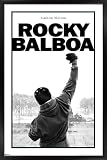 Rocky Balboa (2006) - One Sheet Wall Poster, 34L" x 22.4W", Black Framed Version
- This Allposters Rocky Balboa (2006) - One Sheet Wall Poster uses high-resolution artwork and is printed on PhotoArt Gloss Poster Paper which enhances colors with a high-quality look and feel
- Poster Frame is a clean and modern design offered in a variety of colors to showcase the art and compliment any room decor
- Lightweight and easy to hang construction allows for a quick installation of this framed poster using the attached sawtooth hanger so you can enjoy your wall art immediately
- Easily decorate any space to create the perfect decor for a party, bedroom, bathroom, kids room, living room, office, dorm, and more
- Perfect size for any room; poster is 22.375" x 34" and finished size is 24.25" x 35.75" x 0.75"
Why it matters: It is science fiction stripped of exposition and rebuilt around gaze, vulnerability, predation, and the possibility of empathy.
Special offer. See more information about Outbyte and uninstall instructions. Please review EULA and Privacy policy.Content note: Sexual predation, nudity, violence, and death.
-
Lost in Translation (2003) — Sofia Coppola
Two Americans form an uncertain connection inside the hotels, neon, and dislocated routines of Tokyo. Coppola’s elliptical writing and carefully observed performances make the relationship meaningful precisely because it is temporary and partly unspoken.
Why it matters: It translated loneliness, privilege, and emotional drift into a delicate modern mood piece, while its cross-cultural perspective remains open to debate.
-
Toni Erdmann (2016) — Maren Ade
A father uses an absurd alter ego to interrupt his daughter’s tightly managed corporate life. The comedy becomes increasingly uncomfortable as performance reveals both genuine affection and the violence of refusing to respect another person’s boundaries.
Special offer. See more information about Outbyte and uninstall instructions. Please review EULA and Privacy policy.Why it matters: Ade’s film finds emotional truth in embarrassment and makes work, class, aging, and family obligation inseparable from its comedy.
-
Dogville (2003) — Lars von Trier
Staged on a nearly bare soundstage, with chalk lines marking buildings and few physical walls, Dogville turns theatrical abstraction into a test of moral behavior. A community’s hospitality gradually becomes exploitation.
Why it matters: The deliberately artificial design forces viewers to notice the rules by which violence is normalized rather than hiding cruelty behind realistic scenery.
Content note: Sexual violence, coercive control, enslavement, and brutality.
Quick wins for a faster PC:
Repair Windows errors before they cause bigger problemsFix Now →Fix the driver behind crashes, sound loss and screen glitchesFind Drivers →Special offer. See more information about Outbyte and uninstall instructions. Please review EULA and Privacy policy. -
Holy Motors (2012) — Leos Carax
One actor travels through Paris performing radically different roles for unseen clients. The film moves from comedy to melodrama to action, science fiction, and musical without settling on a single explanation of who is watching or why.
Why it matters: It is a delirious defense of performance and cinema at a moment when the boundaries between actor, image, avatar, and audience were rapidly changing.
-
The Headless Woman (2008) — Lucrecia Martel
After a possible road accident, a wealthy woman moves through daily life in a state of denial and disconnection. Martel’s muffled sound, fragmented point of view, and social details show how class can protect a person from confronting consequences.
Why it matters: Its mystery is less about what happened than about how privilege reorganizes perception after harm.
Recommended: PC Feels Slow? A Free Scan Shows What's Dragging Windows Down →Recommended: Update Every Outdated Driver on Your PC in One Scan - Free →Recommended: Fix Windows Errors and Clear Junk Files in Minutes - Free Scan →Special offer. See more information about Outbyte and uninstall instructions. Please review EULA and Privacy policy.Content note: Possible vehicular death, class inequality, and psychological distress.
-
No Country for Old Men (2007) — Joel and Ethan Coen
The Coen brothers adapt Cormac McCarthy’s fatalistic border thriller with an austere visual grammar and exceptional control of offscreen sound. The pursuit narrative gradually becomes a meditation on aging, chance, and violence that cannot be fully explained.
Why it matters: It is a genre film whose craftsmanship is so exact that every silence, cut, and empty landscape carries moral pressure.
Content note: Graphic violence, murder, drug trafficking, and death.
Do these 3 things before closing this tab:
1Clear out junk files and repair common Windows errors2Fix the driver behind crashes, sound loss and screen glitches3Repair Windows errors before they cause bigger problemsSpecial offer. See more information about Outbyte and uninstall instructions. Please review EULA and Privacy policy. -
Phantom Thread (2017) — Paul Thomas Anderson
In a world of couture, ritual, and control, a dressmaker and his new partner negotiate an unconventional form of intimacy. Anderson’s elegant compositions and Jonny Greenwood’s score make domestic power feel as heightened as melodrama.
Why it matters: It understands romance not as the removal of conflict but as the discovery of a private system in which both people can exercise power.
-
The Act of Killing (2012) — Joshua Oppenheimer
Oppenheimer asks Indonesian perpetrators of mass killings to reenact their crimes in the styles of the movies they admire. The resulting performances expose vanity, denial, fantasy, and the political protection that allows perpetrators to remain celebrated.
Why it matters: It is a landmark in documentary ethics, showing that reenactment can reveal not only facts but the self-mythology surrounding historical violence.
Special offer. See more information about Outbyte and uninstall instructions. Please review EULA and Privacy policy.Content note: Genocide, torture, murder, sexual violence, and disturbing reenactments.
-
A.I. Artificial Intelligence (2001) — Steven Spielberg
Spielberg completes a project associated with Stanley Kubrick by combining a fairy tale about a robot child with a cold inquiry into desire, abandonment, and technological manufacture. The film’s shifting tones are part of its point: innocence and artificiality are impossible to keep separate.
Why it matters: Its emotional directness and philosophical unease make it one of the century’s most misunderstood studio science-fiction films.
-
Pan’s Labyrinth (2006) — Guillermo del Toro
Del Toro sets a dark fairy tale beside the violence of Francoist Spain. The fantasy world does not erase political reality; it gives a child a symbolic language for confronting authoritarian cruelty and impossible choices.
Recommended Free Tools
Special offer. See more information about Outbyte and uninstall instructions. Please review EULA and Privacy policy.Why it matters: It joins production design, creature effects, historical drama, and moral fable into a work whose imagination is inseparable from resistance.
Content note: Fascist violence, child endangerment, torture, war, and death.
-
Syndromes and a Century (2006) — Apichatpong Weerasethakul
Two related halves, one rural and one urban, echo each other through doctors, patients, romance, memory, and institutional spaces. The repetitions are not simple answers; they create a sense that life is being remembered, revised, or dreamed.
Why it matters: It is a quietly radical film about modern Thailand and the porous boundary between personal memory and social structure.
Recommended: Update Every Outdated Driver on Your PC in One Scan - Free →Recommended: Fix Windows Errors and Clear Junk Files in Minutes - Free Scan →Recommended: Crashes or Glitches? A Free Driver Scan Usually Finds the Culprit →Special offer. See more information about Outbyte and uninstall instructions. Please review EULA and Privacy policy. -
Zama (2017) — Lucrecia Martel
A colonial official waits in a remote South American outpost for a transfer that never arrives. Martel’s unstable soundscape, absurd bureaucracy, and disorienting landscapes make colonial power appear both oppressive and grotesquely fragile.
Why it matters: Rather than romanticizing the colonial period, it makes waiting, desire, and administrative violence feel like forms of imprisonment.
Content note: Colonial violence, racism, sexual coercion, and brutality.
-
Boyhood (2014) — Richard Linklater
Shot with the same performers over twelve years, Linklater’s film lets ordinary changes accumulate into a portrait of childhood and adulthood. Its achievement is not simply the production concept; it is the patience to let awkwardness, repetition, and unplanned physical change become the story.
Free tools Windows power users keep installed
One-click scans. No signup required.
Special offer. See more information about Outbyte and uninstall instructions. Please review EULA and Privacy policy.Why it matters: It makes time visible without turning life into a montage of milestones. The result is intimate, observational, and unusually generous.
-
Talk to Her (2002) — Pedro Almodóvar
Almodóvar weaves together two men caring for women in comas, friendship, performance, journalism, and memory. His melodramatic colors and nested stories create compassion while also forcing the viewer to question who gets to speak and who is being looked at.
Why it matters: It is a formally inventive meditation on care and communication that refuses to make emotional intensity a substitute for moral complexity.
Content note: Sexual assault, coma, grief, and ethically disturbing behavior.
PerformanceWindows Errors? Fix Them Before They SpreadDriversOutdated Drivers Are Slowing You DownPerformancePC Slower Than It Used to Be?Special offer. See more information about Outbyte and uninstall instructions. Please review EULA and Privacy policy. -
Once Upon a Time in Anatolia (2011) — Nuri Bilge Ceylan
A nighttime search for a body becomes a slow investigation of authority, guilt, marriage, and storytelling. Ceylan’s vast landscapes and extended conversations make the procedural structure gradually dissolve into a study of how people conceal and disclose themselves.
Why it matters: It turns a seemingly simple crime search into a patient, visually expansive inquiry into truth and institutional responsibility.
Content note: Murder investigation, death, and disturbing discussions of violence.
-
Elephant (2003) — Gus Van Sant
Van Sant follows students through the same school day from overlapping perspectives, creating a quiet map of movement before a shooting. The long takes and nonjudgmental surface resist a simple motive or explanatory diagnosis.
What’s actually slowing this PC down?
Pick the symptom - the matching free tool is one click away.
Special offer. See more information about Outbyte and uninstall instructions. Please review EULA and Privacy policy.Why it matters: It captures how ordinary spaces can contain unrecognized danger, though its deliberately observational approach remains ethically and emotionally challenging.
Content note: School shooting, gun violence, death, and trauma.
-
Songs from the Second Floor (2000) — Roy Andersson
Andersson assembles deadpan tableaux of people trapped in economic, spiritual, and bureaucratic absurdity. Static compositions and pale interiors turn everyday alienation into a series of strange public rituals.
Why it matters: Its painterly staging and dry humor created a recognizable alternative to conventional narrative realism and a sharp portrait of a society losing its bearings.
The Tool Desk
Outbyte Driver Updater FREEFix the driver behind crashes, sound loss and screen glitchesFind Drivers →Outbyte PC Repair FREEClear out junk files and repair common Windows errorsFree Scan →Special offer. See more information about Outbyte and uninstall instructions. Please review EULA and Privacy policy. -
The Death of Mr. Lazarescu (2005) — Cristi Puiu
An ill man is moved from one hospital to another during a long night while medical systems, exhaustion, and indifference close around him. Puiu’s observational style refuses both sentimental uplift and easy villainy.
Why it matters: It helped define the Romanian New Wave’s morally alert realism, making institutional failure visible through mundane time and uncomfortable proximity.
Content note: Medical neglect, illness, humiliation, and death.
-
Children of Men (2006) — Alfonso Cuarón
In a near-future Britain facing human infertility, a former activist escorts a pregnant refugee through a militarized state. Cuarón’s long takes and shifting battlefield perspective make political collapse feel immediate and bodily.
Do these 3 things before closing this tab:
1Fix the driver behind crashes, sound loss and screen glitches2Repair Windows errors before they cause bigger problems3Scan for outdated or missing drivers - takes under a minuteSpecial offer. See more information about Outbyte and uninstall instructions. Please review EULA and Privacy policy.Why it matters: The film combines dystopian world-building with an urgent argument about refugees, state violence, hope, and the ethics of looking.
Content note: War, refugee persecution, state violence, pregnancy danger, and death.
-
Platform (2000) — Jia Zhangke
Jia follows a Chinese cultural troupe from the late 1970s into the 1980s as performance, fashion, music, and political life change around them. Its long historical span is carried by quiet shifts in behavior rather than explanatory speeches.
Why it matters: It makes modernization visible as a change in bodies, workplaces, desires, and artistic habits.
Quick wins for a faster PC:
Repair Windows errors before they cause bigger problemsFix Now →Fix the driver behind crashes, sound loss and screen glitchesFind Drivers →Clear out junk files and repair common Windows errorsFree Scan →Special offer. See more information about Outbyte and uninstall instructions. Please review EULA and Privacy policy. -
In Vanda’s Room (2000) — Pedro Costa
Costa’s digital images remain in the cramped rooms of Fontainhas as residents live amid addiction, poverty, demolition, and fragile companionship. The film’s darkness and duration require the viewer to remain with people usually pushed outside the frame.
Why it matters: It is a major documentary achievement in digital intimacy, demonstrating how austere images can create attention rather than distance.
Content note: Drug use, poverty, illness, demolition, and death.
-
Oldboy (2003) — Park Chan-wook
Park’s revenge thriller is built from operatic color, brutal choreography, baroque production design, and revelations that reshape the meaning of everything before them. Its famous corridor fight is only one expression of a broader obsession with punishment and forbidden knowledge.
Special offer. See more information about Outbyte and uninstall instructions. Please review EULA and Privacy policy.Why it matters: It helped bring South Korean genre cinema to a worldwide audience while retaining an idiosyncratic formal and emotional extremity.
Content note: Graphic violence, torture, incest, sexual violence, and suicide.
-
Punch-Drunk Love (2002) — Paul Thomas Anderson
Anderson turns social anxiety into a compressed romantic musical, with saturated colors, abrupt bursts of sound, and a score that seems to pulse with Barry’s panic. Adam Sandler’s performance makes awkwardness both comic and physically vulnerable.
Why it matters: It is a small film with an unusually complete visual system, proving that a star persona can be dismantled and rebuilt through form.
Special offer. See more information about Outbyte and uninstall instructions. Please review EULA and Privacy policy. -
Inland Empire (2006) — David Lynch
Shot largely on low-resolution digital video, Lynch’s labyrinth of actors, roles, rooms, and parallel realities feels unstable at the level of the image itself. Its length and opacity are part of the experience rather than obstacles to a hidden conventional plot.
Why it matters: It pushed digital cinema toward a genuinely nightmarish, improvisational texture and remains one of the boldest films about performance and identity.
Content note: Sexual exploitation, violence, domestic abuse, and psychological horror.
-
The Lives of Others (2006) — Florian Henckel von Donnersmarck
An East German surveillance officer begins to change while listening to the private life of a playwright and his partner. The film uses the conventions of a political thriller to explore conscience, art, compromise, and the afterlife of authoritarian systems.
PC Slower Than It Used to Be?
A free scan shows the junk files, broken settings and background clutter dragging Windows down - then fixes them in one click.Free scan · Windows 10 & 11Outdated Drivers Are Slowing You Down
One free scan finds every outdated or missing driver and matches the right update for your exact hardware.Free scan · exact hardware matchSpecial offer. See more information about Outbyte and uninstall instructions. Please review EULA and Privacy policy.Why it matters: Its accessible storytelling gives large ethical questions a human scale without pretending that empathy erases political responsibility.
Content note: State surveillance, suicide, repression, and political imprisonment.
-
The Master (2012) — Paul Thomas Anderson
A traumatized veteran encounters a charismatic movement leader, and their relationship becomes a struggle between freedom, discipline, dependence, and domination. The 70mm compositions and Jonny Greenwood’s dissonant score give the postwar landscape a mythic but unstable quality.
Why it matters: It resists reducing its central bond to a simple hero-villain relationship, making charisma itself the object of study.
Special offer. See more information about Outbyte and uninstall instructions. Please review EULA and Privacy policy.Content note: War trauma, alcoholism, coercive belief systems, and sexual themes.
Rank #3
Sale Trends International Back to the Future - One Sheet Wall Poster, 22.375" x 34", Black Framed Version
- THIS TRENDS BACK TO THE FUTURE - ONE SHEET WALL POSTER uses high-resolution artwork and is printed on PhotoArt Gloss Poster Paper which enhances colors with a high-quality look and feel
- POSTER FRAME is a clean and modern design offered in a variety of colors to showcase the art and compliment any room decor
- LIGHTWEIGHT & EASY TO HANG construction allows for a quick installation of this framed poster using the attached sawtooth hanger so you can enjoy your wall art immediately
- PERFECT SIZE for any room; poster is 22.375" x 34" and finished size is 24.25" x 35.75" x .75"
- EASILY DECORATE any space to create the perfect decor for a party, bedroom, bathroom, kids room, living room, office, dorm, and more
-
Memories of Murder (2003) — Bong Joon-ho
Bong’s investigation of serial murders in rural South Korea moves between dark comedy, procedural frustration, and institutional failure. The detectives’ changing methods never fully restore order, and the final look outward turns an old case into a question for the audience.
Why it matters: It uses genre to examine incompetence, class, masculinity, and the limits of evidence while maintaining extraordinary tonal control.
Content note: Sexual violence, murder, police brutality, and trauma.
Recommended: PC Feels Slow? A Free Scan Shows What's Dragging Windows Down →Recommended: Crashes or Glitches? A Free Driver Scan Usually Finds the Culprit →Special offer. See more information about Outbyte and uninstall instructions. Please review EULA and Privacy policy. -
Crouching Tiger, Hidden Dragon (2000) — Ang Lee
Ang Lee combines wuxia action with a restrained story of forbidden love, duty, and generational conflict. The wire-assisted fights are expressive rather than merely spectacular: characters float, leap, and clash according to emotional as well as physical rules.
Why it matters: It brought Chinese-language martial-arts cinema to a broad international audience without flattening its poetry or genre traditions.
-
Brokeback Mountain (2005) — Ang Lee
Across decades, two men attempt to live within a culture that cannot accommodate the love they share. Lee’s restrained direction and Heath Ledger’s controlled performance make silence, routine, and missed chances carry the drama.
Why it matters: It gave queer desire the emotional and historical scope of a classic American romance while revealing the violence of enforced secrecy.
Do these 3 things before closing this tab:
1Repair Windows errors before they cause bigger problems2Scan for outdated or missing drivers - takes under a minute3Clear out junk files and repair common Windows errorsSpecial offer. See more information about Outbyte and uninstall instructions. Please review EULA and Privacy policy.Content note: Homophobia, domestic abuse, and violence.
-
Zodiac (2007) — David Fincher
Fincher’s procedural follows investigators, journalists, and obsessives through an investigation that resists definitive closure. Precise period recreation, digital camera movement, and a measured accumulation of documents and theories make obsession feel like a system.
Why it matters: It is a rare crime film about uncertainty itself, and about the personal cost of allowing an unsolved case to become an identity.
Content note: Serial murder, violence, and disturbing crime-scene material.
What’s actually slowing this PC down?
Pick the symptom - the matching free tool is one click away.
Special offer. See more information about Outbyte and uninstall instructions. Please review EULA and Privacy policy. -
WALL-E (2008) — Andrew Stanton
For much of its first act, Stanton’s animated film tells its story through gesture, sound, movement, and an almost wordless relationship between two machines. Its ecological warning is balanced by a belief in curiosity, physical activity, and collective responsibility.
Why it matters: It demonstrates that a major studio animation can be formally adventurous, visually silent, politically pointed, and emotionally legible across ages.
-
Morvern Callar (2002) — Lynne Ramsay
After a personal loss, a young woman moves through music, landscape, travel, and acts of self-invention. Ramsay’s fragmented sensory style refuses to turn grief into a predictable progression toward healing.
Why it matters: It treats interiority as something created through sound, texture, and movement rather than explained in dialogue.
PC Slower Than It Used to Be?
A free scan shows the junk files, broken settings and background clutter dragging Windows down - then fixes them in one click.Free scan · Windows 10 & 11Crashes, No Sound, or Screen Glitches?
Random freezes, missing sound and display glitches usually trace back to one bad driver. Find and replace yours safely.Free scan · under a minuteSpecial offer. See more information about Outbyte and uninstall instructions. Please review EULA and Privacy policy.Content note: Suicide, grief, emotional detachment, and exploitation.
-
Amour (2012) — Michael Haneke
Haneke confines the drama of an elderly couple to their apartment as illness changes the meaning of love, dignity, and care. The static camera and unadorned performances deny viewers the comforting distance of conventional melodrama.
Why it matters: It takes aging and caregiving seriously as physical, ethical, and domestic realities.
Content note: Stroke, dementia, caregiving, death, and euthanasia.
The Tool Desk
Outbyte Driver Updater FREEFix the driver behind crashes, sound loss and screen glitchesFind Drivers →Outbyte PC Repair FREEClear out junk files and repair common Windows errorsFree Scan →Special offer. See more information about Outbyte and uninstall instructions. Please review EULA and Privacy policy. -
Russian Ark (2002) — Aleksandr Sokurov
Sokurov’s film moves through the State Hermitage Museum in a continuous digital shot, drifting through Russian history as if the building itself were remembering. Its technical feat matters because the camera’s movement becomes a meditation on art, empire, memory, and national myth.
Why it matters: It turns a museum and a single take into a vessel for centuries of historical performance.
-
Nostalgia for the Light (2010) — Patricio Guzmán
In Chile’s Atacama Desert, astronomers search the sky while women search the ground for the remains of relatives disappeared under dictatorship. Guzmán connects cosmic time, archaeological evidence, political memory, and personal mourning with extraordinary clarity.
Why it matters: It shows documentary cinema at its most essayistic: intimate testimony becomes part of a larger investigation into how nations remember.
Recommended Free Tools
Special offer. See more information about Outbyte and uninstall instructions. Please review EULA and Privacy policy.Content note: Dictatorship, state violence, disappearance, and bereavement.
-
Amélie (2001) — Jean-Pierre Jeunet
Jeunet’s elaborately stylized Paris is full of color, tactile details, eccentric characters, and small acts of anonymous kindness. Beneath its whimsy is a story about a person who can manage other people’s happiness more easily than her own vulnerability.
Why it matters: Its visual design and tonal confidence made it one of the century’s most influential international popular films, even as its idealized view of Paris invites scrutiny.
-
The Lord of the Rings: The Fellowship of the Ring (2001) — Peter Jackson
Jackson turns Tolkien’s world into a coherent cinematic geography of mountains, mines, forests, languages, costumes, miniatures, digital effects, and ensemble performance. The fellowship’s formation gives the immense production a clear emotional engine.
Special offer. See more information about Outbyte and uninstall instructions. Please review EULA and Privacy policy.Why it matters: It helped establish the modern fantasy blockbuster as a sustained world rather than a sequence of spectacle set pieces.
-
As I Was Moving Ahead Occasionally I Saw Brief Glimpses of Beauty (2000) — Jonas Mekas
Mekas assembles decades of home-movie fragments into a record of family, friends, seasons, travel, and fleeting happiness. The film does not pretend that memory is complete; its repetition and gaps are the form of remembrance.
Why it matters: It expands the idea of a documentary feature into a life archive, making personal footage feel both private and historically resonant.
Viewing note: Its extended duration and fragmentary structure reward patient viewing rather than conventional plot expectations.
Free tools Windows power users keep installed
One-click scans. No signup required.
Special offer. See more information about Outbyte and uninstall instructions. Please review EULA and Privacy policy. -
The Social Network (2010) — David Fincher
Fincher, Aaron Sorkin, Trent Reznor, and Atticus Ross turn the contested origins of Facebook into a fast, cold drama about ambition, friendship, litigation, and the social costs of technological scale. The editing and music make conversation feel like a competitive sport.
Why it matters: It captured a transformation in how status, intimacy, and information would be organized, while remaining a character study rather than a technology explainer.
-
Y tu mamá también (2001) — Alfonso Cuarón
Two teenagers and an older woman take a road trip through Mexico, where erotic discovery intersects with class, politics, grief, and national history. The narrator periodically widens the frame to reveal what the travelers cannot see.
Why it matters: It makes a seemingly personal coming-of-age story inseparable from the social geography around it.
Special offer. See more information about Outbyte and uninstall instructions. Please review EULA and Privacy policy.Content note: Sexual content, grief, class inequality, and death.
-
A Prophet (2009) — Jacques Audiard
A young prisoner enters a violent hierarchy and learns to survive by reading power, language, loyalty, and opportunity. Audiard’s close physical perspective keeps the prison’s social order in constant motion.
Why it matters: It is a prison film, crime saga, and coming-of-age story about identity being formed under coercion.
Content note: Prison violence, murder, racism, and coercion.
Quick wins for a faster PC:
Repair Windows errors before they cause bigger problemsFix Now →Scan for outdated or missing drivers - takes under a minuteDriver Scan →Special offer. See more information about Outbyte and uninstall instructions. Please review EULA and Privacy policy. -
The Piano Teacher (2001) — Michael Haneke
A repressed piano instructor’s life becomes increasingly unstable when a younger student pursues her. Haneke’s clinical framing and Isabelle Huppert’s uncompromising performance expose the relationship between discipline, desire, shame, and control.
Why it matters: It is an unsettling study of how social repression and private violence can mirror one another rather than a conventional erotic drama.
Content note: Sexual violence, self-harm, stalking, abuse, and psychological distress.
-
Colossal Youth (2006) — Pedro Costa
Costa returns to the displaced residents of Fontainhas, composing dark interiors and broken conversations around migration, memory, and poverty. The film’s fragments feel like testimony from people whose official histories have been discarded.
Special offer. See more information about Outbyte and uninstall instructions. Please review EULA and Privacy policy.Why it matters: It demonstrates how rigorous visual composition can coexist with documentary attention and deep respect for marginalized lives.
Content note: Poverty, displacement, addiction, illness, and family trauma.
-
The Royal Tenenbaums (2001) — Wes Anderson
Anderson’s carefully designed family comedy follows damaged prodigies and the father who tries to re-enter their lives. Symmetry, deadpan performance, chapter structure, costumes, and music turn dysfunction into a recognizable visual language.
Why it matters: It established a major strain of 21st-century American auteur comedy while allowing its formal charm to coexist with genuine sadness.
The Tool Desk
Outbyte Driver Updater FREEScan for outdated or missing drivers - takes under a minuteDriver Scan →Outbyte PC Repair FREERepair Windows errors before they cause bigger problemsFix Now →Special offer. See more information about Outbyte and uninstall instructions. Please review EULA and Privacy policy. -
Synecdoche, New York (2008) — Charlie Kaufman
A theater director builds an ever-expanding replica of New York and his own life, only to lose the boundary between rehearsal and existence. Kaufman’s nesting structures turn mortality, artistic ambition, parenthood, illness, and regret into one impossible production.
Why it matters: It is one of the century’s most ambitious films about the desire to represent life and the impossibility of ever completing that task.
Content note: Illness, death, depression, and existential distress.
-
Roma (2018) — Alfonso Cuarón
Shot in expressive black and white, Cuarón’s semi-autobiographical film follows a domestic worker in 1970s Mexico City amid family fracture and political violence. Elaborate tracking shots place private labor inside a larger historical and urban world.
Quick wins for a faster PC:
Repair Windows errors before they cause bigger problemsFix Now →Scan for outdated or missing drivers - takes under a minuteDriver Scan →Special offer. See more information about Outbyte and uninstall instructions. Please review EULA and Privacy policy.Why it matters: It pairs technical virtuosity with a serious examination of class, race, domestic work, motherhood, and memory.
Content note: Political violence, childbirth trauma, family abandonment, and death.
-
Carol (2015) — Todd Haynes
Haynes uses period design, reflections, windows, shallow focus, and restrained performances to tell a love story shaped by surveillance and social consequence. The camera often shares the characters’ partial knowledge, making desire a matter of visual discovery.
Why it matters: It brings queer romance into the grammar of the classic melodrama while giving its women interiority and agency.
PerformancePC Slower Than It Used to Be?DriversCrashes, No Sound, or Screen Glitches?PerformanceWindows Errors? Fix Them Before They SpreadSpecial offer. See more information about Outbyte and uninstall instructions. Please review EULA and Privacy policy.Content note: Homophobia, custody conflict, and emotional coercion.
-
Silent Light (2007) — Carlos Reygadas
Set within a Mennonite community, Reygadas’s film treats adultery, faith, landscape, and time with startling calm. Natural light and long takes make the rural world feel both physically immediate and spiritually charged.
Why it matters: It uses formal stillness to explore moral conflict without reducing religious belief to either ignorance or easy transcendence.
-
The Dark Knight (2008) — Christopher Nolan
Nolan’s Batman film combines crime thriller structure, political allegory, large-format spectacle, and a villain who treats social order as an experiment. Gotham’s moral choices are expressed through editing, sound, performance, and escalating public dilemmas.
Special offer. See more information about Outbyte and uninstall instructions. Please review EULA and Privacy policy.Why it matters: It expanded the artistic and commercial expectations placed on superhero cinema without abandoning the pleasures of a blockbuster.
Content note: Terrorism, torture, murder, and sustained violence.
-
Before Sunset (2004) — Richard Linklater
Jesse and Céline walk through Paris and revisit the unfinished conversation of their earlier lives. The near-real-time structure makes every hesitation, joke, interruption, and change of subject part of the romance.
Why it matters: It finds cinematic drama in speech, aging, regret, and the possibility that a single afternoon can alter a life.
Special offer. See more information about Outbyte and uninstall instructions. Please review EULA and Privacy policy. -
Once Upon a Time… in Hollywood (2019) — Quentin Tarantino
Tarantino’s Los Angeles of 1969 is a layered film-history playground populated by actors, stunt performers, television workers, counterculture figures, and the threat of the Manson murders. Its final movement rewrites history through the fantasy of movies as protection.
Why it matters: It is both a revisionist Hollywood story and a reflection on the labor, friendship, and mythology that sustain screen culture.
Content note: Cult violence, murder, racism, misogyny, and graphic action violence.
-
4 Months, 3 Weeks and 2 Days (2007) — Cristian Mungiu
Over the course of a single day in late-communist Romania, a young woman helps her friend obtain an illegal abortion. Mungiu’s long takes and unembellished spaces make bureaucratic fear and personal loyalty immediate.
Recommended: Fix Windows Errors and Clear Junk Files in Minutes - Free Scan →Recommended: Update Every Outdated Driver on Your PC in One Scan - Free →Recommended: PC Feels Slow? A Free Scan Shows What's Dragging Windows Down →Special offer. See more information about Outbyte and uninstall instructions. Please review EULA and Privacy policy.Why it matters: It is a precise example of how political history can be experienced through logistics, waiting, money, rooms, and bodily vulnerability.
Content note: Abortion, pregnancy, sexual coercion, bodily distress, and authoritarian control.
-
Dancer in the Dark (2000) — Lars von Trier
A Czech immigrant losing her sight escapes into imagined musical numbers while working to protect her son. Von Trier’s handheld realism and digital-video texture collide with exuberant song-and-dance sequences, making fantasy both refuge and trap.
Rank #4
 HWC Trading Goodfellas Movie Poster The Cast Signed 16 x 12 inch Framed Gift Printed Autograph Film Print Photo Picture Display - 16" x 12" Framed
- A GIFT THEY’LL ACTUALLY LOVE - Give that loved one a great gift with this signed & framed, printed photo of the most popular films of all time. A truly Magical present for them and top present-giving points to you!
- YOU WON'T FIND A BETTER PRODUCT FOR THE PRICE - Just like the real thing but without the cost, Fans and Collectors of any age will be delighted to receive this authentic-looking display that makes for a unique addition to their collectors' memorabilia.
- ARRIVES READY TO GIVE AS A GIFT - Our prints come Framed in a sleek Black Polycarbonate frame that compliments the matt mount display. Lightweight, but of the highest quality - Simply perfect for a birthday, Christmas, or any kind of gift!
- GREAT SIZE, QUALITY AND FINISH - Professionally made in our studio, these displays come with a high-quality picture of the Movie Film Poster alongside a printed copy of them famous autograph signatures. Mounted in a matt black using an acid-free display board, it's perfectly finished with the cast's Pre-Printed Autographs & expertly framed in our chosen sleek black frames, all manufactured in house. A simply great Gift Idea!
Why it matters: It tests the emotional and ethical limits of the musical form by placing theatrical pleasure against poverty, disability, and capital punishment.
Recommended Free Tools
Special offer. See more information about Outbyte and uninstall instructions. Please review EULA and Privacy policy.Content note: Blindness, poverty, execution, violence, and grief.
-
Millennium Mambo (2001) — Hou Hsiao-hsien
A woman looks back on her drift through nightlife, an abusive relationship, and an unstable early adulthood. Hou’s tracking shots, electronic music, and luminous colors create a distance between the narrator and the life she once inhabited.
Why it matters: It captures a generation’s mood through rhythm and atmosphere rather than conventional explanation.
Content note: Emotional abuse, drug use, and relationship violence.
Free tools Windows power users keep installed
One-click scans. No signup required.
Special offer. See more information about Outbyte and uninstall instructions. Please review EULA and Privacy policy. -
Memento (2000) — Christopher Nolan
Nolan fragments a revenge story around a protagonist unable to form new memories. The reverse chronology is not just a gimmick: it places the viewer inside the instability of evidence, self-narration, and deliberate self-deception.
Why it matters: It helped make nonlinear structure a mainstream storytelling tool while keeping its formal puzzle tied to character and ethics.
Content note: Murder, assault, memory impairment, and revenge violence.
-
The Great Beauty (2013) — Paolo Sorrentino
Aging writer Jep Gambardella drifts through Rome’s parties, monuments, friendships, and spiritual emptiness. Sorrentino’s sweeping camera and extravagant compositions are deliberately excessive, then punctured by moments of stillness and mourning.
Do these 3 things before closing this tab:
1Scan for outdated or missing drivers - takes under a minute2Repair Windows errors before they cause bigger problems3Fix the driver behind crashes, sound loss and screen glitchesSpecial offer. See more information about Outbyte and uninstall instructions. Please review EULA and Privacy policy.Why it matters: It turns decadence into a question about what art, memory, and beauty can mean after a life spent performing sophistication.
-
35 Shots of Rum (2008) — Claire Denis
Denis observes a father and daughter whose intimate household is changing as adulthood and desire pull them in different directions. Trains, music, food, and glances carry the emotional information that another film might explain in dialogue.
Why it matters: It is a quiet masterpiece of family attachment, migration, aging, and the painful generosity of letting someone leave.
-
Hunger (2008) — Steve McQueen
McQueen depicts the 1981 IRA hunger strike through a severe visual style that culminates in an extended conversation between Bobby Sands and a priest. Bodies, prison walls, ritual, and political conviction become the film’s primary language.
Special offer. See more information about Outbyte and uninstall instructions. Please review EULA and Privacy policy.Why it matters: It makes political resistance inseparable from the physical consequences imposed on the body.
Content note: Prison abuse, hunger strike, bodily injury, political violence, and death.
-
The Intruder (2004) — Claire Denis
Denis follows an aging man across borders, memories, and identities in a film that feels like a series of emotional and geographic dislocations. Its elliptical structure makes colonial history, family abandonment, and desire difficult to separate.
Why it matters: It is a demanding but richly suggestive work about belonging and the stories people invent to cross damaged histories.
What’s actually slowing this PC down?
Pick the symptom - the matching free tool is one click away.
Special offer. See more information about Outbyte and uninstall instructions. Please review EULA and Privacy policy.Content note: Colonial violence, family abandonment, illness, and death.
-
Moulin Rouge! (2001) — Baz Luhrmann
Luhrmann’s musical uses rapid editing, collage, anachronistic pop songs, saturated color, and theatrical design to turn the tragic romance into a celebration of performance itself. Its excess is carefully choreographed rather than accidental.
Why it matters: It reintroduced maximalist musical spectacle to mainstream cinema and proved that popular film could embrace artifice without apology.
Content note: Tuberculosis, addiction, death, and emotional manipulation.
Windows Errors? Fix Them Before They Spread
Repair common Windows errors and clear accumulated junk for a smoother, more stable PC - no reinstall needed.Free scan · no reinstallCrashes, No Sound, or Screen Glitches?
Random freezes, missing sound and display glitches usually trace back to one bad driver. Find and replace yours safely.Free scan · under a minuteSpecial offer. See more information about Outbyte and uninstall instructions. Please review EULA and Privacy policy. -
Distant (2002) — Nuri Bilge Ceylan
A photographer in Istanbul reluctantly hosts a rural relative seeking work. Their shared apartment becomes a chamber of class resentment, loneliness, masculine pride, and failed communication.
Why it matters: Ceylan creates profound dramatic tension from stillness, awkwardness, and the distance between how people imagine themselves and how they behave.
-
Fish Tank (2009) — Andrea Arnold
Arnold follows a volatile teenage girl in an English housing estate as she searches for independence through dance and is drawn toward an adult who appears sympathetic. Handheld proximity and nonprofessional texture make aspiration feel both urgent and unsafe.
Why it matters: It is a fiercely compassionate portrait of working-class adolescence that never romanticizes vulnerability.
PerformancePC Slower Than It Used to Be?DriversOutdated Drivers Are Slowing You DownPerformanceWindows Errors? Fix Them Before They SpreadSpecial offer. See more information about Outbyte and uninstall instructions. Please review EULA and Privacy policy.Content note: Sexual exploitation, grooming, domestic conflict, and violence.
-
The New World (2005) — Terrence Malick
Malick’s account of the English encounter with the Powhatan people emphasizes landscape, voice-over, movement, and the unstable perspectives of those caught between cultures. The film’s beauty is continually shadowed by conquest and dispossession.
Why it matters: It uses the historical romance to question the myths that have traditionally made colonization appear inevitable or innocent.
Content note: Colonial violence, displacement, warfare, and cultural destruction.
Quick wins for a faster PC:
Repair Windows errors before they cause bigger problemsFix Now →Scan for outdated or missing drivers - takes under a minuteDriver Scan →Clear out junk files and repair common Windows errorsFree Scan →Special offer. See more information about Outbyte and uninstall instructions. Please review EULA and Privacy policy. -
Inglourious Basterds (2009) — Quentin Tarantino
Tarantino’s alternate-history war film treats language, accent, performance, and cinema as weapons. Its long conversational scenes generate suspense through social reading before the film erupts into violent revisionism.
Why it matters: It makes the act of rewriting history part of a larger argument about how movies create, preserve, and avenge cultural memory.
Content note: Nazi violence, torture, antisemitism, graphic violence, and fire.
-
Let the Right One In (2008) — Tomas Alfredson
A bullied Swedish boy forms a bond with a mysterious child who may be a vampire. Snowy landscapes and quiet observation give the horror an atmosphere of loneliness, while the central relationship remains tender and morally unsettling.
Recommended: Update Every Outdated Driver on Your PC in One Scan - Free →Recommended: PC Feels Slow? A Free Scan Shows What's Dragging Windows Down →Recommended: Crashes or Glitches? A Free Driver Scan Usually Finds the Culprit →Special offer. See more information about Outbyte and uninstall instructions. Please review EULA and Privacy policy.Why it matters: It revitalized the vampire film as a story of isolation, dependence, violence, and the desire for protection.
Content note: Bullying, blood, child violence, murder, and disturbing imagery.
-
Petite Maman (2021) — Céline Sciamma
After her grandmother’s death, a young girl meets another child in the woods who seems connected to her mother. Sciamma uses a simple temporal conceit to explore grief, parenthood, friendship, and the possibility of meeting adults as people rather than fixed roles.
Why it matters: It is a small, precise film about childhood perception that treats children as emotionally and intellectually serious viewers.
Free tools Windows power users keep installed
One-click scans. No signup required.
Special offer. See more information about Outbyte and uninstall instructions. Please review EULA and Privacy policy.Content note: Bereavement and family grief.
-
Grizzly Man (2005) — Werner Herzog
Herzog assembles the recordings of Timothy Treadwell, who lived among Alaskan bears, with interviews and landscape footage after Treadwell’s death. The documentary keeps returning to the tension between Treadwell’s self-created mythology and the indifferent reality of wild nature.
Why it matters: It is a layered portrait of obsession, environmental idealism, performance, and the limits of human projection.
Content note: Animal death, human death, predation, and disturbing audio discussion.
-
Sideways (2004) — Alexander Payne
Two friends travel through California wine country while confronting failed ambition, aging, friendship, and romantic self-sabotage. Payne’s dry comedy is grounded in sharply observed behavior rather than broad caricature.
Outdated Drivers Are Slowing You Down
One free scan finds every outdated or missing driver and matches the right update for your exact hardware.Free scan · exact hardware matchPC Slower Than It Used to Be?
A free scan shows the junk files, broken settings and background clutter dragging Windows down - then fixes them in one click.Free scan · Windows 10 & 11Special offer. See more information about Outbyte and uninstall instructions. Please review EULA and Privacy policy.Why it matters: It turns a regional road movie into a humane study of middle age, disappointment, and the stories people tell to protect their pride.
Content note: Alcohol misuse, infidelity, and emotional abuse.
-
Requiem for a Dream (2000) — Darren Aronofsky
Aronofsky intercuts four lives being consumed by different forms of addiction. Split screens, accelerated editing, repeated routines, extreme close-ups, and an aggressive score make desire feel mechanical before it becomes catastrophic.
Why it matters: Its style is intentionally overwhelming, a formal demonstration of how compulsive behavior narrows the world.
The Tool Desk
Outbyte PC Repair FREEClear out junk files and repair common Windows errorsFree Scan →Outbyte Driver Updater FREEScan for outdated or missing drivers - takes under a minuteDriver Scan →Special offer. See more information about Outbyte and uninstall instructions. Please review EULA and Privacy policy.Content note: Drug addiction, eating disorders, sexual exploitation, self-harm, and psychological collapse.
-
Still Life (2006) — Jia Zhangke
Against the flooding and demolition caused by the Three Gorges Dam, Jia follows people searching for family members and trying to orient themselves within a transformed landscape. The film’s quiet realism is occasionally interrupted by surreal images that make dislocation visible.
Why it matters: It makes infrastructure, migration, and modernization into intimate human experiences rather than background policy issues.
Content note: Displacement, demolition, bereavement, and social upheaval.
Special offer. See more information about Outbyte and uninstall instructions. Please review EULA and Privacy policy. -
Blue Is the Warmest Colour (2013) — Abdellatif Kechiche
The film follows Adèle through first love, sexual discovery, artistic aspiration, and separation, with long scenes that privilege faces, appetite, and the awkward duration of intimacy.
Why it matters: Its emotional scale and performances made it a major contemporary coming-of-age romance, while its explicitness and production controversies remain important parts of how the film is discussed.
Content note: Explicit sexual content, sexual exploitation concerns, emotional abuse, and breakup distress.
-
Margaret (2011) — Kenneth Lonergan
A New York teenager witnesses a fatal bus accident and becomes consumed by questions of guilt, responsibility, and public consequence. Lonergan’s crowded city, argumentative dialogue, and deliberately unsettled structure reflect a consciousness unable to accept a simple moral conclusion.
Recommended Free Tools
Special offer. See more information about Outbyte and uninstall instructions. Please review EULA and Privacy policy.Why it matters: It is a major film about the political and emotional aftershocks of witnessing harm in a city shaped by the post-9/11 era.
Content note: Fatal accident, grief, sexual pressure, and psychological distress.
-
First Cow (2019) — Kelly Reichardt
In the early 19th-century Pacific Northwest, a cook and a drifter build a fragile business around stolen milk and shared hope. Reichardt’s patient images make food, labor, friendship, and economic precarity feel consequential.
Why it matters: It revises the frontier story around cooperation rather than conquest and finds a quiet critique of capitalism in a friendship built under scarcity.
Special offer. See more information about Outbyte and uninstall instructions. Please review EULA and Privacy policy.Content note: Colonial violence, poverty, animal harm, and death.
-
The Hurt Locker (2008) — Kathryn Bigelow
Bigelow follows an Army bomb-disposal unit in Iraq through a series of tense, unstable missions. The handheld camera and abrupt editing create the sensation of a job in which routine and catastrophe are always one mistake apart.
Why it matters: It is a formally muscular war film about adrenaline, trauma, masculinity, occupation, and the difficulty of returning to ordinary life.
Content note: War, explosive violence, civilian danger, trauma, and death.
Do these 3 things before closing this tab:
1Clear out junk files and repair common Windows errors2Fix the driver behind crashes, sound loss and screen glitches3Repair Windows errors before they cause bigger problemsSpecial offer. See more information about Outbyte and uninstall instructions. Please review EULA and Privacy policy.
Where to begin if 100 films feel overwhelming
The top of a canon is not necessarily the best starting point for every viewer. These routes offer different entry points without treating accessibility as the same thing as greatness.
| Route | Start with | Why |
|---|---|---|
| Most accessible consensus | Parasite, Get Out, Mad Max: Fury Road, Spirited Away, Moonlight | Strong narrative engines, immediate emotional stakes, and substantial formal ambition. |
| Romance and intimacy | In the Mood for Love, Portrait of a Lady on Fire, Before Sunset, Carol, Brokeback Mountain | Five very different approaches to desire, time, memory, and social constraint. |
| Documentary and nonfiction | The Gleaners & I, The Act of Killing, Nostalgia for the Light, Grizzly Man, In Vanda’s Room | Personal essay, historical investigation, observational realism, and ethical experimentation. |
| Animation and spectacle | Spirited Away, WALL-E, Crouching Tiger, Hidden Dragon, The Lord of the Rings: The Fellowship of the Ring, Mad Max: Fury Road | Large-scale filmmaking in which movement, world-building, and design carry as much meaning as dialogue. |
| Demanding modernism | Werckmeister Harmonies, Tie Xi Qu: West of the Tracks, The Turin Horse, Inland Empire, As I Was Moving Ahead Occasionally I Saw Brief Glimpses of Beauty | Long duration, ambiguity, repetition, or fragmentary form. These are important films, but not always easy first watches. |
| Genre as serious art | Mulholland Dr., Memories of Murder, Under the Skin, No Country for Old Men, Children of Men | Horror, crime, science fiction, thriller, and dystopia used to investigate identity and society. |
What the list leaves out—and why it should change
A ranking published in 2026 cannot pretend to be final. New ballots will change TSPDT’s order, and films from the 2020s have had less time for reputations to settle than films from the 2000s. Late-decade works can belong in a canon when their impact is unusually strong, but their placement should be understood as more provisional.
The list should also be revisited for representation. The TSPDT geography figures show a canon still weighted toward North America and Europe, with Africa, South America, Australasia, and many diasporic traditions underrepresented. A future edition should not simply chase numerical balance; it should broaden the critical conversation from which greatness is recognized.
Finally, critical importance and personal accessibility are separate judgments. A demanding film such as Tie Xi Qu: West of the Tracks, The Turin Horse, or Mekas’s diary film may be indispensable to a history of cinema while being a poor choice for a casual movie night. That is not a contradiction. A useful canon tells readers both why a film matters and what kind of attention it requires.
What’s actually slowing this PC down?
Pick the symptom - the matching free tool is one click away.
Source and update note
This ranking is anchored in the 2026 edition of TSPDT’s The 21st Century’s Most Acclaimed Films, cross-checked against the BFI’s Sight and Sound poll, the 2016 BBC critics’ poll, the 2025 New York Times survey, The Hollywood Reporter’s 2023 critics’ list, and the platform-specific Metacritic aggregate. Because critical rankings change as ballots and reputations develop, this article should be reviewed annually or biennially. Streaming availability and physical-edition inventory are deliberately not stated as permanent facts.
Frequently Asked Questions
Why is Twin Peaks: The Return not included?
This is a feature-film list. TSPDT includes Twin Peaks: The Return at a high position but labels it television, so it is excluded from the 100 and The Hurt Locker is used as the eligible feature-film replacement.
Is In the Mood for Love objectively the best movie of the 21st century?
No. It is the strongest current consensus leader in TSPDT’s 2026 aggregation and a top-five film in the 2022 Sight and Sound all-time critics’ poll. Other polls favor different films, which is why this ranking should be read as a critical canon rather than a scientific score.
Are documentaries included in this list?
Yes. The scope is feature films, not fiction-only films. Documentary and essay-film landmarks include The Gleaners & I, Tie Xi Qu: West of the Tracks, The Act of Killing, In Vanda’s Room, Nostalgia for the Light, Grizzly Man, and Jonas Mekas’s As I Was Moving Ahead Occasionally I Saw Brief Glimpses of Beauty.
The Bottom Line
The best way to use this ranking is as a map, not a verdict. Start with In the Mood for Love, Mulholland Dr., Yi Yi, Spirited Away, or Parasite depending on your taste, then follow the formal and geographic connections outward. The century’s strongest cinema is not one style: it is the conversation between Wong Kar-wai’s restraint, Bong Joon-ho’s genre fluency, Varda’s documentary curiosity, Miyazaki’s animation, and the many other approaches represented here.
Quick Recap
Product prices and availability are accurate as of the date/time indicated and are subject to change. Any price and availability information displayed on Amazon at the time of purchase will apply.