Recommended Free Tools
Hollywood loves sequels, but history shows just how brutal longevity can be. Most franchises sputter by the third installment, crushed by diminishing returns, creative fatigue, or audiences who’ve simply moved on. Reaching a fourth sequel isn’t just uncommon, it’s a cinematic survival test that exposes every weakness in a franchise’s foundation.
What separates the rare success stories is not just popularity, but adaptability. The strongest long-running series learn how to evolve without losing their core identity, recalibrating tone, genre, or scale to match changing tastes while still delivering what fans came for. Whether it’s reinventing a formula, introducing new generations of characters, or embracing bold creative pivots, endurance demands risk as much as consistency.

![Smokey and the Bandit Pursuit Pack [DVD]](https://m.media-amazon.com/images/I/518ep3taMHL._SL160_.jpg)
![How to Train Your Dragon: 3-Movie Collection [DVD]](https://m.media-amazon.com/images/I/51+XV4Ohp7L._SL160_.jpg)
This is where franchise filmmaking becomes an art rather than an assembly line. The movies that endure four, five, or even ten sequels do so because they build worlds worth returning to and characters audiences refuse to abandon. The following franchises didn’t just survive the sequel era, they defined what sustainable blockbuster storytelling looks like when done right.
Ranking Criteria Explained: Quality Control, Cultural Impact, and Evolution Over Time
Before diving into the rankings themselves, it’s worth clarifying how these franchises were evaluated. Longevity alone isn’t a virtue in Hollywood, especially when sequel counts climb into double digits. This list prioritizes franchises that didn’t merely persist, but actively justified their continued existence through craft, relevance, and reinvention.
#1 Best Overall

- Brand New in box. The product ships with all relevant accessories
Quality Control Across the Series
The most critical factor was consistency, not perfection. Nearly every long-running franchise has a misstep or two, but the strongest series maintain a high baseline, avoiding prolonged creative slumps or sequel runs that feel purely contractual. A great fourth or fifth entry carries far more weight than an iconic original followed by years of decline.
Critical reception, audience response, and retrospective reputation all factor into this assessment. Franchises that course-corrected after weak installments, whether through new creative voices or tonal shifts, were rewarded for recognizing and addressing their own shortcomings.
Cultural Impact and Staying Power
Box office success matters, but cultural footprint matters more. These franchises didn’t just sell tickets; they shaped genres, launched stars, coined catchphrases, and became reference points in pop culture. Their influence can be felt in imitators, reboots, merchandise empires, and how audiences talk about movies long after release.
A franchise’s ability to remain culturally relevant across decades, not just opening weekends, played a major role in its placement. If people still debate rankings, quote scenes, or eagerly anticipate new installments, that franchise has transcended its release window.
Quick wins for a faster PC:
Repair Windows errors before they cause bigger problemsFix Now →Scan for outdated or missing drivers - takes under a minuteDriver Scan →Clear out junk files and repair common Windows errorsFree Scan →Evolution Without Losing the Core Identity
Surviving multiple sequels requires change, but reckless reinvention can be just as damaging as stagnation. The best franchises evolve thoughtfully, adjusting tone, scale, or thematic focus while preserving the elements that made audiences fall in love in the first place. That balance between familiarity and surprise is where long-term success lives.
This includes embracing new generations of characters, experimenting with genre crossovers, or responding to shifts in audience expectations without abandoning the franchise’s DNA. The highest-ranked series prove that growth doesn’t require erasure, only confidence in what truly defines the brand.
The Top 10 Ranked: Definitive Franchises That Beat the Sequel Curse
10. Toy Story
Pixar’s flagship franchise achieved something nearly impossible: four films with no outright creative collapse. Toy Story 2 and Toy Story 3 are often cited among the greatest sequels ever made, while Toy Story 4 proved the series could continue without feeling cynical. Its emotional maturity grew with its audience, a rare example of a franchise aging gracefully.
The series’ restraint is part of its strength, choosing thoughtful character evolution over endless expansion. Even as debates continue about where it should have ended, its consistency remains undeniable.
9. Planet of the Apes
Few franchises have reinvented themselves as successfully as Planet of the Apes. The original five-film run of the late ’60s and ’70s laid a bold sci-fi foundation, but the modern reboot trilogy elevated the series into prestige blockbuster territory. Rise, Dawn, and War redefined what intelligent franchise filmmaking could look like in the 2010s.
Its longevity comes from its adaptability, using allegory and technological innovation to stay relevant across eras. Each generation finds its own version of Apes without erasing what came before.
8. Rocky / Creed
What began as a scrappy underdog story evolved into a multi-generational sports saga. Rocky’s original run delivered emotional highs well into its later entries, while Creed revitalized the franchise with new characters and contemporary themes. The handoff from Stallone to Michael B. Jordan felt organic, not forced.
The franchise’s staying power lies in its sincerity. Even its weaker entries never lose sight of the emotional core that made audiences care in the first place.
Rank #2
7. Star Trek (Film Series)
Across thirteen films and multiple casts, Star Trek has endured through sheer flexibility. The original crew, The Next Generation era, and the Kelvin Timeline each brought distinct tones while staying rooted in optimism and philosophical sci-fi. The series has stumbled, but it has never flatlined.
Star Trek’s ability to course-correct after misfires speaks to the strength of its concept. When it works, it reminds audiences why thoughtful, idea-driven blockbusters still matter.
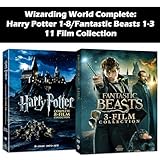
6. Harry Potter / Wizarding World
The core Harry Potter saga remains one of the most consistently successful eight-film runs in cinema history. Growing darker and more complex with each entry, it matured alongside its audience. Even as Fantastic Beasts struggled to replicate that magic, the franchise’s foundation remains rock-solid.
Its cultural saturation is unmatched for a modern fantasy series. Hogwarts is less a setting than a shared cultural memory.
Free tools Windows power users keep installed
One-click scans. No signup required.
5. Fast & Furious
No franchise has reinvented itself midstream more aggressively or successfully. What started as a street-racing crime series transformed into a globe-trotting action spectacle built on found-family mythology. The run from Fast Five through Furious 7 marked a remarkable creative peak.
The series thrives on escalation and self-awareness, leaning into its absurdity without apology. Its ability to turn excess into identity is precisely why it still works.
4. Star Wars
Despite fierce debate and uneven reception, Star Wars remains a defining cinematic institution. The original trilogy set an untouchable standard, while the prequels and sequels expanded the mythos in ambitious, sometimes divisive ways. Even its missteps fuel conversation rather than indifference.
Its endurance is tied to scale and imagination. Few franchises inspire this level of emotional investment, argument, and generational loyalty.
The Tool Desk
Outbyte Driver Updater FREEScan for outdated or missing drivers - takes under a minuteDriver Scan →Outbyte PC Repair FREERepair Windows errors before they cause bigger problemsFix Now →3. James Bond
With over twenty-five films, James Bond is the gold standard of franchise longevity. Each era retools the character for its time, from Connery’s cool minimalism to Craig’s bruised intensity. The series understands reinvention as survival, not betrayal.
Bond’s consistency comes from its refusal to freeze itself in nostalgia. The tuxedo changes, but the icon remains.
2. Mission: Impossible
Mission: Impossible didn’t just survive multiple sequels, it improved because of them. Beginning as a stylish spy thriller, the franchise found its identity through practical stunts, escalating spectacle, and precision filmmaking. Fallout and Dead Reckoning represent franchise filmmaking at its most disciplined and thrilling.
Its success is rooted in trust, both in its audience and its star. Every new installment feels like an event because it earns that status.
Do these 3 things before closing this tab:
1Repair Windows errors before they cause bigger problems2Fix the driver behind crashes, sound loss and screen glitches3Clear out junk files and repair common Windows errorsRank #3
1. The Marvel Cinematic Universe
No franchise has sustained quality across sheer volume like the MCU. Spanning dozens of films with interwoven arcs, it redefined what a sequel could be by making every entry part of a larger narrative machine. Its strongest phases balanced character-driven storytelling with blockbuster scale.
While recent output has sparked debate, the MCU’s overall achievement remains unmatched. It didn’t just beat the sequel curse, it rewrote the rules entirely.
Tier Breakdown: All-Timers, Remarkable Survivors, and Late-Stage Comebacks
All-Timers: Franchises That Never Lost the Plot
These are the rare series that didn’t just accumulate sequels, they turned longevity into an advantage. The MCU, James Bond, Mission: Impossible, and Star Wars operate on a scale where reinvention is baked into the brand, not treated as a risk. Creative resets, tonal shifts, and new blood arrive at just the right moments to keep the core identity intact.
What separates these franchises is discipline. Even when individual entries divide audiences, the overall architecture remains strong enough to absorb misfires and rebound. Their best films don’t feel like exceptions, they feel like proof of a system that understands how to evolve without erasing itself.
Windows Errors? Fix Them Before They Spread
Repair common Windows errors and clear accumulated junk for a smoother, more stable PC - no reinstall needed.Free scan · no reinstallCrashes, No Sound, or Screen Glitches?
Random freezes, missing sound and display glitches usually trace back to one bad driver. Find and replace yours safely.Free scan · under a minuteRemarkable Survivors: Beating the Sequel Curse Through Adaptation
This tier includes franchises that had every reason to collapse under repetition but instead found ways to stay culturally relevant. Fast & Furious transformed from street-racing pulp into globe-trotting action opera, embracing escalation so completely it became the point. Planet of the Apes achieved something even rarer, using reboots and sequels to deliver consistent thematic depth and emotional weight.
The Wizarding World also belongs here, buoyed by the enduring appeal of its universe even as individual films sparked debate. These franchises survive by adjusting tone, scale, or focus, proving that sustainability often comes from knowing when to pivot rather than pushing harder in the same direction.
Late-Stage Comebacks: When the Best Came After the Burnout
Some franchises only discovered their true legacy after stumbling. Mad Max looked like a relic until Fury Road redefined modern action filmmaking, instantly elevating the entire series. Rocky followed a similar path, with Creed injecting urgency, relevance, and generational perspective into a story that seemed long finished.
These comebacks matter because they recontextualize everything that came before. A great late sequel doesn’t just revive a brand, it rewrites the conversation around it, proving that franchise fatigue isn’t inevitable when the creative vision is sharp enough.
What’s actually slowing this PC down?
Pick the symptom - the matching free tool is one click away.
Signature Films That Defined Each Franchise’s Legacy
Identifying a franchise’s defining entry isn’t about picking the biggest hit or the loudest crowd-pleaser. These are the films that crystallized what the series could be at its best, often reshaping expectations not just for sequels, but for blockbuster filmmaking as a whole.
Marvel Cinematic Universe — Avengers: Infinity War (2018)
Infinity War stands as the MCU’s boldest creative gamble, refusing tidy resolutions in favor of operatic tragedy. Its audacity validated the franchise’s long-form storytelling model, proving that years of interconnected narratives could pay off emotionally. The film reframed superhero cinema as serialized epic rather than episodic spectacle.
James Bond — Goldfinger (1964)
Goldfinger didn’t just perfect the Bond formula, it wrote the rulebook. From the villain archetype to the gadgetry and theme song, it established the franchise’s identity for decades. Every reinvention since has either echoed or intentionally reacted against its blueprint.
Mission: Impossible — Fallout (2018)
Fallout elevated the series from reliable action entertainment to elite modern franchise filmmaking. Its commitment to practical stunts, narrative continuity, and character consequence gave the franchise credibility few long-running series maintain. This was the moment Mission: Impossible became the gold standard it once chased.
Rank #4
Star Wars — The Empire Strikes Back (1980)
Empire remains the franchise’s creative high-water mark, expanding its mythos while deepening its emotional stakes. Its darker tone and unresolved ending proved blockbuster sequels could challenge audiences without alienating them. Every Star Wars film since exists in its shadow, measured against its ambition.
Fast & Furious — Furious 7 (2015)
Furious 7 captured the franchise’s transformation from niche street-racing series into global action phenomenon. It balanced outrageous spectacle with genuine emotional resonance, especially in the wake of Paul Walker’s death. The film defined Fast & Furious as a saga about family, not just excess.
Planet of the Apes — Dawn of the Planet of the Apes (2014)
Dawn cemented the rebooted Apes series as thoughtful science fiction rather than nostalgic revival. Its moral ambiguity, political tension, and groundbreaking performance capture elevated the franchise’s thematic ambitions. This was blockbuster spectacle with something urgent to say.
Wizarding World — Harry Potter and the Prisoner of Azkaban (2004)
Prisoner of Azkaban marked the franchise’s tonal maturation, shifting from whimsical fantasy to textured, emotionally complex storytelling. Alfonso Cuarón’s visual and narrative confidence gave the series its cinematic identity. It’s the film that convinced audiences the Wizarding World could grow with its characters.
Mad Max — Fury Road (2015)
Fury Road didn’t just revive Mad Max, it redefined action cinema for the modern era. Its relentless momentum, visual clarity, and thematic simplicity made it instantly canonical. The film retroactively elevated the entire franchise, transforming it from cult classic to cinematic benchmark.
Rocky / Creed — Creed (2015)
Creed honored Rocky’s legacy while asserting its own voice, reframing the franchise through generational change. Its emotional authenticity and character-driven focus gave the series renewed cultural relevance. This wasn’t nostalgia, it was evolution done right.
Toy Story — Toy Story 3 (2010)
Toy Story 3 delivered a rare feat: a sequel that felt like a genuine emotional culmination. By confronting growth, loss, and letting go, it validated animation as a medium capable of profound resonance. The film proved that longevity doesn’t have to dilute meaning when storytelling remains honest.
Independent reader supportYour contribution helps us test, update, and keep practical guides available for everyone.Box Office vs. Critical Reputation: When Popularity and Quality Aligned (or Didn’t)
Long-running franchises inevitably reveal the tension between commercial success and creative credibility. Some series managed to turn critical acclaim into box office dominance, while others thrived financially even as enthusiasm waned. The most durable franchises learned how to recalibrate, responding to audience appetite without completely sacrificing identity.
Outdated Drivers Are Slowing You Down
One free scan finds every outdated or missing driver and matches the right update for your exact hardware.Free scan · exact hardware matchPC Slower Than It Used to Be?
A free scan shows the junk files, broken settings and background clutter dragging Windows down - then fixes them in one click.Free scan · Windows 10 & 11When Critical Acclaim Fueled Commercial Momentum
Toy Story and Harry Potter represent the gold standard for alignment between quality and popularity. Each new entry wasn’t just an event, it was a critical benchmark, reinforcing trust that the franchise would respect its audience’s intelligence. That trust translated into sustained box office growth, proving that emotional and thematic consistency can be a commercial strategy, not a liability.
The Planet of the Apes reboot trilogy followed a similar path, albeit on a smaller scale. Dawn and War earned praise for restraint and seriousness, which helped distinguish them from noisier blockbusters. Their success showed that thoughtful science fiction could still compete in a marketplace dominated by spectacle.
When Box Office Success Outpaced Critical Enthusiasm
Fast & Furious is the clearest example of popularity sprinting ahead of critical approval. Early sequels were often dismissed as disposable, yet audiences kept showing up in larger numbers. Over time, the franchise embraced its own absurdity, and critics began reassessing it not as prestige cinema, but as a uniquely consistent form of maximalist entertainment.
The Rocky series experienced a similar arc before Creed shifted the narrative. Sequels like Rocky IV were massive hits despite critical skepticism, driven by cultural timing and star power rather than storytelling nuance. Creed reversed that imbalance, proving the franchise could achieve both emotional depth and modern relevance without losing its mainstream appeal.
Best Value
When One Film Redefined the Conversation Entirely
Mad Max: Fury Road is the rare sequel that reset both commercial and critical expectations overnight. Its box office performance was strong rather than dominant, but its cultural impact far outweighed raw numbers. The film demonstrated that legacy franchises don’t need to chase trends to feel contemporary; precision and conviction can be just as marketable.
These turning-point entries didn’t merely succeed, they reframed how the entire franchise was perceived. They remind us that sustainability isn’t about constant escalation, but about knowing when to evolve, when to simplify, and when to take creative risks that reestablish purpose.
Near Misses and Honorable Mentions: Franchises That Almost Made the Cut
Not every long-running franchise that cleared the sequel threshold could secure a spot on the main list. Some fell just short due to inconsistency, others because their highs were offset by stretches of creative stagnation. Still, these series deserve recognition for their longevity, cultural footprint, and occasional flashes of greatness that kept audiences invested far longer than most Hollywood properties manage.
Pirates of the Caribbean
For a brief moment, Pirates of the Caribbean looked like a modern miracle. The Curse of the Black Pearl was a lightning-in-a-bottle hit, and Dead Man’s Chest and At World’s End expanded its mythology with surprising ambition and box office dominance. The franchise ultimately stumbled as it leaned too heavily on repetition and spectacle, but its early trilogy remains a defining example of how original blockbuster worlds can sustain multiple sequels when character and tone align.
The X-Men Franchise
Few franchises illustrate creative volatility as clearly as X-Men. Across more than a dozen films, the series swung between genre-defining highs like X2, Days of Future Past, and Logan, and misfires that undercut audience trust. Its willingness to reinvent itself, shift tones, and foreground allegory kept it relevant for nearly two decades, even if that same restlessness prevented it from maintaining consistent quality across all sequels.
Transformers
From a purely commercial perspective, Transformers is one of the most successful sequel-driven franchises ever made. Multiple entries cleared massive global box office numbers, and the brand proved resilient even as critical reception deteriorated. Its near-miss status reflects a franchise that endured through spectacle and brand recognition rather than narrative evolution, with Bumblebee offering a glimpse of the character-driven approach it rarely sustained.
Star Trek
Star Trek’s film history is as uneven as it is influential. With more than ten theatrical entries spanning decades, the franchise produced undeniable classics alongside films that struggled to justify their existence beyond fan loyalty. Its endurance stems from adaptability and thematic ambition, but its cinematic output rarely achieved the sustained momentum needed to stand alongside the most consistently successful movie franchises.
The Hunger Games
While technically qualifying through sequel count, The Hunger Games ultimately felt like a franchise defined by a single arc rather than ongoing evolution. Catching Fire stands as a high point, sharpening the political edge and emotional stakes, but the split finale diluted its impact. Its cultural moment was undeniable, yet its cinematic legacy remains compact rather than expansive, limiting its long-term franchise identity.
What’s actually slowing this PC down?
Pick the symptom - the matching free tool is one click away.
These near misses highlight how difficult sustained excellence truly is. Longevity alone isn’t enough; franchises that endure must balance familiarity with reinvention, and spectacle with purpose. Each of these series came close, and in individual moments, some even matched the best, but consistency remains the hardest sequel of all.
What the Best Franchises Teach Hollywood About Longevity and the Future of Sequels
The franchises that truly endure don’t survive by accident. They reflect a careful balance of creative stewardship, audience awareness, and an understanding that sequels are not just extensions, but opportunities to redefine purpose. When a series reaches four, five, or even ten films, longevity becomes less about novelty and more about trust.
Consistency of Vision Matters More Than Perfect Continuity
The strongest long-running franchises understand who they are, even when directors, casts, or tones change. Audiences are surprisingly forgiving of narrative bumps if the core identity remains intact, whether that’s emotional sincerity, thematic ambition, or a reliable sense of spectacle. What breaks loyalty isn’t experimentation, but inconsistency in values and intent.
Reinvention Works Best When It Feels Earned
The franchises that lasted didn’t simply repeat formulas until exhaustion; they recalibrated at key moments. Tone shifts, genre pivots, and character re-centering allowed these series to stay culturally relevant without alienating longtime fans. The difference between evolution and desperation is confidence, and audiences can sense when a franchise knows why it’s changing.
Characters Outlast Gimmicks and Technology
Visual effects, action escalation, and larger stakes may sell opening weekends, but characters sustain multi-decade runs. The most successful franchises invest in arcs, relationships, and emotional continuity, even when plots grow increasingly outlandish. Iconic characters give audiences something to return to, regardless of how crowded the blockbuster landscape becomes.
Knowing When to Pause Can Be as Valuable as Knowing When to Continue
One of Hollywood’s hardest lessons is that more isn’t always better. The franchises with the strongest reputations often benefited from strategic gaps, soft reboots, or scaled-back entries that restored focus. Fatigue is real, and longevity depends as much on restraint as it does on output.
Ultimately, the best movie franchises with four or more sequels prove that sustainability is a creative discipline, not a commercial accident. They endure by respecting their own legacy while remaining flexible enough to grow, adapt, and occasionally course-correct. As Hollywood continues to chase cinematic universes and endless installments, these franchises stand as reminders that longevity isn’t about how long a series runs, but how well it understands why audiences keep coming back.
Quick Recap
Product prices and availability are accurate as of the date/time indicated and are subject to change. Any price and availability information displayed on Amazon at the time of purchase will apply.
Do these 3 things before closing this tab:
1Clear out junk files and repair common Windows errors2Fix the driver behind crashes, sound loss and screen glitches3Repair Windows errors before they cause bigger problems
