Free tools Windows power users keep installed
One-click scans. No signup required.
Delhi has no single past. It has layers of successive capitals, settlements, migrations and political change, and each layer left physical traces and cultural habits that still shape the city. The most useful way to read that history is through three overlapping perspectives: early and Sultanate Delhi, Mughal Shahjahanabad, and colonial New Delhi with the post-Independence city. Each one answers a different question about who held power, how the city was built, and how its many communities lived together.
Why “three pasts” is a working frame, not a count
Official sources do not agree on how many historic cities Delhi has had. The popular phrase “seven cities of Delhi” is a shorthand for a long, layered urban story rather than a settled archaeological tally. The Municipal Corporation of Delhi (MCD) discusses seven inhabited occasions and names particular settlements, while Delhi Tourism’s “Eight Cities of Delhi” narrative presents a continuity story that begins with Indraprastha. The lists differ in what they include and where they start, so treat any single number with caution.

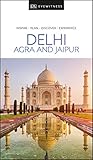


The three perspectives below are not separate cities stacked neatly on top of each other. Each overlaps with the others, and the buildings of one period were often reused, reworked or built against the ruins of the last.
1. Early and Sultanate Delhi
The Indraprastha association
Delhi Tourism connects the city’s story to the Mahabharata and to Indraprastha. This is a traditional, epic association, not an archaeologically proven account of a founding city, and it should be presented that way. Archaeological and built evidence of the city’s successive settlements is a separate kind of evidence, and it is the one specialists test against dates and sites. UNESCO’s India Tentative List entry for “Delhi – A Heritage City” describes this layering of cultural and urban remains, but it does not settle the question of which settlement corresponds to which legend.
Recommended Free Tools
#1 Best Overall
The Sultanate chronology
Delhi Tourism dates the establishment of the Delhi Sultanate to 1206 and gives a compact chronology that moves through the Khaljis, the Tughlaqs and the Lodis before the transition to Mughal rule. That sequence is useful as a map of political power, but dynasties did not each produce a fresh, self-contained city. Later rulers often built beside, over or from the materials of earlier settlements, so the chronology is best read as a sequence of overlapping claims on the same ground.
2. Mughal Shahjahanabad: imperial city and cultural exchange
The imperial city
Delhi Tourism states that Shah Jahan built the walls of Old Delhi in 1638. Its historical itinerary links the Red Fort and the Jama Masjid to his building legacy and places both within the Old Delhi route. Shahjahanabad was therefore not only a royal residence but a planned imperial city whose walls, gates, mosques and palace complex defined its public life. These monuments remain the most visible physical record of the Mughal capital.
Cultural exchange as lived history
UNESCO’s Tentative List entry gives the broader interpretation. It describes Delhi’s architecture and intangible heritage as shaped by exchanges among traditions, and it discusses Sufi practice, bhakti affinities, qawwali, language and the rhythms of urban life. This framing treats cultural mixing as a dynamic process produced by specific people, institutions and places. It does not describe a frictionless harmony. Political conflict, religious tension and social hierarchy were part of the same history, and a fair account keeps them in view alongside the exchanges.
3. Colonial New Delhi and the post-Independence city
The capital shift and the planned city
Delhi Tourism dates the British move of the capital from Calcutta to Delhi to 1911. UNESCO states that New Delhi was built between 1913 and 1931 and describes its planning as an interaction between Western planning influences and colonial requirements. The official itinerary names Rashtrapati Bhavan, the Secretariat, Rajpath and Parliament among the structures associated with this period. These buildings are the clearest expression of imperial administration in the city’s built form, and they sit a short distance from the older city, which makes the contrast between the two Delhis physically visible.
Quick wins for a faster PC:
Repair Windows errors before they cause bigger problemsFix Now →Fix the driver behind crashes, sound loss and screen glitchesFind Drivers →After 1947: capital and conservation pressure
Delhi Tourism says New Delhi was declared India’s capital after independence in 1947. The Delhi Development Authority (DDA) states that post-Independence development has adversely affected historic areas and heritage sites. Conservation and growth therefore run side by side as an ongoing urban question rather than a finished chapter. The DDA’s “Urban Heritage” page describes Delhi as having “more layers of culture, civilization, history and built fabric extant in it than any other city in the world.” That is the Authority’s own promotional wording, and it should be read as the DDA’s claim rather than an independently verified comparison.
Comparing the three perspectives
| Question | Early and Sultanate Delhi | Mughal Shahjahanabad | Colonial New Delhi and after |
|---|---|---|---|
| Anchor date in the cited sources | Sultanate established 1206 (Delhi Tourism) | Walls of Old Delhi built 1638 (Delhi Tourism) | Capital moved from Calcutta 1911 (Delhi Tourism); New Delhi built 1913–1931 (UNESCO); capital after 1947 (Delhi Tourism) |
| Who held power and how the capital worked | Successive dynasties, including the Khaljis, Tughlaqs and Lodis | Imperial Mughal capital | British imperial administration, then the Indian national capital |
| Urban form and architecture | Succession of settlements; detailed layouts not stated in the Delhi Tourism chronology | Walled city with the Red Fort and Jama Masjid as central monuments | Planned administrative city with Rashtrapati Bhavan, the Secretariat, Rajpath and Parliament |
| Cultural exchange and religious or linguistic life | Not stated in the Delhi Tourism chronology | Sufi practice, bhakti affinities, qawwali and language, as described by UNESCO | Post-Independence city life; the DDA describes development pressures on historic areas |
| What remains visible or contested today | Layered archaeological and built remains, with traditional and archaeological claims kept distinct | Monuments and old city fabric | Conservation of historic areas against ongoing development |
What the official counts do and do not establish
The MCD’s Heritage Cell lists 475 heritage sites on a webpage that carries no publication date and does not define what counts as a site. Treat that figure as the MCD’s own count at the time the page was accessed in 2026, not as a dated, comprehensive inventory. The UNESCO entry is a Tentative List submission dated 22 May 2012, and its statement that “Delhi is a living city” is an expression of the nomination’s framing. It is not a declaration that Delhi as a whole has been inscribed as a World Heritage City.
Rank #4

- non-fiction african american book set
- non-fiction black book set
- non-fiction african american children's book set
- non-fiction black children's book set
Where precision matters, attribute dates and claims to the specific source. Delhi Tourism’s chronology, UNESCO’s cultural description and the DDA’s account of development pressures answer different questions and should not be merged into one narrative with a single authority.
Independent reader supportYour contribution helps us test, update, and keep practical guides available for everyone.Where to go next
- Department of Delhi Archives: the repository holds records, maps, photographs, manuscripts and books, and is the most direct institutional route for documentary history of the city.
- Delhi Tourism’s historical itinerary: a practical way to match the three periods above to actual sites in Old Delhi and New Delhi, one route at a time.
- Specialist scholarship: questions about contested dates, archaeological evidence, social history and the experiences of communities displaced by political change need academic historians rather than official heritage pages.
Read together, these perspectives show a city built by successive powers and changing communities. The Sultanate, the Mughal capital and the colonial and post-Independence city each left a different layer, and modern Delhi is the place where those layers still overlap.
Outdated Drivers Are Slowing You Down
One free scan finds every outdated or missing driver and matches the right update for your exact hardware.Free scan · exact hardware matchPC Slower Than It Used to Be?
A free scan shows the junk files, broken settings and background clutter dragging Windows down - then fixes them in one click.Free scan · Windows 10 & 11Quick Recap
Best Value
Product prices and availability are accurate as of the date/time indicated and are subject to change. Any price and availability information displayed on Amazon at the time of purchase will apply.




