Free tools Windows power users keep installed
One-click scans. No signup required.
The Heroine and Other Stories is an English-language collection of eleven short stories by the Tamil writer D. Jayakanthan. His daughter, J Deepalakshmi, selected and translated them, and Niyogi Books published the volume. According to Kavitha Muralidharan’s review in Scroll.in, published on November 5, 2017, all eleven stories were written in the 1960s. Their common ground is how ordinary people, and women above all, respond when family duty, social expectation, or private guilt forces a decision.
What the collection contains
The book is a selection, not a complete set. Kavitha Muralidharan’s review describes Jayakanthan as a writer with a very large output, and the eleven stories are a small part of it. The review’s own figures for that output are quoted in full below, so it is clear they are the reviewer’s account rather than an independently checked catalogue count.


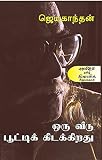

The translator is also the editor. J Deepalakshmi’s role as both selector and translator shapes the collection, and the review singles this out for praise. It judges that choosing eleven representative stories from so large a body of work was “a daunting task,” and that Deepalakshmi carried it off “with the finesse of a translator and affection of a daughter.” That is the reviewer’s assessment of the selection and the translation, not a statement from either Jayakanthan or Deepalakshmi.
How the stories are grouped
The review names eight of the eleven stories. The three others are not named in the review, so this guide does not describe them. The eight named stories fall into three broad groups, which is the reviewer’s reading and not a settled critical consensus.
What’s actually slowing this PC down?
Pick the symptom - the matching free tool is one click away.
#1 Best Overall
Women’s agency under family pressure
The clearest thread is women moving from submission toward assertion. The review gives two examples:
- “Heroine” centres on Madhuram, who responds decisively to her husband’s infidelity. The story turns on that response rather than on the affair itself.
- “New Horizon” follows Kunjammal, who chooses to support her daughter Indu’s relationship despite the cost to the family’s honour. Indu has been confined at home for years before this moment, which gives the decision its weight.
Belief, desire, and the limits of respectability
Some stories put a character’s convictions against her or his own feelings. The review gives two examples:
Rank #2
- “The Crucifixion” concerns Catherine, whose religious commitment is in tension with her feelings for a young man.
- “The Pervert” sets Radha’s past against her encounter with Dr Raghavan. The review says the story complicates conventional assumptions about desire and masculinity, and the title is a provocation the story then works against.
Guilt, compassion, and moral reversal
The review’s third group concerns men who are in distress or who are caught by chance, and whose moral position shifts as a result:
- “The Pallbearers” and “Beyond Cognisance” are read as stories about men facing distress or the accidents of circumstance.
- “The Guilty” centres on Raman’s guilt.
- “The Masquerade” features a petty thief who unexpectedly agrees to take the blame for his friend. It is the review’s clearest example of moral reversal in a character who seems least likely to offer it.
Why the selection matters
Taken together, the stories show a writer who is not interested in heroes. The review describes Jayakanthan’s stories as emotionally complex and focused on ordinary people in moments of crisis, and it places his fiction in a tradition concerned with underclass lives, including the lives of women. Those are the review’s claims, and they are useful as a starting point rather than as the last word on his work.
The Tool Desk
Outbyte Driver Updater FREEScan for outdated or missing drivers - takes under a minuteDriver Scan →Outbyte PC Repair FREEClear out junk files and repair common Windows errorsFree Scan →The review also reports that Jayakanthan began writing in the 1950s and states that his output comprises “forty novels, about 200 short stories, three autobiographies, and several works of non-fiction.” Treat that sentence as the reviewer’s account. Because this collection is a translated selection, it offers a route into his fiction rather than a full survey of it, and a reader who wants the wider range should look beyond these eleven stories.
Independent reader supportYour contribution helps us test, update, and keep practical guides available for everyone.Editions and availability
The bibliographic details in this guide, including the translator, publisher, the eleven-story count, and the 1960s dating, come from the Scroll.in review. They have not been checked against the publisher’s own catalogue. Before buying, confirm the edition, format, and current stock with Niyogi Books, and check that the listing you find lists J Deepalakshmi as translator and the same eleven stories. The available evidence does not establish whether the book is currently in print, or whether any other edition or translation of these stories exists.
Rank #4
If you are comparing copies, the useful points to check are the translator, the story list, the publisher, and the format. Those are the details most likely to differ between printings or listings.
Quick Recap
”
The Bottom Line
“”
Product prices and availability are accurate as of the date/time indicated and are subject to change. Any price and availability information displayed on Amazon at the time of purchase will apply.




