Do these 3 things before closing this tab:
1Clear out junk files and repair common Windows errors2Fix the driver behind crashes, sound loss and screen glitches3Repair Windows errors before they cause bigger problemsSanjay Kak’s Jashn-e-Azadi—also titled How We Celebrate Freedom—was completed and released in 2007. Its return to attention in 2016 was not because it documented that year’s events: it was because its earlier images and questions about Azadi, loss, resistance and power seemed newly urgent amid renewed unrest in Kashmir. The distinction matters: the film’s footage belongs to the mid-2000s; the call to watch it again belongs to 2016.
What is Jashn-e-Azadi about?
The documentary begins with the Independence Day flag-raising at Srinagar’s Lal Chowk, a setting Kak uses to examine what “Azadi”—freedom—means in Kashmir. A 2007 UNI report described the square as otherwise empty, with soldiers, security personnel and media present for the ceremony. Kak said the scene offered a starting point for exploring the different meanings attached to Azadi. In a statement quoted in that report, he described the film as a conversation about freedom in Kashmir and India.


Rather than deliver a single explanatory account, the film brings together observation, archival images, poetry and contrasting locations. Its subjects include an ageing father at the Martyrs’ Graveyard, men surveying the dead in mountain villages of Bandipora, patients at Srinagar’s Government Psychiatric Hospital, Bhand folk performers and an Army Sadhbhavna (goodwill) camp. Contemporary Kashmiri poetry adds another way of registering the experience of the conflict.
IDFA describes the work as combining cinema-verité-style footage, rare archival material and poetry to reflect on power, resistance and freedom. Film scholar Manali Saha’s 2024 analysis discusses its two-part, nonlinear structure, in which location footage meets archival and news images, performances and scenes of protest, disappearance and martyrdom. That is an interpretation of the film’s form, not a claim that the documentary offers a single settled explanation of Kashmir.
Recommended Free Tools
#1 Best Overall
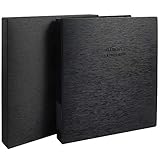
- Material: PP plastic shell Non-toxic, acid free.
- Package: 1x film storage album + 1x protect hard box(not include inserts)
- Compatibility: design for Printfile Standard 135, 120, 4x5., 8x10 Negative Pages or other standard film storage sheet.
- Capacity: this film album can be stored 100 sheets standard negative pages.
- Dimension: 12.4in x 11.2in x 1.58in (315mm x 285mm x 40mm)
Why was it being discussed again in 2016?
In a Scroll article published on July 23, 2016, Ipsita Chakravarty argued that the documentary seemed prescient about a new phase of militancy and should be revisited. That was a contemporary editorial judgment, not a neutral fact about what the film predicted. The film had been made years before; the article’s point was that its questions and images took on renewed force during the unrest of 2016.
A few days earlier, on July 18, RAIOT announced an online release, describing the moment as a harrowing week in Kashmir. The post said it had obtained Kak’s permission to encode and upload the film, and noted that the documentary had previously circulated in lower-resolution versions. The web release gave viewers an opportunity to encounter the work in the same period that prompted renewed discussion of it.
Rank #2

- Material: Film album made from PP plastic shell Non-toxic, acid free. negative page made from polyethylene.
- Capacity: this film album can be stored 100 sheets standard negative pages.
- Film album dimension: 12.4in x 11.2in x 1.58in (315mm x 285mm x 40mm)
- One page hold seven 35mm strips of 6 frames, 42 frames total.
The connection, then, is not that Jashn-e-Azadi records 2016. It is that a documentary made from mid-2000s material returned viewers to enduring questions: who defines freedom, how loss is represented, and how state power and resistance shape ordinary life.
What does “2007” mean here?
IDFA lists the film in its 2007 archive, identifies it as an Indian production directed by Sanjay Kak, and says it was shot and edited between August 2004 and 2006. A 2007 UNI report likewise gives a production period of August 2004 to 2006. Kak’s note accompanying RAIOT’s 2016 web release instead describes the period as August 2004 to 2007. The records therefore do not establish one uncontested end year for production.
PC Slower Than It Used to Be?
A free scan shows the junk files, broken settings and background clutter dragging Windows down - then fixes them in one click.Free scan · Windows 10 & 11Outdated Drivers Are Slowing You Down
One free scan finds every outdated or missing driver and matches the right update for your exact hardware.Free scan · exact hardware matchRank #3
Runtime listings also vary slightly. IDFA and the 2007 UNI report give 139 minutes; York University’s 2014 screening notice lists 138 minutes. “About 139 minutes” is a practical description, while the published records differ by a minute.
The UNI report identifies the film as digital, in Kashmiri and Urdu with English subtitles. York University describes its languages as Kashmiri, Urdu and English, also with English subtitles. These descriptions are not identical, so the safest practical expectation is a film primarily identified with Kashmiri and Urdu and presented with English subtitles; the records differ on whether English is also listed as a language.
Independent reader supportYour contribution helps us test, update, and keep practical guides available for everyone.How did the film circulate, and can it be watched online now?
The 2007 reporting records disagreement around public screenings and the film’s political characterization. Scroll’s 2016 account also refers to disruption or objections at screenings, while noting circulation through cultural centres and festivals. This history should not be reduced to a claim that the film was universally accepted or universally rejected.
RAIOT’s July 2016 post linked to an online video and recommended viewing the film in two parts, with a short break; its upload followed that structure. That is historical access information, not confirmation that the video remains available or accessible in every location today.
Quick wins for a faster PC:
Fix the driver behind crashes, sound loss and screen glitchesFind Drivers →Clear out junk files and repair common Windows errorsFree Scan →Best Value
Why it remains worth revisiting
The case for watching the film again is not that it provides a definitive account of Kashmir or a report on 2016. Its value lies in how it places very different forms of experience side by side: ritual and militarized space, mourning and institutional care, folk performance and political poetry. Returning to it in the context of 2016 meant reconsidering those perspectives and the unresolved meanings of Azadi that the film had put on screen nearly a decade earlier.
Quick Recap
Product prices and availability are accurate as of the date/time indicated and are subject to change. Any price and availability information displayed on Amazon at the time of purchase will apply.




