Do these 3 things before closing this tab:
1Fix the driver behind crashes, sound loss and screen glitches2Repair Windows errors before they cause bigger problems3Scan for outdated or missing drivers - takes under a minuteLearning a song does not run through a single “song center” in the brain. Several systems work at once: auditory areas track pitch and rhythm, language-related areas process the words, memory circuits bind the two into an ordered sequence, and motor regions become involved when you sing or play. Exactly what happens depends on how you engage with the music. Listening to an unfamiliar song, silently imagining it, and singing it aloud are separate conditions, and neuroscience studies have measured them as different tasks with different results.
How lyrics and melody are represented
A song is two streams of information that arrive together: words and tune. A 2010 functional MRI study using unfamiliar songs found that the two can be integrated at some stages of processing while remaining more distinct at others. Integration showed up in the left superior temporal region. The same study reported a possible fused vocal code in the left dorsal precentral gyrus, and it also found that some lyric processing can proceed independently of tune processing.
The practical takeaway is that the brain does not split a song into a “language half” and a “melody half.” Its handling of lyrics and melody is flexible, and how tightly the two are bound depends on the stage of processing and the task.
What changes when words are bound to a melody
Memorizing a song means building a link between the words and the tune. A 2016 study of encoding new songs compared two conditions: lyrics and melody sung together, and a condition where the melody was sung on “la” while the lyrics were presented separately. The two conditions produced different patterns of brain activity. The separate-presentation condition showed greater activity in the right hippocampus, a structure central to forming new memories.
PC Slower Than It Used to Be?
A free scan shows the junk files, broken settings and background clutter dragging Windows down - then fixes them in one click.Free scan · Windows 10 & 11Outdated Drivers Are Slowing You Down
One free scan finds every outdated or missing driver and matches the right update for your exact hardware.Free scan · exact hardware match#1 Best Overall

- Studio-Grade Sound – 40mm drivers deliver deep bass, clear mids, and crisp highs for DJing, studio recording, mixing, and monitoring.
- Single-sided Monitoring – The 90° swiveling ear cups allow for single-ear monitoring, making it ideal for DJing or mixing.
- All-Day Comfort – Ultra-soft padded ear muffs and an adjustable headband ensure fatigue-free wear, while the foldable design enhances portability.
- Universal Compatibility – Comes with a 2.2m (7.2ft) audio cable, connecting seamlessly to mixers, amps, PCs, guitars, keyboards, and laptops.
- Built for Pros & Home Use – Durable construction for studio, stage, or home office use—ideal for DJs, musicians, producers, and audiophiles.
This is a single contrast within one task, so it should not be read as proof that the hippocampus stores songs. What it does show is that the way a song is delivered changes which memory-related activity appears during learning. Hearing words and melody as one unit and hearing them apart engage the brain differently.
Why a song plays on in your head: prediction and gap-filling
Once a song is familiar, the brain begins to anticipate what comes next. Several lines of work point the same way:
Rank #2

- High-Resolution Sound Quality: Engineered with massive 50mm dynamic drivers, these wired headphones deliver punchy bass, balanced mids, and precise treble across a wide $20 ext{Hz} - 20 ext{kHz}$ frequency range. Ideal for DJ mixing, studio monitoring, and audiophile listening, they ensure accurate vocal self-monitoring during recording and tracking sessions.
- Maximum Comfort & Portability: Weighing just 260g (9.1 oz), this over-ear headset features skin-friendly protein leather and plush memory foam for long-lasting comfort and passive noise isolation.
- Single-Side Monitoring: Designed for live performing and mixing, the 90° swiveling earcups allow instant single-ear monitoring. The self-adjustable, flexible headband contours perfectly to any head size, ensuring a secure, fatigue-free fit during extended studio sessions.
- Music & Audio Sharing Tech: Share your mix or media without a splitter. This unique feature allows you to daisy-chain multiple headphones: connect the main headset to your device via the 3.5mm jack, then bridge the 6.35mm output to another pair for seamless, zero-latency co-listening.
- No Adapter Required: Equipped with a detachable 5.7ft - 6ft coiled cord, these headphones offer ultimate freedom of movement. Dual 3.5mm and 6.35mm plugs provide plug-and-play compatibility with audio mixers, interfaces, PCs, tablets, and smartphones.
- Anticipatory imagery (2009 study). When participants anticipated learned sound sequences, activity appeared in prefrontal and premotor areas. Frontostriatal changes also emerged across the learning process, suggesting that prediction develops as the sequence is learned.
- Silent gaps (2016 EEG study). When a familiar or recently learned song paused silently, the brain still produced neural responses to the gap. This is consistent with the listener internally completing the missing material.
- A prediction framework (2022 review). A review of music cognition describes perception, action, emotion, and learning in terms of prediction. It is a useful organizing account rather than an established single-cause explanation for every musical response.
This is why a listener can mentally supply the next line when the music drops out. It also explains why a familiar song feels “wrong” when a line is altered.
Singing and playing add a motor loop
Listening and singing do not engage the same circuits to the same degree. A 2006 functional MRI study compared listening and covert (silent) singing with speech and found that both auditory and production processes were involved in the musical tasks. Covert singing, in which you sing in your head without making sound, still recruits systems that plan and monitor vocal output.
Rank #3

- HI-FI SOUND: UPGRADED Professional DJ headphones MAONO MH601 is built-in 50 mm large aperture driver, for immersive sound, which can bring you better listening enjoyment. Exceptional clarity throughout an extended frequency range, with deeper, accurater bass response. Soft and comfortable close back ear pad reduce background noise to a certain extent, makes you focus on what you want to hear
- MULTI-FUNCTIONAL DESIGN: MAONO wired close back studio headphones feature multi-functional connectivity with a detachable 9.8ft spring-loaded 3.5mm to 6.35mm cable and additional interchangeable 6.35mm jack for shared listening. Compatible with smartphones, PC, computer, mixers, music production equipment (e.g. guitar amps, piano or keyboards) and MAONO podcast equipment bundle and microphones (PD200X/PD400X/HD300T/PD200W/PD100W)
- PROFESSIONAL WIRED STUDIO HEADSET: Pivot between dual and single-ear monitoring in seconds with 90° swiveling earcups—ideal for tracking vocals or fine-tuning mixes. The wired connection ensures zero-latency audio, critical for sample-accurate edits without dropout risks. An ergonomic headband with protein memory cushions molds to your head. Maono MH601 over-ear headphones built for creators who demand both flexibility and fidelity
- PREMIUM COMFORT & NOISE ISOLATION HEADPHONES - Experience studio-grade sound clarity with our ultra-soft protein earmuffs that create a perfect acoustic seal, effectively blocking 85% of ambient noise while maintaining exceptional breathability for all-day comfort. The space-saving foldable design effortlessly fits in your bag alongside MAONO microphone setups. Engineered for 8+ hours of fatigue-free use, whether you're tracking vocals, monitoring instruments, or immersing in music
- PACKAGE LIST: 1x Maono wired over-ear Headphones; 1x Detachable 9.8 ft spring cable (3.5 mm to 6.35 mm); 1x 6.35mm Interchangeable Audio Jack; 1x Instruction manual
A 2017 study examined what happens when a person learns a sound-making action. Learning the action immediately changed how the brain responded to subsequent sounds. The musical task in that study involved learning to play an instrument, so it is adjacent evidence for auditory-motor feedback rather than a direct test of memorizing lyrics or a whole song.
Comparing the conditions
The table below places the main findings side by side. Where a study did not address a column, the cell says so.
Rank #4
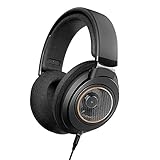
- All New Philips Shp9600 With The Perfect Blend Of Performance, Comfort, And Quality
- Open-Back Design With Spacious Sound. Ideal For Listening To Your Favorite Music Everyday At Home
- Perfectly Tuned 50 Mm Drivers Deliver Crisp Bass, Balanced Midrange, And Prstine High Frequencies.
- The Drivers Are Engineered To Fit The Ear'S Natural Geometry, Ensure No Detail Is Lost.
| Condition studied | Study (year) | Method | Main finding | What it does not show |
|---|---|---|---|---|
| Listening to unfamiliar songs | 2010 | fMRI | Lyrics and tune partly integrated; some lyric processing independent of tune | A fixed division of lyrics and melody between hemispheres |
| Hearing lyrics and melody together vs. separately | 2016 | Encoding study with brain imaging | Different activity patterns; greater right hippocampal activity in the separate condition | That the hippocampus alone stores songs |
| Anticipating learned sound sequences | 2009 | Brain imaging | Prefrontal and premotor activity; frontostriatal changes across learning | Which practice schedule produces the best recall |
| Silent gaps in familiar and newly learned songs | 2016 | EEG | Neural responses to silence, consistent with internal completion | Sample size or effects across different listener ages: not stated |
| Listening and covert singing vs. speech | 2006 | fMRI | Auditory and production processes engaged during musical tasks | That covert singing is equivalent to singing aloud: not stated |
| Learning a sound-making action | 2017 | Not stated | Subsequent sound responses changed immediately after learning | Direct effects on memorizing lyrics: not tested in this study |
Earworms are not the same as learning
A song that replays involuntarily is not the same thing as a song you have learned. In two earworm experiments from 2021, with 30 and 50 participants respectively, catchy unfinished music interfered with performance on a phonological task. Participants’ keystrokes also tended to synchronize with the tempo of the song they had just heard. The authors interpreted this as consistent with an unconscious urge to sing along. The studies show that a song can capture attention and motor activity without being stored in a usable form.
What the evidence does not establish
- No single brain region, hemisphere, or memory system explains learning a song. Each study measured involvement under a specific task.
- The studies do not identify an optimal number of repetitions or a best practice schedule.
- They do not show that singing aloud always improves recall more than listening. The motor evidence is suggestive, not decisive.
- The studies cited here do not establish a role for dopamine in song learning.
- Most of this work uses small laboratory samples. Results may not generalize across ages, musical training, or language backgrounds.
Applying the findings
If you are learning a song, the evidence supports a few reasonable choices, though none has been shown to be the fastest method. Learn words and melody together rather than memorizing lyrics as a poem, since the two are bound in memory. Sing rather than only listen, because production adds a motor and feedback loop that listening alone does not. Practice the sections where you have to predict the next phrase, because prediction is central to how familiar music is held in mind.
What’s actually slowing this PC down?
Pick the symptom - the matching free tool is one click away.
Best Value

- Hi-Res Sound Quality: Equipped with 40mm drivers, these wired over-ear headphones deliver exceptional sound clarity and depth, making them perfect for studio monitoring, mixing, and DJing. The high-resolution audio ensures every detail and nuance in your music is captured and reproduced with precision.
- Built to Stay Comfortable: The soft padded ear cushions are specifically designed for monitor headphones comfort and noise isolation. The headband is adjustable and stretchable for you to find the desired angle you like to fit in.
- No More Adapter: A long-style 6.6-9.8 ft coiled cord and standard-sized 6.35mm plug and a 3.5mm plug are included. These headphones can be easily connected to a variety of devices including AMPs, computers, keyboards, guitars, and laptops.
- Single-sided Monitoring: 90° swiveling earcups for single-ear monitoring anytime, keep one ear free for conversations with single-sided monitoring.
- Share Audio Port: With a shared audio port, easily connect another pair to share music or videos—no splitters or special cables needed.
These are inferences from the findings above, not tested recommendations for memorization.
Quick Recap
Product prices and availability are accurate as of the date/time indicated and are subject to change. Any price and availability information displayed on Amazon at the time of purchase will apply.




