Recommended Free Tools
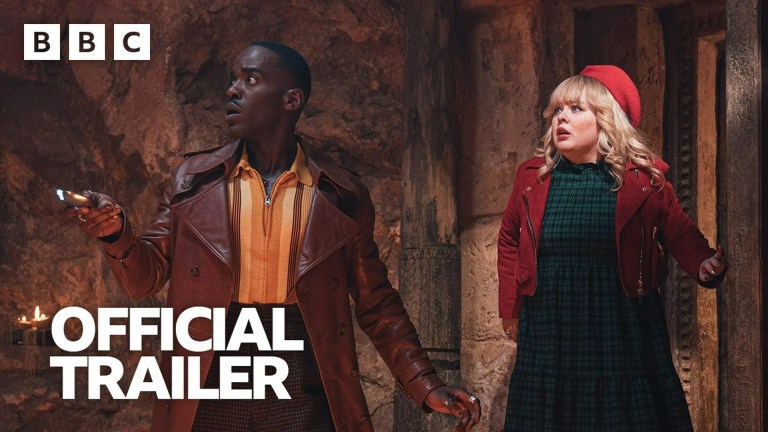
Spoilers for Doctor Who’s 2024 season finale, “Empire of Death.” Doctor Who’s season 14 finale reaches for the scale and mechanics of an Avengers-style event: a universe-threatening enemy, a mystery built across the season, and a climactic reversal of death. The comparison fits the shape of the story. What it misses, in my view, is the season’s more compelling idea—that the Doctor and Ruby matter because of how they care for people, not because they are secretly cosmically exceptional.
Why the finale felt like an Avengers movie
“Empire of Death” turns the season’s long-running mystery into a universe-scale confrontation with Sutekh. It gathers clues and revelations into a climactic event, then uses the reversal of death as part of its resolution. Those are recognizable blockbuster-franchise mechanics: raise the threat to the maximum, connect the plot to a hidden truth, and make the ending feel consequential across an enormous world.
| # | Preview | Product | Price | |
|---|---|---|---|---|
| 1 |

|
Doctor Who: Season Two (DVD) | $34.29 | Buy on Amazon |
| 2 |

|
Doctor Who: The Jodie Whittaker Collection (DVD) | $19.99 | Buy on Amazon |
| 3 |

|
Doctor Who: The Matt Smith Collection | $23.01 | Buy on Amazon |
| 4 |

|
Doctor Who: The Day of the Doctor (50th Anniversary Special) | $9.54 | Buy on Amazon |
| 5 |

|
Doctor Who: Planet of the Dead | $8.40 | Buy on Amazon |
The comparison is not a consensus verdict. In a July 2024 ComicsBeat roundtable, Johanna Draper Carlson said the finale reminded her “a bit too much of the Thanos Avengers movie plotline,” objecting to the reversal of death as emotionally cheap. Other panelists found the season’s answers underwhelming or insufficiently explained; others praised the Doctor and Ruby’s emotional performances and found the episode entertaining. The MCU analogy describes one aspect of the finale, not every viewer’s response.
What the season made more interesting than scale
Before the finale, season 14 had repeatedly shown how much Doctor Who can do without escalating toward a universe-ending battle. “Boom” traps the Doctor in a physically constrained predicament, making dependence on other people part of the drama. Steven Moffat described the effect of immobilizing him: “It would take so much away from him – he can’t run about, he can’t bamboozle people, and he literally can’t move.” The SFRA Review’s analysis similarly emphasizes vulnerability and collective action.
Windows Errors? Fix Them Before They Spread
Repair common Windows errors and clear accumulated junk for a smoother, more stable PC - no reinstall needed.Free scan · no reinstallCrashes, No Sound, or Screen Glitches?
Random freezes, missing sound and display glitches usually trace back to one bad driver. Find and replace yours safely.Free scan · under a minute#1 Best Overall
“73 Yards” makes the mystery personal
“73 Yards” leaves the Doctor behind and follows Ruby through an uncanny alternate life, haunted by a figure who keeps its distance. Its Welsh folklore and long view of Ruby’s life make small choices and their consequences feel more important than a cosmic explanation. The episode shows that a season-long mystery can deepen a character’s experience without turning her into the answer to everything.
“Dot and Bubble” gives its spectacle a social edge
“Dot and Bubble” uses a society dependent on digital bubbles to examine privilege, echo chambers, and systemic racism. Its unsettling force comes not from a bigger weapon or a wider battlefield, but from what the characters reveal about themselves and the world they have built.
“Rogue” treats genre as play
“Rogue” shifts into Regency romance, comedy, and queer flirtation. ComicsBeat’s roundtable praised that playful mixture. Rather than making every episode a rung on the ladder to the finale, the season could move between tones and kinds of story.
The most important part the finale missed
The missed opportunity was not simply that the finale went big. Doctor Who can do spectacle. It is that the spectacle threatened to overwhelm the season’s more distinctive emotional and thematic stakes: the Doctor and Ruby’s bond, the value of ordinary lives, and the possibility that being important does not require being “special” in a cosmic sense.
That contrast matters because Russell T Davies had described the show as able to range across genres while keeping the Doctor and companion central. In a May 9, 2024, DoctorWho.tv interview, he said: “We can have a comedy one week, a terror the next week, a haunted house the next week and a thriller the next week.” He also said the episodes could be watched separately while Ruby’s birth-family mystery continued toward the finale. That is evidence of the season’s stated design, not proof that every reveal or payoff succeeded.
The emotional risk in a death reversal is that it can make loss feel temporary by default. Carlson’s criticism points to that cost: if the audience expects a reversal, grief may lose some of its force. Meanwhile, when a mystery’s answers feel under-explained or less satisfying than the questions, the scale of the reveal cannot supply the missing character consequence. The roundtable’s divided reactions capture both sides: viewers could find the episode moving and fun while still feeling that its central mechanics did not fully earn their payoff.
Rank #4
- Brand New in box. The product ships with all relevant accessories
Why the MCU comparison has limits
Davies described the Doctor as a hero whose defining traits are not weapons or brute force: “the defining feature of the Doctor is that they don’t carry a weapon, and, quite profoundly, he makes jokes in the face of danger.” That description, from the same DoctorWho.tv interview, helps explain why a superhero-style climax can feel both familiar and slightly out of tune. Doctor Who’s hero is often most compelling when ingenuity, compassion, and other people’s choices matter more than overpowering an enemy.
So the useful comparison is not that Doctor Who became the MCU. It is that “Empire of Death” borrowed the grammar of a franchise-ending event—huge threat, accumulated mystery, reversal—and that grammar did not always serve what the season’s smaller stories had made powerful. The season’s best episodes demonstrate the alternative: keep the stakes legible through a person’s vulnerability, a community’s failures, or a relationship that changes how danger is faced.
Free tools Windows power users keep installed
One-click scans. No signup required.
Best Value
- Factory sealed DVD
What to take from season 14
Season 14 is not reducible to its finale. Its genre shifts and standalone stories make a case for Doctor Who as a show that can be intimate, frightening, funny, and politically pointed in turn. The finale’s Avengers-like scale may be memorable, but the season’s strongest argument for the Doctor is quieter: heroism is not a matter of being the most powerful or secretly chosen person in the universe. It is what you do for others when the universe is not going to make the choice for you.
Quick Recap
Product prices and availability are accurate as of the date/time indicated and are subject to change. Any price and availability information displayed on Amazon at the time of purchase will apply.