What’s actually slowing this PC down?
Pick the symptom - the matching free tool is one click away.
Fashion magazines did not begin with Vogue. They emerged gradually as publications aimed at women and readers interested in dress began combining fashion reporting, advice and images. Earlier women-directed books provide context, but they were not all fashion magazines; the change took shape through periodicals such as Mercure galant, then expanded with illustrated magazines and, eventually, photography.
Before fashion magazines: print for women and images of dress
The phrase “virtuous virgins” comes from an earlier kind of women-directed print. The British Library identifies John Partridge’s The Treasure of Hidden Secrets as addressed to “gentlewomen, honest matrons and virtuous virgins.” It offered practical and medical material, not fashion coverage. Its significance is as evidence that publishers were addressing women readers before fashion magazines took shape.



Images of clothing also predated fashion periodicals. The Swiss National Museum describes sixteenth-century costume books as records of dress by region or city. Later engraved images and series built a visual vocabulary that periodicals could adapt, helping readers encounter garments and styles beyond their immediate surroundings.
Mercure galant: fashion enters a periodical
Jean Donneau de Visé began publishing the French Mercure galant in 1672. It covered fashion alongside poetry, songs, court and battle reports, theatre reviews and other cultural and social news. Its conversational style addressed readers directly, making fashion part of a broader account of society rather than the publication’s only subject.
#1 Best Overall
There is no single date that captures every stage of its role in fashion publishing. The Swiss National Museum dates its monthly publication to 1677 and notes special issues with engravings by court artist Jean Bérain, engraved by Jean Lepautre. Museo del Traje identifies a quarterly extraordinaire supplement in January 1678 as the first fashion news. These dates mark different milestones: the periodical’s launch, its monthly run and the appearance of fashion-focused material. It is most accurate to call Mercure galant a forerunner or prototype of the fashion magazine.
Text and image worked together. Seasonal descriptions covered clothing, accessories, fabrics and settings, while engraved plates made styles visible. The Swiss National Museum connects this reporting to the emergence of a seasonal fashion system and French textile production under Louis XIV. The museum quotes de Visé’s 1687 observation, in its English translation: “Nothing is as fleeting as fashion.”
Rank #2
Women’s periodicals widen the audience and the subject matter
From the eighteenth century onward, women’s periodicals multiplied, but they did not all share the same purpose. The British Library describes publications that mixed fashion pages and illustrations with advice and other material. The Gallica overview from France’s national library likewise emphasizes varied editorial agendas, from feminist claims to more traditional representations of women.
Advice, commentary and fashion pages
The British Library calls Eliza Haywood’s The Female Spectator, published from 1744 to 1746, the first magazine written and published for women. Fashion was one strand of this developing print culture. The Ladies’ Magazine carried fashion pages, while The Ladies Monthly Magazine offered advice on gowns, hairdressing and accessories. Women’s magazines could therefore serve readers seeking practical guidance as well as fiction, education or social commentary.
Free tools Windows power users keep installed
One-click scans. No signup required.
Different readers and national contexts
Fashion periodicals did not address one uniform readership. The British Library dates the monthly Gallery of Fashion to 1794–1803 and notes that Forget Me Not (1891) was aimed at working-class women. These examples point to differences in audience and class positioning, not a single market for fashion publishing.
In Spain, El Periódico de las Damas began in 1821, drawing on precedents including London’s The Lady’s Magazine (1770) and Paris’s Le Journal des Dames (1797). Museo del Traje places the growth of Spanish fashion press in a context of textile and luxury industries, seasonal styles, new fabrics and changing ideas about women’s social roles.
Rank #4
How fashion magazines became more visual
Across these publications, fashion reporting developed through a combination of description, advice, seasonal news and images. The British Library observes that fashion plates grew larger and more detailed as women-targeted publications expanded. It also notes that advertising revenue supported improved reproduction and graphic styles, without supplying a quantified account of that effect.
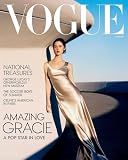
Printing and paper-making developments in the twentieth century enabled a much larger volume of magazine production, according to the British Library. Fashion imagery shifted from woodcuts, engraving and lithography toward photography. The National Gallery of Victoria identifies a specific milestone: Vogue published its first photographic cover in 1932, marking a significant move away from illustration on the cover.
Best Value
Harper’s Bazaar, Vogue and the modern magazine era
Harper’s Bazaar, founded in the United States in 1867, and Vogue, founded there in 1892, belong to a later stage in fashion-magazine history. Their dates do not mark the start of fashion publishing; they follow centuries of women-directed print, fashion reporting and illustrated dress imagery. The British Library says Vogue was first imported into Britain in 1916, a reminder that a magazine’s founding and its arrival in another country are separate milestones.
| Date | Publication or milestone | What it marks |
|---|---|---|
| 1672 | Mercure galant | Jean Donneau de Visé begins publishing the periodical, according to the Swiss National Museum. |
| 1677 | Mercure galant | Monthly publication begins, according to the Swiss National Museum. |
| January 1678 | Mercure galant extraordinaire | Museo del Traje dates fashion news in a quarterly supplement to this point. |
| 1744–1746 | The Female Spectator | Eliza Haywood’s magazine, which the British Library identifies as the first written and published for women. |
| 1794–1803 | Gallery of Fashion | Monthly issues, according to the British Library. |
| 1821 | El Periódico de las Damas | Begins publication in Spain, according to Museo del Traje. |
| 1867 | Harper’s Bazaar | Founding year given by the museum sources. |
| 1892 | Vogue | Founding year given by the museum sources. |
| 1916 | Vogue in Britain | The British Library dates its first importation into Britain to this year. |
| 1932 | Vogue cover | The National Gallery of Victoria dates the magazine’s first photographic cover to this year. |
What changed—and what did not
The evolution was not a straight line from one women’s book to a modern fashion title. Publications changed in what they covered, whom they addressed and how they showed clothing. Some combined dress with advice, entertainment or commentary; others made fashion more central. Engravings and later photographic printing extended what readers could see, while seasonal reporting connected images and descriptions to changing styles.
The durable thread is the pairing of fashion information with a visual record of dress. Vogue became a prominent late nineteenth-century milestone, and its 1932 photographic cover marks one later shift in magazine imagery. Neither milestone erases the varied publishing forms that came before.
Sources: British Library; Swiss National Museum; Museo del Traje; Acción Cultural Española; Bibliothèque nationale de France, Gallica; National Gallery of Victoria.
Quick wins for a faster PC:
Fix the driver behind crashes, sound loss and screen glitchesFind Drivers →Clear out junk files and repair common Windows errorsFree Scan →Scan for outdated or missing drivers - takes under a minuteDriver Scan →Quick Recap
Product prices and availability are accurate as of the date/time indicated and are subject to change. Any price and availability information displayed on Amazon at the time of purchase will apply.