Free tools Windows power users keep installed
One-click scans. No signup required.
Here are 30 essential Arctic Monkeys songs, ranked as an editorial selection rather than an official or definitive chart. The order weighs songwriting and lyrical perspective, distinctive melodies and performances, emotional impact, lasting resonance, and how well each track represents the band’s changing sound—from sharp early guitar rock to the more cinematic records.
30 best Arctic Monkeys songs, ranked
- A Certain Romance — A vivid portrait of provincial nightlife that grows more complicated as it unfolds. Its closing turn gives the song a generosity that complicates the youthful eye-roll at its centre. Alexis Petridis placed it first in his Guardian ranking of 20 songs; that is one critic’s judgment, not a universal verdict.
- Do I Wanna Know? — A slow, heavy riff turns romantic uncertainty into something almost physical. It is also the band’s biggest song by UK chart sales: Official Charts Company reported more than 3.8 million in its 2025 update. That measures UK popularity, not artistic quality. Official Charts Company figures.
- 505 — A restrained beginning gives way to a rush of longing, making the track’s final stretch feel like an emotional release rather than a conventional rock climax.
- Fluorescent Adolescent — A bright, instantly memorable melody carries a rueful song about the distance between youthful excitement and adult routine. Official Charts Company reported 2.8 million UK chart sales in its 2025 update; the single reached number five there. Official Charts Company.
- I Bet You Look Good on the Dancefloor — The debut-era rush in concentrated form: wiry guitars, urgent delivery, and a dance-floor scene observed with comic precision. It reached number one in the UK, and Official Charts Company reported 2.9 million UK chart sales in its 2025 update. Official Charts Company.
- R U Mine? — A muscular riff and clipped vocal phrasing give this restless song a harder, more direct edge than much of the band’s earlier work. Official Charts Company reported 2.4 million UK chart sales in its 2025 update, despite a peak of number 23. Official Charts Company.
- Cornerstone — A lonely narrator searches familiar bars for someone he cannot replace. The understated arrangement lets the awkwardness and sadness of the story land without turning it into melodrama.
- The View from the Afternoon — A propulsive opener built around anticipation: the night is only beginning, but the song already knows how its familiar rituals tend to end.
- Mardy Bum — A domestic argument becomes an affectionate, sharply observed portrait of a relationship. Its conversational detail and easy melody make it one of the most welcoming entry points to the debut.
- Arabella — A sleek, heavy guitar figure gives the song a dramatic, almost sci-fi glamour. Petridis noted its Black Sabbath echo in his Guardian ranking, a useful clue to the riff’s weight without reducing the track to its influence.
- When the Sun Goes Down — The story moves from street-level observation to a forceful chorus, giving the band’s early knack for character sketches real dramatic momentum.
- Brianstorm — A fast, tightly wound performance whose drumming and guitar accents make the song feel perpetually on the verge of breaking loose.
- Teddy Picker — A sharp attack on manufactured attention, delivered with the band’s characteristic mix of wit and impatience. Its compact arrangement never lets the song’s energy sag.
- Pretty Visitors — Jagged, theatrical and rhythmically volatile, it turns a crowded scene into a series of unsettling images. Petridis singled out its agile, forceful drumming in the Guardian list.
- One Point Perspective — A loping, hazy groove supports a jaded narrator looking back on a rock-star life. It shows how the band could trade urgency for atmosphere without losing their eye for character.
- Star Treatment — A patient, lounge-like opening introduces one of the band’s most distinctive late-period voices: reflective, self-aware and deliberately unhurried.
- Four Out of Five — A central statement from Tranquility Base Hotel & Casino, built around an imagined lunar resort and a cool, luxuriant arrangement. The Guardian described that album as a marked turn from the band’s earlier rock sound.
- Body Paint — A slow-building song whose shifting arrangement and swelling finish reward close attention. It captures the band’s later interest in texture and drama more than straightforward riff-driven momentum.
- Only Ones Who Know — A gentle melody and restrained performance create an unusually intimate pause in the band’s early catalogue.
- Riot Van — A compact, subdued scene of adolescent boredom and trouble, told with more sympathy than swagger.
- Why’d You Only Call Me When You’re High? — A woozy groove and a memorable late-night predicament make this one of the band’s most immediate songs. It reached number eight in the UK; Official Charts Company reported 2.6 million UK chart sales in its 2025 update. Official Charts Company.
- Snap Out of It — A buoyant, polished song that balances an easy chorus with a narrator’s pointed concern about someone’s fixation.
- Knee Socks — A smooth, nocturnal groove gives the song a confident ease, with a chorus that feels made for the band’s more expansive AM sound.
- Arabella??
- Black Treacle — A tuneful, lightly surreal track that brings a softer, more playful shade to the band’s guitar songwriting.
- Don’t Sit Down ’Cause I’ve Moved Your Chair — A deadpan title and a procession of absurd instructions sit over one of the band’s most lurching, fuzzed-out grooves.
- The Hellcat Spangled Shalalala — A warm, hazy song with a melodic lift that makes the Suck It and See era’s more relaxed side especially appealing.
- That’s Where You’re Wrong — A glowing, open-ended finale that lets melody and atmosphere carry the song rather than a sharp punchline or explosive riff.
- My Propeller — Dark, slow-burning and unusually sensual, it establishes the shadowy mood that distinguishes Humbug from the albums around it.
- Suck It and See — A sweet, direct love song whose uncomplicated warmth offers a welcome counterpoint to the band’s more guarded narrators.
How the ranking balances hits and deep cuts
The order is an editorial judgment, not a statistical result. The Guardian’s 2022 list ranks 20 songs by critic Alexis Petridis, while Official Charts measures UK chart performance; neither establishes an objective artistic top 30. Apple Music’s US artist page also highlights a platform-specific selection of popular tracks, not a definitive ranking. Together, these references help show the difference between critical selection, commercial reach and catalogue visibility.
The band’s sound changes substantially across the catalogue, from the rapid guitar songs of Whatever People Say I Am, That’s What I’m Not and Favourite Worst Nightmare to the darker Humbug, the sleek AM, and the cinematic approach of Tranquility Base Hotel & Casino and The Car. That range matters here: a list limited to the most recognizable singles would miss some of the band’s strongest songwriting and its most revealing stylistic turns. Apple Music’s US catalogue lists albums from the 2006 debut through 2022’s The Car. Apple Music catalogue
Quick Recap
Best Value
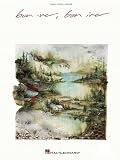
- P/V/G
- Pages: 72
- Instrumentation: Piano/Vocal/Guitar
Rank #4
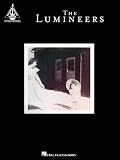
- 80 Pages
- Includes 11 Songs
- Artist: The Lumineers
- Softcover - TAB
- Dimensions 12 x 9
Rank #3

Rank #2

- Easy Guitar with Notes & Tab
- Pages: 144
- Instrumentation: Guitar
#1 Best Overall

- P/V/G
- Pages: 160
- Instrumentation: Piano/Vocal/Guitar
Product prices and availability are accurate as of the date/time indicated and are subject to change. Any price and availability information displayed on Amazon at the time of purchase will apply.




