Recommended Free Tools
Om Puri’s Alauddin Khilji in Bharat Ek Khoj belongs to a television retelling shaped by Malik Muhammad Jayasi’s literary ballad Padmavat—not to a verified account of the 1303 siege of Chittor. Shyam Benegal said the episode drew on Jayasi’s poem. The distinction matters: Padmavati has a powerful place in literary and popular tradition, but her presence in the siege is not established by the contemporary accounts discussed by historians.
Where Om Puri’s Khilji fits in Bharat Ek Khoj
Shyam Benegal’s Bharat Ek Khoj was a 53-episode television series based on Jawaharlal Nehru’s The Discovery of India. It began airing on 14 November 1988. Benegal recalled that his team brought 15 historians on board while developing the series, which combined historical research with dramatized storytelling. Hindustan Times
| # | Preview | Product | Price | |
|---|---|---|---|---|
| 1 |
|
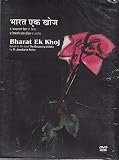
Bharat Ek Khoj-The Discovery of India (Brand New 18 dvd set, Hindi Language, With English Subtitles,... | $500.00 | Buy on Amazon |
| 2 |
|
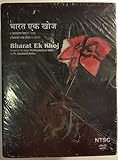
Bharat Ek Khoj The Discovery of India | $500.00 | Buy on Amazon |
Om Puri was not limited to the role of narrator: Benegal said he also appeared in numerous roles across the series. His Alauddin Khilji is therefore one performance within a much larger historical and cultural panorama, rather than a standalone screen biography of the sultan.
The Jindal Global University Library catalog identifies episode 26 as “Padmavat & the Tughlaq Dynasty” and lists a Doordarshan Archives recording produced and directed by Benegal. That catalog entry is useful for identifying the episode and its archival record; it does not, by itself, establish the details of what appears on screen. Jindal Global University Library
Why the episode draws on Padmavat
Benegal described the episode as based on Jayasi’s Padmavat, a literary ballad, and urged filmmakers working with contentious historical or mythological material to identify their sources. In his words, “Whenever any film relates to any contentious historical or mythological incidents or events, it is always prudent to refer to its source.” He added, “Mentioning the source is essential, since the story is not a purely imaginary work of the filmmaker.” The Indian Express, 26 November 2017
That emphasis helps clarify how to read the episode: it stages a story inherited from a poem, rather than claiming that every element is documented history. Benegal recalled a scene in which Khilji stands below Chittor’s ramparts, looking toward a pavilion where women dance ghoomar. Padmavati watches them, while Raja Ratan Sen watches from another pavilion above. This is Benegal’s description of the drama in the episode, not independent evidence of what took place during the siege.
What historians’ accounts can—and cannot—establish
The siege of Chittor in 1303 is a historical event; the romance involving Padmavati belongs to a later literary tradition. A 2017 Business Standard report says that the contemporary accounts of the siege it discusses do not mention Padmavati, and identifies Jayasi’s Padmavat, composed long after Alauddin Khalji’s death, as the first account of her. The report also discusses later versions of the story and cites historians Irfan Habib and Harbans Mukhia. Business Standard
The careful conclusion is not that Padmavati’s historical status has been settled in every respect. It is that her role in the 1303 siege is not established by the contemporary accounts discussed in that reporting. A poem can be culturally consequential without serving as a contemporary record of the event it narrates.
Free tools Windows power users keep installed
One-click scans. No signup required.
How to approach the later Padmavati movie comparison
The phrase “Padmavati movie” can refer to later screen treatments of the legend, but the available interviews and reporting establish the literary basis of Benegal’s episode, not a detailed scene-by-scene comparison with a later film. It would be misleading to claim that one portrayal is more historically accurate on that evidence alone: neither dramatization is primary evidence for the siege.
A useful comparison begins with the source each work identifies and the choices each makes in adapting it. For Bharat Ek Khoj, Benegal explicitly named Jayasi’s Padmavat and described the scene connecting Khilji, the dancers, Padmavati and Ratan Sen. That grounds a discussion of this episode’s literary framing, while leaving any detailed comparison with another film to evidence about that film itself.
Further reading
For an account of how the queen’s story changed across later traditions, Ramya Sreenivasan’s The Many Lives of a Rajput Queen (2007) is identified by Business Standard as a study tracing those changes. The book is a route into the story’s reception, not a substitute for contemporary evidence about the siege.
Quick Recap
Product prices and availability are accurate as of the date/time indicated and are subject to change. Any price and availability information displayed on Amazon at the time of purchase will apply.
The Tool Desk
Outbyte PC Repair FREEClear out junk files and repair common Windows errorsFree Scan →Outbyte Driver Updater FREEScan for outdated or missing drivers - takes under a minuteDriver Scan →



